
Chef Joost
Beschuit met Muisjes
The airy Dutch rusk sold in rolls of thirteen, twice baked until crisp, then buttered and crowned with sugared aniseed for the birth of a child.
A cooking platform built around craft, culture, and the stories behind what we eat.
Created by
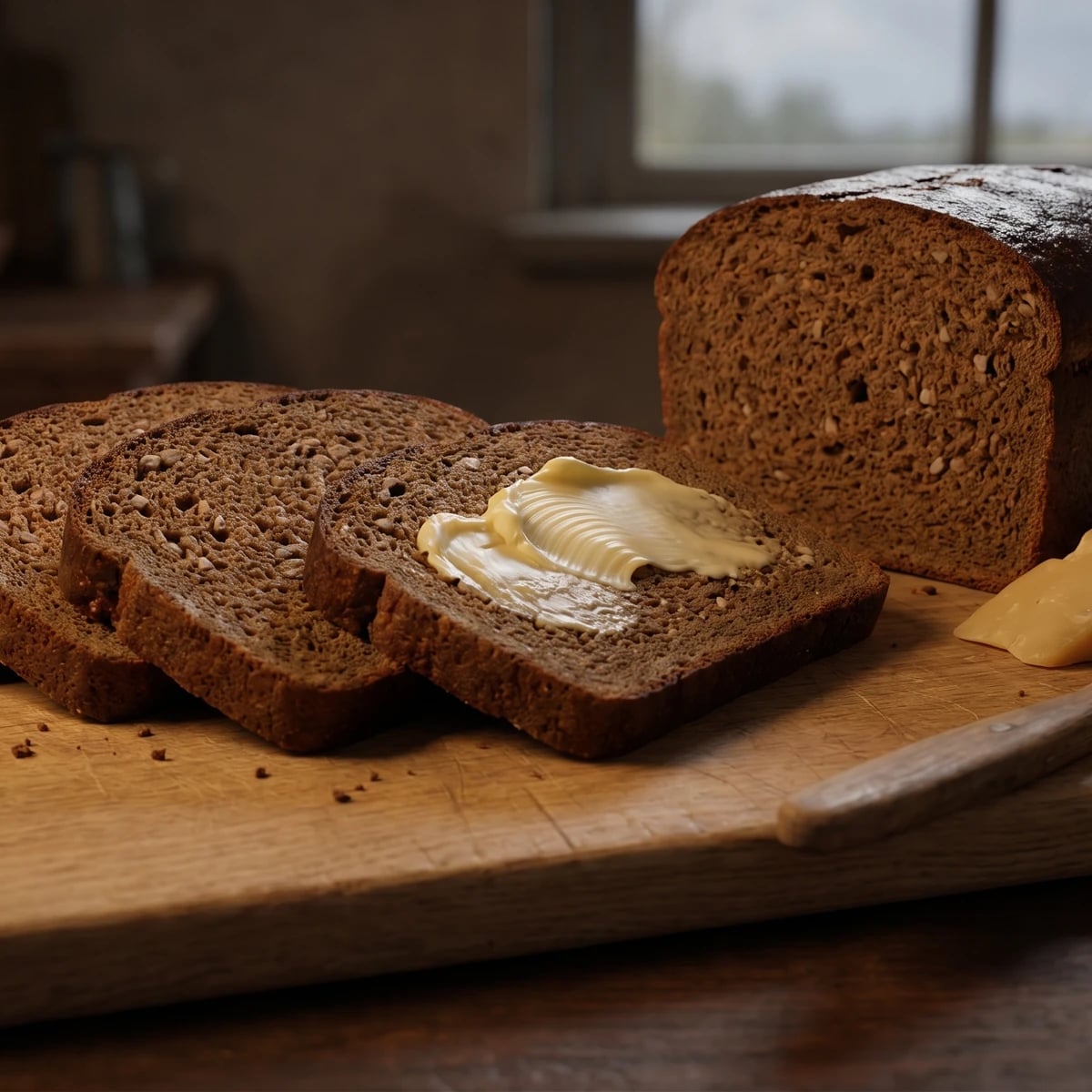
Roggebrood is the northern loaf that refuses prettiness: dark rye, time, and patience cooked into a near-black slice for snert, old cheese, and winter tables.
Roggebrood belongs to the family table that had more sense than money. In my grandmother's second notebook it is not given drama, only a line about rye, salt, sour, and time, which tells you nearly everything about the old Dutch kitchen. Wheat was the proud grain in rich soil. Rye was the survivor on poorer ground, especially in the north and east, where it fed people without asking to be admired.
The name already tells you the truth without embroidery: rogge is rye, brood is bread. But let me tell you a secret: this bread is not baked in the way a white loaf is baked. It is gegaard, cooked through slowly, for hours, until the rye darkens, sweetens, and settles into that dense slice that looks almost stern until you put butter on it. Then it becomes very reasonable.
Do not expect spring and height. Rye has little patience for that sort of bakery vanity. The sourdough is here for flavour, keeping quality, and tenderness, not a dramatic rise. Hou het altijd simpel, always keep it simple: soak the rye so it softens, give the sour time to wake it, wrap the loaf against drying, and cook it slowly enough that the grain turns from raw meal into something sliceable, dark, and faintly sweet. A dish without its story is half a meal; with roggebrood, the story is patience made edible.
Dark roggebrood has long belonged to the rye-growing provinces of Friesland, Groningen, Drenthe, and Overijssel, where poorer sandy and peat soils favored rye over wheat. Northern versions are traditionally cooked for many hours at low heat, closer to Westphalian pumpernickel than to a risen wheat loaf, while southern Dutch rye breads tend to be lighter and more openly baked. Its place beside erwtensoep, spek, herring, and old cheese reflects an older Dutch larder built on stored grains, preserved fish, cured meat, and winter thrift.
Quantity
300g
Quantity
250g
Quantity
350ml
Quantity
150g
100% hydration
Quantity
60g
Quantity
10g
Quantity
as needed
for the tin
| Ingredient | Quantity |
|---|---|
| cracked rye or coarse rye meal | 300g |
| wholegrain rye flour | 250g |
| boiling water | 350ml |
| active rye sourdough starter100% hydration | 150g |
| dark rye syrup or molasses | 60g |
| fine sea salt | 10g |
| butter or neutral oilfor the tin | as needed |
Put the cracked rye in a large bowl and pour over the boiling water. Stir until every grain is wet, cover the bowl, and leave it for at least 6 hours, or overnight. This is not fussiness. Dry rye stays gritty; soaked rye softens and gives the loaf its quiet sweetness.
Add the rye flour, sourdough starter, rye syrup or molasses, and salt to the soaked rye. Mix with a sturdy spoon or wet hand until you have a heavy, sticky paste. It will not look like bread dough and it will not knead like bread dough. Good. Rye has its own manners.
Cover the bowl and let the mixture ferment at room temperature for 8 to 12 hours, until it smells pleasantly sour and grainy and the surface shows a few small cracks. Do not wait for it to double. Roggebrood rises by suggestion, not by performance.
Butter or oil a small loaf tin, about 20 by 10 cm. Scrape in the rye paste and press it down firmly with wet hands so there are no air pockets. Smooth the top, then cover the tin tightly with a double layer of foil. The tight cover keeps the loaf moist while it cooks low and long.
Set the covered tin in a deep roasting pan and pour hot water around it to come halfway up the sides. Cook at 120C for 7 to 8 hours, topping up the water if needed. The loaf is ready when it feels firm through the foil and the edges have darkened to near-black. You are not chasing crust; you are cooking the rye all the way to the centre.
Let the loaf cool in its tin, still covered, then wrap it and rest it for at least 12 hours before slicing. This is the step impatient cooks resent and experienced ones defend. Cut it too soon and it crumbles; wait, and the loaf sets into thin, clean slices with a faint sour sweetness.
1 serving (about 55g)
Culinary guides, cultural storytelling, and the editorial depth that makes cooking meaningful.
Discover Culinary Explorer
Chef Joost
The airy Dutch rusk sold in rolls of thirteen, twice baked until crisp, then buttered and crowned with sugared aniseed for the birth of a child.

Chef Joost
The Dutch square loaf baked under a lid, with a quiet crumb, a disciplined crust, and exactly the right shape for the tosti pan.

Chef Joost
Before bread came from a packet of yeast, it came from yesterday: flour, water, salt, and a living desem starter carrying one loaf into the next.

Chef Joost
A Zaanstreek feast bread with the devil hiding in its name, lemon in its crumb, and a shape old bakers knew before holiday tables learned to behave.