
Chef Freja
Aebleskiver
Round Danish pancake balls turned in a cast-iron pan, fluffy inside and golden outside, dusted with powdered sugar and dipped in raspberry jam. The taste of a Danish December.
A cooking platform built around craft, culture, and the stories behind what we eat.

Created by Chef Freja
Danish Christmas rice porridge simmered slowly in whole milk with a cinnamon stick, served with cold butter melting into golden pools and a generous snow of cinnamon sugar. The bowl that starts the Danish December.
There's a particular evening in December when risengrod comes out. Not a date, a feeling. The candles have been on the table since late afternoon because the light went early, the windows are black with winter, and someone has put on a pot of milk to warm. This is the porridge of Danish Christmas, and it carries more weight than any bowl of rice and milk has a right to.
Risengrod is eaten all through December in Danish homes, and on Christmas Eve a bowl is traditionally left out for the nisse, the small grey-clad house spirit who looks after the farm and, if forgotten, turns mischievous. Children grow up with this story and with the porridge that goes with it. The dish itself is simple almost to the point of disappearing: short-grain rice, whole milk, a cinnamon stick, salt. What makes it matter is the care you give it and the way it's served, with a knob of cold butter melting into a golden well in the centre and a generous scatter of cinnamon sugar across the top.
I want you to pay attention to two things. The first is patience. Risengrod cannot be rushed. Milk wants to scorch, rice wants to clump, and your only defense is a low flame and a wooden spoon in your hand. The second is the finishing. Cold butter on hot porridge is not decoration. It's the moment the dish becomes itself, and you'll know when it's right because you won't be able to stop eating it. Make extra. Tomorrow's leftovers become risalamande, the cold almond rice cream that closes every Danish Christmas dinner, and the joy of waiting for that is half the reason you cook the porridge in the first place.
Rice arrived in Danish kitchens as a luxury import in the late Middle Ages, when it was expensive enough to be served only on feast days and holy occasions. By the 1800s it had become affordable to ordinary households, and risengrod settled into its place as the proper food for Christmas Eve lunch and the December advent weeks. The tradition of leaving a bowl for the nisse on Christmas night comes from older agrarian folk belief, when farmers genuinely believed the small household spirits protected livestock and crops. Risalamande, the cold almond version served on Christmas Eve with warm cherry sauce, was invented in the late 1800s as a clever way to stretch expensive rice further on the most important meal of the year, and the hidden whole almond that wins a small prize is a tradition that almost disappeared during the wartime shortages of the 1940s before being revived in the 1950s.
Quantity
200g
Quantity
300ml
Quantity
1 litre, plus extra to loosen
Quantity
1
Quantity
1 strip
Quantity
1/2 teaspoon
Quantity
50g
to serve
Quantity
4 tablespoons
to serve
Quantity
2 teaspoons
to serve
Quantity
small glass
| Ingredient | Quantity |
|---|---|
| short-grain pudding rice (grodris) | 200g |
| water | 300ml |
| whole milk | 1 litre, plus extra to loosen |
| cinnamon stick | 1 |
| lemon peel (optional) | 1 strip |
| fine sea salt | 1/2 teaspoon |
| cold unsalted butterto serve | 50g |
| caster sugarto serve | 4 tablespoons |
| ground cinnamonto serve | 2 teaspoons |
| dark beer or Christmas ale (optional) | small glass |
Put the rice and the water in a heavy-bottomed pot and bring it to a boil. Let it bubble for two minutes until the water is almost fully absorbed. This first step is the one most people skip, and it's the reason their porridge turns out gluey. The water opens the rice gently, so the milk that follows can soak in slowly instead of being fought off by dry grains. You'll see the rice go from chalky to slightly translucent at the edges. That's what you're waiting for.
Pour in the whole milk, drop in the cinnamon stick and the strip of lemon peel if you're using it, and add the salt. Stir gently and bring the pot just to the edge of a simmer. You don't want a rolling boil. You want the surface to shiver, the occasional bubble rising slow and heavy. Milk that boils hard will catch on the bottom and turn bitter.
Turn the heat down as low as it will go and let the porridge cook gently for forty to forty-five minutes. Stir it every few minutes with a wooden spoon, scraping the bottom of the pot each time. This is not a dish you walk away from. The reason is simple: the starch in the rice wants to settle on the hot metal and scorch, and the only thing stopping it is your spoon. The porridge is ready when the rice is soft, the milk has thickened around it, and a spoon dragged through the middle leaves a slow-closing trail. If it gets too thick before the rice is fully tender, loosen it with a splash more milk. The consistency should be loose enough to pour from a ladle but thick enough to hold its shape in the bowl.
Fish out the cinnamon stick and the lemon peel. Taste the porridge. It should taste of milk and rice and the faint warmth of cinnamon, never of salt, never of nothing. Add a pinch more salt if it falls flat. Take the pot off the heat and let it sit for two or three minutes. The porridge will thicken slightly as it rests, which is what you want. Warm, not scorching. You should be able to eat it straight from the bowl.
Mix the caster sugar and ground cinnamon together in a small bowl. This is kanelsukker, and every Danish child knows what it is. Ladle the porridge into deep bowls. Make a small well in the centre of each one and drop in a cold knob of butter. Don't stir it. Let it melt slowly into a golden pool, the way butter melts on kartoffelsuppe. Scatter the cinnamon sugar generously across the top. The contrast of cold butter melting into hot porridge, of sweet cinnamon against the gentle savoriness of the rice, is the whole point. Tak for mad.
1 serving (about 410g)
Culinary guides, cultural storytelling, and the editorial depth that makes cooking meaningful.
Discover Culinary ExplorerChef Freja
Round Danish pancake balls turned in a cast-iron pan, fluffy inside and golden outside, dusted with powdered sugar and dipped in raspberry jam. The taste of a Danish December.

Chef Freja
A thick Danish farmhouse egg cake set golden in the pan with crispy bacon and chives, cut in wedges at the table and served with rugbrod, sliced tomatoes, and mustard. Jutland weeknight cooking at its most honest.
Chef Freja
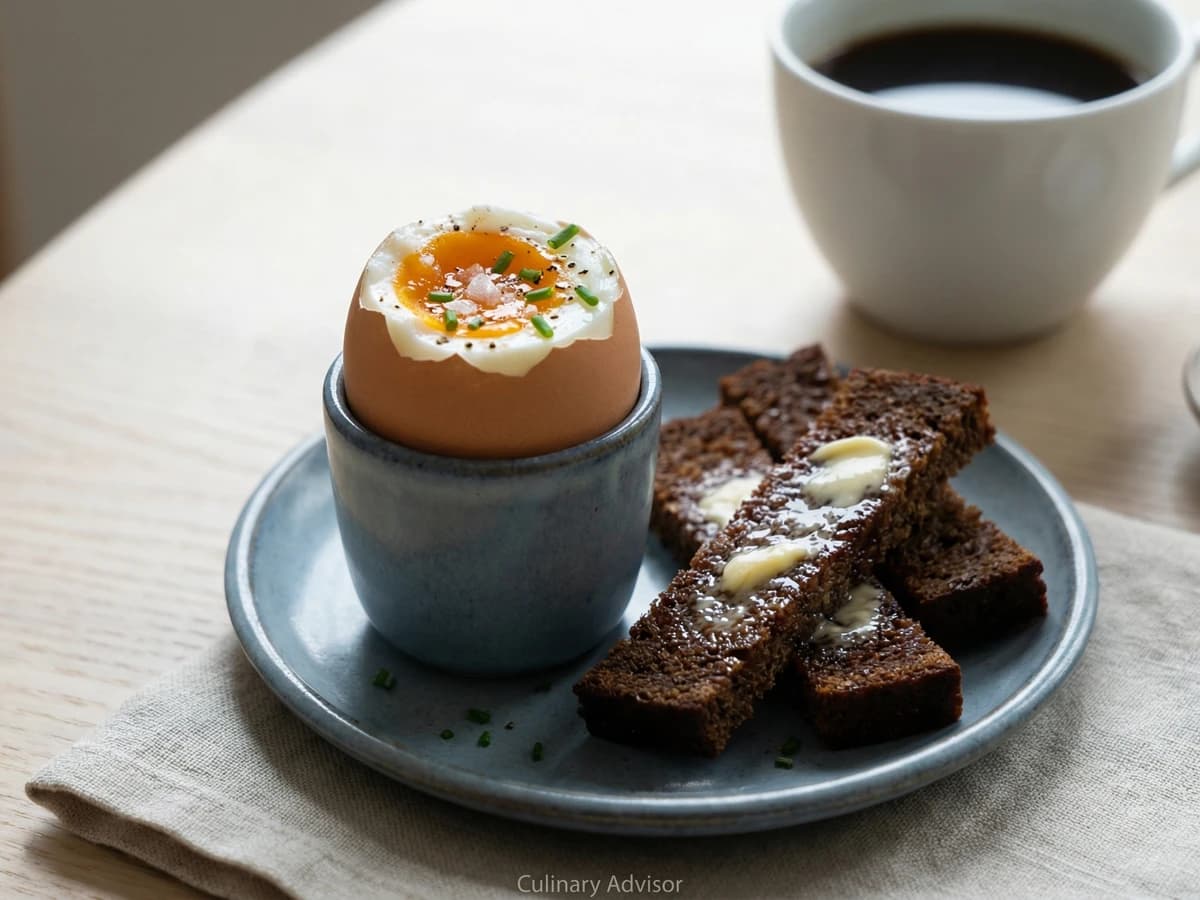
The simplest Danish breakfast there is. A soft-boiled egg in its cup with buttered rugbrod cut into soldiers for dipping, strong coffee alongside, and nothing else asking for your attention.

Chef Freja
Danish heart waffles with browned butter and cardamom, crisp at the edges and soft inside, served warm with whipped cream and berry jam. The smell of a Sunday afternoon in any Danish kitchen.