
Chef Freja
Aebleskiver
Round Danish pancake balls turned in a cast-iron pan, fluffy inside and golden outside, dusted with powdered sugar and dipped in raspberry jam. The taste of a Danish December.
A cooking platform built around craft, culture, and the stories behind what we eat.
Created by Chef Freja
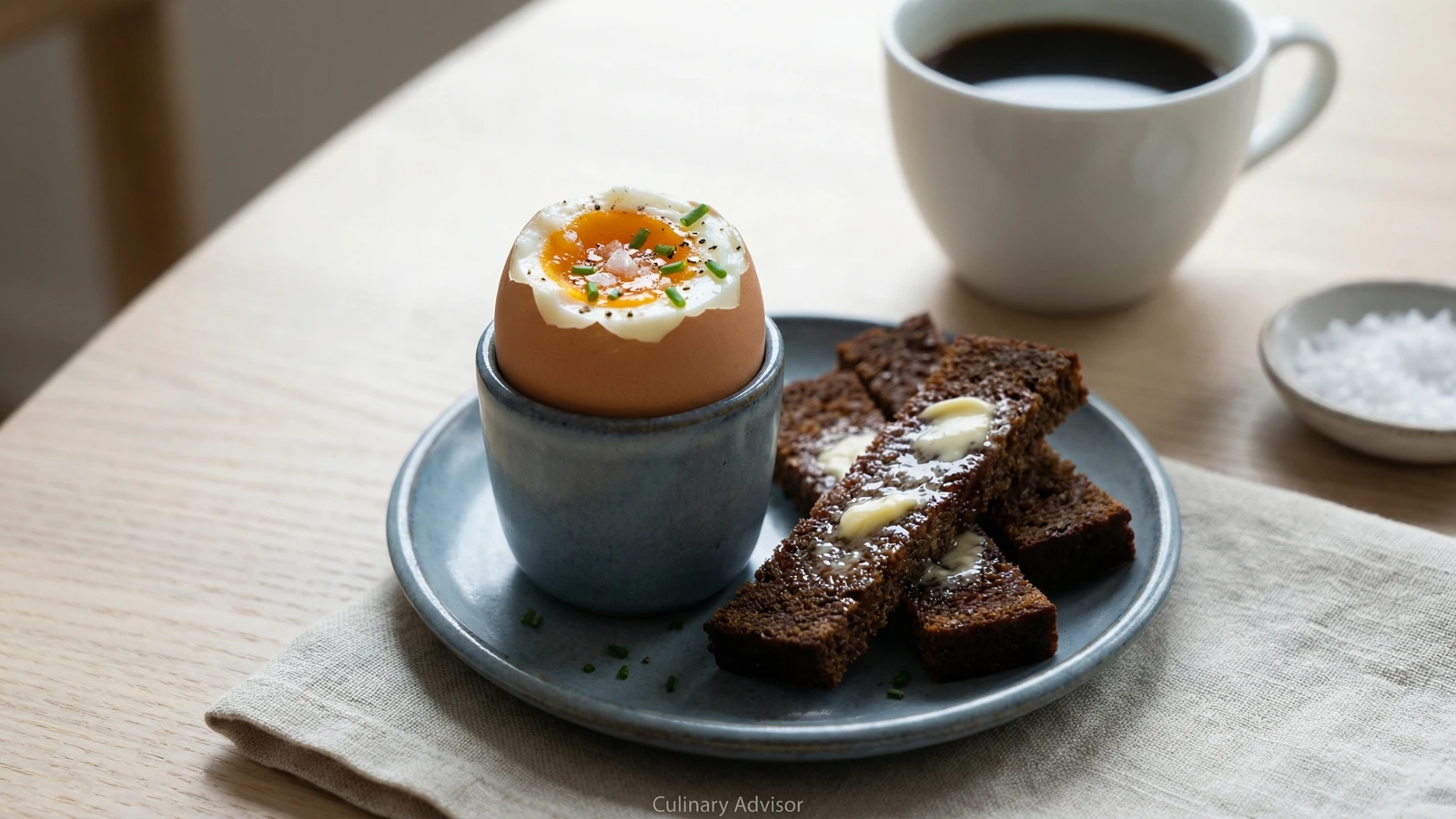
The simplest Danish breakfast there is. A soft-boiled egg in its cup with buttered rugbrod cut into soldiers for dipping, strong coffee alongside, and nothing else asking for your attention.
There is a quiet version of the Danish morning that doesn't get written about much. No pastries, no laid table, no Saturday performance. Just an egg in a cup, a slice of rugbrod with cold butter, and coffee strong enough to matter. This is what a weekday looks like in a lot of Danish kitchens, and it has looked like this for generations.
Blodkogte aeg means soft-cooked eggs, and the word itself is an instruction. The yolk stays liquid, the white just sets, and the whole thing arrives at the table in its shell, balanced in a small ceramic cup that most Danish households own several of without quite remembering when they bought them. You crack the top, sprinkle salt, and dip strips of buttered rugbrod, the soldiers, into the warm yolk. That's the whole dish. It costs very little and takes eleven minutes, and if you get it right, it is one of the best things you can eat before the day has properly started.
What you need to pay attention to is the timing and the water. Room temperature eggs, a gentle simmer, six minutes on the clock. That's it. I'll walk you through every step, but the truth is that once you've made this three or four times, your hands will know it and you won't need the recipe again. That's the gift of simple food. You carry it with you.
The soft-boiled egg in its cup is an old ritual across northern Europe, but in Denmark it became inseparable from rugbrod, the dense sourdough rye that every household kept on hand as the base of the daily meal. The small ceramic egg cup, or aeggebaeger, became a fixture of the Danish breakfast table in the nineteenth century, when porcelain production at Royal Copenhagen and the blue-pattern tableware of Bing and Grondahl made them accessible to ordinary homes. The practice of cutting buttered rugbrod into strips for dipping has no single origin story, only the quiet logic of a country that had dense bread, good butter, and eggs every morning, and let the three meet on one plate.
Quantity
4 large
at room temperature
Quantity
4 thick slices
Quantity
40g
softened
Quantity
to taste
Quantity
freshly ground, to taste
Quantity
small handful, snipped
| Ingredient | Quantity |
|---|---|
| fresh eggsat room temperature | 4 large |
| dark rugbrod | 4 thick slices |
| good salted buttersoftened | 40g |
| flaky sea salt | to taste |
| black pepper | freshly ground, to taste |
| chives (optional) | small handful, snipped |
Take the eggs out of the fridge at least twenty minutes before you cook them. Cold eggs dropped into hot water crack on contact, and the shock sets the white unevenly. Room temperature eggs cook gently and predictably, and the timing actually works. If you forget, sit them in a bowl of warm tap water for five minutes while you put the kettle on.
Fill a small saucepan with enough water to cover the eggs by about two centimetres. Bring it to a rolling boil, then turn the heat down until the water is at a steady, lively simmer. Not a hard boil. A hard boil throws the eggs against the bottom of the pan and cracks the shells. A simmer cooks them evenly.
Use a slotted spoon to lower each egg carefully into the simmering water. Start your timer the moment the last egg goes in. Six minutes gives you a set white and a warm, runny yolk, the classic blodkogt. Six and a half for a slightly thicker yolk that still runs when you cut in. Seven for a yolk that's jammy but no longer liquid. I cook them for six minutes and don't think about it twice.
While the eggs cook, toast the rugbrod lightly if you like, or leave it as it is. Either is correct. Spread each slice generously with softened butter, going right to the edges. Cut each slice into three or four long strips. These are your soldiers, wide enough to hold their shape, narrow enough to fit into the egg. Rugbrod is dense and dark and the butter sinks in slowly, which is exactly what you want when the yolk hits the bread.
When the timer goes, lift the eggs out with the slotted spoon and plunge them briefly into a bowl of cold water for about ten seconds. Not an ice bath. You're not trying to stop the cooking completely, just halt the carry-over heat so the yolks don't keep setting. Ten seconds is enough to make them safe to handle without going cold.
Set each egg upright in an egg cup, pointed end down for stability. Tap the top of the egg gently with the back of a teaspoon and lift off the cap, or take a knife and cut straight across the top in one confident motion. Sprinkle the exposed yolk with flaky salt and a turn of black pepper. Scatter a few chives if you have them. Arrange the rugbrod soldiers alongside and serve immediately with strong coffee. Dip a soldier into the yolk, salt and all, and you'll understand why this is the Danish morning. Tak for mad.
1 serving (about 200g)
Culinary guides, cultural storytelling, and the editorial depth that makes cooking meaningful.
Discover Culinary ExplorerChef Freja
Round Danish pancake balls turned in a cast-iron pan, fluffy inside and golden outside, dusted with powdered sugar and dipped in raspberry jam. The taste of a Danish December.

Chef Freja
A thick Danish farmhouse egg cake set golden in the pan with crispy bacon and chives, cut in wedges at the table and served with rugbrod, sliced tomatoes, and mustard. Jutland weeknight cooking at its most honest.

Chef Freja
Danish heart waffles with browned butter and cardamom, crisp at the edges and soft inside, served warm with whipped cream and berry jam. The smell of a Sunday afternoon in any Danish kitchen.
Chef Freja
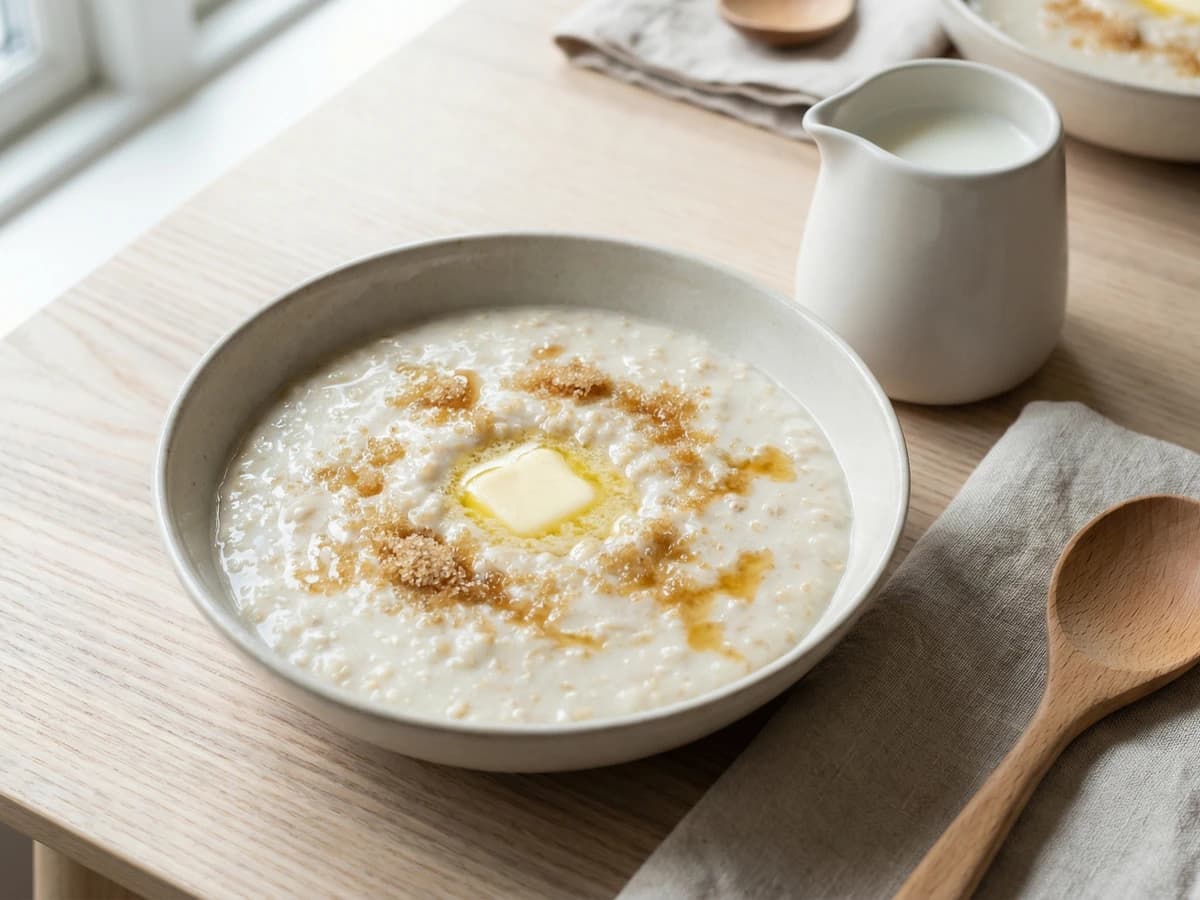
Danish oatmeal porridge simmered slowly in milk with a pinch of salt, finished with a golden pool of butter and brown sugar at the center. The breakfast that carries Danish winter mornings.