
Chef Freja
Aebleskiver
Round Danish pancake balls turned in a cast-iron pan, fluffy inside and golden outside, dusted with powdered sugar and dipped in raspberry jam. The taste of a Danish December.
A cooking platform built around craft, culture, and the stories behind what we eat.

Created by Chef Freja
Danish heart waffles with browned butter and cardamom, crisp at the edges and soft inside, served warm with whipped cream and berry jam. The smell of a Sunday afternoon in any Danish kitchen.
The waffle iron comes out on Sunday afternoons. Not for breakfast, Danish waffles are not a morning dish, but later, around three or four, when the light is already thinking about leaving and you want a reason to stay inside. Someone puts the kettle on. Someone else finds the jam at the back of the cupboard. The iron heats up and the kitchen starts to smell of browned butter and cardamom, and that is hyggelig in its purest form, the kind that happens by itself when people are together and not trying.
Danske vafler are heart-shaped because the iron is. Five small hearts joined at the centre, a shape that has been cast into Scandinavian waffle irons for over a century and has outlasted every kitchen fashion that came after it. The batter is simple, flour, eggs, milk, sugar, butter, cardamom, but two details lift it above an ordinary waffle. The butter is browned until it smells of hazelnuts. The sparkling water goes in cold, at the end, and the bubbles stay alive in the batter all the way to the iron.
What I want you to pay attention to is the browned butter. That is the step most recipes skip or rush. Take your time with it. Stand at the stove and swirl the pan and wait for the moment the foam clears and the milk solids turn gold. Pull it off the heat immediately. That small act of attention is the difference between a waffle you eat and a waffle you remember. Served warm with a spoon of whipped cream and a spoon of berry jam, or just with soft butter and a dusting of sugar, this is Sunday baking at its simplest and most generous.
Heart-shaped waffle irons spread across Scandinavia in the 19th century, when cast-iron household goods became affordable for ordinary homes, and the heart pattern, with its five connected lobes, became the regional standard from Norway down through Denmark. Danish vafler were traditionally a weekend or festive food, cooked on open hearths before electric irons arrived, and they sat at the centre of eftermiddagskaffe, the afternoon coffee that anchors the Danish day. The addition of cardamom to the batter echoes the spice's long history in Danish baking, a legacy of the Copenhagen spice trade that reached the city from the Far East as early as the 1600s.
Quantity
125g
Quantity
250g
Quantity
2 tablespoons
Quantity
1 teaspoon
Quantity
1/2 teaspoon
Quantity
1/2 teaspoon
Quantity
3
separated
Quantity
300ml
Quantity
100ml
cold
Quantity
1 teaspoon
Quantity
for the iron
Quantity
to serve
Quantity
to serve
Quantity
for dusting
| Ingredient | Quantity |
|---|---|
| unsalted butter | 125g |
| plain flour | 250g |
| caster sugar | 2 tablespoons |
| baking powder | 1 teaspoon |
| ground cardamom | 1/2 teaspoon |
| fine sea salt | 1/2 teaspoon |
| large eggsseparated | 3 |
| whole milk | 300ml |
| sparkling watercold | 100ml |
| vanilla extract | 1 teaspoon |
| neutral oil or extra butter | for the iron |
| thick whipped cream | to serve |
| strawberry or blackberry jam | to serve |
| icing sugar (optional) | for dusting |
Put the butter in a small pale-bottomed pan over a medium heat and let it melt, then foam, then quiet. Swirl the pan gently. The milk solids will sink and start to turn gold, then deeper gold, and the whole kitchen will smell of hazelnuts. That is the moment. Pull the pan off the heat immediately. Brown butter is what gives Danish waffles their backbone. Pale melted butter tastes of nothing; browned butter tastes of afternoon.
Whisk the flour, caster sugar, baking powder, cardamom, and salt together in a large bowl. The cardamom is not optional. It's the quiet detail that makes these taste Danish rather than generically Scandinavian, the same spice that lives in kanelsnegle and wienerbrod and most of the sweet things that come out of a Copenhagen kitchen.
Whisk the egg yolks with the milk and vanilla in a jug. Pour this into the dry ingredients and whisk until smooth. Stream in the browned butter, scraping every dark fleck from the bottom of the pan into the batter. Those flecks are the flavor. Finally whisk in the cold sparkling water. The bubbles do the same thing they do in a good frikadeller mixture, they create tiny air pockets that survive the heat and give you a lighter waffle than still water ever could.
Whisk the egg whites in a clean bowl until they hold soft peaks. Not stiff. Soft, so they still flop when you lift the whisk. Fold them into the batter in three additions, using a light hand. You're not mixing, you're folding. The goal is to keep as much air in the batter as possible. Let the batter rest for ten minutes while the iron heats. This is the joy of waiting: the flour hydrates, the bubbles settle into place, and the first waffle comes out better for it.
Heat your heart-shaped waffle iron until it's properly hot. If you flick a drop of water on the surface it should dance and evaporate in a second. Brush both plates with a thin film of neutral oil or melted butter. The first waffle from any iron is usually the worst one. Don't worry about it. It's the cook's waffle. You eat it standing at the counter and don't tell anyone.
Ladle enough batter into the centre of the iron to almost fill the hearts, about 100ml for most irons, and close the lid. Cook for three to four minutes without opening. If you open it too early the waffle tears in half and you lose faith in the whole operation. When the steam coming from the sides slows and the iron feels lighter, lift the lid. The waffle should be deep gold with clear heart shapes and crisp edges. You'll know when it's right because the smell changes from batter to browned butter and toast.
Transfer each waffle to a wire rack, not a plate. A plate traps steam underneath and turns the bottom soggy within a minute. The rack keeps the crisp edge intact. Serve them the moment you have enough for everyone, warm from the iron, with a generous spoonful of thick whipped cream and a spoon of good berry jam. A dusting of icing sugar if the mood is right. Tak for mad.
1 serving (about 190g)
Culinary guides, cultural storytelling, and the editorial depth that makes cooking meaningful.
Discover Culinary ExplorerChef Freja
Round Danish pancake balls turned in a cast-iron pan, fluffy inside and golden outside, dusted with powdered sugar and dipped in raspberry jam. The taste of a Danish December.

Chef Freja
A thick Danish farmhouse egg cake set golden in the pan with crispy bacon and chives, cut in wedges at the table and served with rugbrod, sliced tomatoes, and mustard. Jutland weeknight cooking at its most honest.
Chef Freja
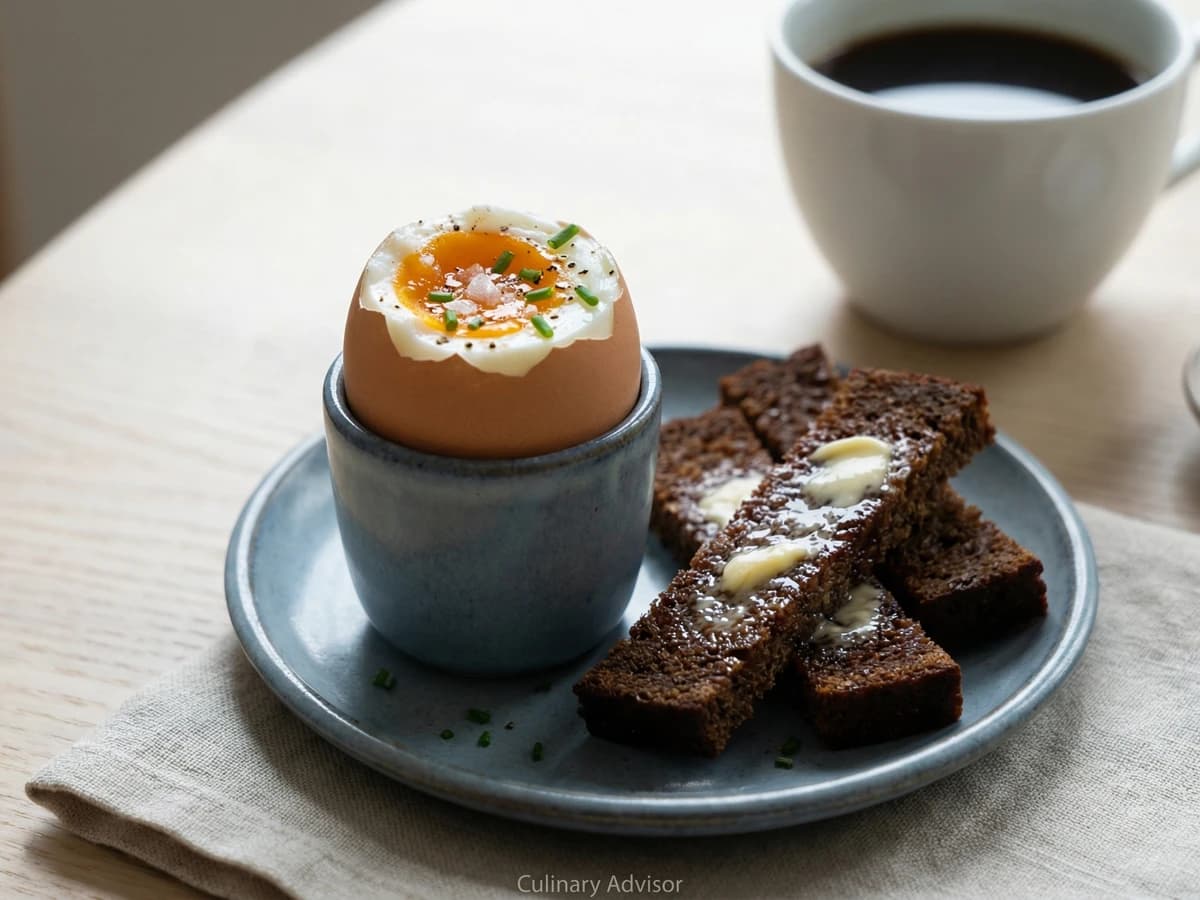
The simplest Danish breakfast there is. A soft-boiled egg in its cup with buttered rugbrod cut into soldiers for dipping, strong coffee alongside, and nothing else asking for your attention.
Chef Freja
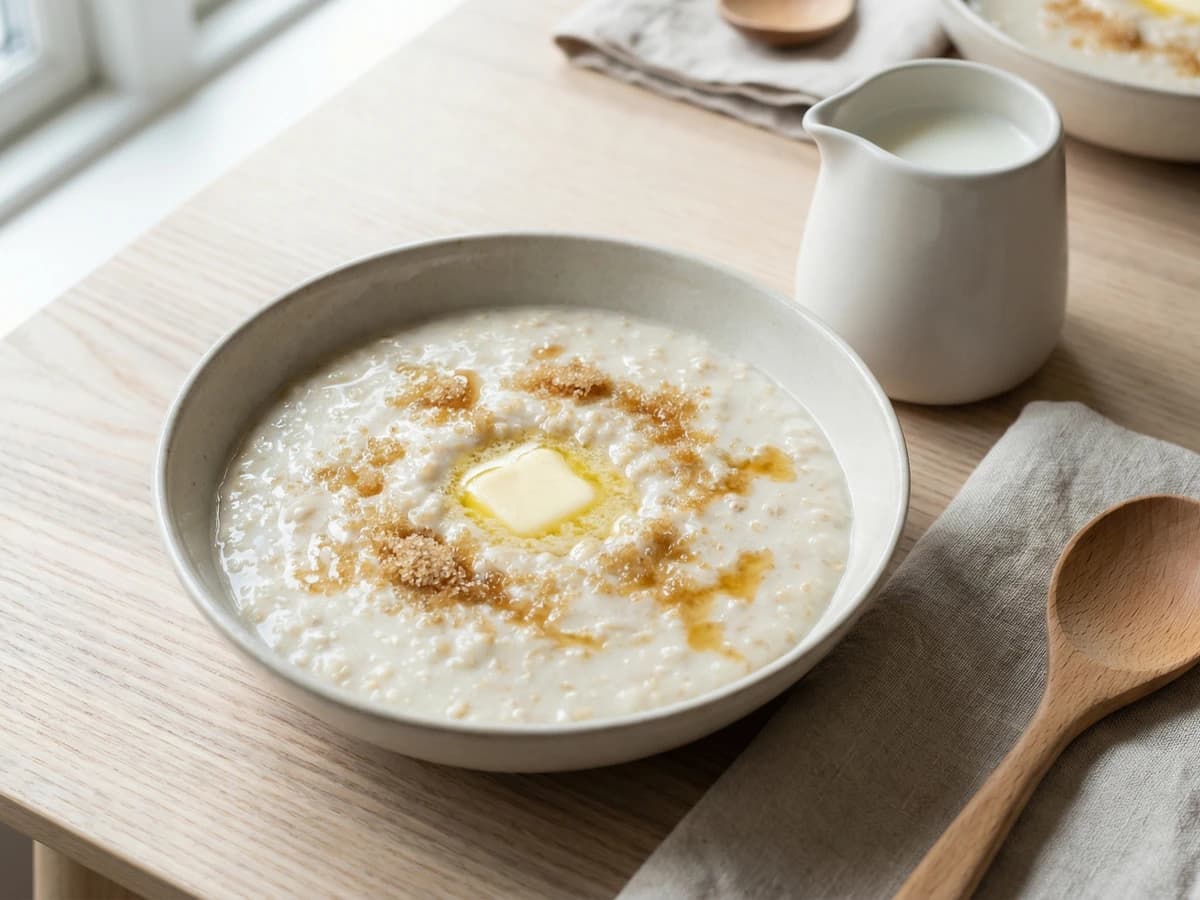
Danish oatmeal porridge simmered slowly in milk with a pinch of salt, finished with a golden pool of butter and brown sugar at the center. The breakfast that carries Danish winter mornings.