
Chef Freja
Aebleskiver
Round Danish pancake balls turned in a cast-iron pan, fluffy inside and golden outside, dusted with powdered sugar and dipped in raspberry jam. The taste of a Danish December.
A cooking platform built around craft, culture, and the stories behind what we eat.
Created by Chef Freja
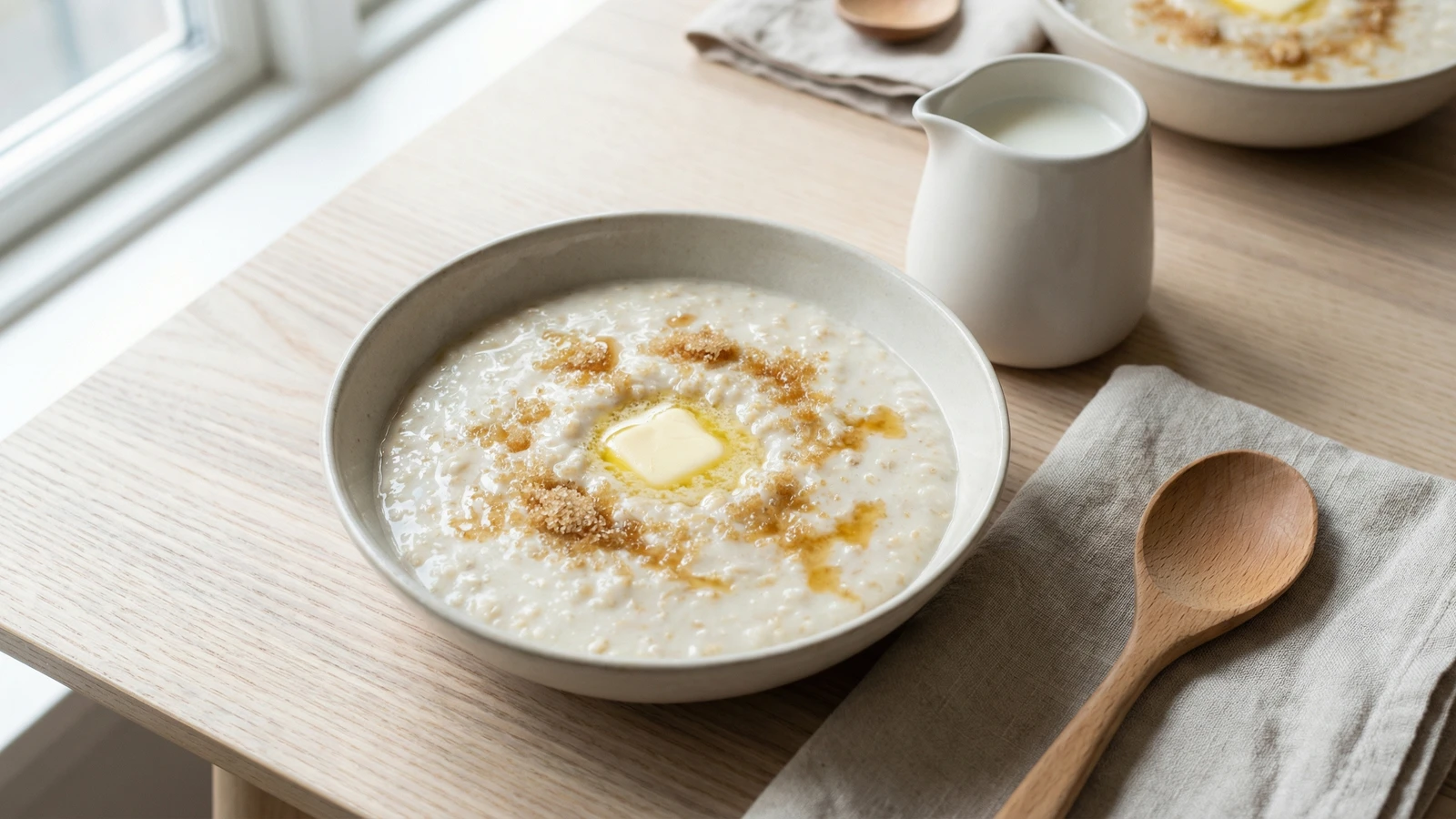
Danish oatmeal porridge simmered slowly in milk with a pinch of salt, finished with a golden pool of butter and brown sugar at the center. The breakfast that carries Danish winter mornings.
Winter mornings in Denmark are dark at seven and darker at eight. The kind of dark where you turn on the kitchen light before the kettle and the windows hold nothing but your own reflection. This is when havregrynsgrod comes into its own. A pan of oats on the stove, a wooden spoon moving slowly, the steam-free warmth of milk coming up to a simmer. A small act of care before the day begins.
Porridge is not trying to be clever. It's oats, milk, and salt, cooked slowly until the starch releases and the whole thing turns creamy. What makes the Danish version Danish is the finish: a well pressed into the center, a knob of cold butter dropped in, a spoonful of brown sugar melting over the top into a golden pool. We call this the smorhul, the butter hole, and it's the small ritual that turns a bowl of oats into breakfast. You dig your spoon through the pool as you eat, so each bite carries a bit of sweet and salt and fat.
What matters most is patience. Grod cooked too fast is grainy and thin. Grod cooked slowly, stirred often, and rested under a lid for two minutes before serving is something else entirely. Silky, rounded, deeply comforting. I'll walk you through every step so the first bowl you make is already the bowl you want. And I want you to resist the urge to stir the butter and sugar in at the end. That pool at the center is not decoration. It's the point.
Porridge is one of the oldest continuous foods in the Danish kitchen, eaten on Nordic farms since the Iron Age, long before the potato or even wheat bread found their way into daily life. Through the 19th century, thick grod made from rye or barley was the staple breakfast for farm workers and schoolchildren across the country, while oats, imported and once considered a luxury, slowly took their place at the table. The tradition of the smorhul, the well of butter and brown sugar at the center of each bowl, dates from the late 1800s when sugar became affordable enough for everyday use, and survives today as one of the most recognizable rituals of Danish home cooking.
Quantity
150g
Quantity
500ml
Quantity
200ml
Quantity
1/2 teaspoon
Quantity
2 tablespoons
cold, to finish
Quantity
2 tablespoons
to finish
Quantity
to pour alongside
| Ingredient | Quantity |
|---|---|
| rolled oats (havregryn) | 150g |
| whole milk | 500ml |
| water | 200ml |
| fine sea salt | 1/2 teaspoon |
| unsalted buttercold, to finish | 2 tablespoons |
| light brown sugarto finish | 2 tablespoons |
| cold whole milk | to pour alongside |
Pour the milk and water into a heavy saucepan and set it over medium heat. Add the salt. The water keeps the milk from scorching on the bottom of the pan, which is the single thing that ruins porridge faster than anything else. Milk alone catches and burns; water gives the oats somewhere softer to land.
When the milk is warm but not yet steaming, stir in the oats. Adding them before the milk gets hot gives them time to swell evenly. If you drop oats into already-boiling milk, the outside softens too fast and the inside stays chalky. Gentle and early is the rule.
Bring the porridge up to a gentle simmer, then turn the heat down so it barely bubbles. Stir with a wooden spoon every minute or so, sweeping across the bottom of the pan. You're doing two things at once: keeping the milk from catching, and working the starch out of the oats so the porridge turns creamy. This takes ten to twelve minutes. Don't rush it. Grod is the joy of waiting on a small scale.
Take the pan off the heat and put the lid on. Let it sit for two minutes. This short rest is not optional. The oats keep drinking the milk after the heat is off, and the texture settles into something smoother than you could get by cooking alone. Skip this and the porridge tastes finished but unfinished, if that makes sense.
Spoon the porridge into warm bowls. Press the back of a spoon into the center of each one to make a small well. This is the smorhul, the butter hole, and it's the soul of Danish porridge. Drop a cold knob of butter into the well, scatter brown sugar over the top, and let it melt into a golden pool. Don't stir it in. The point is to dip each spoonful into the sweet, buttery center as you eat. Serve a small jug of cold milk alongside so everyone can pour a ring of it around the edge. Tak for mad.
1 serving (about 420g)
Culinary guides, cultural storytelling, and the editorial depth that makes cooking meaningful.
Discover Culinary ExplorerChef Freja
Round Danish pancake balls turned in a cast-iron pan, fluffy inside and golden outside, dusted with powdered sugar and dipped in raspberry jam. The taste of a Danish December.

Chef Freja
A thick Danish farmhouse egg cake set golden in the pan with crispy bacon and chives, cut in wedges at the table and served with rugbrod, sliced tomatoes, and mustard. Jutland weeknight cooking at its most honest.
Chef Freja
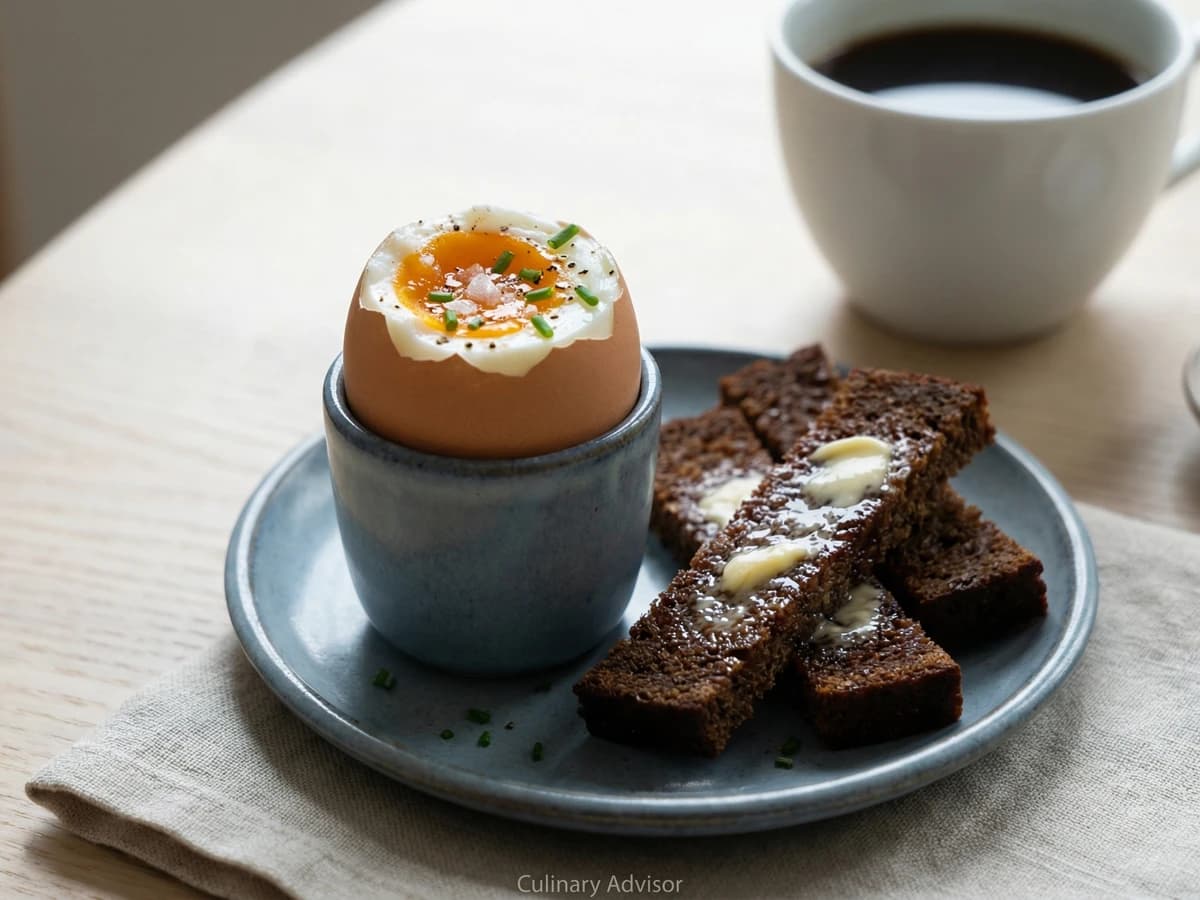
The simplest Danish breakfast there is. A soft-boiled egg in its cup with buttered rugbrod cut into soldiers for dipping, strong coffee alongside, and nothing else asking for your attention.

Chef Freja
Danish heart waffles with browned butter and cardamom, crisp at the edges and soft inside, served warm with whipped cream and berry jam. The smell of a Sunday afternoon in any Danish kitchen.