
Chef Freja
Aebleskiver
Round Danish pancake balls turned in a cast-iron pan, fluffy inside and golden outside, dusted with powdered sugar and dipped in raspberry jam. The taste of a Danish December.
A cooking platform built around craft, culture, and the stories behind what we eat.

Created by Chef Freja
A thick Danish farmhouse egg cake set golden in the pan with crispy bacon and chives, cut in wedges at the table and served with rugbrod, sliced tomatoes, and mustard. Jutland weeknight cooking at its most honest.
Aeggekage is Jutland in a skillet. A weeknight dish from the farms of the Danish mainland, where eggs were always close, bacon hung in the smokehouse, and chives grew in a pot by the kitchen door. You came in from the fields, the pan went on the stove, and within half an hour the whole household was sitting down to something warm and generous that had been cooked with love and almost nothing else.
This is not an omelette. It is thicker, taller, held together by a spoonful of flour in the batter and finished slowly under a lid so the centre stays just-set, like a good custard. The bacon goes on top, not inside. The chives come at the end, raw and green and sharp against the rich eggs. You serve it straight from the pan with sliced tomatoes and dark rugbrod, and everyone reaches in and cuts their own wedge. That is the whole ceremony.
The two things that matter most are the bacon and the finish. The bacon has to render slowly so it goes crisp without burning, and the eggs have to stop cooking while they are still tender. I'll walk you through both so you know exactly what to look for. This is one of the simplest things in the Danish repertoire, and once you've made it once, it becomes the dish you reach for when you have eggs, bacon, and thirty minutes. Which, in most Danish kitchens, is most evenings.
Aeggekage comes out of the rural kitchens of Jutland, where a thick skillet egg cake served directly from the pan was the kind of meal that fed a farming family after a long day without demanding much from whoever was cooking. The addition of a small amount of flour to the egg mixture is the specifically Danish detail, a trick passed down through farmhouse cooks to give the cake enough structure to hold its height. By the early twentieth century, aeggekage had migrated from farm kitchens into the Copenhagen lunch restaurants, where it earned its place on the menu as one of the few hot dishes served alongside the cold smorrebrod, usually under the name stor aeggekage, the big egg cake, because at the table it was always meant to be shared.
Quantity
8
Quantity
150ml
Quantity
2 tablespoons
Quantity
1/2 teaspoon
Quantity
freshly ground, to taste
Quantity
250g
in lardons or strips
Quantity
30g
Quantity
large bunch
snipped
Quantity
4
sliced thick
Quantity
thick slices, to serve
Quantity
to serve
| Ingredient | Quantity |
|---|---|
| large eggs | 8 |
| whole milk | 150ml |
| plain flour | 2 tablespoons |
| fine sea salt | 1/2 teaspoon |
| black pepper | freshly ground, to taste |
| thick-cut smoked baconin lardons or strips | 250g |
| unsalted butter | 30g |
| chivessnipped | large bunch |
| ripe tomatoessliced thick | 4 |
| dark rugbrod | thick slices, to serve |
| good mustard (optional) | to serve |
Lay the bacon into a cold heavy frying pan, around 24cm across, and set it over a medium heat. Starting from cold lets the fat render slowly, which is what gives you bacon that is crisp all the way through rather than burned on the outside and soft in the middle. Cook gently until the lardons are deep golden and the fat has pooled in the pan, about eight minutes. Lift the bacon out with a slotted spoon onto a plate. Pour off most of the fat but leave a thin film behind. That film carries the smoke into the eggs.
While the bacon cooks, whisk the eggs in a large bowl with the milk, flour, salt, and a few turns of pepper. The flour is the Jutland detail. Just two tablespoons, whisked smooth, gives the aeggekage its body and lets it stay tall in the pan instead of collapsing into a soft omelette. Whisk until the batter is even and pale. A few small lumps of flour will dissolve as it cooks.
Add the butter to the pan with the bacon film and let it foam over a medium-low heat. When the foam begins to smell nutty, pour in the egg batter all at once. Let it sit undisturbed for about a minute, then draw a spatula slowly across the bottom of the pan in wide arcs, letting raw egg run underneath. Do this for two or three minutes, then stop. You want the bottom set, the edges firming, and the top still loose and glossy. Stirring any longer turns it into scrambled eggs, and that is not the dish you want.
Turn the heat to low, cover the pan with a lid or a plate, and let the aeggekage finish by gentle steam for five to seven minutes. The top should set to a pale yellow with no shine left, but the centre should still feel tender when you press it. An aeggekage that is cooked hard is a sad thing. You are looking for just-set, the way a good custard is just-set. You'll know when it's right.
Scatter the crisp bacon back across the top of the aeggekage in an even layer. Shower it generously with the snipped chives, so the whole surface goes green and smoky and golden at once. Bring the pan straight to the table. Cut into thick wedges and serve with sliced tomatoes, rugbrod, and a little mustard on the side. The rugbrod is not optional. It is the floor under the meal. Tak for mad.
1 serving (about 365g)
Culinary guides, cultural storytelling, and the editorial depth that makes cooking meaningful.
Discover Culinary ExplorerChef Freja
Round Danish pancake balls turned in a cast-iron pan, fluffy inside and golden outside, dusted with powdered sugar and dipped in raspberry jam. The taste of a Danish December.
Chef Freja
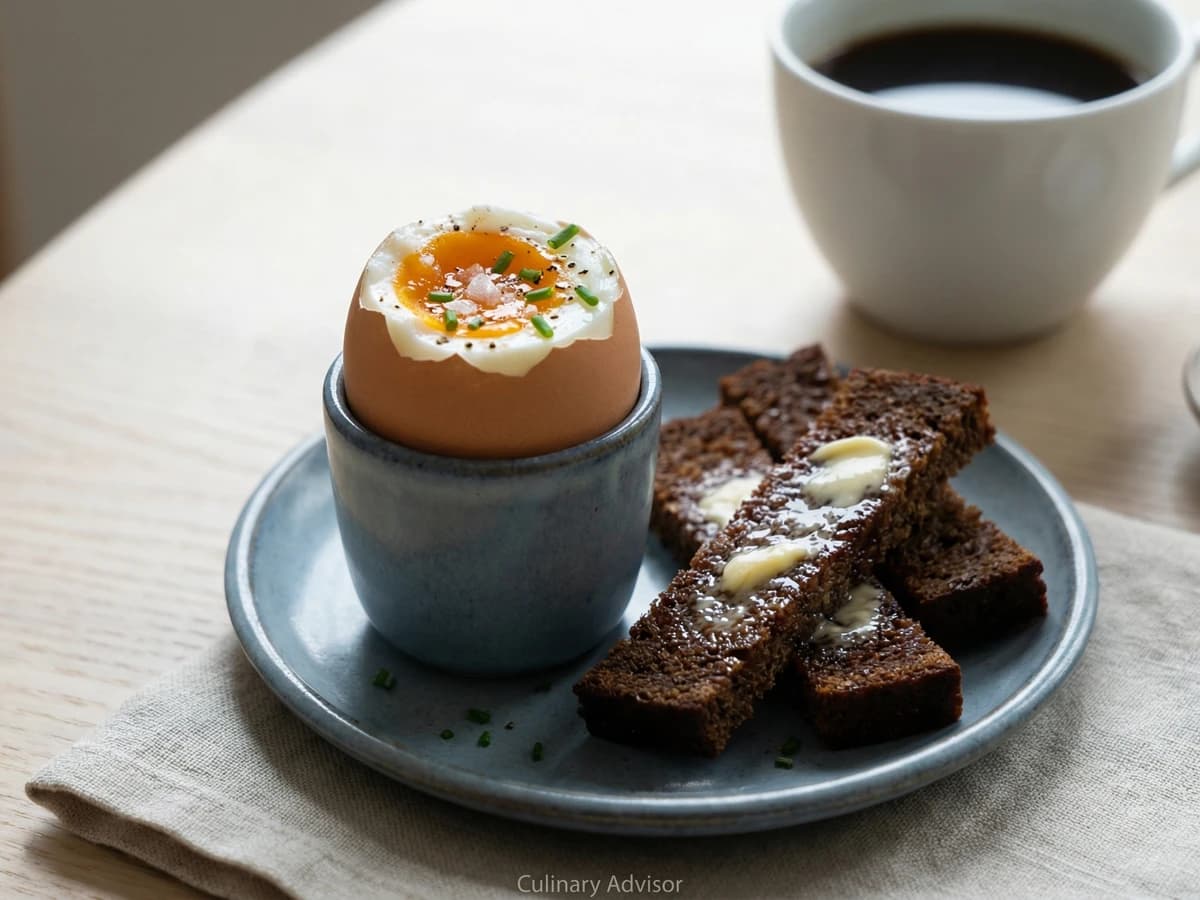
The simplest Danish breakfast there is. A soft-boiled egg in its cup with buttered rugbrod cut into soldiers for dipping, strong coffee alongside, and nothing else asking for your attention.

Chef Freja
Danish heart waffles with browned butter and cardamom, crisp at the edges and soft inside, served warm with whipped cream and berry jam. The smell of a Sunday afternoon in any Danish kitchen.
Chef Freja
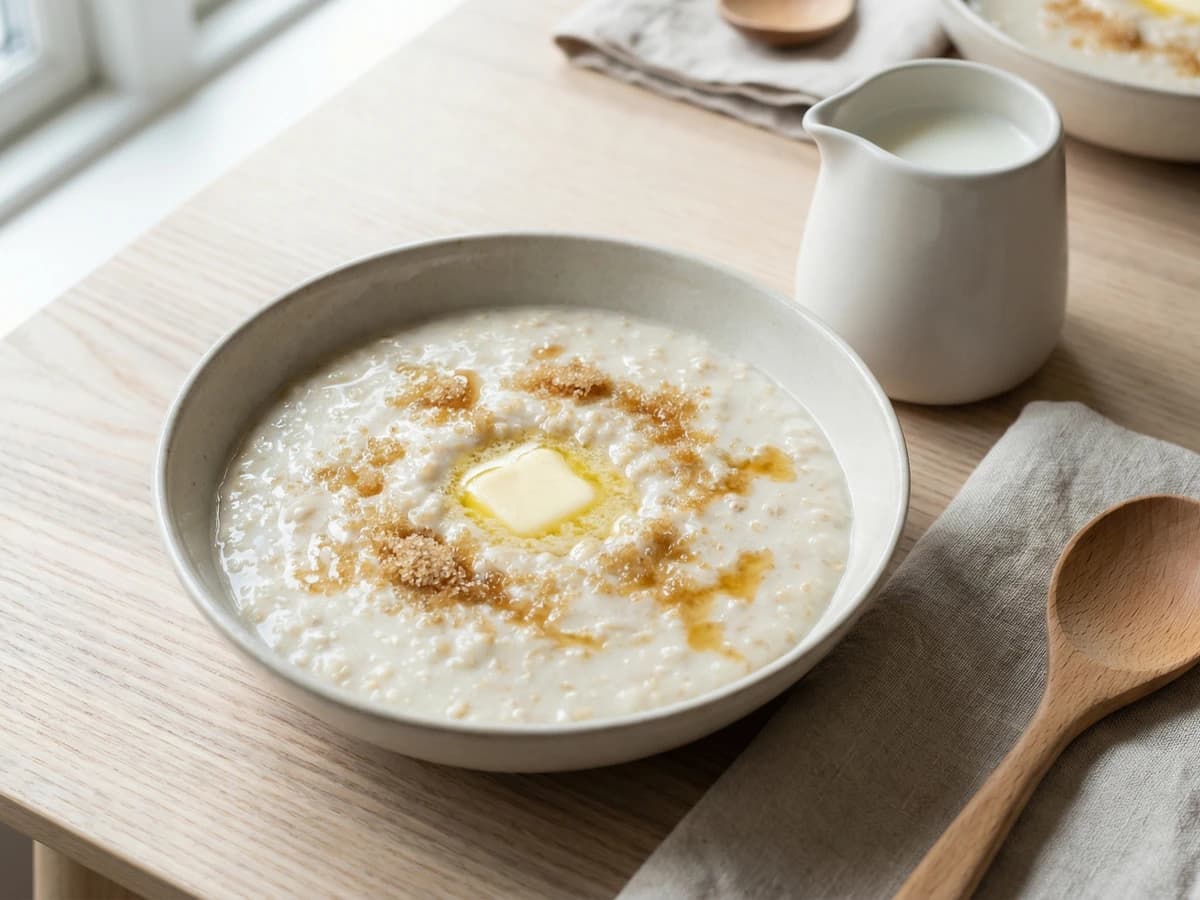
Danish oatmeal porridge simmered slowly in milk with a pinch of salt, finished with a golden pool of butter and brown sugar at the center. The breakfast that carries Danish winter mornings.