Chef Lupita
Acúmara Tatemada al Comal
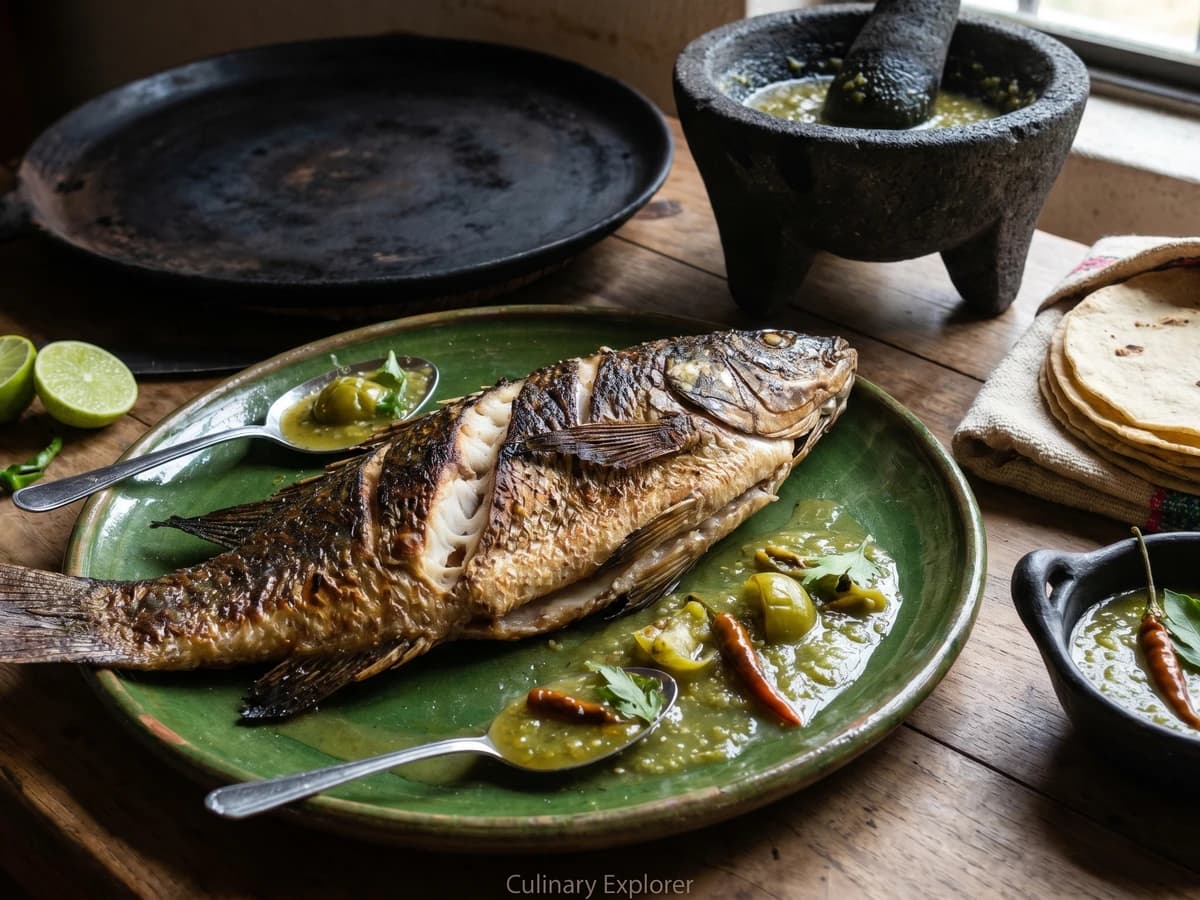
Michoacán's Lake Pátzcuaro acúmara, a whole kurucha from the lago tatemada on a comal de leña and served with chile perón atápakua, corn tortillas, and P'urhépecha discipline.
A cooking platform built around craft, culture, and the stories behind what we eat.
Created by
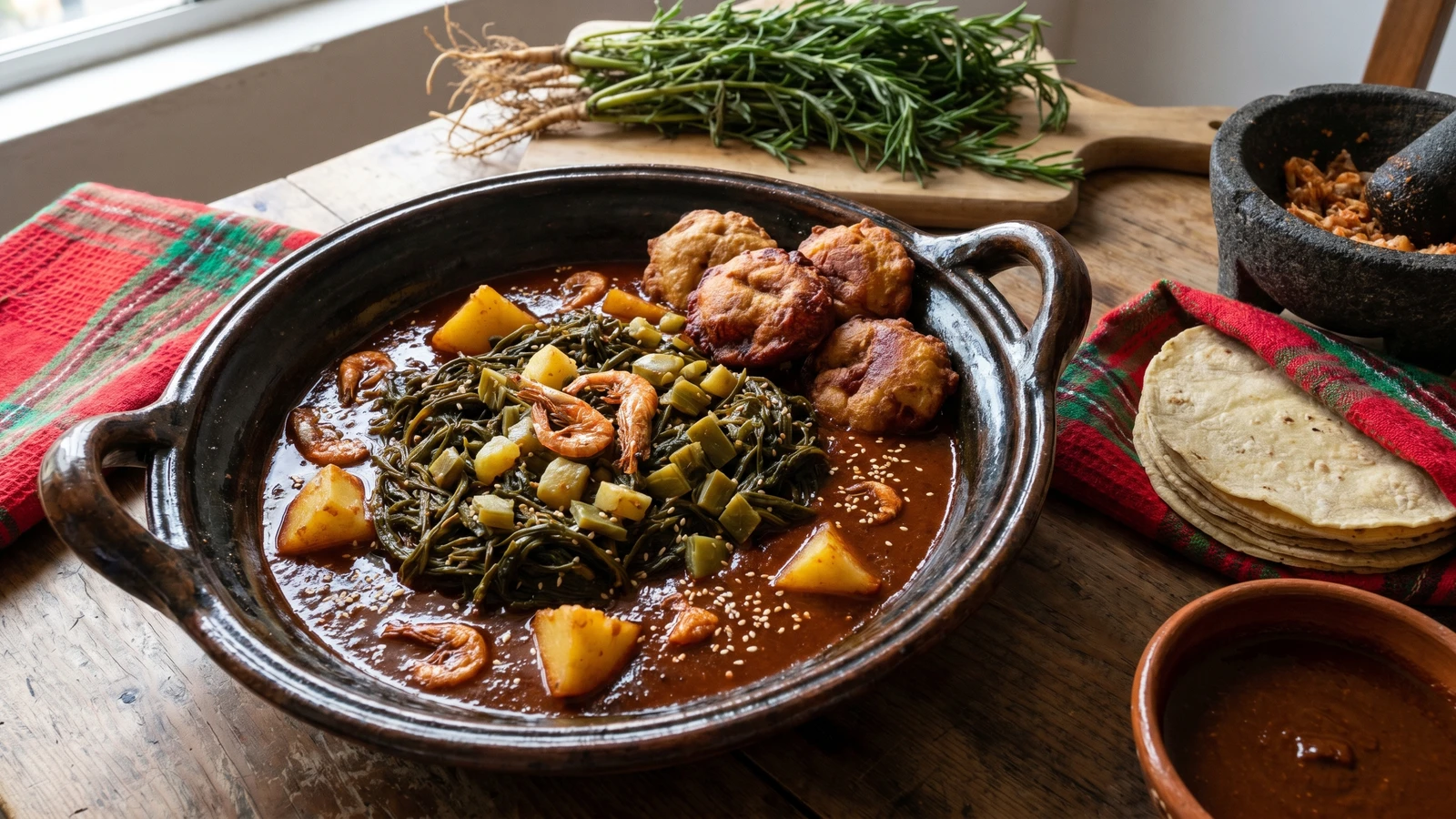
Mexico City's Christmas Eve and Lenten cazuela of wild romeritos greens, nopales, and potatoes drowned in mole poblano, with crisp dried-shrimp fritters folded through at the last minute.
Revoltijo is Ciudad de México's dish. Specifically a centro and Estado de México dish, and it lives on two tables every year: Nochebuena and Viernes Santo. If you grew up in the capital, you know the smell, mole frying in lard, the wet green tang of romeritos coming out of the colander, the salty brine of camarón seco being ground in a molcajete. That smell is December.
The romeritos themselves are the heart of it. They are not rosemary, despite the name, and they are not spinach. They are a wild, succulent, salty-leaved plant (Suaeda torreyana) that grows around the salt flats of the central valleys and shows up at the mercado from late November through Easter. Their season is the dish's season. When the romeritos are gone, the dish is gone. Mexican grandmothers cook with what the mercado is selling today.
My mother was from Jalisco and she did not grow up with revoltijo. She married into it. Her notebook has a page with my paternal grandmother's instructions copied in pencil, including a note in the margin that says 'no escatimes en el camarón seco', do not skimp on the dried shrimp. She was right. The ground camarón seco is what seasons the mole. It is the salt, the umami, the thread that ties the wild greens to the chiles to the fritters. Without it, you have mole with vegetables. With it, you have revoltijo.
This is a fasting dish that does not taste like a fasting dish. The Church forbade meat during Lent and on Christmas Eve vigil, so the cooks of central Mexico built a plate around shrimp, eggs, and wild greens that is richer and more layered than most meat dishes will ever be. Saber cocinar es saber vivir, especially when the calendar tells you what you cannot eat.
Revoltijo is the colonial-era fusion of pre-Columbian and Iberian fasting traditions, born in the kitchens of central New Spain where the indigenous mole, romeritos (called 'romerillos' in 16th-century chronicles), and nopal met the Spanish liturgical calendar's prohibition on meat during Advent and Lent. The dried shrimp came from the salt-cured fisheries of the Pacific and Gulf coasts, traded inland for centuries before Spanish contact and adopted into the Catholic fasting repertoire because shrimp, classified as a fish, was permitted on vigil days. The dish's name, from the Spanish 'revolver' (to stir together), refers to the way the cook folds everything into a single cazuela at the end, a method documented in 19th-century Mexico City cookbooks as the defining preparation of Christmas Eve and Holy Week in the capital.
Quantity
2 pounds
thick stems removed, washed in three changes of water
Quantity
3 medium
despined and diced into 1/2-inch pieces
Quantity
4 medium
peeled and cut into 3/4-inch chunks
Quantity
1 1/2 cups
homemade or a serious brand like Mayordomo or Don Pancho
Quantity
5 cups
warmed
Quantity
3 tablespoons
Quantity
1/2 medium
Quantity
2
Quantity
to taste
Quantity
4 ounces
heads and tails removed for the fritters
Quantity
1 ounce
ground to a powder for the broth
Quantity
4
separated, at room temperature
Quantity
2 tablespoons
Quantity
for frying the tortitas
Quantity
for serving
Quantity
for serving
| Ingredient | Quantity |
|---|---|
| fresh romeritosthick stems removed, washed in three changes of water | 2 pounds |
| nopalesdespined and diced into 1/2-inch pieces | 3 medium |
| yellow waxy potatoespeeled and cut into 3/4-inch chunks | 4 medium |
| mole poblano pastehomemade or a serious brand like Mayordomo or Don Pancho | 1 1/2 cups |
| chicken brothwarmed | 5 cups |
| manteca de cerdo (pork lard) | 3 tablespoons |
| white onion | 1/2 medium |
| garlic cloves | 2 |
| kosher salt | to taste |
| dried shrimp (camarón seco)heads and tails removed for the fritters | 4 ounces |
| additional dried shrimpground to a powder for the broth | 1 ounce |
| large eggsseparated, at room temperature | 4 |
| all-purpose flour | 2 tablespoons |
| neutral oil | for frying the tortitas |
| toasted sesame seeds (optional) | for serving |
| hand-pressed corn tortillas (optional) | for serving |
Romeritos hold dirt like nothing else in the mercado. Pick through the bunches and pull off any woody stems, keeping the tender green needles and the soft side shoots. Submerge them in a large bowl of cold water, swish, and lift them out into a colander. Do this three times until the water at the bottom of the bowl is clean. If you skip this step, you will eat grit. There is no recovering from it later.
Place the diced nopales in a pot with cold water to cover, a quarter onion, one garlic clove, and a teaspoon of salt. Bring to a boil and cook for 12 to 15 minutes, until tender and the slime is gone. Drain in a colander, rinse with cold water, and shake dry. Cooking them separately is the difference between clean nopales and a slimy pot.
In a second pot of well-salted boiling water, cook the potato chunks until just tender, about 10 minutes. Lift them out with a slotted spoon. Drop the cleaned romeritos into the same water and blanch for 2 minutes, just until they collapse and turn deep green. Drain immediately and reserve. Do not overcook them. Romeritos that have been simmered to death lose the wild grassy flavor that makes this dish what it is.
In a wide cazuela or heavy pot, melt the manteca over medium heat. Add the mole poblano paste and fry it, stirring constantly with a wooden spoon, for 4 to 5 minutes. The paste will darken and the kitchen will smell of toasted chile, sesame, and chocolate. La manteca es el sabor. Skip this step and your mole tastes raw and one-dimensional.
Whisk in the warmed chicken broth, one cup at a time, until the mole is the consistency of heavy cream. Stir in the ground dried shrimp powder. That powder is the salt of this dish, so taste before you reach for the salt jar. Simmer gently for 15 minutes, stirring often. The mole should coat the back of a spoon and leave a clear line when you drag your finger through.
In a clean, dry bowl, beat the egg whites with a pinch of salt until they hold stiff peaks. The bowl and the whisk must be completely dry, no trace of yolk in the whites, or they will not climb. Beat the yolks separately with the flour until smooth and pale. Fold the yolks into the whites in three additions, gently, with a rubber spatula. You want a cloud, not a paste. Do not deflate them.
Heat half an inch of neutral oil in a skillet to 350F. Drop scant tablespoons of the egg batter into the hot oil, then press 3 or 4 cleaned dried shrimp into the top of each one. Fry for about a minute and a half on the first side, until golden and puffed, then flip and cook another minute. Lift them out with a slotted spoon onto a plate lined with paper. Work in batches. Crowding the pan drops the oil temperature and the tortitas come out greasy.
Add the drained romeritos, nopales, and potatoes to the simmering mole. Fold gently with a wooden spoon so the potatoes do not break. Let everything warm through for 5 minutes, then slip the tortitas de camarón into the cazuela. Spoon some mole over each one so the batter drinks it in. Cook for 3 more minutes, no longer. The tortitas should soften slightly at the edges but still hold their shape.
Bring the cazuela to the table. Sprinkle toasted sesame seeds over the top and serve with a stack of hot corn tortillas wrapped in a servilleta. Make sure every plate gets greens, a chunk of potato, a piece of nopal, and at least one tortita. This is a Christmas Eve plate and a Holy Week plate. It feeds memory as much as it feeds the table. Recetas probadas y garantizadas.
1 serving (about 510g)
Culinary guides, cultural storytelling, and the editorial depth that makes cooking meaningful.
Discover Culinary ExplorerChef Lupita
Michoacán's Lake Pátzcuaro acúmara, a whole kurucha from the lago tatemada on a comal de leña and served with chile perón atápakua, corn tortillas, and P'urhépecha discipline.

Chef Lupita
Puebla's weekday adobo of pork shoulder braised in a thick guajillo and ancho sauce sharpened with vinegar, cumin, and clove. The deep red of a market spice stall, the dish a poblana cooks without thinking.

Chef Lupita
Loreto's pit-roasted clams, planted hinge-up in beach sand and tatemadas under a fast fire of dried romerillo brush, the resinous Baja desert shrub that gives this dish its smoke.

Chef Lupita
Oaxaca's eighth mole, the silky, almond-and-cinnamon almendrado, served over poached chicken. Mild, sweet, restrained, and a quiet rebuttal to anyone who thinks Mexican food has to be hot to be Mexican.