
Chef Lupita
Aceite de Chiltepin Bajacaliforniano
Baja California's wild chiltepin steeped in olive oil with garlic, orejon, and lime peel, until the oil turns ruby-amber and carries the slow, sneaky burn of the desert coast.
A cooking platform built around craft, culture, and the stories behind what we eat.
Created by
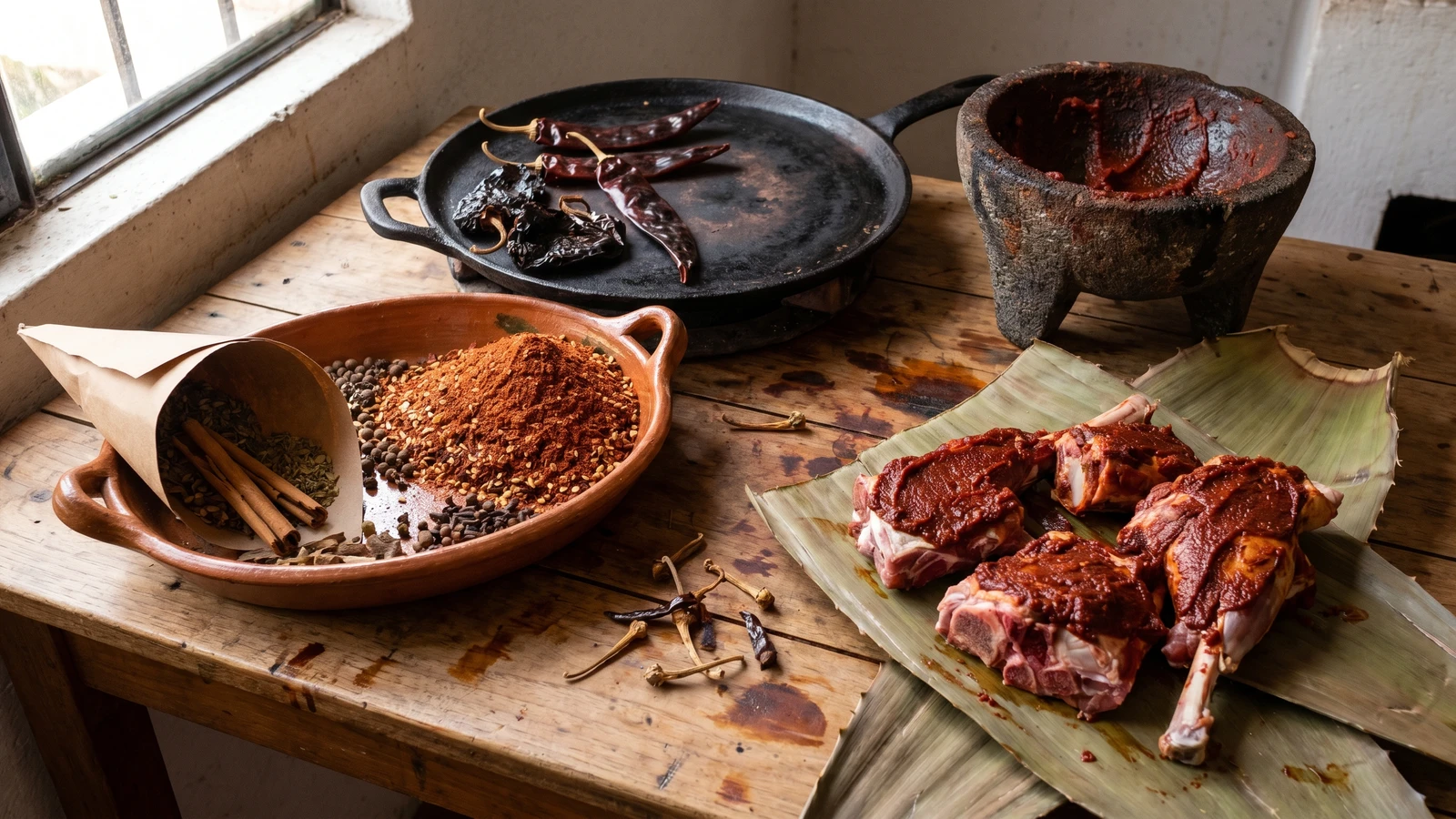
Aguascalientes' dry recado for cordero birria, built from toasted guajillo, ancho, jengibre, clavo, oregano, and salt before the meat is wrapped and steamed slowly.
Aguascalientes sits in the Bajio, small on the map and stubborn at the table. Its birria is not Jalisco's birria, though people confuse them because they see red chile and stop thinking. Here the recado is rubbed onto cordero, packed tight, wrapped, and cooked slowly until the meat carries the chile and spice all the way through.
The chiles do the structure: chile guajillo for clean red color and light fruit, chile ancho for depth and a little sweetness. The jengibre and clavo are what make this Aguascalientes table recognizable, especially in the birrias served for family celebrations and feria days. A señora in the Mercado Teran once corrected my hand when I reached for too much cumin. "No es barbacoa del norte," she told me. She was right.
This recado is dry first. Toast, cool, grind, then rub it into the cordero with just enough vinegar or pulque to help it cling when you are ready to cook the birria. Do not soak the chiles for this version. Do not turn it into a blender salsa. The powder has to bite into the meat before the long cooking softens everything. Cada estado, su propia cocina.
Birria is most strongly associated with Jalisco, where goat became the emblematic meat after Spanish colonization brought caprines to western Mexico in the 16th century, but neighboring Bajio states developed their own versions with lamb, mutton, and regional spice balances. Aguascalientes' celebration birrias often show the influence of central Mexican barbacoa technique, with meat wrapped and cooked slowly, while keeping a red chile recado closer to the western birria family. The use of warming spices such as clavo, canela, and jengibre reflects colonial trade routes that moved imported spices inland through markets long before modern state borders fixed culinary identity.
Quantity
8
stemmed, seeded, and wiped clean
Quantity
3
stemmed, seeded, and wiped clean
Quantity
1 tablespoon
Quantity
1 teaspoon
Quantity
8
Quantity
5
Quantity
1 small
broken into pieces
Quantity
1 teaspoon
Quantity
2
crumbled
Quantity
1 1/2 tablespoons
Quantity
4 large
peeled and finely grated
Quantity
2 tablespoons
added only when rubbing the meat
| Ingredient | Quantity |
|---|---|
| dried chile guajillostemmed, seeded, and wiped clean | 8 |
| dried chile anchostemmed, seeded, and wiped clean | 3 |
| dried Mexican oregano | 1 tablespoon |
| whole cumin seed | 1 teaspoon |
| whole black peppercorns | 8 |
| whole cloves | 5 |
| Mexican cinnamon stickbroken into pieces | 1 small |
| ground jengibre | 1 teaspoon |
| bay leavescrumbled | 2 |
| kosher salt | 1 1/2 tablespoons |
| garlic clovespeeled and finely grated | 4 large |
| apple cider vinegar or pulqueadded only when rubbing the meat | 2 tablespoons |
Open the chile guajillo and chile ancho with your fingers or kitchen scissors. Remove stems, seeds, and loose veins. Wipe the skins with a barely damp cloth if they are dusty. Do not rinse them under water. You want dry chiles for a dry recado.
Heat a dry comal over medium. Toast the guajillos first, about 20 to 25 seconds per side, pressing them flat with a spatula until the skin darkens slightly and smells fruity. Toast the anchos separately, about 25 to 30 seconds per side. They should become flexible and fragrant, never black. Burned chile turns bitter and will punish the whole batch.
Lower the heat. Add the oregano, cumin seed, peppercorns, cloves, and cinnamon to the comal. Move them constantly for 45 to 60 seconds, just until the oregano smells sharp and the clove opens up. Pull them off the heat before the oregano goes brown. This is where the recado gets its Aguascalientes spine.
Spread the toasted chiles and spices on a plate and let them cool for 5 minutes. Warm chiles trap moisture in the grinder and clump. A proper recado should fall through your fingers like coarse red earth, not paste itself to the blade.
Tear the cooled chiles into pieces and grind them with the toasted spices, jengibre, bay leaves, and salt in a spice grinder or clean molino until fine. Work in batches if needed. Shake the grinder between pulses so the ancho skins do not sit stubbornly on top. The finished recado should be brick red, aromatic, and even.
Transfer the ground recado to a bowl. Rub in the grated garlic with your fingers until the mixture looks like damp sand. If you are storing the recado more than one day, leave the garlic out and add it fresh when you season the meat. Garlic is powerful, but old garlic in a spice mix turns tired.
For birria, use about 1 cup recado for 4 to 5 pounds of bone-in cordero shoulder, ribs, or leg pieces. Moisten the recado with the vinegar or pulque, just enough to help it cling, then pack it onto the meat with your hands. Cover and refrigerate at least 8 hours, preferably overnight. The salt and chile need time to enter the meat. Así se hace y punto.
Line a heavy pot or steamer with softened pencas de maguey or a double layer of banana leaf if maguey is impossible to find. Add the rubbed cordero, wrap it tightly, and cook low and slow until the meat pulls from the bone. This recipe is the recado, not the whole birria, but understand the principle: the rub belongs to long covered cooking, not a quick skillet.
1 serving (about 20g)
Culinary guides, cultural storytelling, and the editorial depth that makes cooking meaningful.
Discover Culinary ExplorerChef Lupita
Baja California's wild chiltepin steeped in olive oil with garlic, orejon, and lime peel, until the oil turns ruby-amber and carries the slow, sneaky burn of the desert coast.

Chef Lupita
Puebla's Lenten convent adobo, a brick-red vinegar chile paste of ancho, guajillo, garlic, oregano, and comino made to dress fish for the meatless calendar.
Chef Lupita
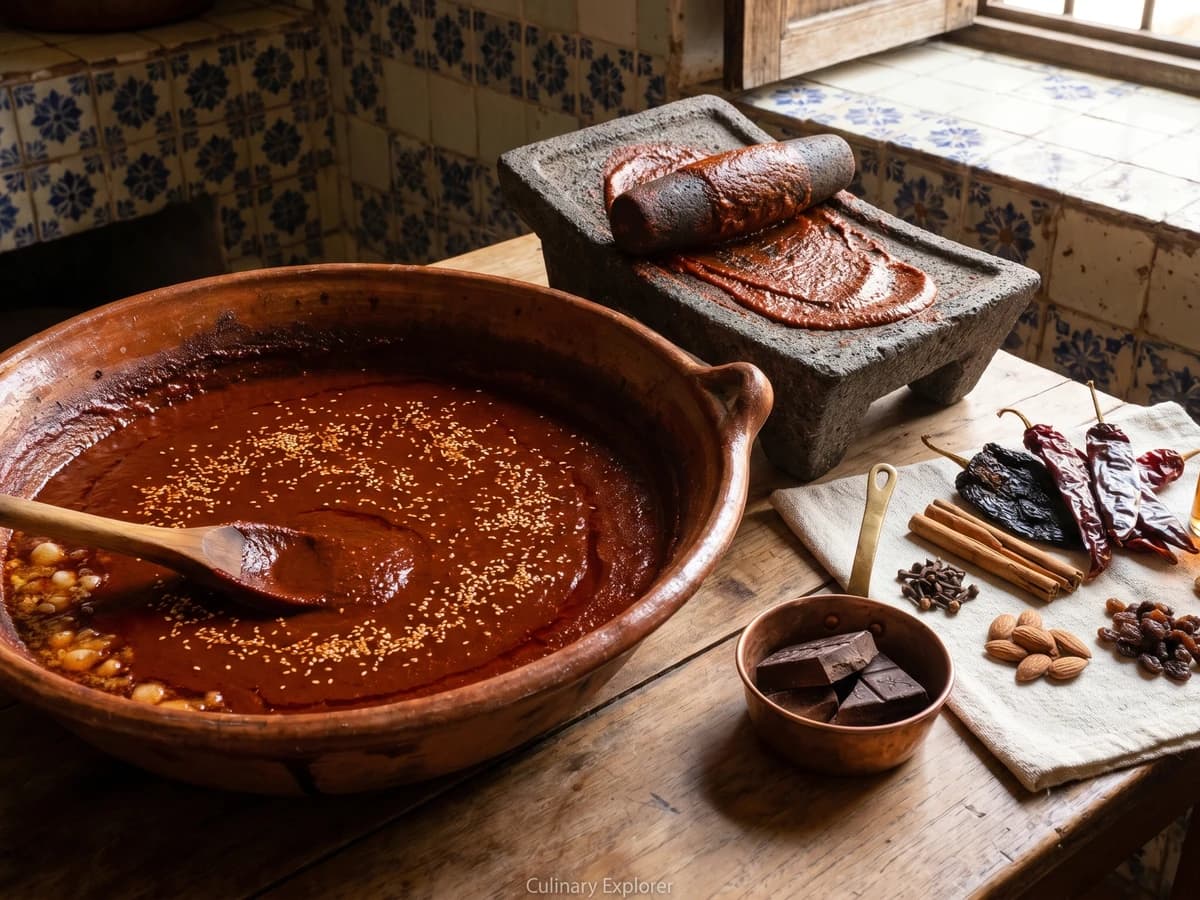
Zacatecas' wedding-table adobo, built from toasted guajillo and ancho, piloncillo, sour orange, chocolate, canela, clavo, almonds, sesame, and lard.

Chef Lupita
Puebla's convent kitchens built this adobo with ancho, guajillo, jerez, almonds, raisins, clove, and lard, a baroque marinade that stains pork loin and finishes as the sauce.