Chef Isabel
Abanico Ibérico a la Plancha
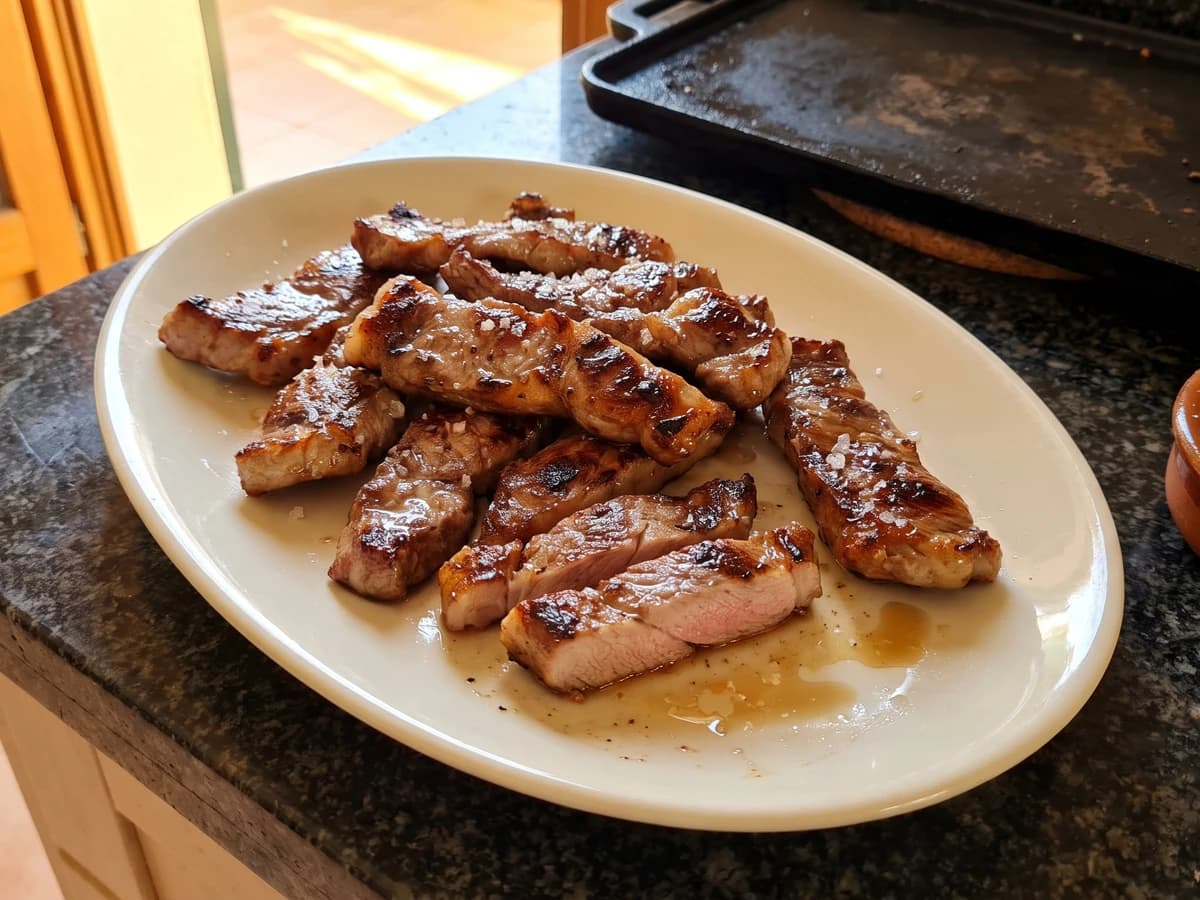
Extremadura's dehesa gives us this fan-shaped, marbled rib cut: salt it at the last moment, lay it on a fierce plancha, and count in seconds so the centre stays juicy.
A cooking platform built around craft, culture, and the stories behind what we eat.
Created by
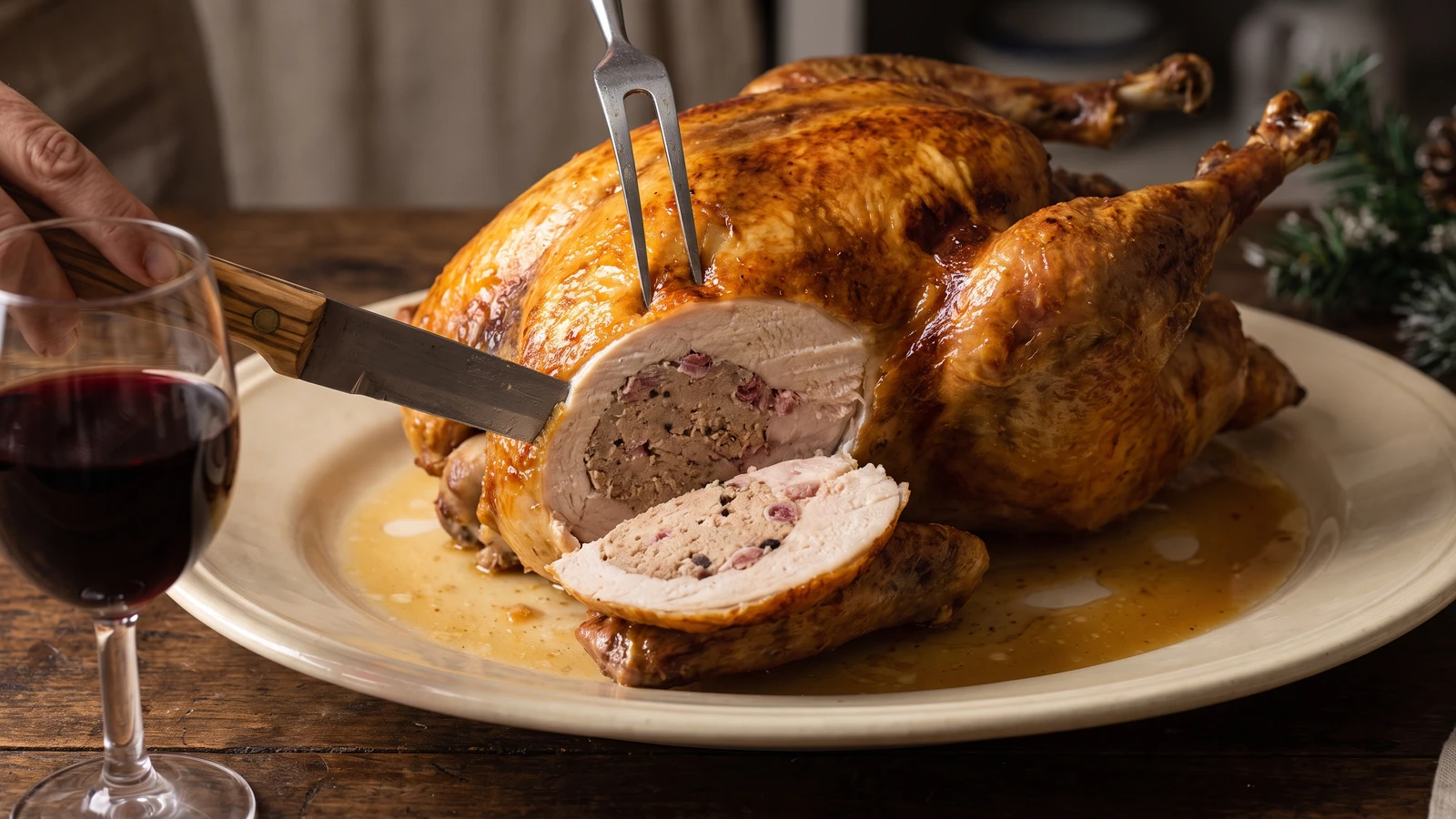
Castilla y León’s Christmas poulard, boned whole and packed with pork, jamón and black truffle, roasts slowly into a golden centrepiece that rests firm and carves into generous, tidy slices.
Pularda rellena is Castilian celebration cooking, especially at Christmas in Castilla y León. A fine, fattened young hen is opened and boned whole, packed with a close-grained stuffing of pork, jamón serrano and black winter truffle, then roasted until the skin turns burnished gold. This is the savory Castilian line, not the prune-and-pine-nut filling found in much Catalan Christmas poultry.
The work that decides the dish is the shaping. Keep the skin in one sheet apart from the opening along the back, carry the stuffing into the leg cavities, then sew and tie the bird into a firm, even parcel. Empty pockets make the filling fall away when you carve, while too much stuffing splits the skin. Pésalo, no lo adivines. Use the measured amount, close it patiently and let the strings do their work.
If you can't find a poulard, use a capon of the same weight. Its meat is a little firmer and fuller in flavor, but it holds the stuffing properly and belongs at the same sort of feast. Fresh black truffle is best; a good whole truffle preserved in its own juice gives a quieter aroma but remains a sound household substitute. Truffle-flavored oil is perfume, not truffle. Leave it in the cupboard.
Give the cooked bird a full thirty-five minutes before carving. That rest sets the stuffing and keeps the juices in the slice instead of across the board. My Margin has the warning written plainly: Christmas lunch will wait for the pularda, but the pularda won't mend itself after an impatient knife. Siempre sale, si lo sigues.
In Castilla y León, poultry fattened for winter feast days met two prized parts of the regional larder: cured pork from the matanza, the household pig slaughter, and black truffle from the cold uplands of Soria. Pularda names a young hen specially fattened for the table, costly enough to be kept for celebrations rather than ordinary meals. Boning and stuffing made that fine bird go further, producing equal slices in which every guest received poultry, pork, jamón and truffle.
Quantity
1, weighing 3.2 to 3.6kg before boning
deboned through the back with the skin kept intact; bones reserved
Quantity
26g
divided
Quantity
6g
divided
Quantity
70g
crust removed and torn into small pieces
Quantity
100ml
Quantity
550g
coarsely minced and well chilled
Quantity
120g
skin removed and finely diced
Quantity
150g
cut into 5mm dice
Quantity
2, about 100g without shells
Quantity
25g fresh, or 20g preserved plus 15ml of its juice
cleaned and finely chopped
Quantity
40ml
Quantity
1g
Quantity
40g
softened
Quantity
250g
cut into thick wedges
Quantity
150g
cut into large pieces
Quantity
150ml
Quantity
500ml
| Ingredient | Quantity |
|---|---|
| whole poulard, or a same-weight capondeboned through the back with the skin kept intact; bones reserved | 1, weighing 3.2 to 3.6kg before boning |
| fine sea saltdivided | 26g |
| freshly ground black pepperdivided | 6g |
| day-old white country breadcrust removed and torn into small pieces | 70g |
| whole milk | 100ml |
| pork shouldercoarsely minced and well chilled | 550g |
| fresh pork bellyskin removed and finely diced | 120g |
| jamón serranocut into 5mm dice | 150g |
| large eggs | 2, about 100g without shells |
| fresh black winter trufflecleaned and finely chopped | 25g fresh, or 20g preserved plus 15ml of its juice |
| brandy de Jerez | 40ml |
| freshly grated nutmeg | 1g |
| rendered pork lardsoftened | 40g |
| onioncut into thick wedges | 250g |
| carrotcut into large pieces | 150g |
| dry white wine | 150ml |
| unsalted chicken stock | 500ml |
Ask the butcher to debone the poulard through the back and return the carcass, neck and other bones. If doing it yourself, keep the bird cold and place it breast-side down. Cut once from neck to tail along the backbone, then work a short boning knife against the ribs so no meat stays on the carcass. Dislocate the hip and shoulder joints, lift out the carcass, and tunnel down each leg, scraping the thigh and drumstick bones free without making new cuts through the skin. Remove the larger wing bones and wishbone in the same way. Refrigerate the opened bird at once.
Soak the bread in the milk for 10 minutes, then mash it into a soft panade, the bread-and-milk binder that keeps the filling juicy. Add the chilled pork shoulder, pork belly, jamón, eggs, truffle, brandy, nutmeg, 8g of the salt and 3g of the pepper. Mix firmly by hand for 60 to 90 seconds, just until the filling becomes tacky and holds together. Fry a 20g patty in a dry pan until cooked through, then taste it before filling the bird; jamón varies in salt, and the test saves an expensive surprise.
Lay the poulard skin-side down with the meat facing you. Season the inside evenly with 8g salt and 1g pepper. Press stuffing into the empty leg and wing cavities first, taking care not to stretch the skin. Spread the remainder over the centre in an even layer, leaving a 2cm border along the back opening. Press out visible air pockets, but don't force in more filling than the bird can hold.
Bring the two sides of the back opening together and sew them from tail to neck with uncoated cotton kitchen twine, taking stitches about 2cm apart. Turn the bird seam-side down, shape it into a regular oval and tie crosswise at 3cm intervals, firmly enough to hold the filling but not so tightly that the twine cuts the skin. Tie the legs neatly against the body. This close, even shape is what gives you clean slices; loose pockets separate, and an overfilled bird bursts.
Heat a conventional oven to 220°C, or a fan oven to 200°C. Scatter the onion and carrot in a heavy roasting tin and set the poulard on top, seam-side down. Rub the skin all over with the softened lard, then season with the remaining 10g salt and 2g pepper. Leave it out for 30 minutes while the oven heats, but no longer.
Pour the white wine and 150ml of the stock around the bird, keeping the liquid off the skin. Roast for 20 minutes, until the breast begins to take on a clear golden color. The hot start sets and colors the skin; the gentler roasting that follows cooks the thick stuffing without drying the fine breast meat.
Lower the oven to 165°C, or 145°C fan, and continue roasting. Baste every 30 minutes with the fat and juices from the tin, adding the remaining stock in 100ml portions whenever the vegetables threaten to catch. Begin checking after a further 1 hour 50 minutes. Push a probe thermometer through the back seam into the exact centre of the stuffing: it must reach 74°C, and the thickest leg meat must also be at least 74°C. Expect 2 hours 20 minutes to 2 hours 40 minutes of roasting in total. If the skin darkens too quickly, shield the breast loosely with foil.
Lift the poulard onto a warm platter, keeping the back seam underneath. Cover it loosely with foil without wrapping it tightly, and rest for 35 minutes. The filling firms as it rests and the juices settle back into the meat. Cut it immediately and even a well-tied bird will crumble.
Transfer the vegetables and roasting liquid to a saucepan, scraping every browned deposit from the tin. Simmer for 10 minutes, press the vegetables lightly against the side of the pan, then strain. Spoon away excess fat and reduce the liquid until about 350ml remains and it lightly coats a spoon. Taste before adding any salt; the jamón and concentrated juices usually provide enough.
Remove every length of trussing twine and the stitched thread from the back. With a long, sharp knife, carve the poulard crosswise into slices 1.5 to 2cm thick. Arrange them slightly overlapping on the platter, spoon a little roasting juice around them, and serve the rest separately. Each slice should show a complete ring of poultry around the close-grained pork, jamón and truffle filling.
1 serving (about 300g)
Culinary guides, cultural storytelling, and the editorial depth that makes cooking meaningful.
Discover Culinary ExplorerChef Isabel
Extremadura's dehesa gives us this fan-shaped, marbled rib cut: salt it at the last moment, lay it on a fierce plancha, and count in seconds so the centre stays juicy.
Chef Isabel
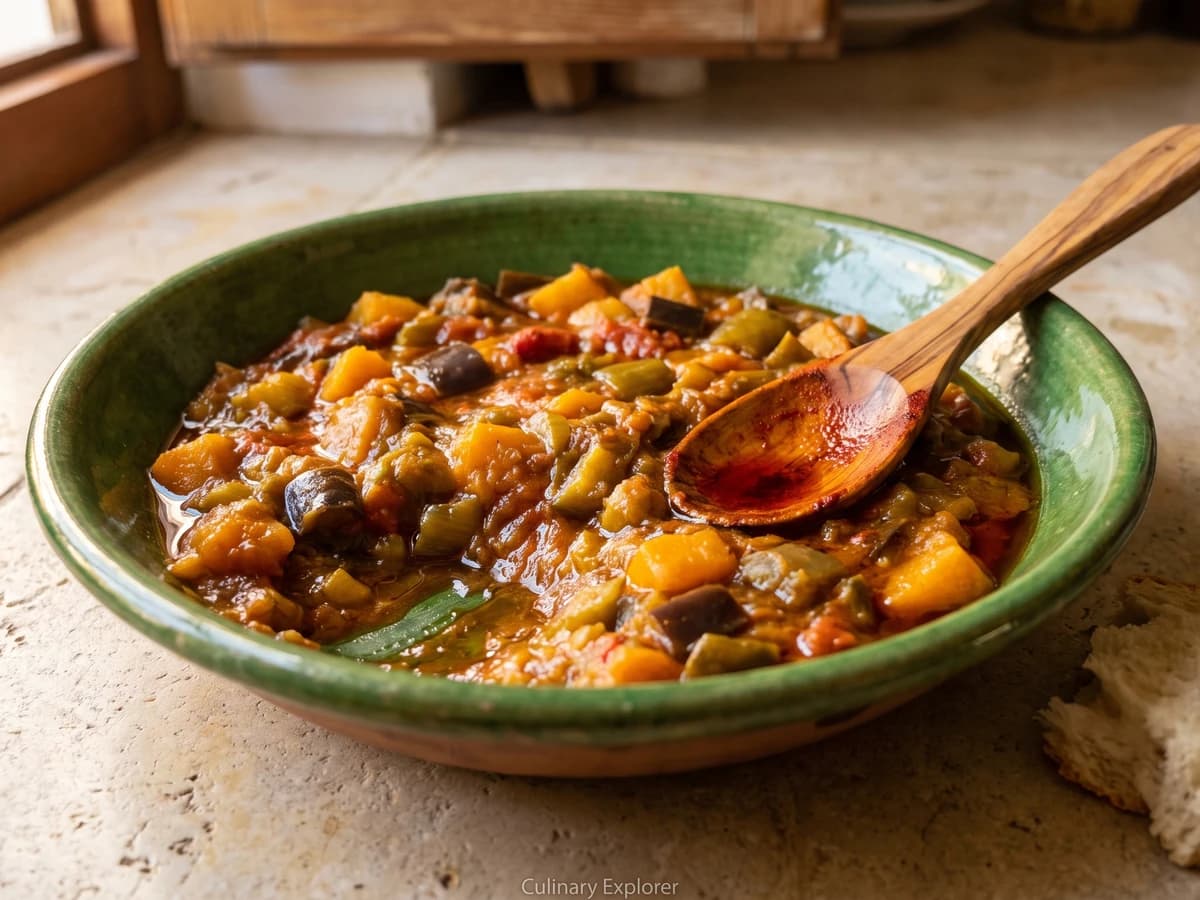
Alboronía is Andalucía's old pumpkin and aubergine stew, deepened with tomato, pimentón, and cumin, then cooked without hurry until the vegetables settle into a glossy, sweet, spoon-soft whole.

Chef Isabel
Aletría Murciana is Murcia's humble noodle guiso: fine fideos, pork ribs, potato, saffron, and a dark sweet sofrito. Get that base right and the pot knows where it's going.
Chef Isabel
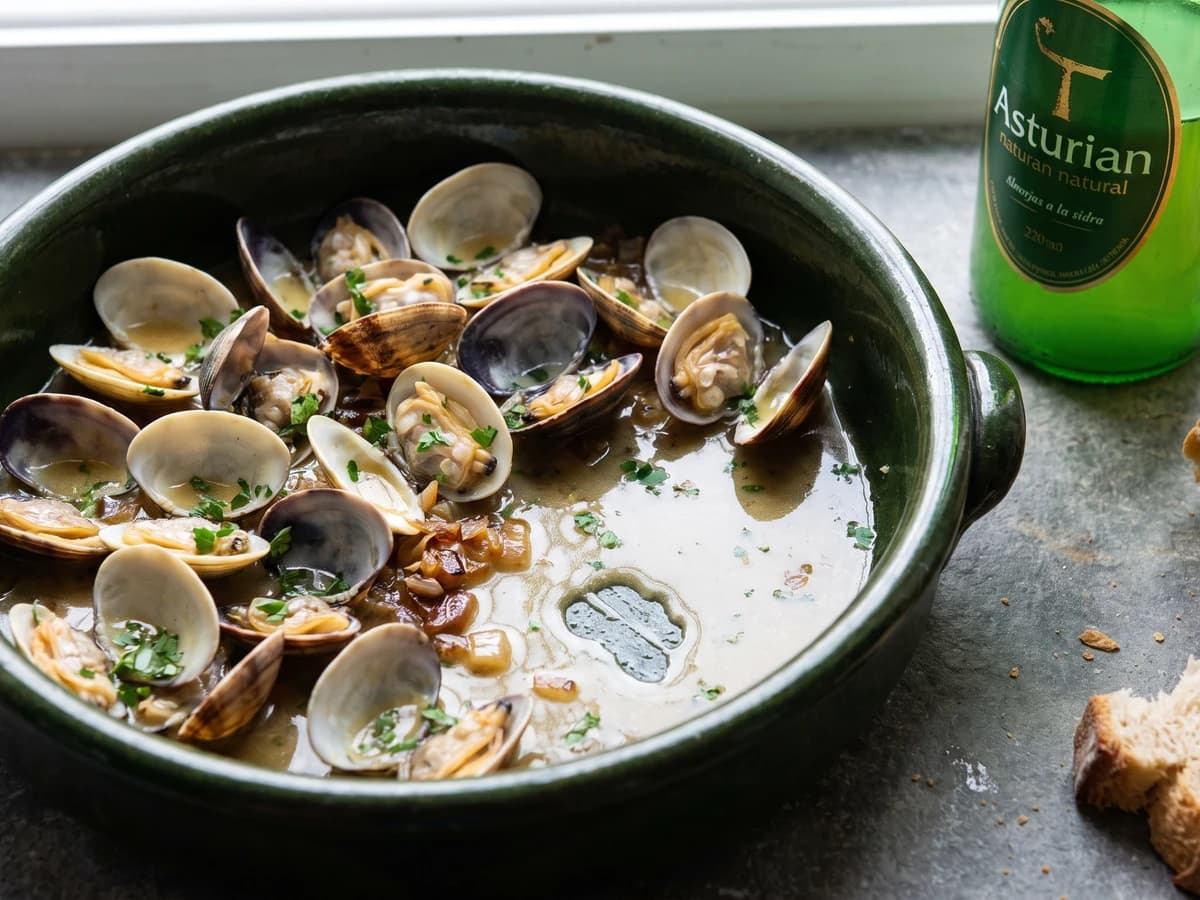
Asturias opens clams in tart natural cider over a slow onion and garlic sofrito, making a bright, briny sauce that asks for bread and rewards one rule: lift each clam as it opens.