Chef Isabel
Abanico Ibérico a la Plancha
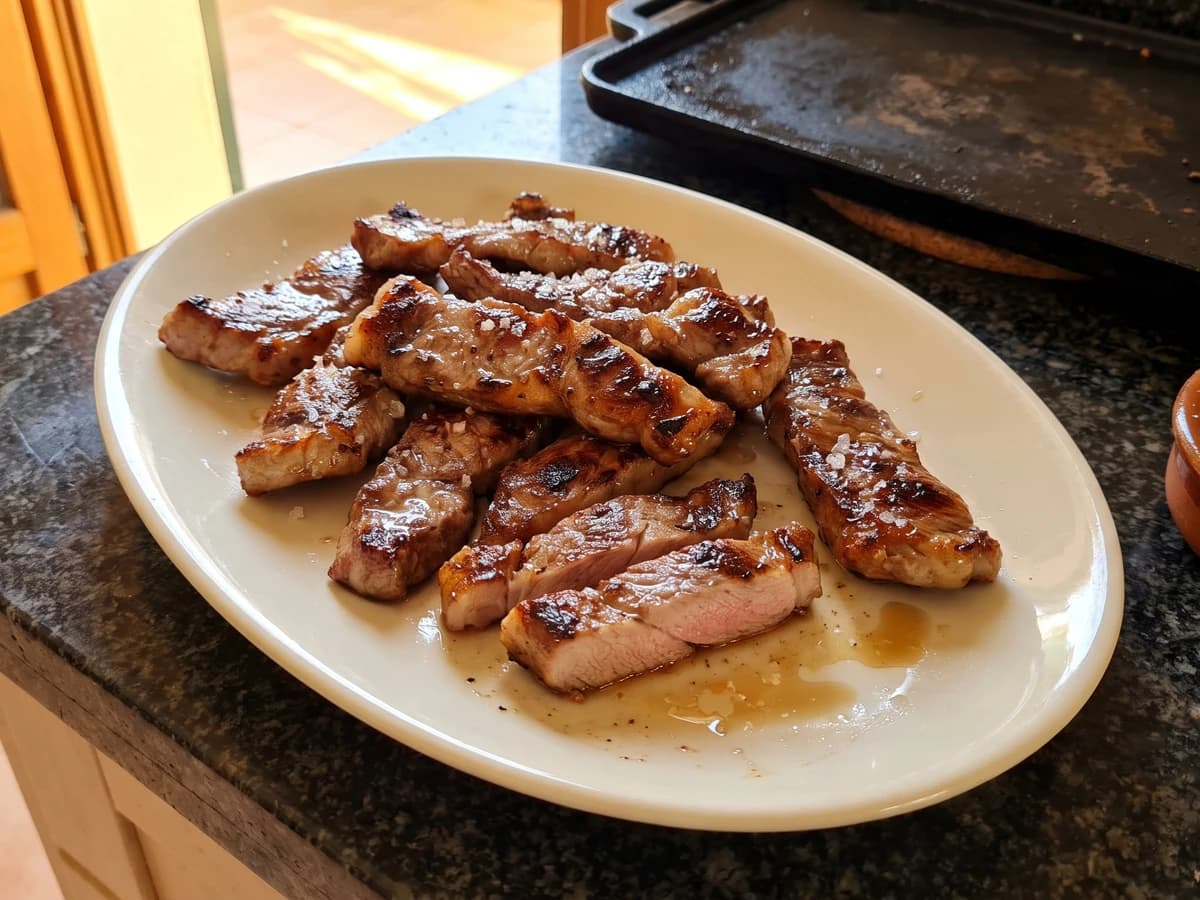
Extremadura's dehesa gives us this fan-shaped, marbled rib cut: salt it at the last moment, lay it on a fierce plancha, and count in seconds so the centre stays juicy.
A cooking platform built around craft, culture, and the stories behind what we eat.
Created by
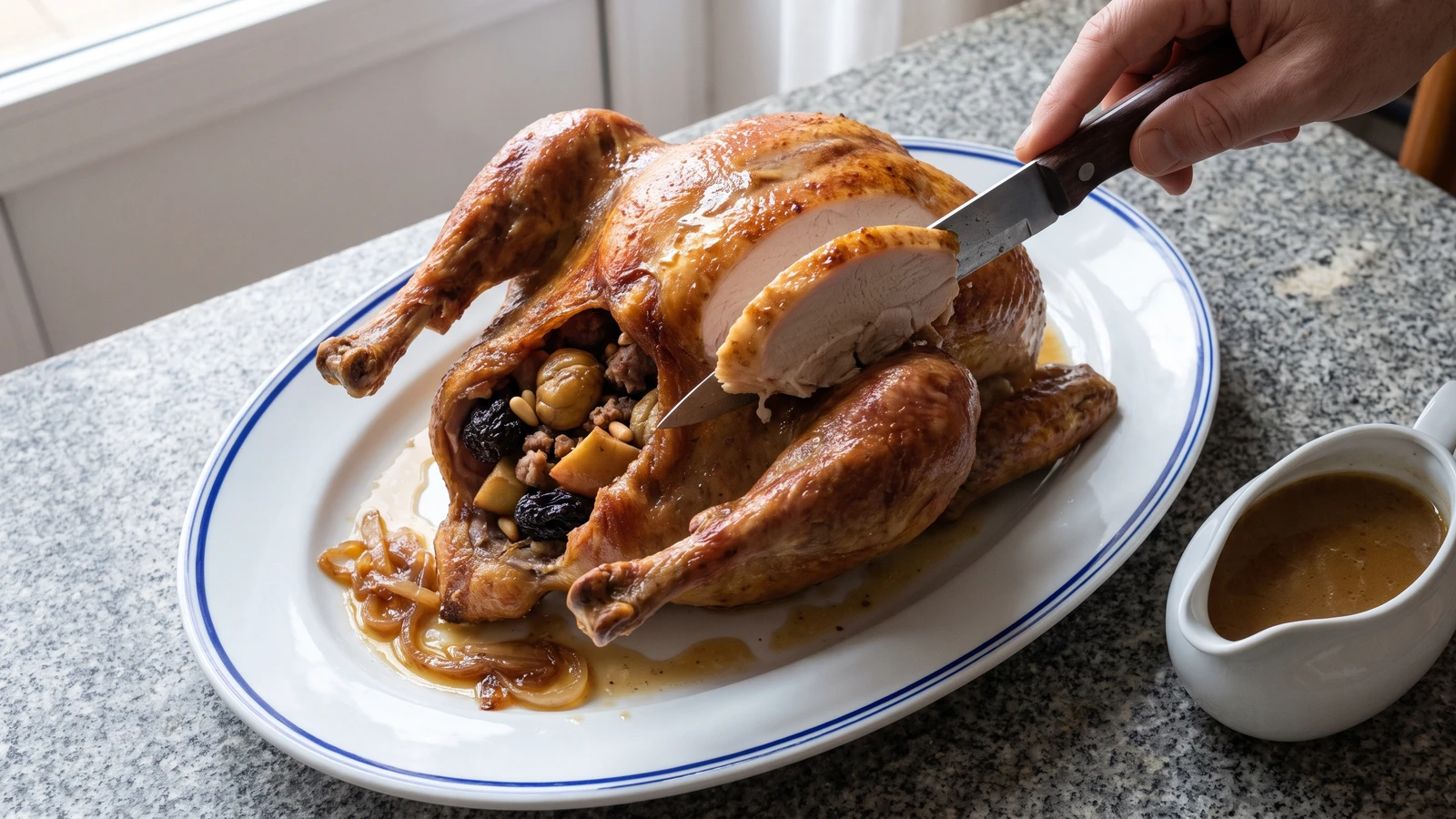
Capón de Vilalba is Galicia's great Christmas bird, richly fattened, filled with pork, chestnuts, prunes and pine nuts, then roasted slowly with brandy until the flesh stays succulent beneath burnished skin.
Capón de Vilalba is Galician, from Terra Chá around Vilalba in Lugo: a castrated cockerel raised slowly until it grows broad, tender and well marbled, then saved for the Christmas table. Vilalba names the bird and its way of being fattened, not one compulsory stuffing. In Galician homes the filling changes by family; this one follows the old festive line of pork, chestnuts, apple, prunes, raisins and pine nuts, with brandy in the roasting juices. The filling should taste savoury first, with the fruit behind it.
The method that decides it is a long, moderate roast with the breast protected early, then a short hotter finish. A capon is too large to bully with fierce heat. The legs need time before the breast dries, so keep the oven steady, baste every thirty minutes once the juices begin to run, and uncover only toward the end. A thermometer settles the matter: both the middle of the stuffing and the deepest part of the thigh must reach 74°C.
If you're far from Galicia, look first for a free-range capon of the same weight. If there isn't one, use a poularde or a large free-range roasting chicken weighing 3 to 3.5kg. It will be a little leaner and less deeply flavoured, so keep the breast covered and begin checking it sooner. No hace falta haber pisado España, you don't need to have set foot in Spain, but you do need a bird raised slowly enough to have some fat on it.
In the Margin beside this roast I keep two words: "relleno suelto," loose stuffing. Pack the cavity tightly and the centre cooks too slowly while the breast waits and suffers. Fill it lightly, cook any remainder in a separate dish, and trust the thermometer rather than the clock alone. Siempre sale, si lo sigues, it turns out if you follow it.
Capón de Vilalba belongs to Terra Chá, the broad inland plain of Lugo, where farm households made a Christmas bird by castrating young cockerels and raising them for months rather than slaughtering them at ordinary chicken size. During the final fattening the birds were kept in capoeiras, small individual pens, and fed from the farm larder, especially maize and boiled potato, which helped lay down the fine fat prized in the roast. Vilalba's pre-Christmas Feira do Capón preserves the trade, with carefully dressed birds presented in cloth-lined baskets as both food and a mark of the feast.
Quantity
1 whole bird, 3.5 to 4kg
giblets removed; liver reserved if supplied
Quantity
30g
23g for the bird and 7g for the stuffing
Quantity
4g
divided equally between the bird and stuffing
Quantity
60g
softened and divided
Quantity
30ml
Quantity
80g
crusts removed and torn
Quantity
80ml
Quantity
200g
Quantity
75g
finely diced
Quantity
1, about 40g
trimmed and finely chopped
Quantity
150g
finely diced
Quantity
2 cloves
finely minced
Quantity
150g
roughly broken
Quantity
100g
roughly chopped
Quantity
50g
Quantity
30g
Quantity
150g
peeled, cored and cut into 1cm dice
Quantity
1
beaten
Quantity
15g
finely chopped
Quantity
120ml
40ml for the fruit and 80ml for the roasting tin
Quantity
300g
cut into thick wedges
Quantity
4 cloves
lightly crushed
Quantity
2
Quantity
250ml
preferably Godello, or use another dry white wine
Quantity
250ml
| Ingredient | Quantity |
|---|---|
| Capón de Vilalba or free-range capongiblets removed; liver reserved if supplied | 1 whole bird, 3.5 to 4kg |
| fine sea salt23g for the bird and 7g for the stuffing | 30g |
| freshly ground black pepperdivided equally between the bird and stuffing | 4g |
| pork lardsoftened and divided | 60g |
| extra virgin olive oil | 30ml |
| day-old rustic white breadcrusts removed and torn | 80g |
| whole milk | 80ml |
| minced pork shoulder | 200g |
| fresh unsmoked pork bellyfinely diced | 75g |
| capon liver (optional)trimmed and finely chopped | 1, about 40g |
| onion for the stuffingfinely diced | 150g |
| garlic for the stuffingfinely minced | 2 cloves |
| cooked peeled chestnutsroughly broken | 150g |
| pitted prunesroughly chopped | 100g |
| raisins | 50g |
| pine nuts | 30g |
| firm tart applepeeled, cored and cut into 1cm dice | 150g |
| large eggbeaten | 1 |
| flat-leaf parsleyfinely chopped | 15g |
| dry grape brandy40ml for the fruit and 80ml for the roasting tin | 120ml |
| onions for the roasting tincut into thick wedges | 300g |
| garlic for the roasting tinlightly crushed | 4 cloves |
| bay leaves | 2 |
| dry Galician white winepreferably Godello, or use another dry white wine | 250ml |
| light unsalted chicken stock or water | 250ml |
Pat the capon dry inside and out. Rub it with 23g of the salt and 2g of the pepper, working some into the cavity and around the joints. For the best skin, set it uncovered on a tray in the refrigerator for 12 to 24 hours. If you're cooking the same day, give it 45 minutes in the refrigerator while you prepare the filling. Don't rinse it.
Combine the prunes and raisins with 40ml of the brandy and leave them for 20 minutes. Soak the torn bread in the milk. Toast the pine nuts in a dry frying pan over medium-low heat for 3 to 4 minutes, shaking the pan until they are pale gold, then remove them. Add the olive oil and pork belly to the pan and cook for 5 minutes. Add the diced onion, lower the heat and cook for 12 to 15 minutes, until dark gold and sweet. Stir in the two minced garlic cloves, the liver if using, and the minced pork. Cook for 7 to 8 minutes, breaking up the pork, until no pink remains.
Take the pork mixture off the heat and stir in the soaked fruit with its brandy, the chestnuts, apple and pine nuts. Spread it on a wide tray and let it cool for no longer than 30 minutes. Fold in the milk-soaked bread, beaten egg, parsley, the remaining 7g salt and 2g pepper. The filling should hold together when pressed but remain loose, with distinct pieces of chestnut and fruit.
Heat the oven to 170°C conventional or 150°C fan, with a rack in the lower-middle position. Spoon the cooled filling into the neck and body cavities without pressing it down, leaving roughly one-quarter of the space empty. Secure the openings with skewers or kitchen twine, tie the legs loosely together and tuck the wing tips beneath the bird. Put any filling that does not fit into a lightly greased baking dish and refrigerate it until the final part of roasting.
Scatter the onion wedges, four crushed garlic cloves and bay leaves across a large roasting tin. Set the capon breast-side up on the onions. Rub 50g of the softened lard over the legs, breast and wings. Pour the wine, remaining 80ml brandy and 150ml stock around the bird, not over it. Smear the remaining 10g lard on a sheet of baking parchment, lay it over the breast, and cover the bird loosely with foil. Roast for 1 hour.
After the first hour, spoon the pan juices generously over the legs and breast, then replace the covering. Baste again every 30 minutes. If the bottom of the tin begins to dry, add the remaining stock in 50ml portions. After 2 hours 30 minutes, remove the foil and parchment, baste once more, and raise the oven to 200°C conventional or 180°C fan. Roast uncovered for another 30 to 60 minutes, giving the skin its final baste about 20 minutes before the end so it has time to turn crisp and burnished.
Begin checking the capon after 3 hours in all. Insert a thermometer into the centre of the stuffing and then into the deepest part of the thigh without touching bone. Both must reach 74°C; check the thickest part of the breast as well. If the skin is ready before the centre is safe, cover it loosely with foil and return the oven to 170°C. Transfer the finished capon to a platter, cover it loosely and rest for 30 minutes. The rest keeps the juices in the meat instead of on the carving board.
Discard the bay leaves and spoon excess fat from the roasting tin, leaving about 30ml behind. Scrape the onions, garlic and browned juices into a saucepan with the remaining liquid. Press the roasted garlic from its skins, simmer for 5 to 10 minutes, then pass everything through a fine sieve, pressing on the onions. Aim for about 350ml of glossy sauce. If it tastes too strong, loosen it with a little water; if it is thin, reduce it briefly.
Remove the twine and spoon the cavity stuffing into a warm serving bowl before carving the bird. Take off the legs at the joints, separate the thighs and drumsticks, then remove each breast in one piece and cut it across into thick slices. Give every plate some breast or leg meat, a spoonful of the chestnut and fruit filling, and enough pan sauce to gloss it. Tal como se hace allí, set the rest in the middle of the table and let the family reach.
1 serving (about 300g)
Culinary guides, cultural storytelling, and the editorial depth that makes cooking meaningful.
Discover Culinary ExplorerChef Isabel
Extremadura's dehesa gives us this fan-shaped, marbled rib cut: salt it at the last moment, lay it on a fierce plancha, and count in seconds so the centre stays juicy.
Chef Isabel
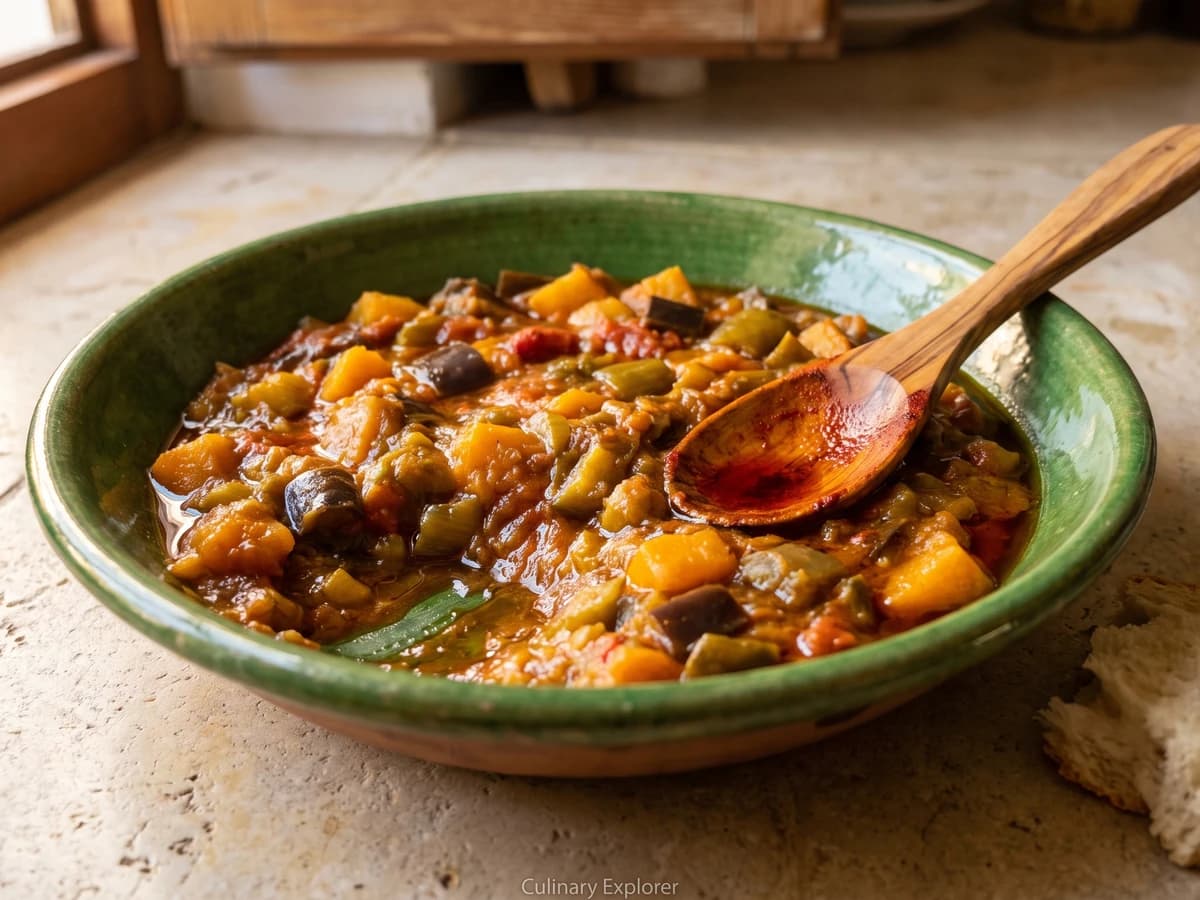
Alboronía is Andalucía's old pumpkin and aubergine stew, deepened with tomato, pimentón, and cumin, then cooked without hurry until the vegetables settle into a glossy, sweet, spoon-soft whole.

Chef Isabel
Aletría Murciana is Murcia's humble noodle guiso: fine fideos, pork ribs, potato, saffron, and a dark sweet sofrito. Get that base right and the pot knows where it's going.
Chef Isabel
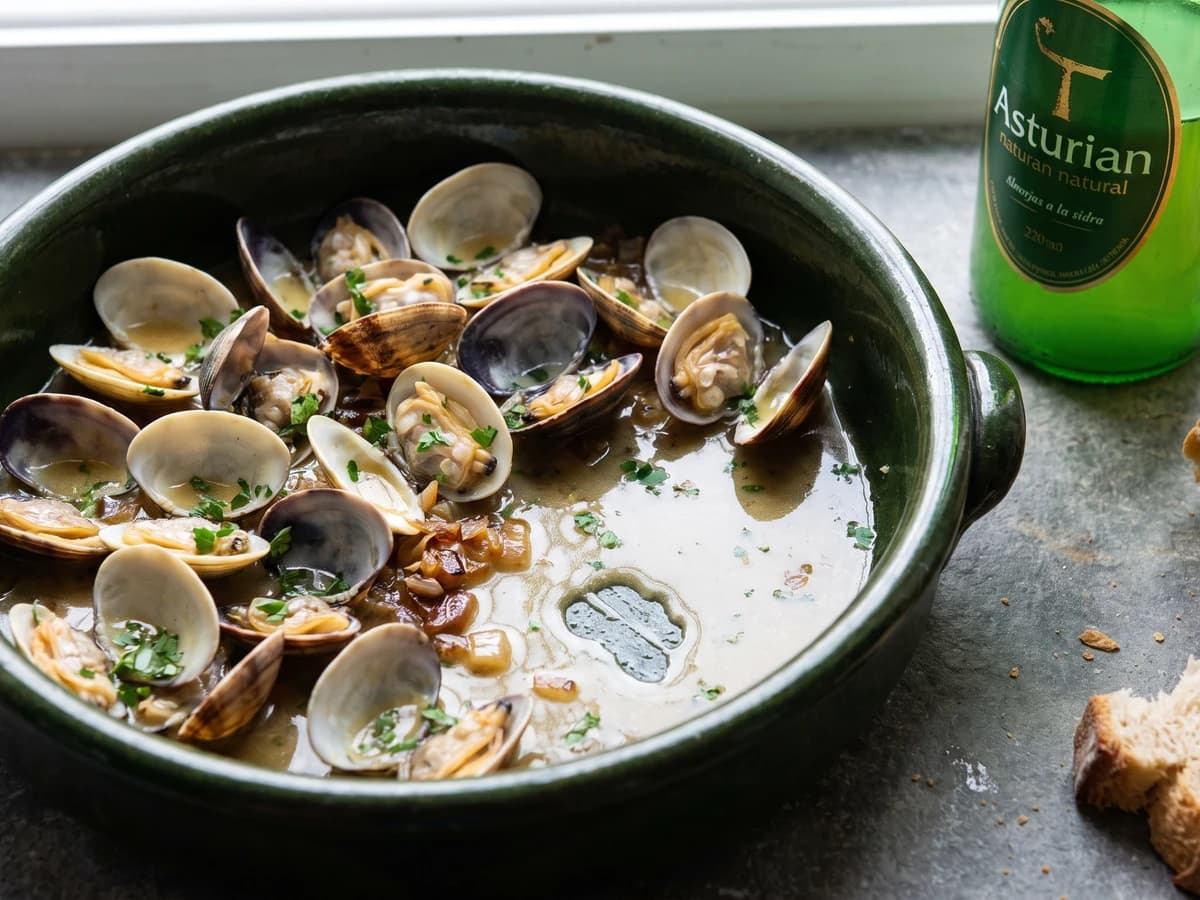
Asturias opens clams in tart natural cider over a slow onion and garlic sofrito, making a bright, briny sauce that asks for bread and rewards one rule: lift each clam as it opens.