Chef Isabel
Abanico Ibérico a la Plancha
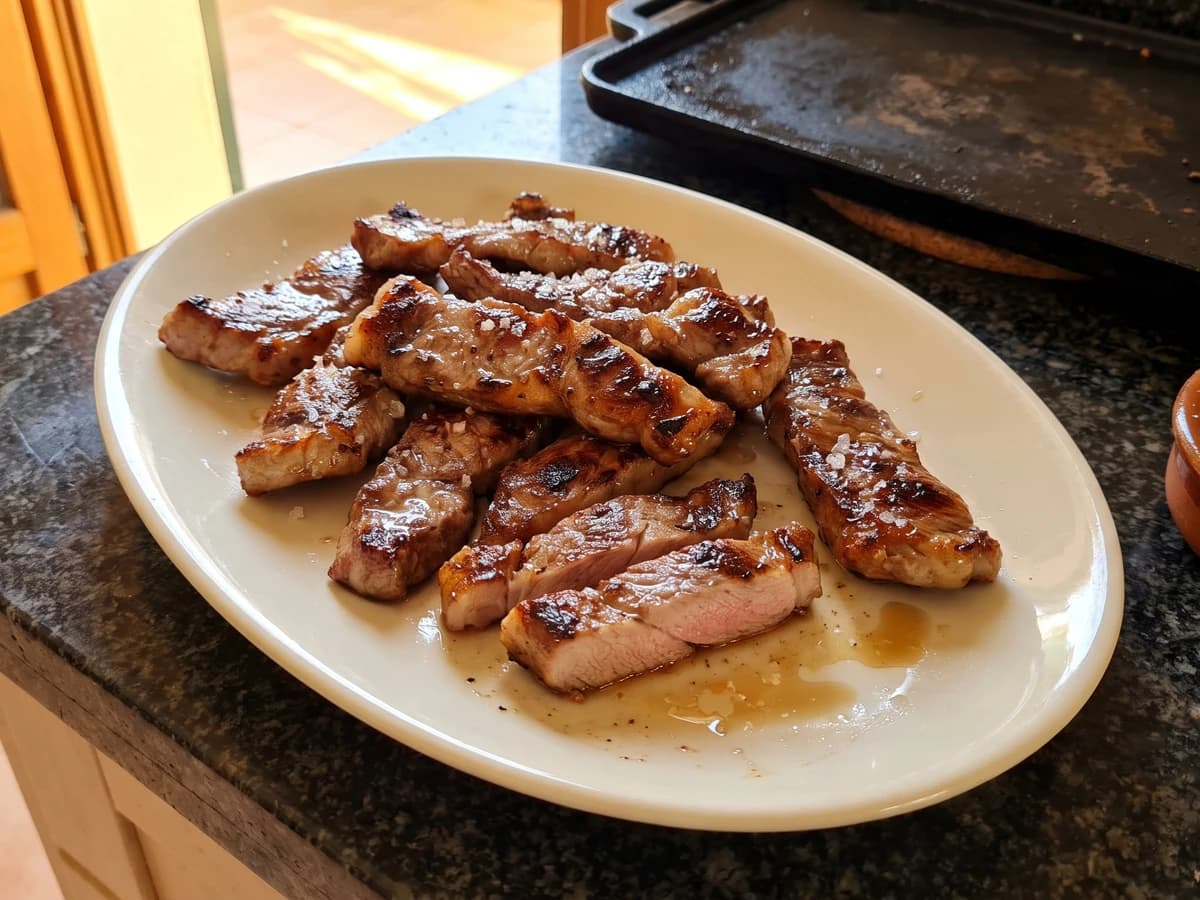
Extremadura's dehesa gives us this fan-shaped, marbled rib cut: salt it at the last moment, lay it on a fierce plancha, and count in seconds so the centre stays juicy.
A cooking platform built around craft, culture, and the stories behind what we eat.
Created by
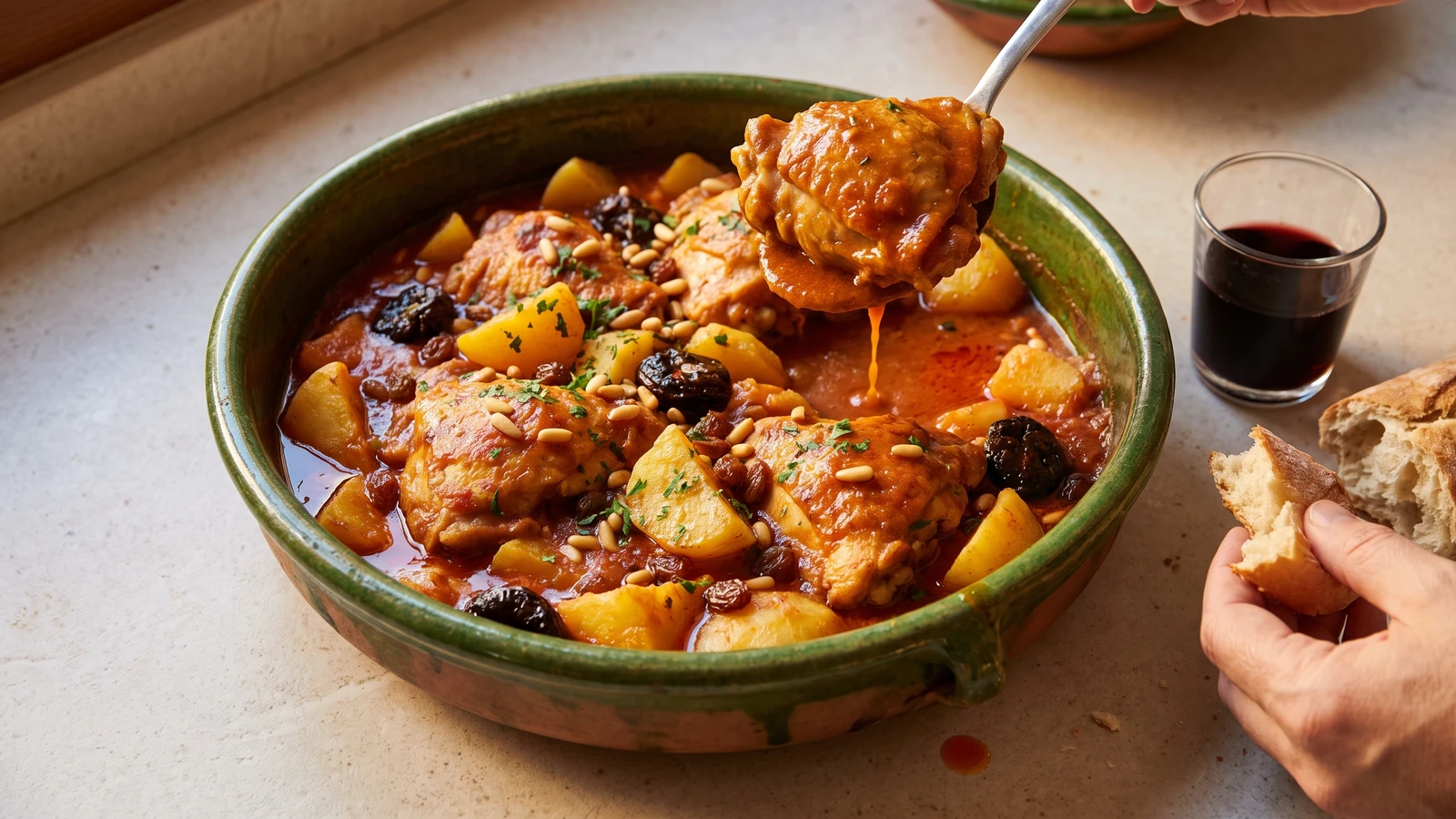
Mallorca’s festive chicken stew, where sobrassada melts into the slow onion base, potatoes hold the sauce, and a finely ground almond picada turns the cooking juices glossy and full.
Escaldums de pollastre is Mallorcan cocina de cuchara, spoon food made from chicken, potatoes, dried fruit, and a sauce marked by the island’s sobrassada and almonds. The sausage melts into the sofregit, the slow onion and tomato base, staining it brick red without turning the pot into a chorizo stew. Prunes, raisins, cinnamon, and pine nuts give the savory sauce the restrained sweetness that belongs here.
The picada decides it. Grind the fried almonds, garlic, bread, and parsley until they become a paste, loosen it with cooking liquor, then add it only for the final minutes. Chopped nuts merely float in the gravy; a proper picada binds the chicken juices and oil into a sauce that coats each potato. Pésalo, no lo adivines. The amounts below give you body without turning the stew pasty.
No hace falta haber pisado España. If sobrassada de Mallorca is beyond reach, mince 50g of mild cured chorizo with 15g of pork fat until spreadable. It will taste smokier and won’t melt quite as completely, but it is a sensible kitchen compromise. Canned whole tomatoes are better than tired fresh ones in winter. The Margin beside this recipe says only, “grind the almond until no corner remains.” Do that, keep the braise gentle, and it comes out. Siempre sale, si lo sigues.
Escaldums belongs to Mallorca’s Nadal table, where chicken or turkey is cooked with potatoes, almonds, dried fruit, and warm spice for a feast-day pot. Its sweet and savory seasoning preserves the medieval Catalan-Balearic habit of cooking meat with nuts and fruit, while the sobrassada ties it to the island’s matança, the household pig slaughter and preserving season. Potatoes joined an older family of poultry stews later, but became so settled in the Mallorcan dish that they now carry as much of the prized sauce as the meat.
Quantity
1.6kg
patted dry
Quantity
12g
divided
Quantity
1g
Quantity
120ml
Quantity
900g
peeled and cut into 4cm chunks
Quantity
60g
Quantity
35g
cut into 2 thick pieces
Quantity
5 cloves
2 finely minced and 3 left whole
Quantity
30g
Quantity
350g
finely diced
Quantity
350g
fresh tomatoes grated or canned tomatoes crushed
Quantity
75g
casing removed
Quantity
75ml
Quantity
700ml
heated
Quantity
1
Quantity
1/2 stick
Quantity
1g
Quantity
120g
Quantity
50g
Quantity
12g
roughly chopped
| Ingredient | Quantity |
|---|---|
| bone-in, skin-on chicken thighs and drumstickspatted dry | 1.6kg |
| fine sea saltdivided | 12g |
| freshly ground black pepper | 1g |
| extra virgin olive oil | 120ml |
| waxy potatoespeeled and cut into 4cm chunks | 900g |
| blanched almonds | 60g |
| day-old country breadcut into 2 thick pieces | 35g |
| garlic2 finely minced and 3 left whole | 5 cloves |
| pine nuts | 30g |
| yellow onionsfinely diced | 350g |
| ripe plum tomatoes or canned whole tomatoesfresh tomatoes grated or canned tomatoes crushed | 350g |
| sobrassada de Mallorcacasing removed | 75g |
| brandy | 75ml |
| low-sodium chicken stockheated | 700ml |
| bay leaf | 1 |
| cinnamon stick | 1/2 stick |
| dried marjoram | 1g |
| pitted prunes | 120g |
| raisins | 50g |
| flat-leaf parsley leavesroughly chopped | 12g |
Pat the chicken dry so it browns instead of steaming against the pot. Season it all over with 8g of the salt and the black pepper, then leave it for 20 minutes while you prepare the vegetables. Keep the remaining 4g of salt divided for the potatoes and sofregit.
Heat the olive oil in a wide, heavy casserole over medium-high heat. Brown the chicken in two batches, skin-side down first, for 4 to 5 minutes, then for 2 to 3 minutes on the other side. You want a deep golden skin and browned bits on the bottom, not meat cooked through. Lift each batch onto a plate and keep every drop of juice.
Lower the heat to medium. Add the potatoes to the same oil and fry them for 10 to 12 minutes, turning carefully, until their edges are golden but the centers remain firm. Season them with 2g of salt and lift them onto a second plate. They finish cooking in the sauce later, where the browned outside helps them hold together.
Add the almonds, 3 whole garlic cloves, and bread to the casserole. Fry for 2 to 3 minutes, turning often, until the almonds are golden, the garlic has softened, and the bread is crisp on both sides. Remove them to a mortar. Toast the pine nuts for about 1 minute until pale gold, then set them aside separately. Pour the cooking oil into a heatproof jug and return exactly 45ml to the casserole.
Set the casserole over low to medium-low heat. Add the onions and the final 2g of salt, then cook for 18 to 20 minutes, stirring often, until dark gold, soft, and nearly jammy. Add the 2 minced garlic cloves and cook for 1 minute. Stir in the tomato and cook for 12 to 15 minutes, until its water is gone and the base leaves a clean trail when you draw the spoon through it. This slow reduction gives the sauce sweetness; rush it and the whole pot tastes thin. Add the sobrassada and stir for 2 minutes until it has melted through the sofregit. Pour in the brandy and let it bubble for 3 minutes to cook away its raw edge.
Return the chicken and its resting juices to the casserole. Add the bay leaf, cinnamon, marjoram, and hot stock. The liquid should come roughly two-thirds of the way up the chicken rather than drown it. Bring it just to a simmer, lower the heat, cover slightly ajar, and cook gently for 25 minutes. Turn the pieces once without disturbing their skin more than necessary.
While the chicken braises, pound the fried almonds, garlic, bread, and parsley in the mortar. Work until no hard almond pieces remain and the mixture forms a thick, slightly coarse paste. Ladle in about 150ml of hot liquid from the casserole and mix until smooth enough to pour. A small blender works if you have no mortar, but stop before it becomes an oily nut butter.
Nestle the fried potatoes, prunes, and raisins around the chicken. Cover slightly ajar and simmer gently for 18 to 22 minutes, until a knife enters the potatoes without resistance and the thickest chicken pieces reach 74°C at the bone. Keep the bubbling quiet. A hard boil breaks the potatoes and pulls the chicken apart.
Remove the bay leaf and cinnamon. Stir in the loosened picada and most of the toasted pine nuts, moving the chicken carefully so the paste reaches the sauce. Simmer uncovered for 8 to 10 minutes, until the gravy is glossy and coats the back of a spoon. If it tightens too far, loosen it with a small splash of hot stock or water. Rest off the heat for 10 minutes, then scatter over the remaining pine nuts and serve from the casserole.
1 serving (about 580g)
Culinary guides, cultural storytelling, and the editorial depth that makes cooking meaningful.
Discover Culinary ExplorerChef Isabel
Extremadura's dehesa gives us this fan-shaped, marbled rib cut: salt it at the last moment, lay it on a fierce plancha, and count in seconds so the centre stays juicy.
Chef Isabel
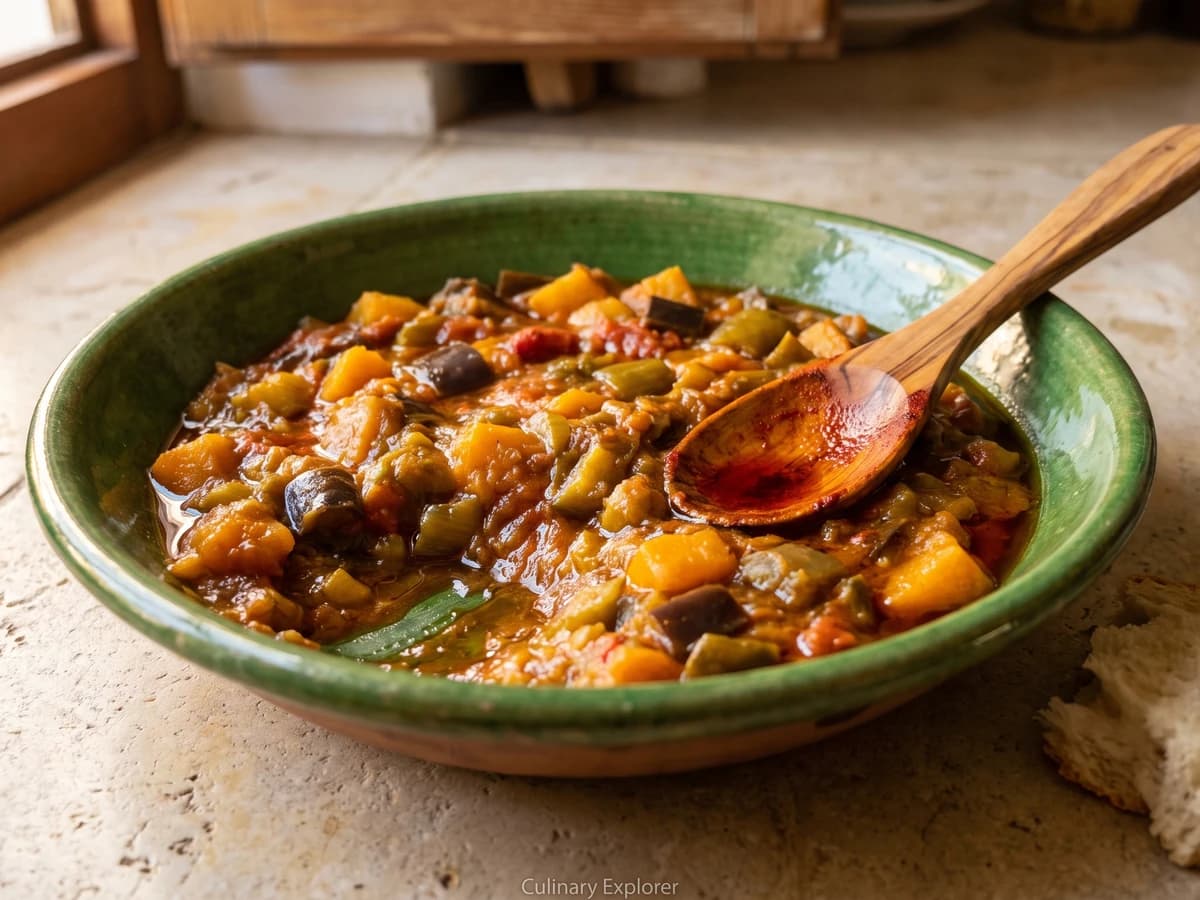
Alboronía is Andalucía's old pumpkin and aubergine stew, deepened with tomato, pimentón, and cumin, then cooked without hurry until the vegetables settle into a glossy, sweet, spoon-soft whole.

Chef Isabel
Aletría Murciana is Murcia's humble noodle guiso: fine fideos, pork ribs, potato, saffron, and a dark sweet sofrito. Get that base right and the pot knows where it's going.
Chef Isabel
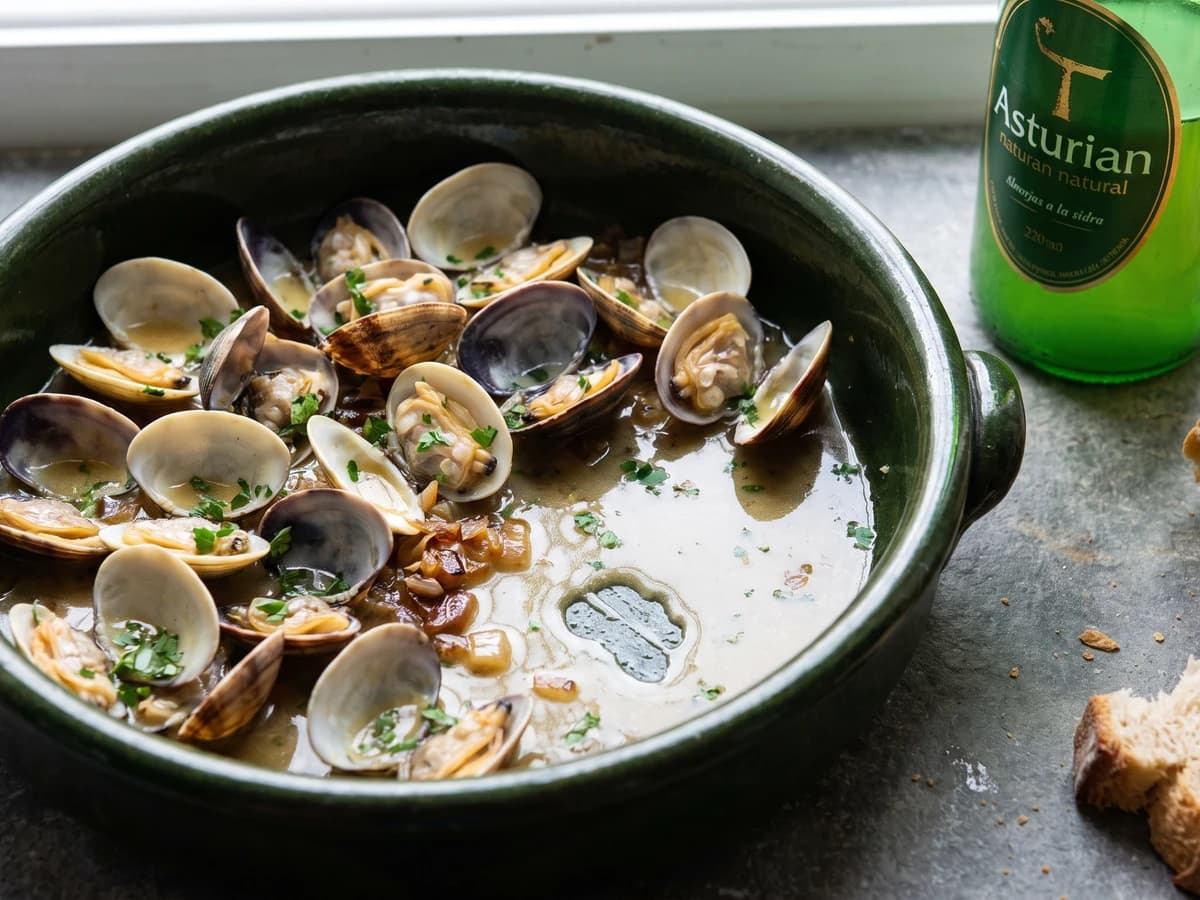
Asturias opens clams in tart natural cider over a slow onion and garlic sofrito, making a bright, briny sauce that asks for bread and rewards one rule: lift each clam as it opens.