Chef Isabel
Abanico Ibérico a la Plancha
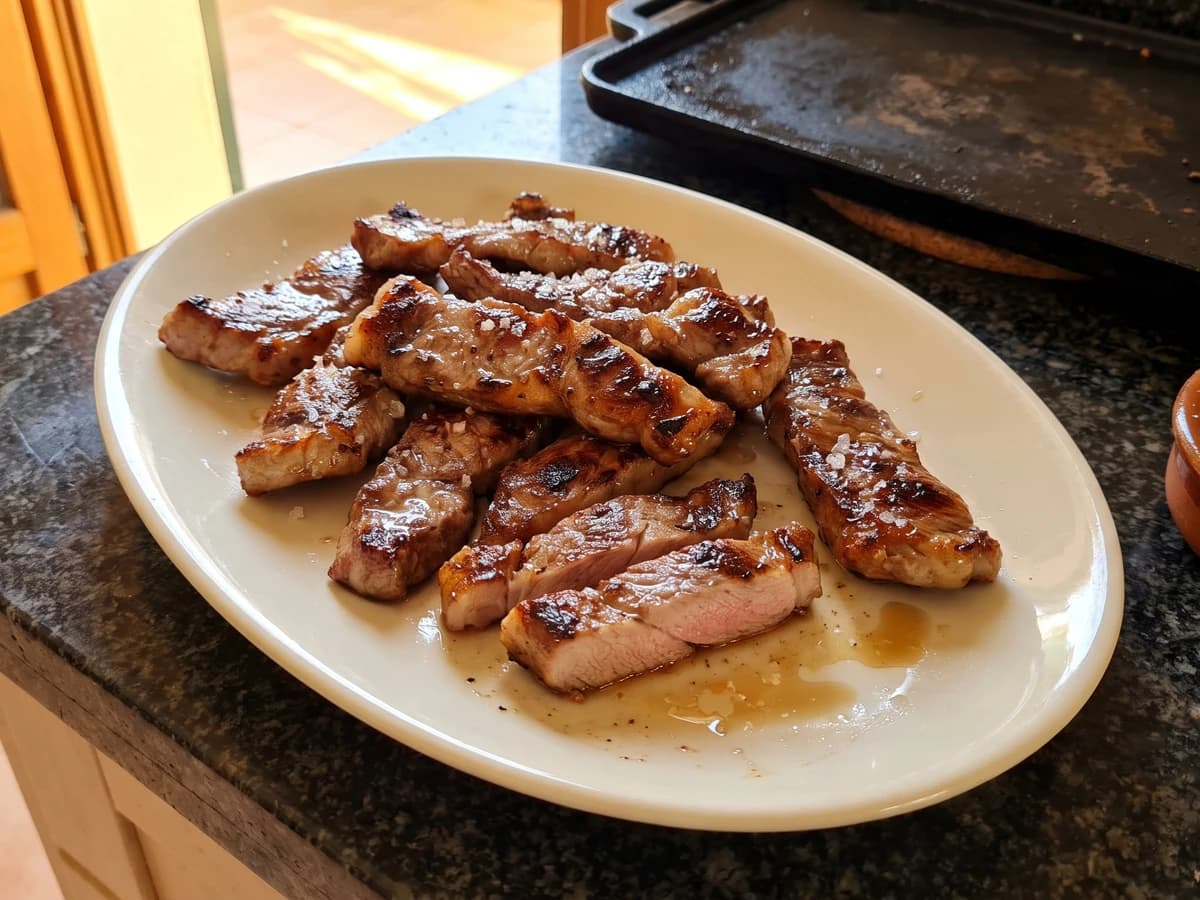
Extremadura's dehesa gives us this fan-shaped, marbled rib cut: salt it at the last moment, lay it on a fierce plancha, and count in seconds so the centre stays juicy.
A cooking platform built around craft, culture, and the stories behind what we eat.
Created by
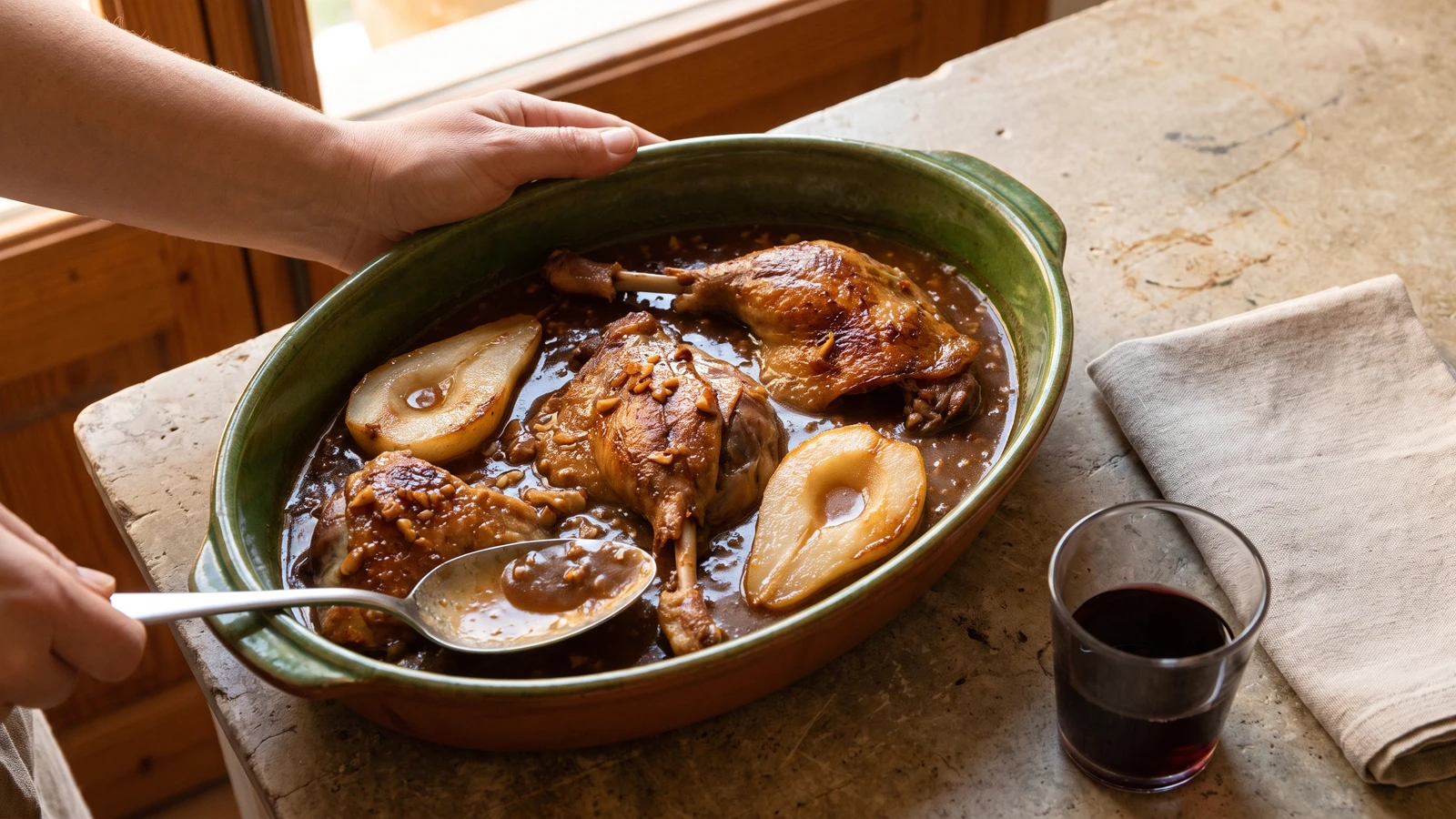
Oca amb peres is Catalonia's old festive goose braise: browned bird, firm winter pears, a patient sofregit and almond picada, with every spoonful of sauce skimmed clean enough to taste rich, never greasy.
Oca amb peres is Catalan, an old feast-day braise of goose with firm winter pears, a long-cooked sofregit and an almond picada. The pear isn't decoration. It softens in the dark sauce, bringing fragrance and a gentle sweetness that cuts through the richness of the bird. That balance, meat, fruit and nuts in one cassola, places the dish firmly in Catalonia.
In my pot, one thing decides whether it works: remove the goose fat before the picada goes in. Goose gives up far more fat than duck, so brown it patiently, braise it gently, then skim the sauce until only a thin gloss remains. The picada can then draw the wine, stock and sofregit together. Skip the skimming and the dish tastes heavy instead of generous.
Choose firm autumn or winter pears, Conference or Bosc if the Catalan varieties aren't sold where you live, and add them only near the end. They are a little less perfumed, but they hold their shape properly. If goose is beyond reach, a large duck is the honest household substitute. The result is lighter, cooks faster and has its own proper name, ànec amb peres, duck with pears.
The Margin beside this recipe says, "desgreixa abans de la picada," skim before the picada. Nothing grander was needed. Follow the order, keep the simmer quiet and handle the pears gently. Siempre sale, si lo sigues, it turns out if you follow it.
Oca amb peres belongs to Catalonia's old repertory of aviram amb fruita, poultry cooked with fruit, a family that also includes duck with pears and birds braised with prunes. Farmyard geese were valuable festive birds, while firm autumn pears brought fragrance and gentle sweetness to their rich meat. The pairing of meat, fruit, spice and ground nuts preserves a medieval Catalan pattern; tomato entered the sofregit later, while the almond-and-bread picada kept the older way of binding the sauce.
Quantity
1 (4-4.5kg)
cut into 2 legs, 2 wings and 4 bone-in breast pieces; loose fat trimmed and reserved
Quantity
22g
divided
Quantity
3g
Quantity
30ml
Quantity
500g
finely chopped
Quantity
4 cloves
2 finely chopped for the sofregit and 2 reserved for the picada
Quantity
300g
grated, skins discarded
Quantity
250ml
Quantity
900ml
heated
Quantity
2
Quantity
4 sprigs
Quantity
1 (about 5cm)
Quantity
6 medium (about 1.2kg)
peeled, halved lengthwise and cored just before cooking
Quantity
60g
Quantity
30g
toasted
Quantity
10g
roughly chopped
| Ingredient | Quantity |
|---|---|
| oven-ready goosecut into 2 legs, 2 wings and 4 bone-in breast pieces; loose fat trimmed and reserved | 1 (4-4.5kg) |
| fine sea saltdivided | 22g |
| freshly ground black pepper | 3g |
| olive oil | 30ml |
| onionsfinely chopped | 500g |
| garlic2 finely chopped for the sofregit and 2 reserved for the picada | 4 cloves |
| ripe tomatoesgrated, skins discarded | 300g |
| dry white wine | 250ml |
| unsalted poultry stockheated | 900ml |
| bay leaves | 2 |
| thyme | 4 sprigs |
| cinnamon stick | 1 (about 5cm) |
| firm pearspeeled, halved lengthwise and cored just before cooking | 6 medium (about 1.2kg) |
| toasted blanched almonds | 60g |
| day-old country breadtoasted | 30g |
| flat-leaf parsley leavesroughly chopped | 10g |
Pat every goose piece completely dry. Prick only the thick pockets of skin with a fine skewer, taking care not to pierce the flesh. Season with 20g of the salt and all the pepper, reserving 2g of salt for the finished sauce. Leave the pieces at room temperature for 30 minutes while you prepare the onions and tomato.
Put the olive oil in a cold, wide heavy casserole and arrange the first batch of goose skin-side down. Set it over medium-low heat and let the fat render slowly until the skin is deep gold, 12 to 15 minutes. Turn and brown the flesh side for 3 to 4 minutes, then transfer to a tray. Repeat without crowding the pan. Carefully strain the rendered fat into a heatproof jar, leaving about 45ml in the casserole.
Lower the heat and add the onions to the fat in the casserole. Cook for 25 to 30 minutes, stirring regularly, until dark gold, soft and jammy. Add the 2 chopped garlic cloves and cook for 1 minute. Stir in the grated tomato and cook for another 15 to 20 minutes, until the sofregit, the slow onion and tomato base, is brick-coloured, almost dry and showing small glints of fat around its edges.
Pour in the wine, scrape the bottom well and boil for 4 to 5 minutes, until reduced by about half. Add the hot stock, bay leaves, thyme and cinnamon. Return the leg and wing pieces skin-side up; the liquid should reach roughly halfway up the meat. Bring it to a bare simmer, cover with the lid slightly ajar and cook gently for 60 minutes. Add the breast pieces and continue at the same quiet simmer for 35 minutes.
Nestle the pear halves into the sauce without piling them on one another. Cover slightly ajar and cook for 25 to 30 minutes, turning the pears carefully once. They are ready when a small knife enters with slight resistance and the halves still hold their shape. The goose legs should give easily at the joint, and the thickest breast piece must reach at least 74°C. If a breast piece or pear is ready before the legs, lift it out and keep it covered while the legs finish.
Transfer the goose and pears to a warm platter and cover loosely. Discard the bay, thyme and cinnamon, then let the sauce stand for 5 minutes. Skim off the clear fat thoroughly with a shallow spoon or fat separator. Goose runs much fatter than duck, and this is the step that decides the sauce: the picada can bind wine, stock and sofregit, but it cannot bind a lake of fat. Boil the skimmed sauce uncovered for 5 to 10 minutes, until it lightly coats a spoon.
Pound the almonds, toasted bread, 2 reserved garlic cloves and parsley in a mortar until you have a coarse paste. Loosen it with about 120ml of the hot sauce, then stir it back into the casserole. Simmer gently for 8 to 10 minutes, stirring often, until the raw garlic taste is gone and the sauce is smooth enough to cling to the goose. Return the meat and pears, spoon the sauce over them and warm gently for 5 minutes without a hard boil. Taste before adding any of the reserved salt, then rest for 10 minutes and serve with one or two pear halves in each portion.
1 serving (about 525g)
Culinary guides, cultural storytelling, and the editorial depth that makes cooking meaningful.
Discover Culinary ExplorerChef Isabel
Extremadura's dehesa gives us this fan-shaped, marbled rib cut: salt it at the last moment, lay it on a fierce plancha, and count in seconds so the centre stays juicy.
Chef Isabel
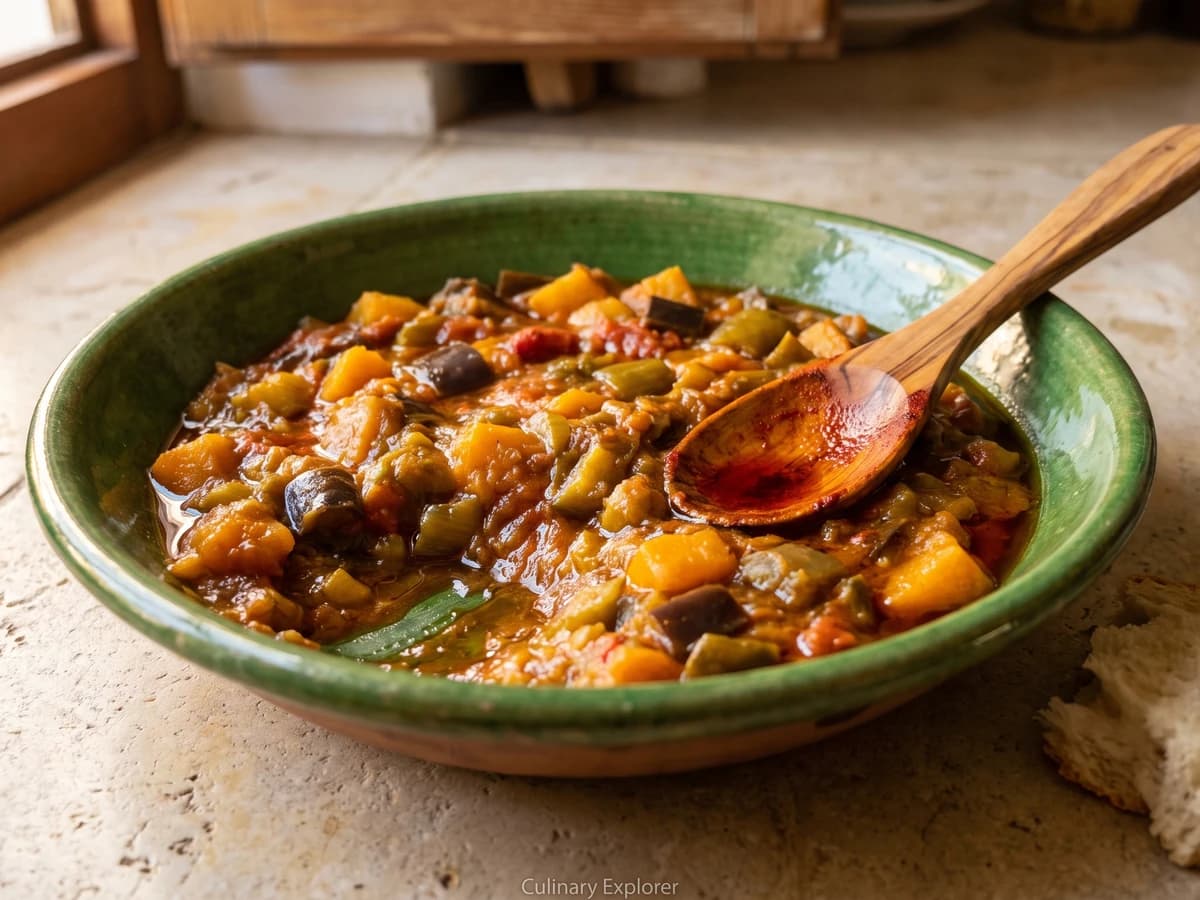
Alboronía is Andalucía's old pumpkin and aubergine stew, deepened with tomato, pimentón, and cumin, then cooked without hurry until the vegetables settle into a glossy, sweet, spoon-soft whole.

Chef Isabel
Aletría Murciana is Murcia's humble noodle guiso: fine fideos, pork ribs, potato, saffron, and a dark sweet sofrito. Get that base right and the pot knows where it's going.
Chef Isabel
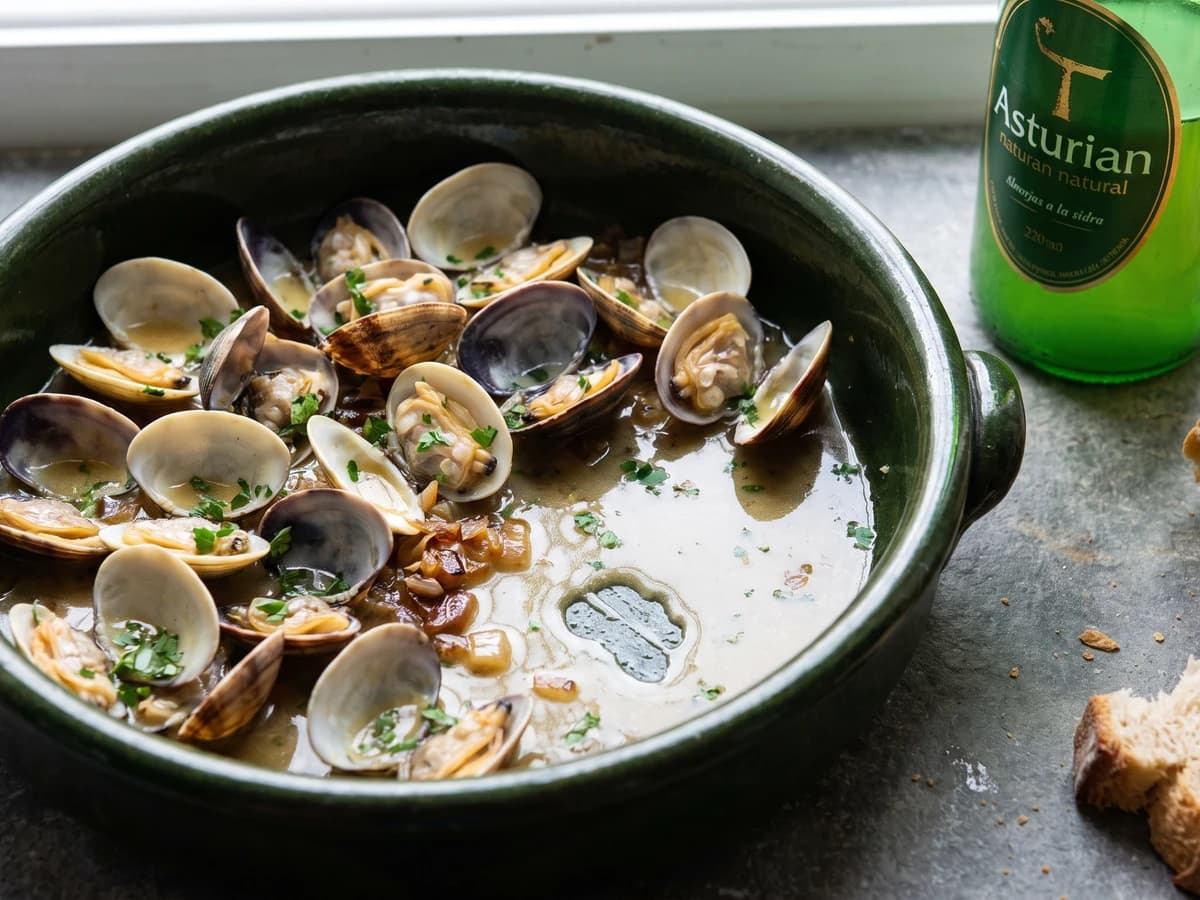
Asturias opens clams in tart natural cider over a slow onion and garlic sofrito, making a bright, briny sauce that asks for bread and rewards one rule: lift each clam as it opens.