Chef Isabel
Abanico Ibérico a la Plancha
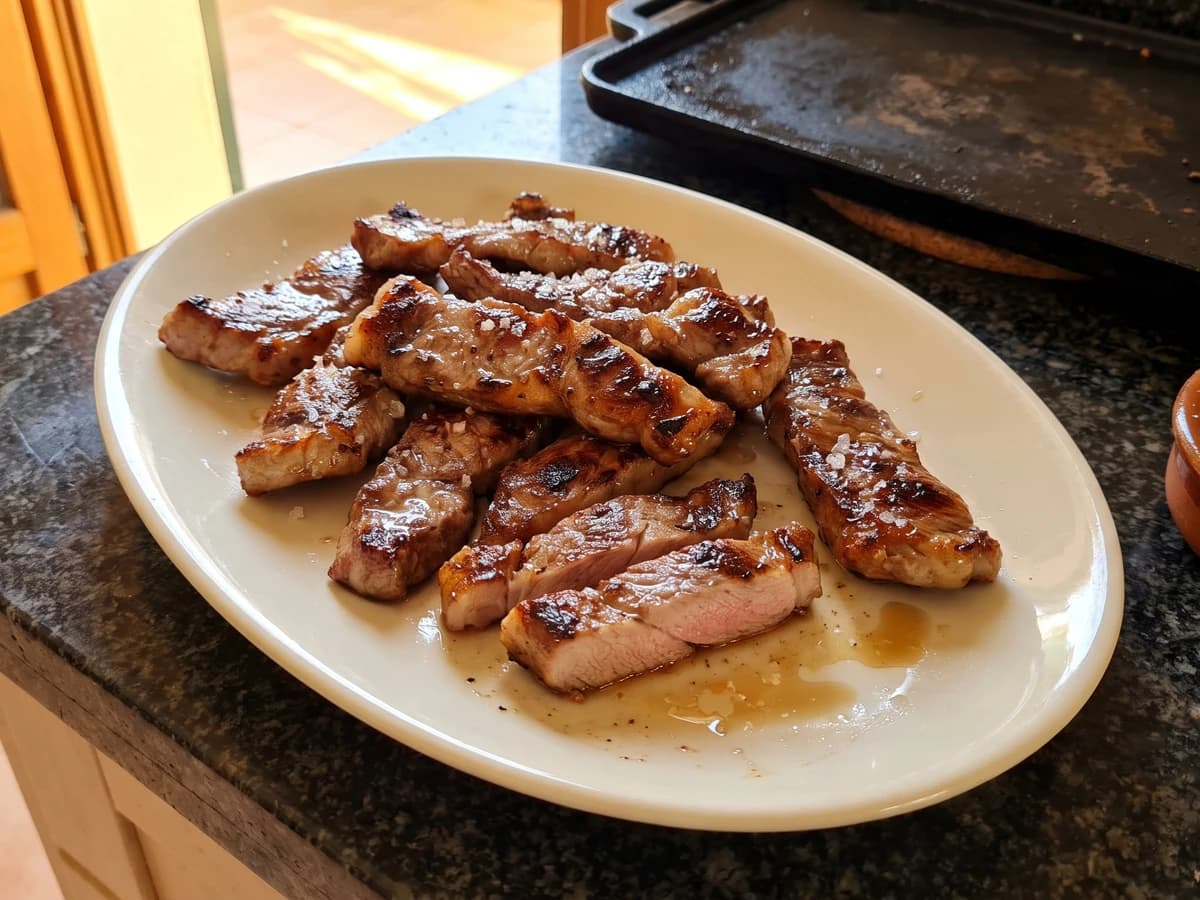
Extremadura's dehesa gives us this fan-shaped, marbled rib cut: salt it at the last moment, lay it on a fierce plancha, and count in seconds so the centre stays juicy.
A cooking platform built around craft, culture, and the stories behind what we eat.
Created by
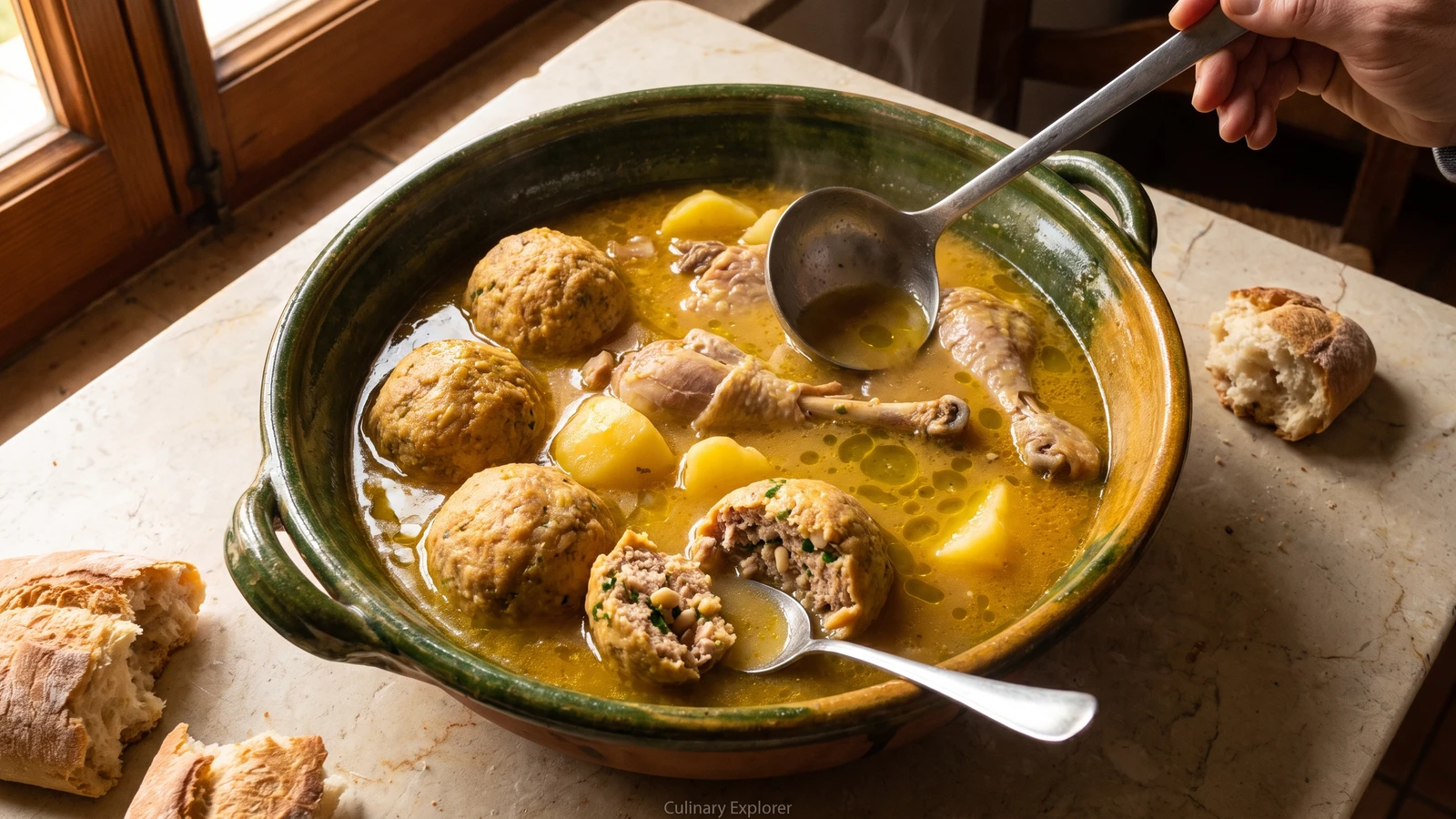
Murcia's Christmas guiso pairs bone-in turkey with large pork pelotas enriched by blanco sausage, egg and pine nuts, first browned, then gently finished in a saffron broth until tender.
Guiso de pava con pelotas belongs to Murcia and to its Christmas table. Bone-in pava cooks slowly in a saffron broth with potatoes and a dark, patient sofrito, while the pelotas are large enough to count as part of the meat course. Pork, blanco murciano, egg and pine nuts make them Murcian, not ordinary meatballs dropped into turkey soup.
The pelotas decide whether the guiso works. Brown them only long enough to form a thin skin, then let the broth cook them through. Fry them until the centres are done and they arrive at the table dry; drop them in raw and a soft mixture may come apart. The brief sealing gives you both tenderness and a broth that stays clear enough to taste of turkey and saffron.
No hace falta haber pisado España. If blanco murciano is out of reach, use longaniza blanca, or a mild unsmoked pork sausage with no fennel; the pelota will lose a little of the blanco's peppery richness but will still hold. Bone-in supermarket turkey thighs make a lighter broth than a mature hen turkey, so use unsalted poultry stock rather than water. The Margin beside this recipe says only, brown outside, finish inside. Follow that and the rest is patient simmering.
In the Huerta de Murcia and the towns of the Segura basin, guiso de pava con pelotas belongs to the Christmas table, when a household turkey made the broth rich enough for a celebration. The pelotas carry the matanza larder into the pot: fresh pork, tocino or blanco sausage, stale bread, eggs and pine nuts, stretched into generous balls that served as meat rather than garnish. Neighboring Vega Baja del Segura also keeps Christmas broths with pelotas, but the Murcian pot is marked by pava, local blanco and a saffron-gold broth.
Quantity
1.5kg
skin on, cut into 7 to 8cm pieces
Quantity
350g
Quantity
100g
very finely minced
Quantity
100g
casing removed and finely chopped
Quantity
100g
Quantity
2, about 100g without shells
Quantity
30g
Quantity
15g
finely chopped
Quantity
4 cloves, about 16g
divided
Quantity
2g
Quantity
35g
for dusting the pelotas
Quantity
250g
finely chopped
Quantity
250g
grated or crushed
Quantity
800g
peeled and cracked into 5cm pieces
Quantity
1.6L
heated, with 60ml reserved for the bread and 100ml for the saffron
Quantity
0.15g
Quantity
4g
Quantity
1
Quantity
100ml
Quantity
20g
divided
Quantity
2g
divided
Quantity
up to 250ml
| Ingredient | Quantity |
|---|---|
| bone-in pava or turkey thighs and drumsticksskin on, cut into 7 to 8cm pieces | 1.5kg |
| minced pork shoulder | 350g |
| fresh unsmoked pork bellyvery finely minced | 100g |
| blanco murciano or longaniza blancacasing removed and finely chopped | 100g |
| crumb from day-old white bread | 100g |
| large eggs | 2, about 100g without shells |
| pine nuts | 30g |
| flat-leaf parsleyfinely chopped | 15g |
| garlicdivided | 4 cloves, about 16g |
| finely grated lemon zest | 2g |
| plain flourfor dusting the pelotas | 35g |
| onionfinely chopped | 250g |
| ripe tomato or drained canned whole tomatoesgrated or crushed | 250g |
| waxy potatoespeeled and cracked into 5cm pieces | 800g |
| unsalted turkey or chicken stockheated, with 60ml reserved for the bread and 100ml for the saffron | 1.6L |
| saffron threads | 0.15g |
| sweet unsmoked pimentón de Murcia | 4g |
| bay leaf | 1 |
| extra virgin olive oil | 100ml |
| fine sea saltdivided | 20g |
| freshly ground black pepperdivided | 2g |
| hot water (optional) | up to 250ml |
Moisten the bread crumb with 60ml of the warm stock and leave it for 10 minutes. Put the pork shoulder, pork belly and blanco in a large bowl. Add the softened bread, eggs, pine nuts, parsley, two finely grated garlic cloves, lemon zest, 8g salt and 1g black pepper. Mix with clean hands just until the mixture becomes evenly tacky and holds together. Don't keep squeezing once it binds, or the pelotas will turn dense.
Divide the mixture into 12 equal portions of about 70g each. Pésalo, no lo adivines, weigh it, don't guess. With damp hands, shape each portion into a firm ball without crushing it. Arrange them on a tray and refrigerate for 15 minutes so the bread and egg can settle.
Spread the flour on a plate and roll each pelota through it, shaking off every loose trace. Heat about 60ml of the olive oil in a wide casserole over medium heat. Brown the pelotas in two batches for 3 to 4 minutes, turning carefully until a thin golden skin forms. The centres must remain raw. Lift them onto a clean plate. This short frying is the method that decides the dish: the browned skin holds each pelota together, while the saffron broth finishes the inside without drying it out.
Pat the turkey dry and season it with 8g salt and the remaining 1g pepper. Spoon out any blackened flour crumbs from the casserole, leaving the browned residue that smells sweet. Brown the turkey in batches, skin side down first, for 8 to 10 minutes per batch. Add a little of the remaining oil if the pan becomes dry. Remove the turkey once the outside is well colored; it is not meant to be cooked through yet.
Lower the heat and add the remaining oil, then the onion and 2g salt. Cook for 18 to 20 minutes, stirring now and then, until the onion is dark gold, soft and almost jammy. Add the remaining two garlic cloves, finely chopped, and cook for 1 minute. Add the tomato and cook for another 12 to 15 minutes, until its water has gone and the oil shows around the edges. Take the casserole off the heat, stir in the pimentón for 15 seconds, then immediately add a ladleful of stock so it cannot scorch.
Crush the saffron threads between your fingers and steep them in 100ml of the hot stock for 10 minutes. Return the turkey and its juices to the casserole. Add the bay leaf, saffron infusion and remaining stock. Bring it just to a boil, skim any grey foam, then lower the heat to a quiet simmer. Cover with the lid slightly ajar and cook for about 55 minutes, or until a knife enters the thickest turkey piece with some resistance but no raw firmness. A mature hen turkey may need another 30 to 60 minutes.
Crack each potato piece from the knife rather than cutting it cleanly; the rough edges release enough starch to give the broth body. Add the potatoes, then nestle the browned pelotas among the turkey in one layer. The liquid should come about three-quarters of the way up the meat, so add hot water only if needed. Simmer uncovered for 25 to 30 minutes. Shake the casserole by its handles instead of stirring during the first 10 minutes, then turn the pelotas once. They are ready when the potatoes yield completely, the pelotas reach 71°C at the centre and the turkey has passed 74°C and pulls tenderly from the bone.
Remove the bay leaf and take the casserole off the heat. Let the guiso rest for 10 minutes so the broth settles around the potatoes and pelotas. Taste and use the remaining 2g salt only if the broth needs it. Serve each person turkey, potatoes, plenty of saffron broth and two pelotas. Siempre sale, si lo sigues, it turns out if you follow it.
1 serving (about 650g)
Culinary guides, cultural storytelling, and the editorial depth that makes cooking meaningful.
Discover Culinary ExplorerChef Isabel
Extremadura's dehesa gives us this fan-shaped, marbled rib cut: salt it at the last moment, lay it on a fierce plancha, and count in seconds so the centre stays juicy.
Chef Isabel
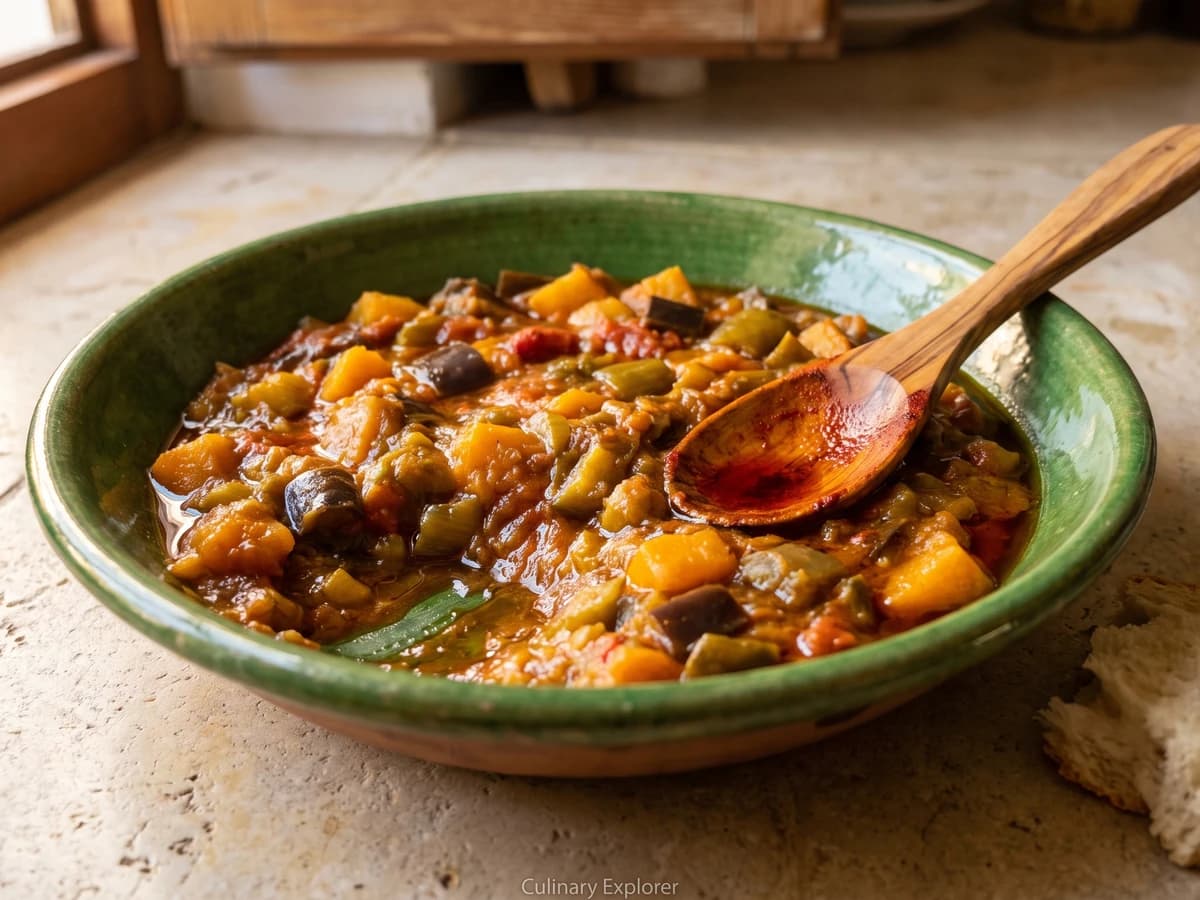
Alboronía is Andalucía's old pumpkin and aubergine stew, deepened with tomato, pimentón, and cumin, then cooked without hurry until the vegetables settle into a glossy, sweet, spoon-soft whole.

Chef Isabel
Aletría Murciana is Murcia's humble noodle guiso: fine fideos, pork ribs, potato, saffron, and a dark sweet sofrito. Get that base right and the pot knows where it's going.
Chef Isabel
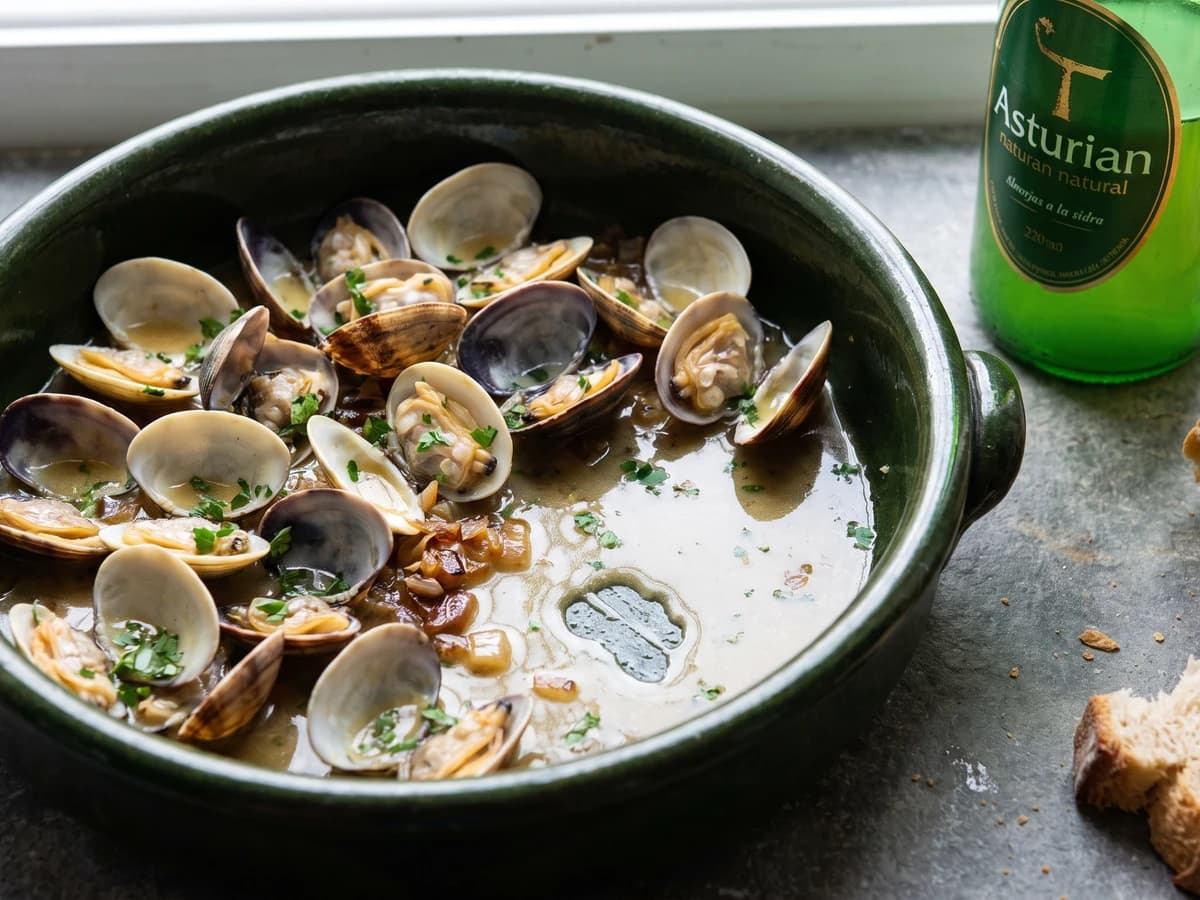
Asturias opens clams in tart natural cider over a slow onion and garlic sofrito, making a bright, briny sauce that asks for bread and rewards one rule: lift each clam as it opens.