
Chef Juliana
Açaí com Camarão do Pará
You think açaí belongs with banana and granola because that's the version that traveled. In Pará, thick unsweetened açaí sits beside shrimp, rice, and farinha. Anota aí: same fruit, different meal.
A cooking platform built around craft, culture, and the stories behind what we eat.
Created by
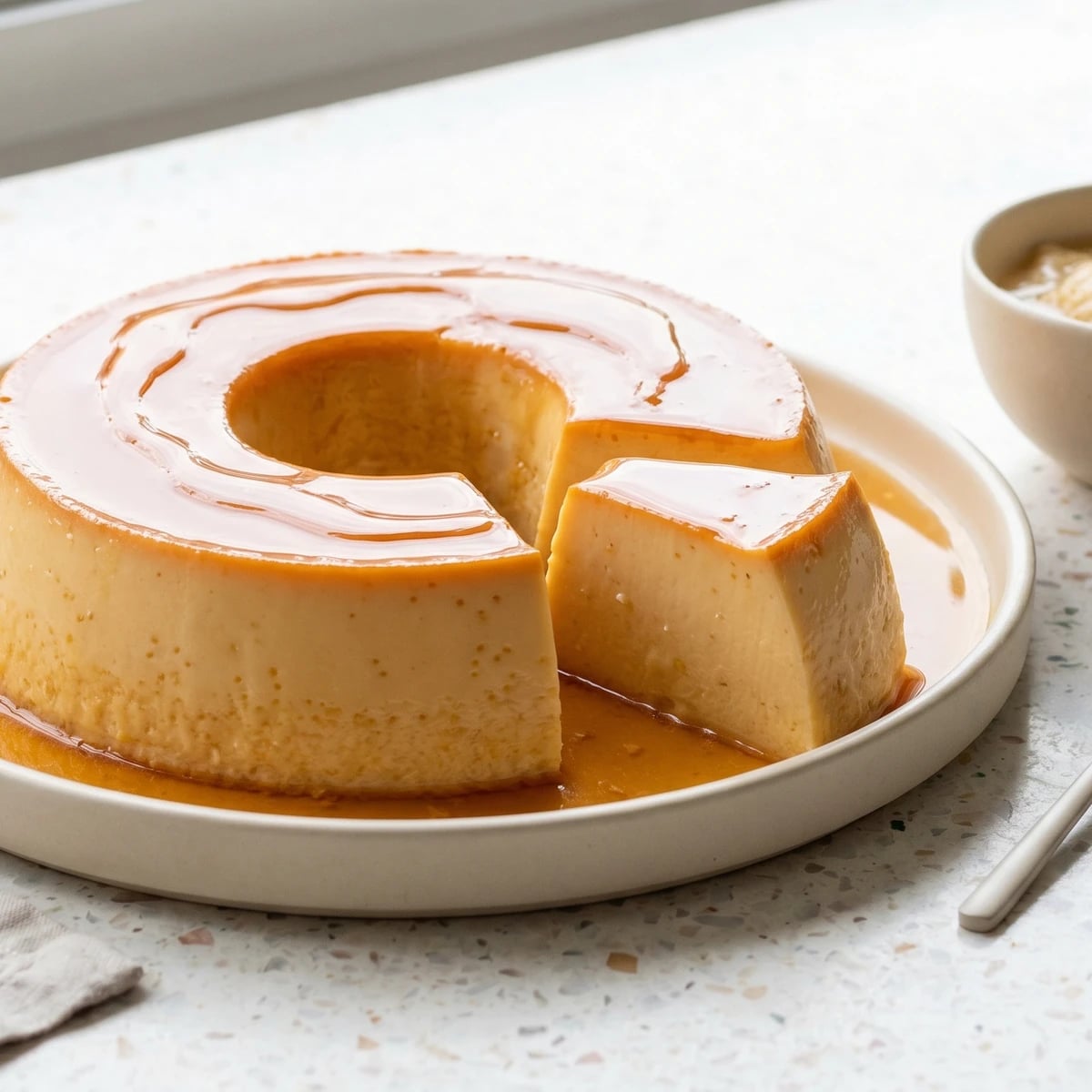
You know pudim de leite, even if you've never made it. Blend, strain, bake gently, chill. Cupuaçu brings tart Amazon fruit to the table without making dessert a mystery.
You may be looking at the word cupuaçu and already hearing the little voice: "isso não é pra mim." Good. Bring that voice here. A gente is going to give it a spoon, a measuring cup, and a job.
At my grandmother's counter in São Paulo, dessert meant something that waited in the fridge while lunch happened properly: rice, beans, meat or egg, something green, the pê-efe doing its quiet national work. Then someone unmolded pudim, and the table leaned forward. This version keeps that same home logic, but the fruit is cupuaçu, tart and perfumed, the kind of Amazon flavor I respect without pretending I own.
The method is not romance, it's order. Make a caramel until it smells like toasted sugar, not smoke. Blend the pulp with condensed milk so the acidity behaves. Strain the custard so the fibers and foam don't become little bumps. Bake in banho-maria because eggs like gentle heat, and nobody asked for sweet scrambled eggs.
Use frozen unsweetened polpa if that's what you can get. That's an honest shortcut. The powdered dessert mix stays on the shelf, because a packet pretending to be fruit is not comida de verdade. Anota aí: cozinhar não é dom, é um aprendizado, and this is one of those receitas que funcionam.
Cupuaçu is native to the Amazon basin and has long been used by Indigenous and ribeirinho communities in Pará and Amazonas in juices, creams, sweets, and seeds treated much like cacao. The fruit is Theobroma grandiflorum, a close relative of cacao, and frozen polpa helped carry it from northern markets into home freezers across Brazil. In the early 2000s, Brazilian groups challenged attempts to register cupuaçu as a foreign trademark, which is a dry reminder that an ingredient can be everyday food and still be worth defending.
Quantity
1 cup
Quantity
1/3 cup
Quantity
1 1/4 cups (about 300 g)
thawed and stirred
Quantity
1 can (14 ounces / 395 g)
Quantity
4 large
room temperature
Quantity
1/4 teaspoon
Quantity
enough to come halfway up the mold
for the banho-maria
| Ingredient | Quantity |
|---|---|
| granulated sugar | 1 cup |
| water | 1/3 cup |
| unsweetened frozen cupuaçu pulpthawed and stirred | 1 1/4 cups (about 300 g) |
| sweetened condensed milk | 1 can (14 ounces / 395 g) |
| eggsroom temperature | 4 large |
| fine salt | 1/4 teaspoon |
| hot waterfor the banho-maria | enough to come halfway up the mold |
Heat the oven to 160°C (325°F). Put a 20 cm (8-inch) ring mold beside the stove, set a large roasting pan near the oven, and start heating water for the banho-maria. Caramel waits for no one. If the mold is ready, you won't be walking around with hot sugar looking for a place to put it.
Put the sugar and water in a small heavy saucepan and stir just until the sugar looks like wet sand. Set it over medium heat and let it bubble without stirring, swirling the pan only if one side colors faster. Cook until the syrup turns deep amber and smells like toasted sugar, about 10 to 12 minutes. Pour it into the mold and carefully tilt the mold so the caramel coats the bottom and climbs a little up the sides. Stop at amber, not black, because burnt caramel is bitter and will bully the cupuaçu.
Put the cupuaçu pulp and condensed milk in the blender first and blend for 20 seconds, until the mixture looks smooth and sunny orange-yellow. Add the eggs and salt, then blend another 20 seconds, just until no streaks remain. The condensed milk cushions the fruit's acidity, and the short blend keeps foam down. Too much air gives you bubbles and a pockmarked pudim.
Pour the custard through a fine-mesh sieve into a bowl or pitcher, pressing gently if the cupuaçu fibers slow it down. Let it rest for 10 minutes, then skim off any thick foam with a spoon. Straining catches fruit fibers and little egg bits; resting lets bubbles rise before they get baked into the custard. Smooth pudim is not magic. It's a sieve and patience.
Pour the strained custard over the hardened caramel in the mold. Cover the mold tightly with foil, set it inside the roasting pan, and pour hot water into the roasting pan until it comes halfway up the mold. Bake for 55 to 70 minutes, until the edges are set and the center trembles like soft gelatin when you nudge the pan. The water bath softens the oven heat so the eggs set gently. Skip it and the edges cook before the center, which is how you get grainy custard and regret.
Lift the mold out of the water bath and uncover it. Let it cool at room temperature for 1 hour, then cover and refrigerate for at least 4 hours, preferably overnight. The custard finishes setting as it chills, and the caramel underneath loosens into syrup. Unmold it warm and it can slump; rush the chill and the sauce may stay stuck. A gente waited this long. Finish the job.
Run a thin knife around the outside edge and the center tube of the mold. Dip the bottom of the mold in hot water for 20 seconds, dry it, place a rimmed serving plate on top, and flip in one confident move. Listen for the soft release. If it doesn't drop, warm the mold for 10 seconds more and try again. Don't shake it like you're angry at it. Serve cold, spooning the caramel over each slice.
1 serving (about 135g)
Culinary guides, cultural storytelling, and the editorial depth that makes cooking meaningful.
Discover Culinary Explorer
Chef Juliana
You think açaí belongs with banana and granola because that's the version that traveled. In Pará, thick unsweetened açaí sits beside shrimp, rice, and farinha. Anota aí: same fruit, different meal.

Chef Juliana
You don't need a blender trick or a sweet shop bowl. Thick unsweetened açaí, crunchy farinha de tapioca, and the discipline to read the label solve this Belém spoon plate.

Chef Juliana
You think savory açaí is not for you. I understand. Then you taste the cold, dark bowl beside hot fried fish, rice, greens, and farinha, and dinner gets very quiet.

Chef Juliana
You don't need a shop to make a thick açaí bowl. You need real frozen pulp, a ripe banana, and the discipline to stop blending before it becomes juice.