
Chef Lesia
Adzhyka po-Ukrainsky (аджика, tomato-pepper relish)
The tomatoes go from garden-red to brick-red while the peppers slump and the garlic waits. By the end, the spoon leaves a path and the whole south fits in one jar.
A cooking platform built around craft, culture, and the stories behind what we eat.
Created by
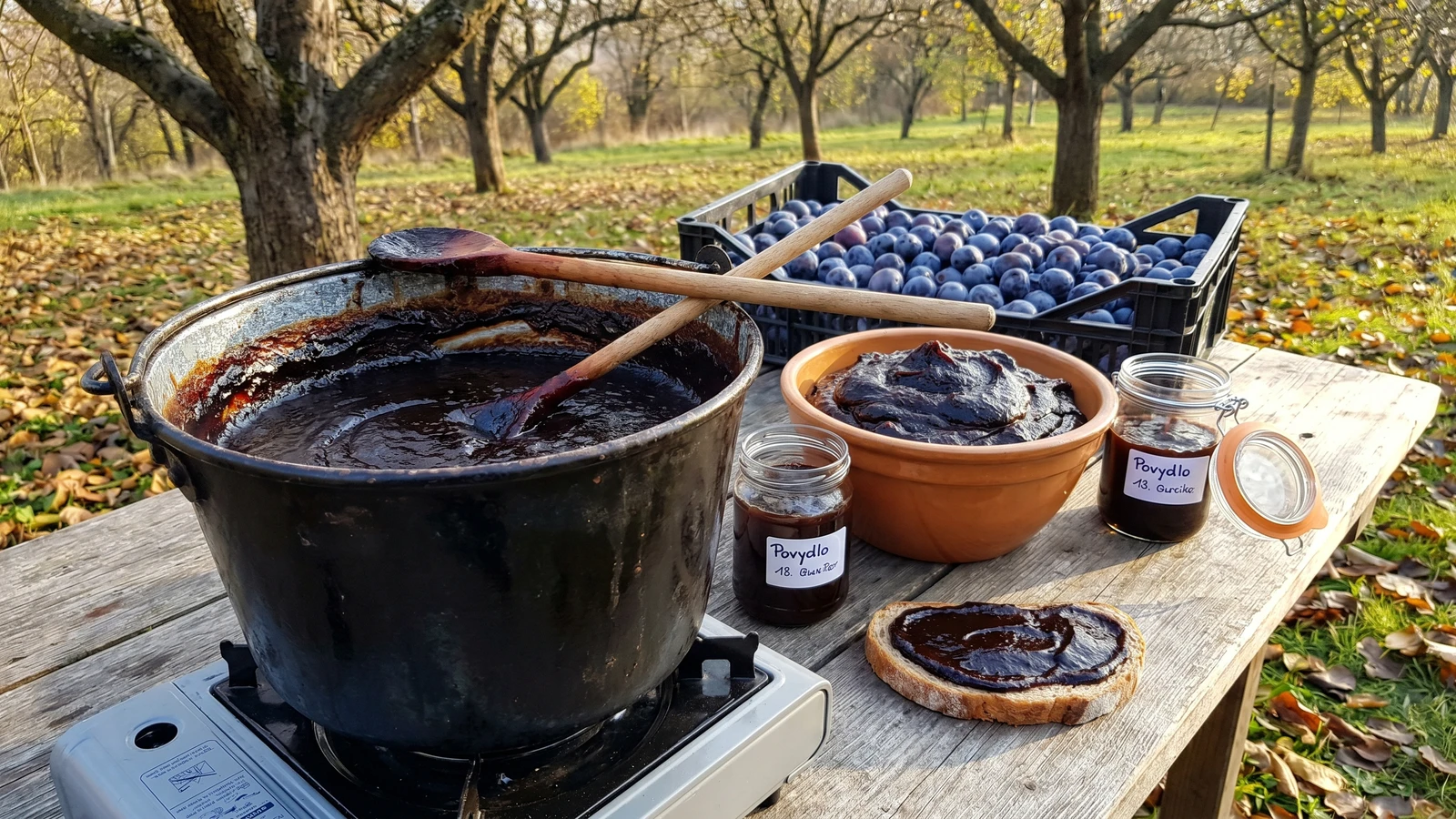
Late plums collapse into a dark, glossy butter so thick a spoon dragged through leaves a clean path. No pectin, no hurry, just fruit cooked until it changes character.
The plums start violet and innocent, then the pot turns almost black. That is the thing to watch. Not the clock, not the number on a thermometer, but the moment when the fruit stops smelling fresh and sharp and begins to smell deep, jammy, a little like dried prunes and warm wine.
Povydlo is the preserve that closes the southern season. In the litnya kuhnia, the summer kitchen, this would be made when the trees had given too much and everyone was tired of pretending they could eat another bowl of fresh plums. You cook them down slowly, without pectin, because the whole point is concentration: less water, darker fruit, a paste thick enough for pyrizhky, rohalyky, pancakes, or a spoon straight from the jar when nobody is looking.
Aunt Nadia's letter only said, "stir until it sounds right," which was comedy the first time I tried it. But she was right. At the beginning the pot blips and spits like fruit soup; near the end the spoon moves heavily, the bubbling gets low and lazy, and a wooden spoon drawn through the middle leaves a clean road before the fruit folds back. That's povydlo. The spoon must stand up straight.
Povydlo belongs to Ukraine's household preserving calendar, especially in plum-growing regions where late blue plums, often called uhorky, were cooked down for winter baking without needing precious extra pectin. In Zakarpattia, a related thick plum preserve called lekvar is still cooked in large cauldrons for many hours, a village-scale version of the same idea: turn too much autumn fruit into something dark, durable, and useful.
Quantity
3 kg
washed, halved, and stoned
Quantity
300g
adjust only if the plums are very sharp
Quantity
2 tablespoons
Quantity
1/2 teaspoon
Quantity
1
Quantity
1 tablespoon
for greasing the pot if finishing in the oven
| Ingredient | Quantity |
|---|---|
| ripe dark plumswashed, halved, and stoned | 3 kg |
| sugaradjust only if the plums are very sharp | 300g |
| lemon juice | 2 tablespoons |
| fine sea salt | 1/2 teaspoon |
| cinnamon stick (optional) | 1 |
| unrefined sunflower oil (optional)for greasing the pot if finishing in the oven | 1 tablespoon |
Put the halved plums into a wide heavy pot with the lemon juice, salt, and cinnamon if you're using it. Cover and set over a low flame until the fruit gives up its juice and slumps into itself. Don't add water unless the fruit is truly dry and catching; even then, only a splash.
Uncover the pot and cook slowly, stirring often, until the plums break down into a loose purple mash. Add the sugar once the fruit has fully collapsed, then keep cooking. The color will move from bright plum to burgundy to brown-black, and the smell will change from fresh fruit to dried plum, almost honeyed at the edges.
As it thickens, lower the heat and stir more often, scraping the bottom and corners so the fruit doesn't scorch. Early on it splashes sharply; later it bubbles low and heavy, with a soft plop that tells you most of the water has gone. This is what Aunt Nadia meant by until it sounds right.
Drag a wooden spoon through the middle of the povydlo. When it leaves a clean path for a few seconds before the fruit slowly folds back, you're there. It should mound on the spoon, glossy and dark, not run like jam. Pull out the cinnamon stick if you used one.
Ladle the hot povydlo into hot sterilized jars, leaving a little headspace, then seal. For shelf storage, process the jars in a boiling water bath for 10 minutes; for the fridge, cool them and refrigerate. Let the jars sit overnight before judging the set. By morning it will be thicker, darker, and ready for winter baking.
1 serving (about 20g)
Culinary guides, cultural storytelling, and the editorial depth that makes cooking meaningful.
Discover Culinary ExplorerChef Lesia
The tomatoes go from garden-red to brick-red while the peppers slump and the garlic waits. By the end, the spoon leaves a path and the whole south fits in one jar.

Chef Lesia
A jar of grated beets turns ordinary water into sour red light, the kind that wakes borshch from inside instead of shouting over it.

Chef Lesia
Raw garlic, salt, and green sunflower oil turn into a sauce that announces itself from the doorway, sharp enough for pampushky, potatoes, grilled meat, and any tired Tuesday plate.

Chef Lesia
The gravy should start dark as wet bark, then soften when smetana goes in. Spoon it over buckwheat, potatoes, or mlyntsi and nobody asks where the meat went.