
Chef Lesia
Adzhyka po-Ukrainsky (аджика, tomato-pepper relish)
The tomatoes go from garden-red to brick-red while the peppers slump and the garlic waits. By the end, the spoon leaves a path and the whole south fits in one jar.
A cooking platform built around craft, culture, and the stories behind what we eat.
Created by
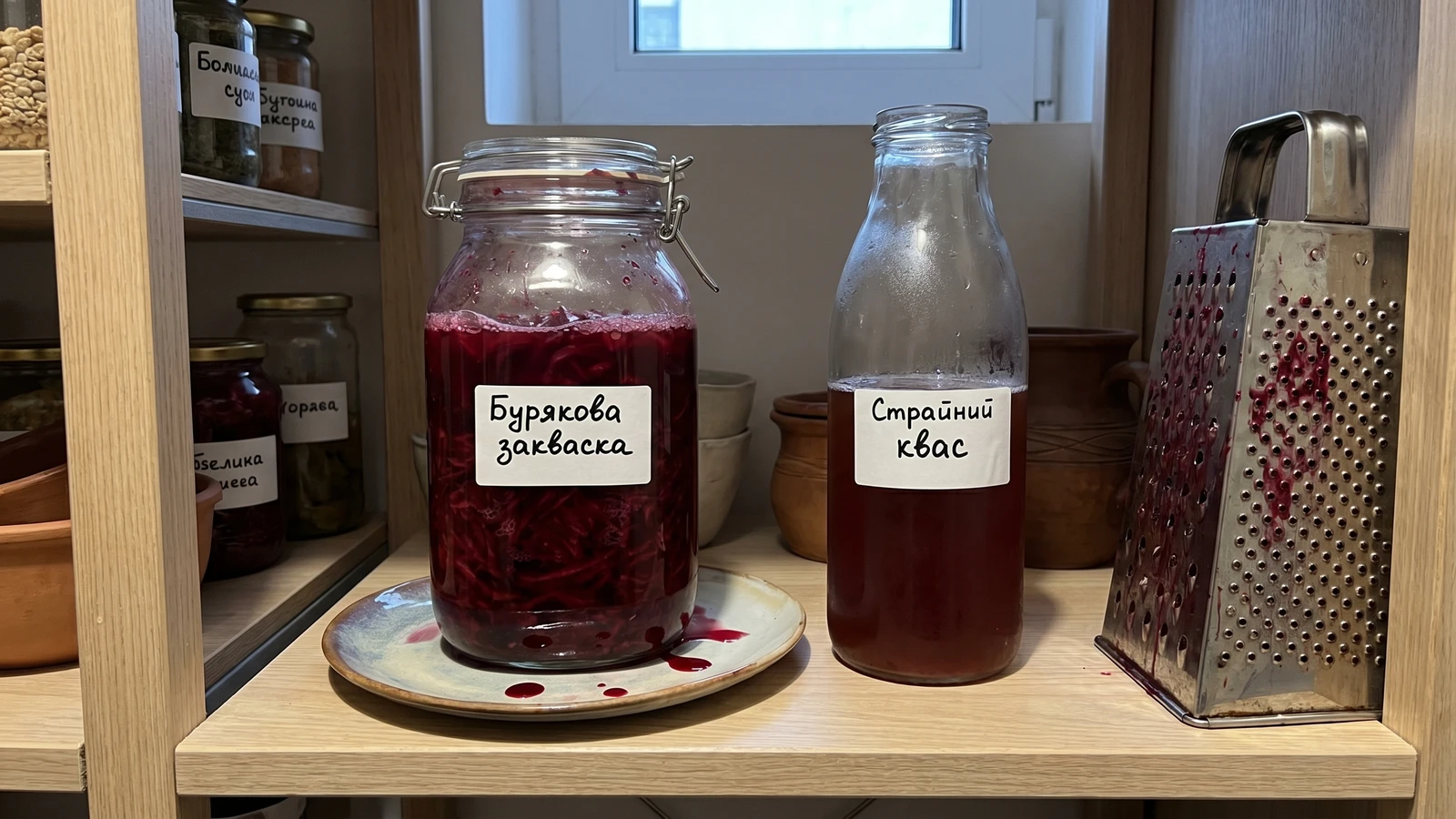
A jar of grated beets turns ordinary water into sour red light, the kind that wakes borshch from inside instead of shouting over it.
The first thing this jar gives you is color, not flavor: a red so deep it looks lit from underneath. Then the smell changes. Raw beet turns earthy and sweet, then bright, then tart enough to make your mouth wake up before you've even tasted it.
This is buryakova zakvaska, beet starter, the souring liquid I want in borshch when vinegar would only make it sharp. It isn't a drink first, not at my table. It is the quiet engine under the pot, the thing that makes beet sweetness speak properly, with a little fizz at the edge and a clean lactic sourness that sits in the broth instead of stabbing it.
The method is almost rude in its simplicity: grate the beets, salt the water, keep everything under the brine, and wait until it smells alive. Aunt Nadia's letter only said "leave until it sounds right," which is comedy when a jar is silent, so I listened another way. Tiny bubbles, cloudy ruby liquid, a smell like beetroot cellar and lemon peel. That's ready.
Make more than you think. A small jar disappears into one big pot, and there is no tradition of making borshch for only yourself.
Beet zakvaska belongs to the older Ukrainian souring pantry, alongside fermented tomato mors, cucumber brine, and beet zakwas used before factory vinegar became the easy bottle on the shelf. In central and southern kitchens it was valued less as a drink than as a living sour for borshch, giving color, acidity, and depth without boiling the beets grey. Soviet-era standardized recipes often replaced these house ferments with vinegar or citric acid, which saved time but flattened the regional habit of souring from the jar.
Quantity
700g
scrubbed and coarsely grated
Quantity
1 litre
or boiled and cooled
Quantity
30g
3 percent of the water weight
Quantity
2 cloves
lightly smashed
Quantity
1 small
Quantity
1 slice
optional, for faster fermentation only
| Ingredient | Quantity |
|---|---|
| raw beetsscrubbed and coarsely grated | 700g |
| cool filtered wateror boiled and cooled | 1 litre |
| fine sea salt or non-iodized salt3 percent of the water weight | 30g |
| garliclightly smashed | 2 cloves |
| dill stem or dill flower head (optional) | 1 small |
| rye bread with live sourdough culture (optional)optional, for faster fermentation only | 1 slice |
Weigh the water, then weigh the salt. Stir 30g salt into 1 litre cool water until it disappears. Three percent is enough for grated beets because they ferment quickly and you want a clean sour, not a salty pickle.
Put the grated beets into a clean 1.5 to 2 litre jar with the garlic and dill if using. Press them down with clean fingers or the back of a spoon so they sit tightly, but don't crush them into paste. You want the brine to move through the shreds.
Pour in the salted water until the beets are fully covered by at least 2cm. Weight them down with a fermentation weight or a small clean jar so no beet shreds float above the surface. If you use the rye bread, set it on top for the first day only, then remove it before it softens and breaks apart.
Set the jar on a plate in a cool room, out of direct sun, with the lid loose enough to let gas escape. The brine will turn ruby, then cloudy ruby, and tiny bubbles will gather around the beet shreds. Smell it each day. When raw earthiness gives way to bright, clean sourness, it is becoming itself.
Start tasting after four days. It should be tart, lightly salty, beet-sweet underneath, and a little alive on the tongue. Strain the liquid into clean bottles, refrigerate it, and use the spent beets in soup or salad if they still taste good. If you see fuzzy mold, a rotten smell, or slime, throw it away and start again with cleaner jars and fully submerged beets.
Add the zakvaska near the end of cooking borshch, after the vegetables are tender and the zasmazhka has done its sweet work. Don't boil it hard. Let it warm through so the sourness stays bright and the color stays brave.
1 serving (about 250g)
Culinary guides, cultural storytelling, and the editorial depth that makes cooking meaningful.
Discover Culinary ExplorerChef Lesia
The tomatoes go from garden-red to brick-red while the peppers slump and the garlic waits. By the end, the spoon leaves a path and the whole south fits in one jar.

Chef Lesia
Raw garlic, salt, and green sunflower oil turn into a sauce that announces itself from the doorway, sharp enough for pampushky, potatoes, grilled meat, and any tired Tuesday plate.

Chef Lesia
The gravy should start dark as wet bark, then soften when smetana goes in. Spoon it over buckwheat, potatoes, or mlyntsi and nobody asks where the meat went.

Chef Lesia
Fresh horseradish is quiet until you cut it, then it fills the room, clears your head, and makes cold pork taste awake again.