
Chef Lesia
Adzhyka po-Ukrainsky (аджика, tomato-pepper relish)
The tomatoes go from garden-red to brick-red while the peppers slump and the garlic waits. By the end, the spoon leaves a path and the whole south fits in one jar.
A cooking platform built around craft, culture, and the stories behind what we eat.
Created by
Fresh horseradish is quiet until you cut it, then it fills the room, clears your head, and makes cold pork taste awake again.
Fresh horseradish looks like nothing: a pale root, rough-skinned, a little muddy, with no promise in it at all. Then the knife opens it and the whole room gets a slap. Your eyes water, your nose clears, somebody laughs from the doorway, and suddenly the cold table makes sense.
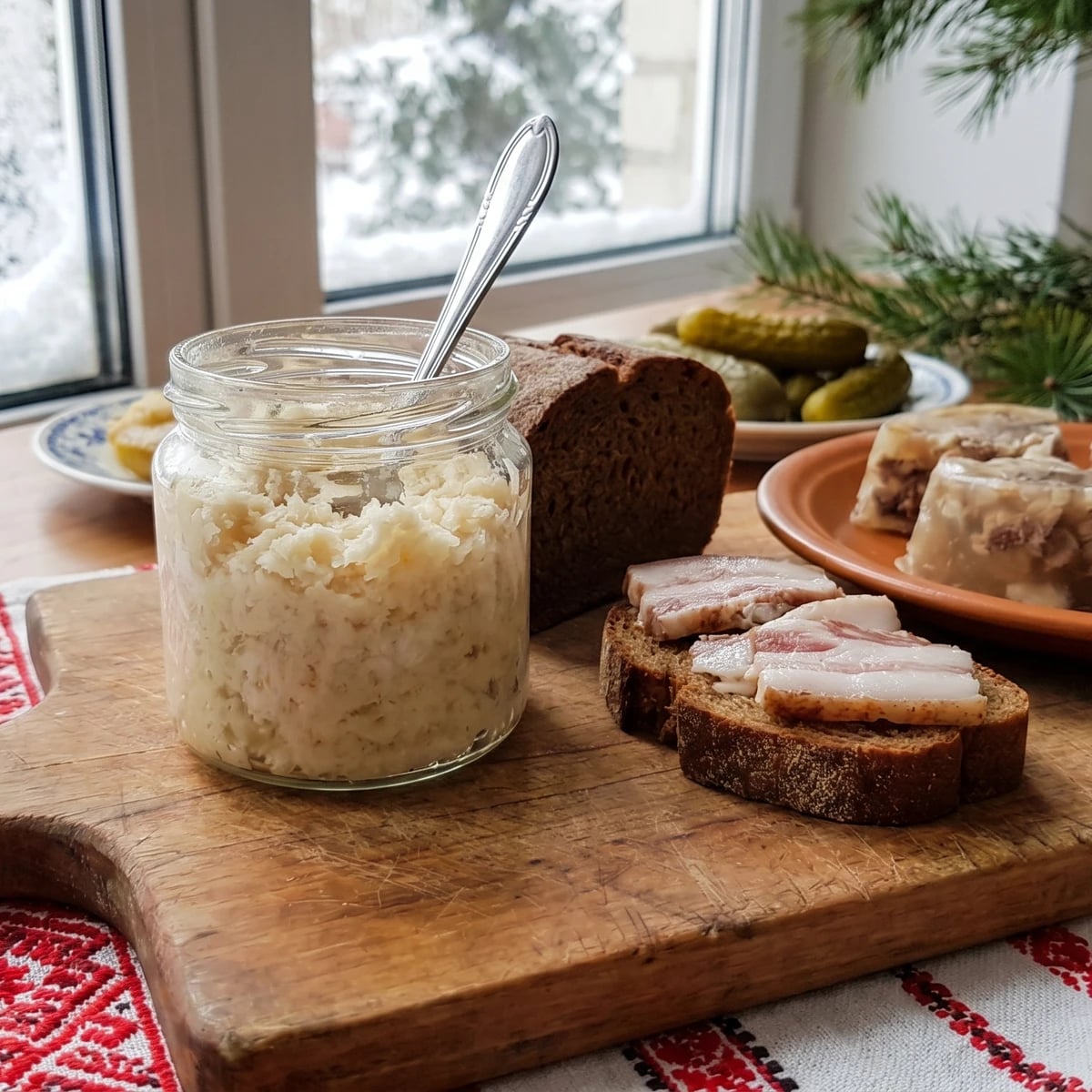
This white khrin is the version I put beside kholodets, salo, boiled pork, Easter eggs, anything rich and cold that needs waking up. The one thing that decides it is timing: grate the root, then catch its fire quickly with salt, sugar, vinegar, and a little cooled boiled water. Leave it exposed too long and the sharpness runs away into the air instead of staying in the jar.
Aunt Nadia's letter just says, "make it angry, then calm it." Very helpful, as usual. What she meant is this: it should bite first, then settle into clean sour-salt heat. If it only hurts, add a spoon of water. If it tastes sleepy, you waited too long, so make another jar and feed this one to beet salad.
Horseradish has grown for centuries along damp Ukrainian garden edges and riverbanks, and the root is usually dug in late autumn after frost or in early spring before the plant spends its strength on leaves. White khrin belongs to the cold table: kholodets, salo, boiled meats, kovbasa, Easter eggs. Western Ukrainian kitchens also make a beet-red version often called tsvikli, but the plain white jar keeps its place because it cuts through fat with no sweetness hiding the root.
Quantity
250g
scrubbed and peeled
Quantity
120ml, plus more if needed
Quantity
60ml
Quantity
1 1/2 teaspoons
Quantity
1 teaspoon
Quantity
1 teaspoon
for sealing the top
| Ingredient | Quantity |
|---|---|
| fresh horseradish rootscrubbed and peeled | 250g |
| cooled boiled water | 120ml, plus more if needed |
| white wine vinegar or apple cider vinegar | 60ml |
| fine sea salt | 1 1/2 teaspoons |
| sugar | 1 teaspoon |
| unrefined sunflower oil (optional)for sealing the top | 1 teaspoon |
Wash a medium jar and lid well, then rinse with boiling water and leave them to air-dry. Stir the salt and sugar into the cooled boiled water until dissolved, then add the vinegar. Have this brine ready before you grate. Horseradish waits for nobody.
Scrub the horseradish hard under cold water, then peel away the rough skin with a vegetable peeler. Cut out any woody brown cores. The root should smell clean and fierce, like mustard and cold soil.
Grate the root finely by hand or pulse it in a food processor until it looks like wet white snow. Keep your face back when you open the lid. The bite rises sharply, and that is the dish announcing itself.
Immediately spoon the grated horseradish into the brine and stir until every fleck is wet. This is the why of the recipe: vinegar and salt fix the heat in place before the volatile oils escape into the room. It should smell sharp enough to clear your head, but not chemical or bitter.
Pack the khrin into the clean jar, pressing out air pockets. Add a spoon more cooled boiled water if it looks dry; you want a loose paste, not crumbs. Smooth the top, cover with a thin film of sunflower oil if you like, seal, and refrigerate. Taste after it has sat long enough to settle. It should bite first, then finish clean.
1 serving (about 56g)
Culinary guides, cultural storytelling, and the editorial depth that makes cooking meaningful.
Discover Culinary Explorer
Chef Lesia
The tomatoes go from garden-red to brick-red while the peppers slump and the garlic waits. By the end, the spoon leaves a path and the whole south fits in one jar.

Chef Lesia
A jar of grated beets turns ordinary water into sour red light, the kind that wakes borshch from inside instead of shouting over it.

Chef Lesia
Raw garlic, salt, and green sunflower oil turn into a sauce that announces itself from the doorway, sharp enough for pampushky, potatoes, grilled meat, and any tired Tuesday plate.

Chef Lesia
The gravy should start dark as wet bark, then soften when smetana goes in. Spoon it over buckwheat, potatoes, or mlyntsi and nobody asks where the meat went.