
Chef Lesia
Adzhyka po-Ukrainsky (аджика, tomato-pepper relish)
The tomatoes go from garden-red to brick-red while the peppers slump and the garlic waits. By the end, the spoon leaves a path and the whole south fits in one jar.
A cooking platform built around craft, culture, and the stories behind what we eat.
Created by
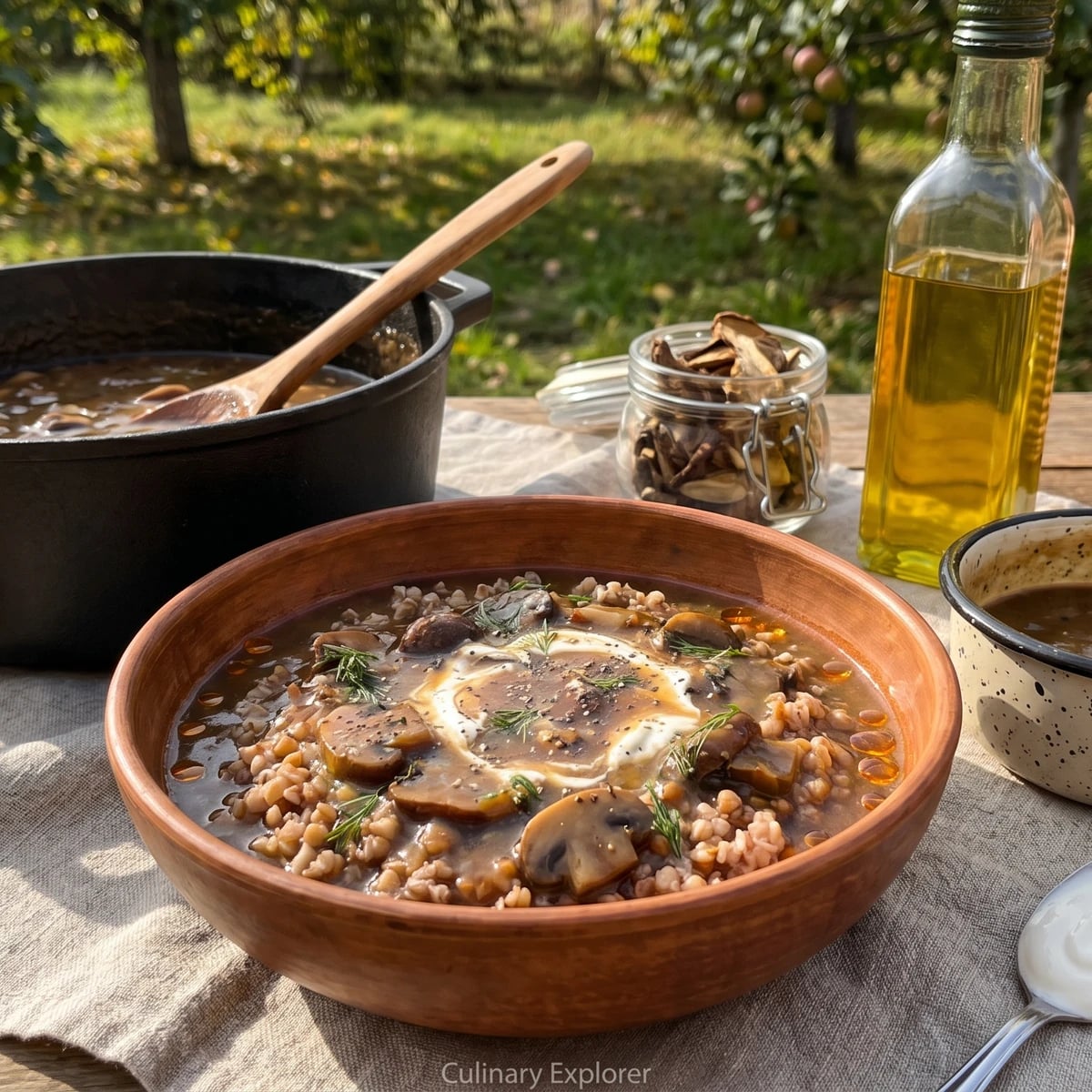
The gravy should start dark as wet bark, then soften when smetana goes in. Spoon it over buckwheat, potatoes, or mlyntsi and nobody asks where the meat went.
The first spoonful should taste like the forest floor after rain: dark, savoury, a little damp in the best way, then rounded by smetana until it turns glossy and brown-gold. This is not a polite cream sauce. Hrybna pidliva is the thing you drag across buckwheat kasha, boiled potatoes, deruny, mlyntsi, or plain varenyky when the table needs feeding and the pot has to stretch.
The mushrooms do most of the talking, especially if you use dried porcini or mixed forest mushrooms. Their soaking liquid is not dirty water, it's the stock. Let it settle, pour it carefully, and leave the grit behind. Aunt Nadia wrote only "cook until the smell changes," which is annoying until it happens: the raw mushroom sharpness disappears and the pan smells deep, almost nutty.
The one why is the zasmazhka, the slow-sweated onion and carrot flavour base. It goes in near the end so its sweetness sits brightly on the gravy instead of flattening into the mushroom stock. Make a proper pot. There is no tradition of a small one.
Mushroom gravies belong especially to Ukraine's forested kitchens, from Polissia to the Carpathians, where dried borovyky, porcini, carried summer and autumn into winter cupboards. In many western Ukrainian homes, a meatless mushroom sauce appears at Sviata Vecheria, Christmas Eve supper, poured over holubtsi, varenyky, or potatoes. Soviet cafeterias made mushroom gravy pale and floury, but the older home version is darker, more fragrant, and built from the soaking liquor of real dried mushrooms.
Quantity
35g
Quantity
500ml
Quantity
500g
sliced
Quantity
3 tablespoons
Quantity
1 tablespoon
Quantity
2 medium
finely diced
Quantity
1 medium
finely grated
Quantity
2 cloves
finely grated
Quantity
1
Quantity
1 tablespoon
Quantity
150g
Quantity
1 teaspoon
Quantity
1 small bunch
finely chopped
Quantity
to taste
| Ingredient | Quantity |
|---|---|
| dried porcini or mixed dried forest mushrooms | 35g |
| just-boiled water | 500ml |
| fresh mushroomssliced | 500g |
| unrefined sunflower oil | 3 tablespoons |
| butter | 1 tablespoon |
| onionsfinely diced | 2 medium |
| carrotfinely grated | 1 medium |
| garlicfinely grated | 2 cloves |
| bay leaf | 1 |
| plain flour | 1 tablespoon |
| smetana or full-fat sour cream | 150g |
| mild mustard (optional) | 1 teaspoon |
| dillfinely chopped | 1 small bunch |
| sea salt and black pepper | to taste |
Put the dried mushrooms in a bowl and cover with the just-boiled water. Leave them until they soften and the water turns dark tea-brown and smells like the woods after rain. Lift the mushrooms out with your fingers, chop them finely, then let the soaking liquid settle so the grit sinks to the bottom.
Warm 1 tablespoon sunflower oil and the butter in a wide pan, then add the fresh mushrooms with a good pinch of salt. Let them give up their water, hiss, shrink, and then begin to catch at the edges. Don't rush them. They are ready when the wet squeak in the pan turns to a softer fry and the smell changes from raw mushroom to toasted and deep.
In a separate wide pan, warm the remaining sunflower oil and add the onions. Cook gently until translucent and sweet-smelling, then add the grated carrot and garlic. You're not browning anything hard. You're coaxing sweetness out slowly, until the oil turns orange and the carrot has melted into the onions.
Sprinkle the flour over the zasmazhka and stir until it disappears into the oil and smells warm, not dusty. Add the chopped soaked mushrooms, the cooked fresh mushrooms, and the bay leaf. Now pour in the clear mushroom soaking liquid slowly, stirring as you go, until the pan loosens into a dark, glossy gravy.
Let the gravy bubble quietly, not angrily, until it coats the back of a spoon and the mushrooms taste like they belong to the sauce instead of sitting in it. If it gets too thick, slacken it with a splash of hot water. Taste for salt and black pepper. The spoon should leave a path through the pan for a second before the gravy closes over itself.
Lower the heat and stir a spoonful of hot gravy into the smetana first, then stir that warmed smetana back into the pan. Add the mustard if you want a small lift, then fold in most of the dill. The colour should soften from dark brown to walnut, and the finish should be glossy, not split.
Ladle the pidliva over buckwheat kasha, boiled potatoes, deruny, mlyntsi, or plain varenyky. Scatter over the last dill and bring more smetana to the table. This is enough for eight guests or one hungry Ukrainian, depending on the weather.
1 serving (about 165g)
Culinary guides, cultural storytelling, and the editorial depth that makes cooking meaningful.
Discover Culinary Explorer
Chef Lesia
The tomatoes go from garden-red to brick-red while the peppers slump and the garlic waits. By the end, the spoon leaves a path and the whole south fits in one jar.

Chef Lesia
A jar of grated beets turns ordinary water into sour red light, the kind that wakes borshch from inside instead of shouting over it.

Chef Lesia
Raw garlic, salt, and green sunflower oil turn into a sauce that announces itself from the doorway, sharp enough for pampushky, potatoes, grilled meat, and any tired Tuesday plate.

Chef Lesia
Fresh horseradish is quiet until you cut it, then it fills the room, clears your head, and makes cold pork taste awake again.