Chef Isabel
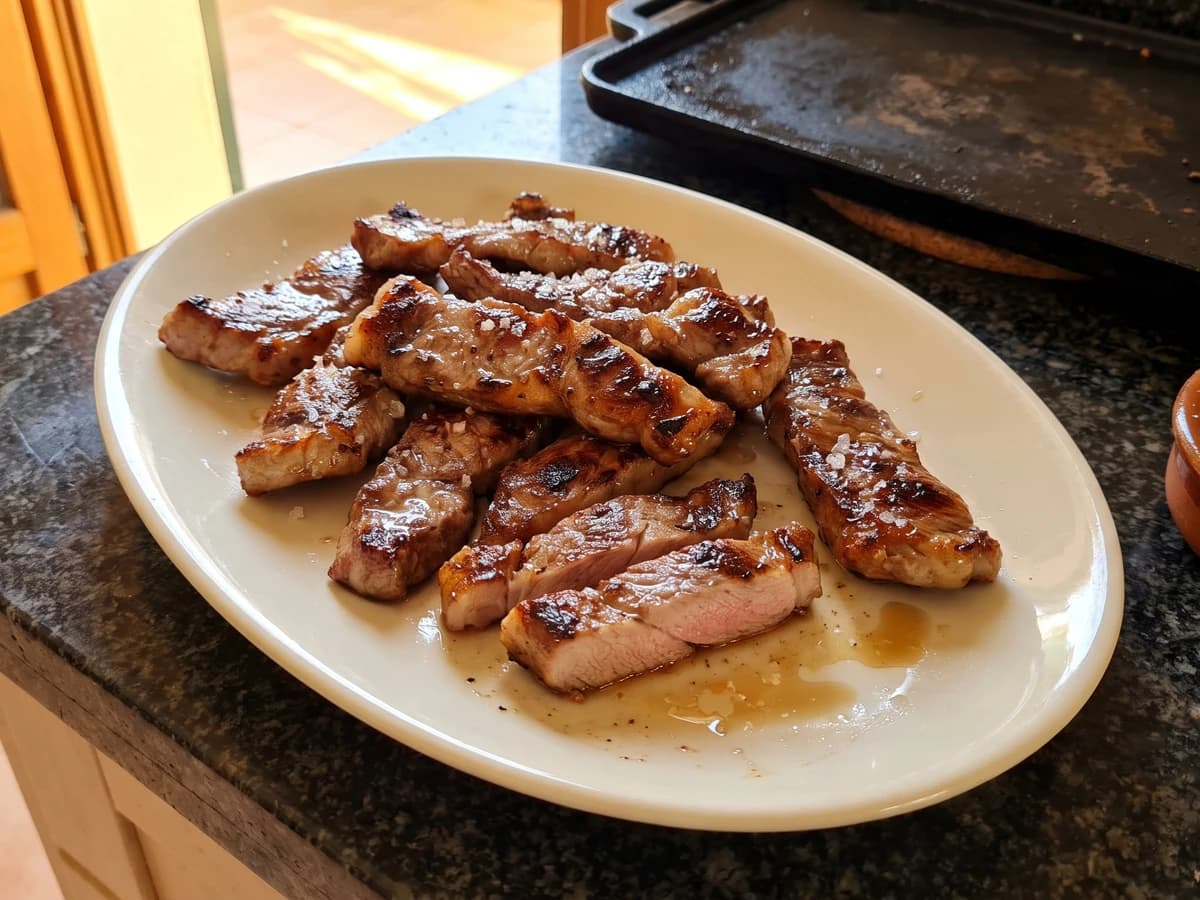
Abanico Ibérico a la Plancha
Extremadura's dehesa gives us this fan-shaped, marbled rib cut: salt it at the last moment, lay it on a fierce plancha, and count in seconds so the centre stays juicy.
A cooking platform built around craft, culture, and the stories behind what we eat.
Created by
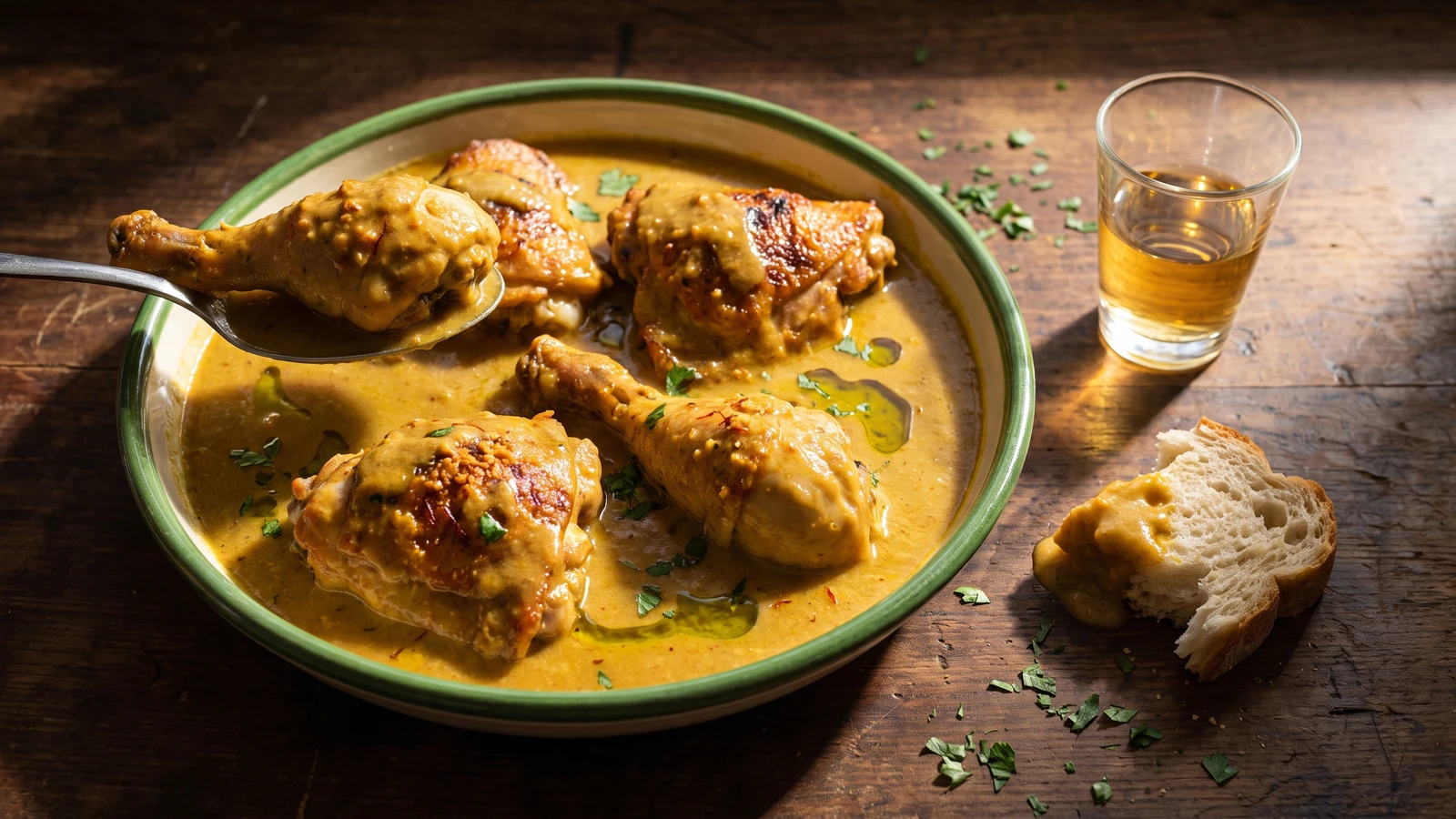
Andalucía's almond chicken turns toasted nuts, fried bread, garlic, and slow-cooked onion into a silky sauce that clings to browned chicken, rich enough for Sunday and plain enough for home.
Pollo en salsa de almendras is Andaluz: chicken browned in olive oil and simmered in a pale-gold sauce of toasted almonds, fried bread, garlic, saffron, and a slow onion sofrito. The majado, a mortar paste of nuts, bread, and garlic, is what makes this more than an ordinary wine-braised chicken. It thickens the pot without cream and turns a plain bird into Sunday lunch.
The almonds decide whether it works. I fry them slowly until honey-gold, then pull them before they turn brown; that measured toast gives the sauce its sweet, nutty depth. Grind them very smooth with the fried bread and garlic, then return the picada to the casserole over low heat. Rush the almonds or boil the finished sauce hard and they answer with bitterness. Almonds are patient until they aren't.
Spanish Marcona almonds are lovely, but they are not a toll gate. Raw blanched almonds from any good shop are the right substitute; the sauce will be a little less buttery and slightly firmer. If fino is hard to find, use a dry, unoaked white wine. You lose some of sherry's saline, nutty edge, not the dish. No hace falta haber pisado España, you don't need to have set foot in Spain. The line in my Margin is blunt: pull the almonds early. Siempre sale, si lo sigues.
Pollo en salsa de almendras belongs broadly to Andalucía rather than to one single province, and its majado follows the southern practice of thickening stews with nuts, fried bread, garlic, and cooking liquor worked smooth in a mortar. Almonds were present on the Iberian Peninsula before Muslim rule, but the agriculture and cookery of al-Andalus deepened their place in savoury sauces as well as sweets. Fried bread stretched the costly almonds and gave a household sauce body without cream, making the dish festive and frugal at once.
Quantity
1.5kg
preferably 4 thighs and 4 drumsticks, patted dry
Quantity
12g, plus up to 2g after tasting
Quantity
1g (about 1/2 teaspoon)
Quantity
90ml
Quantity
100g
completely dry
Quantity
60g
crust removed and cut into 2cm pieces
Quantity
20g (about 4 large cloves)
peeled and left whole
Quantity
250g
finely diced
Quantity
150ml
Quantity
600ml
divided
Quantity
0.1g (about 20 threads)
Quantity
1
Quantity
10g
finely chopped
Quantity
up to 100ml
for loosening the sauce if needed
| Ingredient | Quantity |
|---|---|
| bone-in, skin-on chicken piecespreferably 4 thighs and 4 drumsticks, patted dry | 1.5kg |
| fine sea salt | 12g, plus up to 2g after tasting |
| freshly ground black pepper | 1g (about 1/2 teaspoon) |
| extra virgin olive oil | 90ml |
| raw blanched almondscompletely dry | 100g |
| day-old rustic white breadcrust removed and cut into 2cm pieces | 60g |
| garlicpeeled and left whole | 20g (about 4 large cloves) |
| yellow onionfinely diced | 250g |
| dry fino sherry or dry, unoaked white wine | 150ml |
| unsalted chicken stockdivided | 600ml |
| saffron threads | 0.1g (about 20 threads) |
| bay leaf | 1 |
| flat-leaf parsley leavesfinely chopped | 10g |
| water (optional)for loosening the sauce if needed | up to 100ml |
Rub the dry chicken with 10g of the salt and all the black pepper. Leave it for 20 minutes while you weigh and prepare everything else. Pésalo, no lo adivines, weigh it, don't guess. Dry skin browns; wet skin sticks and spits.
Heat 60ml of the olive oil in a wide casserole over medium-low heat. Fry the bread for about 2 minutes, turning until crisp and deep gold, then lift it out. Fry the whole garlic cloves for 2 minutes until lightly golden and remove them. Add the almonds and cook for 4 to 5 minutes, stirring constantly, until honey-gold through the centre. Lift them out at once. The almonds continue darkening after they leave the oil, and brown almonds make a bitter sauce.
Raise the heat to medium-high. Brush away any dark crumbs but keep the almond-scented oil. Brown the chicken in two batches so the pieces do not crowd the pan, beginning skin-side down. Give each batch 5 minutes on the skin side and 2 minutes on the second side. Add the remaining 30ml oil only if the casserole looks dry. Transfer the browned pieces to a plate; they will still be raw inside.
Lower the heat and add the onion with the remaining 2g measured salt. Cook for 18 to 20 minutes, stirring often and scraping up the browned chicken juices, until the onion is dark gold, soft, and almost jammy. This is the sofrito, the slow onion base. If it catches before softening, add 15ml water and lower the heat; more oil will not fix a fire that is too high.
Pour in the fino and scrape the bottom clean. Let it bubble for about 3 minutes, until reduced by half and no sharp smell of alcohol remains. Return the chicken and its juices, keeping the skin sides mostly above the liquid. Add 400ml of the stock, the saffron, and the bay leaf. Bring just to a simmer, cover, and cook gently for 25 minutes.
While the chicken braises, put the fried bread, garlic, and toasted almonds in a blender with the reserved 200ml stock. Blend for 60 to 90 seconds, scraping down once, until the picada, the ground thickening paste, is smooth and creamy rather than gritty. A large mortar works too: pound the garlic first, then the almonds, then the bread, and work in the stock gradually.
Pour the picada around the chicken and stir it into the cooking liquid without tearing the skin. Simmer uncovered over low heat for 10 to 12 minutes, shaking the casserole by its handles now and then. The finished sauce should coat a spoon but still pour. If it becomes stiff, add water 25ml at a time. Once ground almond enters the pot, a hard boil makes the sauce catch, so keep the fire low.
Check the thickest piece of chicken away from the bone; it must reach at least 74°C, and the meat beside the bone should no longer be pink. Remove the bay leaf, taste the sauce, and add up to 2g more salt if needed. Rest off the heat for 10 minutes, then scatter over the parsley. The sauce thickens as it stands, so loosen it with a spoonful of water before serving if necessary.
1 serving (about 340g)
Culinary guides, cultural storytelling, and the editorial depth that makes cooking meaningful.
Discover Culinary ExplorerChef Isabel
Extremadura's dehesa gives us this fan-shaped, marbled rib cut: salt it at the last moment, lay it on a fierce plancha, and count in seconds so the centre stays juicy.
Chef Isabel
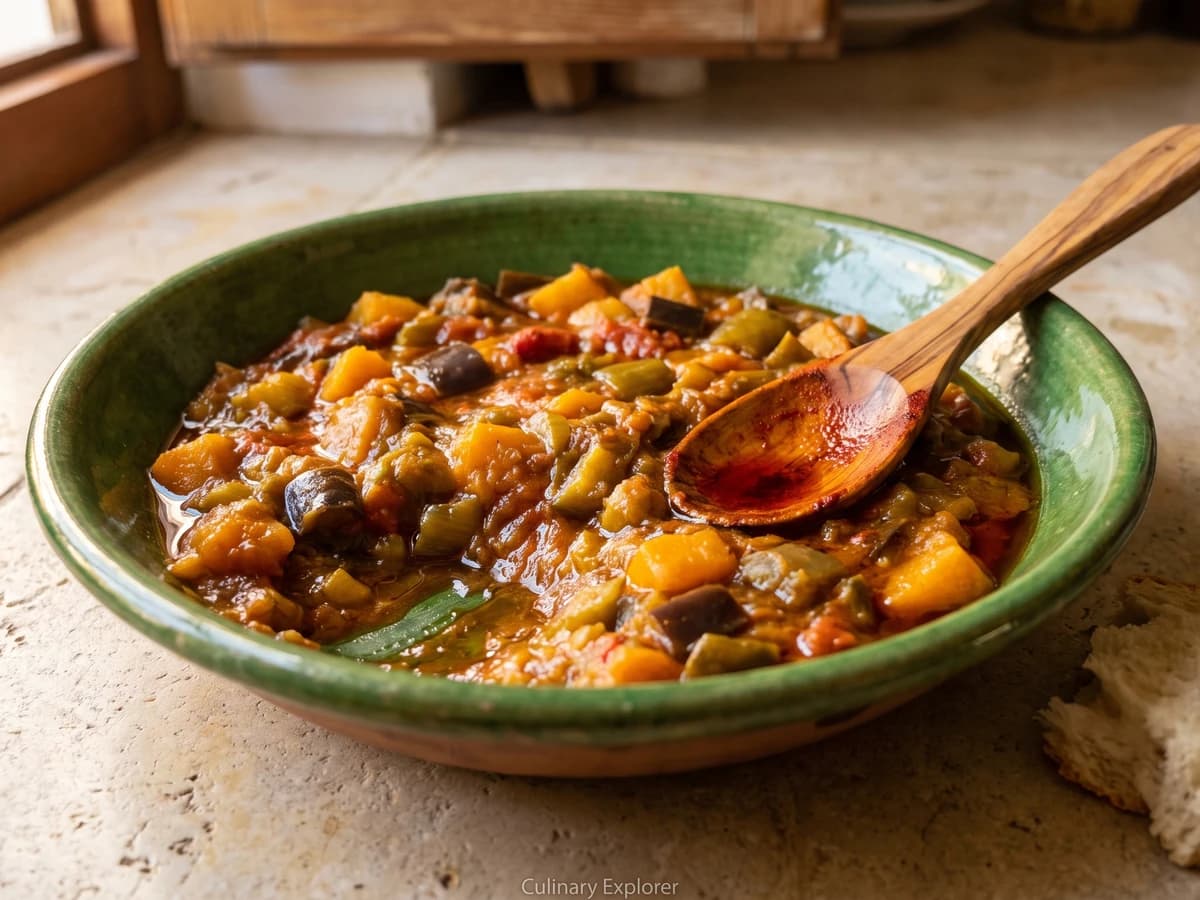
Alboronía is Andalucía's old pumpkin and aubergine stew, deepened with tomato, pimentón, and cumin, then cooked without hurry until the vegetables settle into a glossy, sweet, spoon-soft whole.

Chef Isabel
Aletría Murciana is Murcia's humble noodle guiso: fine fideos, pork ribs, potato, saffron, and a dark sweet sofrito. Get that base right and the pot knows where it's going.
Chef Isabel
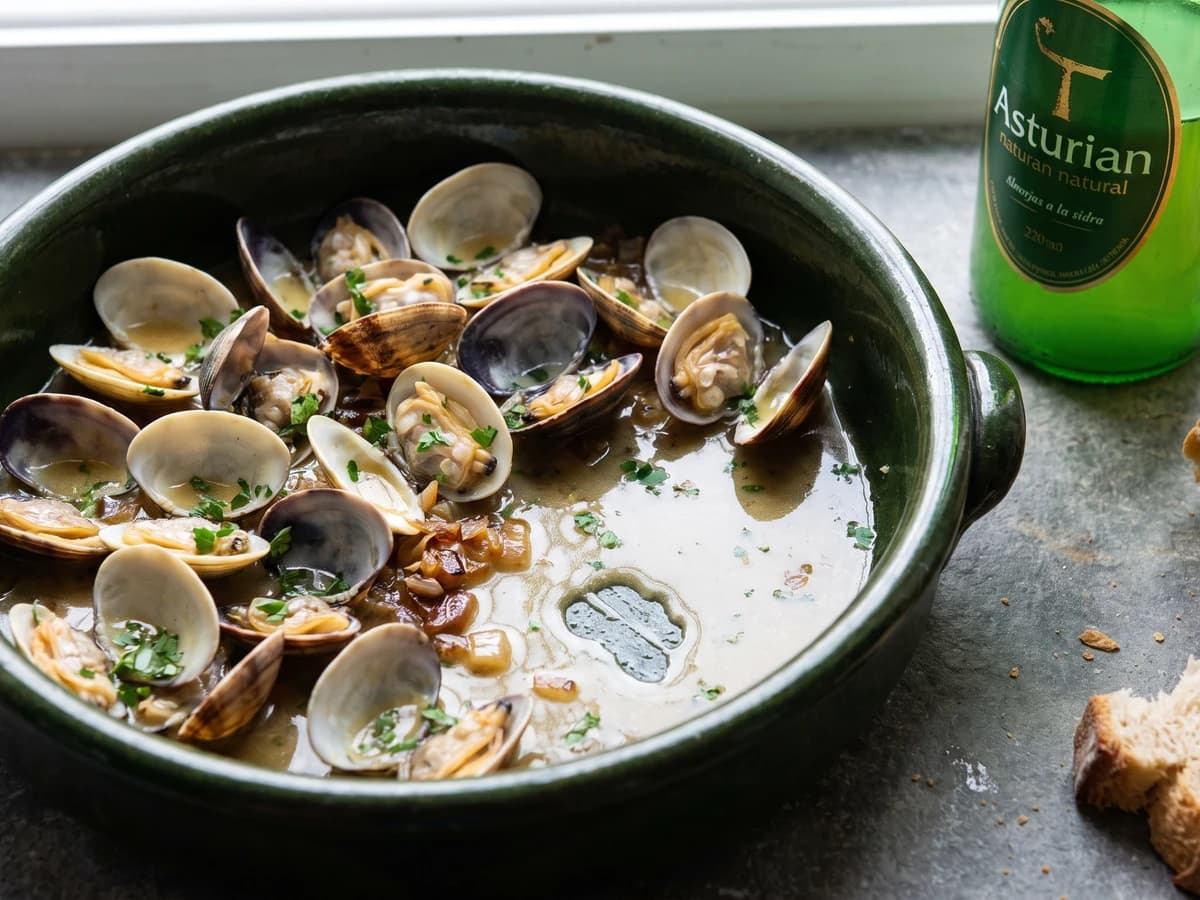
Asturias opens clams in tart natural cider over a slow onion and garlic sofrito, making a bright, briny sauce that asks for bread and rewards one rule: lift each clam as it opens.