Chef Isabel
Abanico Ibérico a la Plancha
Extremadura's dehesa gives us this fan-shaped, marbled rib cut: salt it at the last moment, lay it on a fierce plancha, and count in seconds so the centre stays juicy.
A cooking platform built around craft, culture, and the stories behind what we eat.
Created by
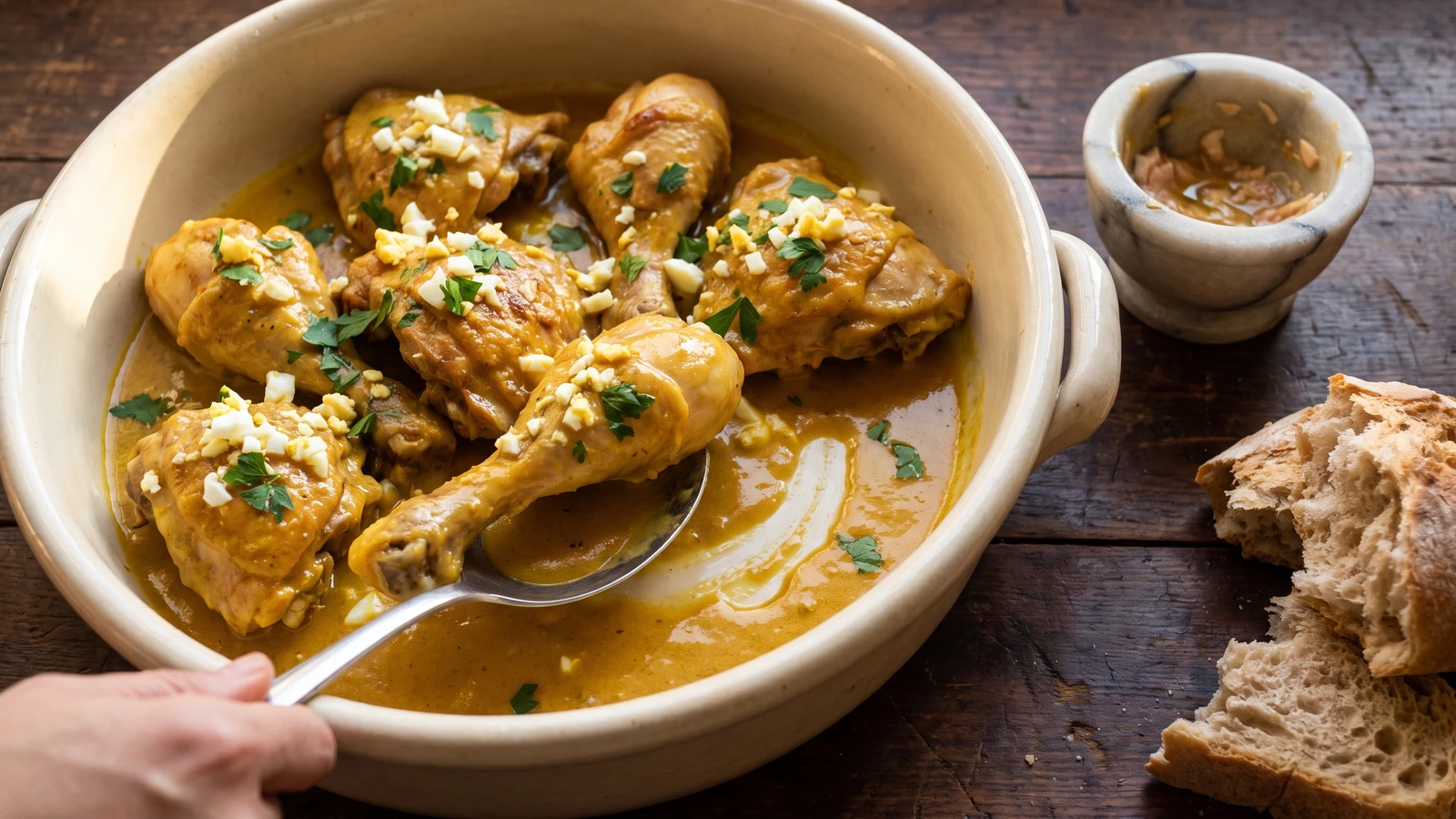
Castile's golden chicken guiso gets its body from a fine majado of almonds, saffron, fried bread, and cooked egg yolk. Pound it smooth, then let it thicken the sauce gently.
Pollo en pepitoria is Castilian: browned chicken braised in a golden sauce of onion, almonds, saffron, fried bread, and hard-cooked egg yolk. That yolk is not decoration. Pounded into the majado, the mortar mixture that binds the sauce, it is what sets pepitoria apart from an ordinary chicken guiso.
This is old inland feast cooking made from an ordinary bird, rich without needing cream. Cook the onion low until it is deep gold and sweet, then give your attention to the majado. Pound it until the almond, bread, saffron, and yolk become one smooth paste. That is the step that decides the dish, because a coarse majado leaves grit in the sauce and no amount of simmering removes it.
No hace falta haber pisado España. If Marcona almonds are hard to find, use fresh blanched almonds from a shop with good turnover; the sauce will be a little less sweet and round, but it will still be right. If a jointed whole chicken is awkward, use 1.4kg bone-in, skin-on thighs. You lose the contrast between breast and leg meat, and gain a slightly richer sauce.
Finish the sauce over gentle heat and give it ten quiet minutes before serving. The Margin beside mine carries two words, "almendra fina," almond ground fine. Follow that and the rest is patient pot work, nothing more frightening than Sunday lunch.
Pepitoria is a Castilian method rather than the name of one fixed bird: poultry is braised and its sauce is bound with pounded almonds and hard-cooked yolk, while saffron gives the characteristic gold. Older household pots were often gallina en pepitoria, because a mature hen rewarded long braising; pollo keeps the same preparation with a shorter cooking time. The origin of the word pepitoria is disputed, but the almond and saffron place the sauce within the Hispano-Arabic inheritance that shaped Castilian courtly and feast cooking.
Quantity
2
Quantity
1 (about 1.6kg)
jointed into 8 bone-in, skin-on pieces
Quantity
10g
divided
Quantity
1g
Quantity
20g
for dusting the chicken
Quantity
75ml
divided
Quantity
60g
Quantity
3 cloves (about 12g)
peeled
Quantity
30g
crust removed
Quantity
0.15g
Quantity
500ml
kept warm and divided
Quantity
250g
finely diced
Quantity
1
Quantity
150ml
Quantity
10g
finely chopped and divided
| Ingredient | Quantity |
|---|---|
| large eggs | 2 |
| whole chickenjointed into 8 bone-in, skin-on pieces | 1 (about 1.6kg) |
| fine sea saltdivided | 10g |
| freshly ground black pepper | 1g |
| plain flourfor dusting the chicken | 20g |
| extra virgin olive oildivided | 75ml |
| raw blanched almonds, preferably Marcona | 60g |
| garlicpeeled | 3 cloves (about 12g) |
| day-old country breadcrust removed | 30g |
| saffron threads | 0.15g |
| unsalted chicken stockkept warm and divided | 500ml |
| yellow onionfinely diced | 250g |
| bay leaf | 1 |
| dry white wine | 150ml |
| flat-leaf parsley leavesfinely chopped and divided | 10g |
Bring a small saucepan of water to a gentle boil. Lower in the eggs and cook for 10 minutes, then transfer them to cold water. Peel when cool and separate the yolks from the whites. Keep the yolks whole for the majado and finely chop the whites for serving.
Heat 30ml of the olive oil in a wide casserole over medium-low heat. Fry the almonds for 2 to 3 minutes, stirring, until evenly pale gold. Add the garlic for the final minute, then lift both out before the garlic browns. Fry the bread in the same oil for 1 to 2 minutes per side until crisp and golden. Set it with the almonds and garlic. Put the saffron in a cup with 30ml of the warm stock and leave it to infuse for 10 minutes.
Pat the chicken completely dry. Season all over with 8g of the salt and the black pepper, then dust lightly with the flour. Shake off every loose patch. A thin coating helps the browned flavor cling to the sauce; a heavy one gives you paste.
Add the remaining 45ml olive oil to the casserole and raise the heat to medium-high. Brown the chicken in two batches without crowding it, about 4 minutes on the skin side and 2 minutes on the other side. It should be properly golden but still raw inside. Transfer each batch to a plate. Leave about 30ml fat in the casserole and spoon off any excess.
Lower the heat and add the onion, bay leaf, and remaining 2g salt. Cook for 18 to 20 minutes, stirring often and scraping up the browned bits, until the onion is deep gold, very soft, and nearly jammy. This is the sofrito, the slow onion base, and rushing it leaves the sauce sharp and thin. Pour in the wine, raise the heat, and cook for 3 to 4 minutes, until reduced by about half and the raw wine smell is gone.
Return the thighs, drumsticks, and wings to the casserole. Add 410ml of the warm stock, keeping the final 60ml aside, and bring it just to a simmer. Cover and cook gently for 15 minutes. Add the breast pieces skin side up, cover again, and cook for another 18 to 22 minutes. The liquid should tremble, not boil hard. The breasts are ready at 74°C in the thickest part; the thighs are best between 78°C and 82°C, when the joint moves easily.
While the chicken braises, put the fried almonds, garlic, and bread in a large mortar. Pound for 3 to 4 minutes until no distinct almond pieces remain. Add the cooked yolks and 5g parsley, then pound again to a thick paste. Work in the saffron and its stock, followed by 120ml hot liquid taken from the casserole, a little at a time. A small food processor is fine, but run it until the paste is truly smooth. Coarse almonds stay sandy however long the sauce cooks.
Transfer the cooked chicken to a warm plate and discard the bay leaf. Stir the majado gradually into the casserole, keeping the heat low. Simmer gently for 6 to 8 minutes, stirring and scraping the base, until the sauce coats a spoon and a line drawn through it closes slowly. Do not let it boil hard. If it becomes too thick, add the reserved stock 15ml at a time. Return the chicken and its resting juices for 2 minutes, turning each piece once in the sauce.
Take the casserole off the heat and let it rest for 10 minutes. The sauce will settle around the chicken and grow a little thicker. Scatter over the chopped egg whites and remaining parsley, then serve from the casserole with plenty of sauce. Siempre sale, si lo sigues.
1 serving (about 440g)
Culinary guides, cultural storytelling, and the editorial depth that makes cooking meaningful.
Discover Culinary ExplorerChef Isabel
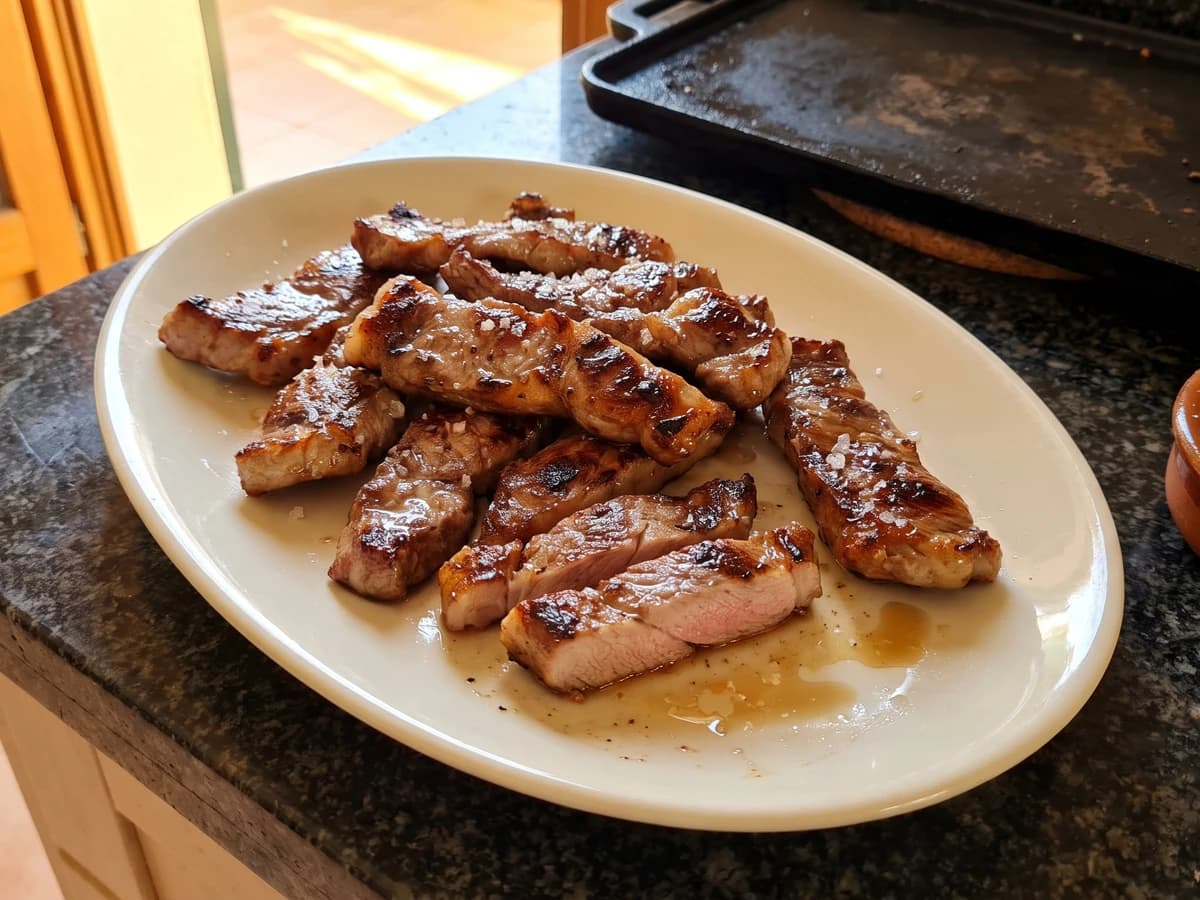
Extremadura's dehesa gives us this fan-shaped, marbled rib cut: salt it at the last moment, lay it on a fierce plancha, and count in seconds so the centre stays juicy.
Chef Isabel
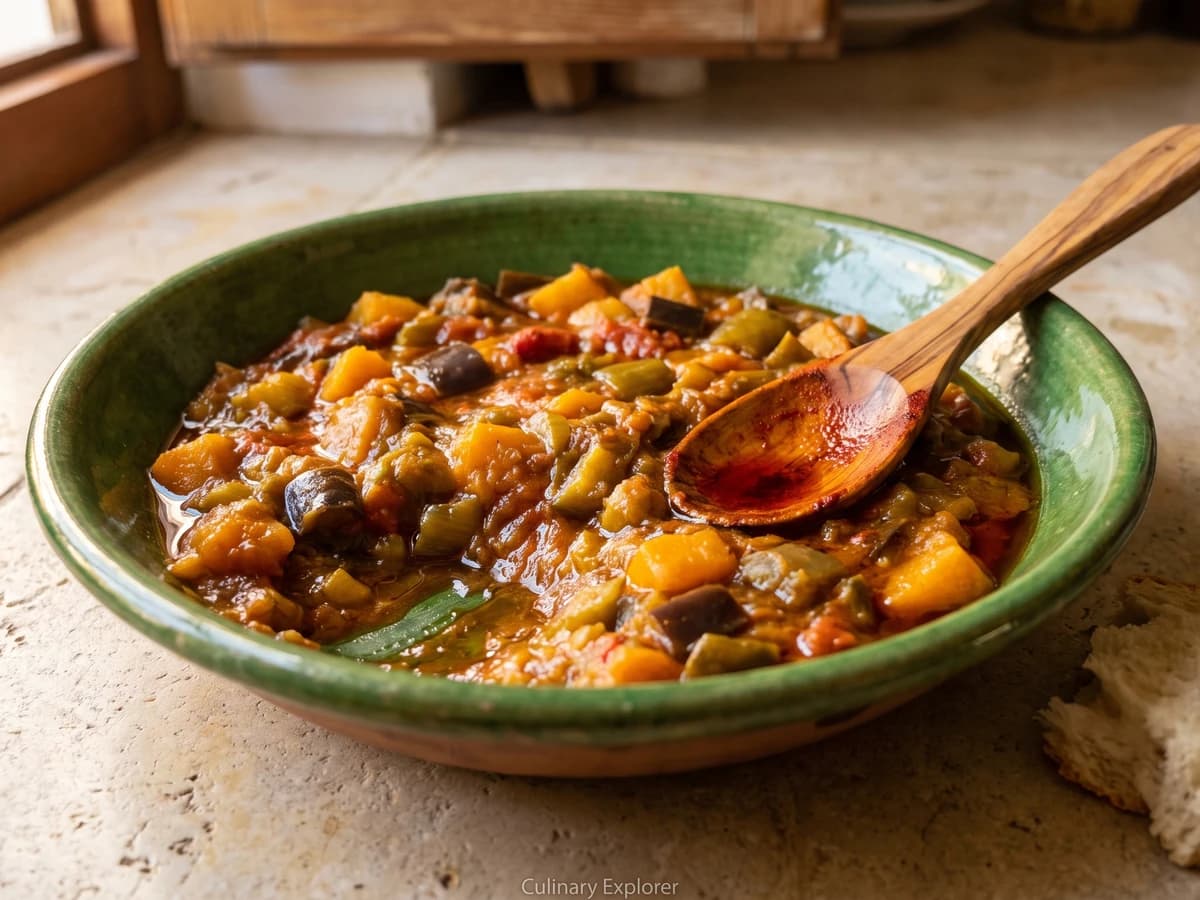
Alboronía is Andalucía's old pumpkin and aubergine stew, deepened with tomato, pimentón, and cumin, then cooked without hurry until the vegetables settle into a glossy, sweet, spoon-soft whole.

Chef Isabel
Aletría Murciana is Murcia's humble noodle guiso: fine fideos, pork ribs, potato, saffron, and a dark sweet sofrito. Get that base right and the pot knows where it's going.
Chef Isabel
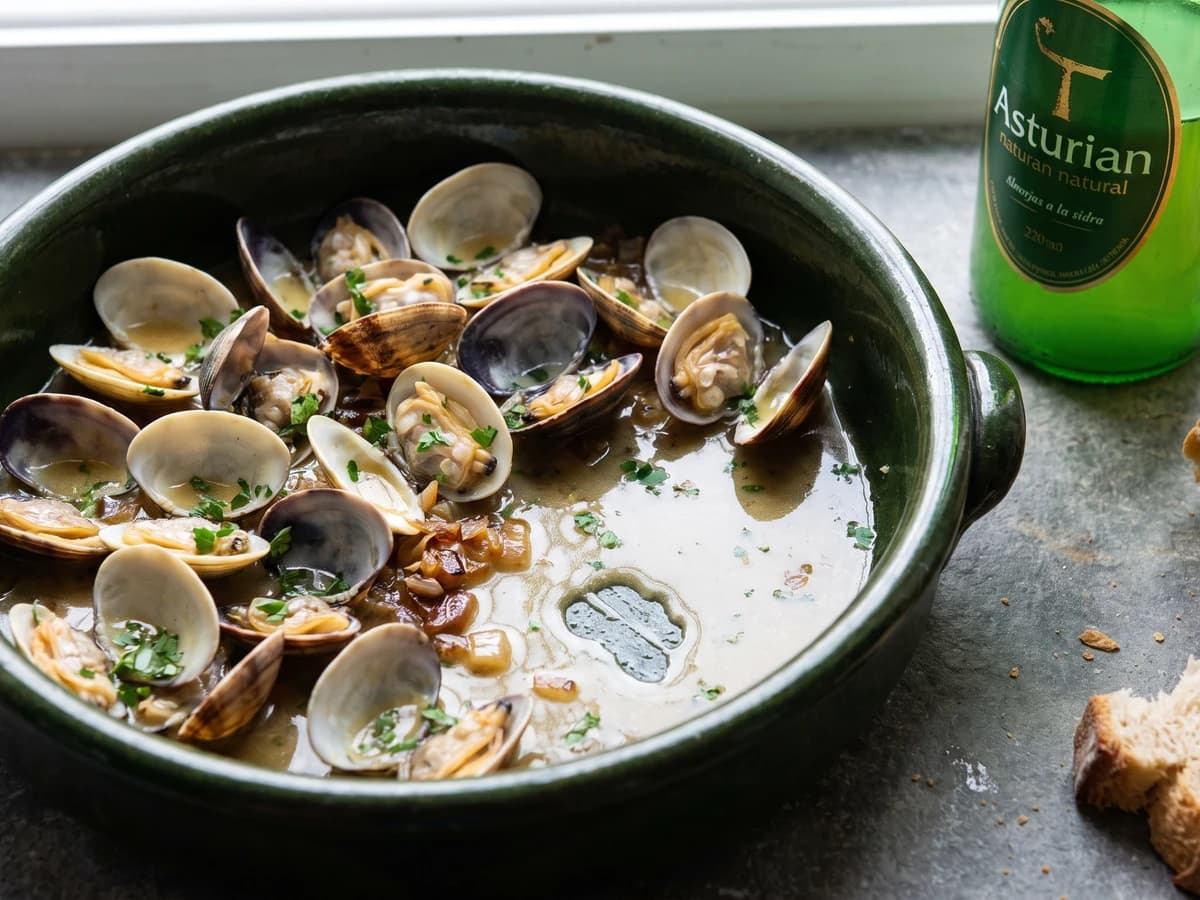
Asturias opens clams in tart natural cider over a slow onion and garlic sofrito, making a bright, briny sauce that asks for bread and rewards one rule: lift each clam as it opens.