Chef Isabel
Abanico Ibérico a la Plancha
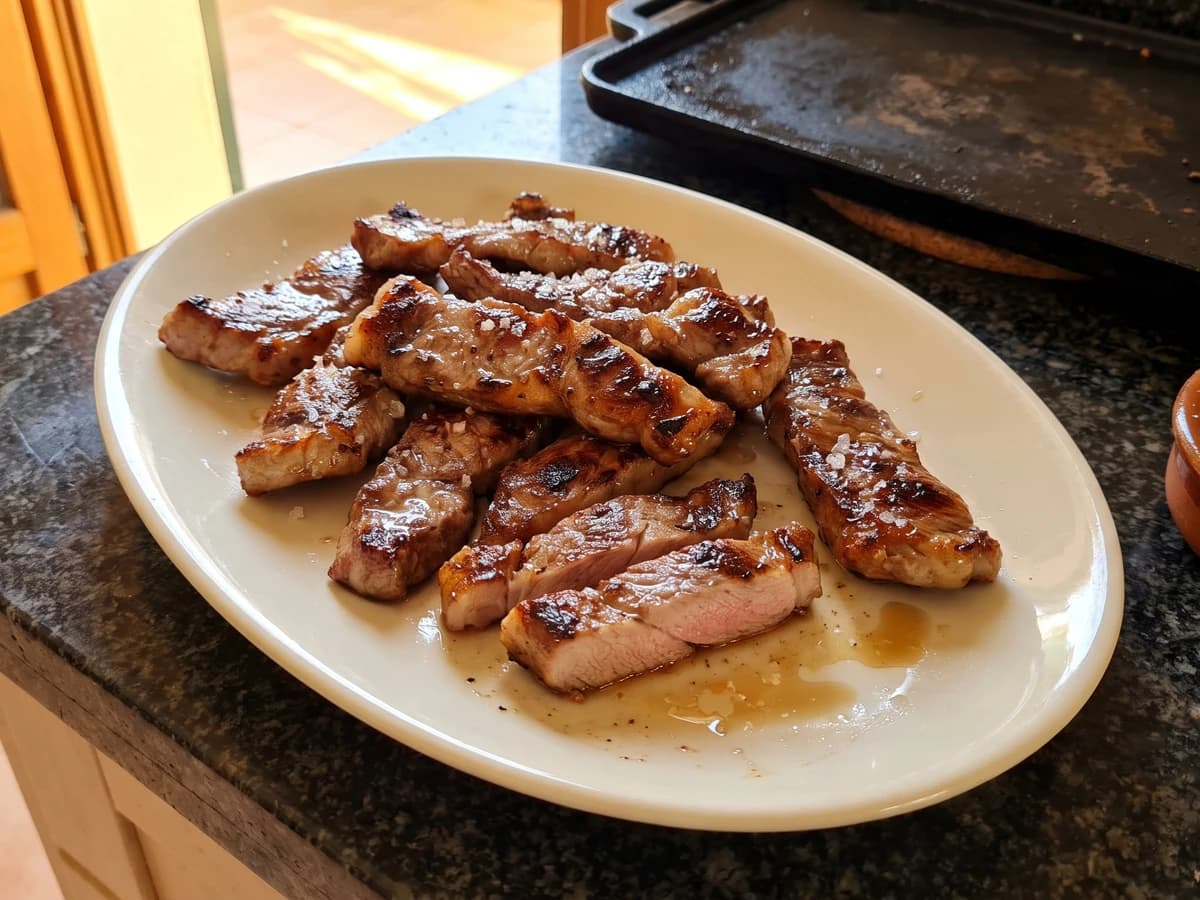
Extremadura's dehesa gives us this fan-shaped, marbled rib cut: salt it at the last moment, lay it on a fierce plancha, and count in seconds so the centre stays juicy.
A cooking platform built around craft, culture, and the stories behind what we eat.
Created by
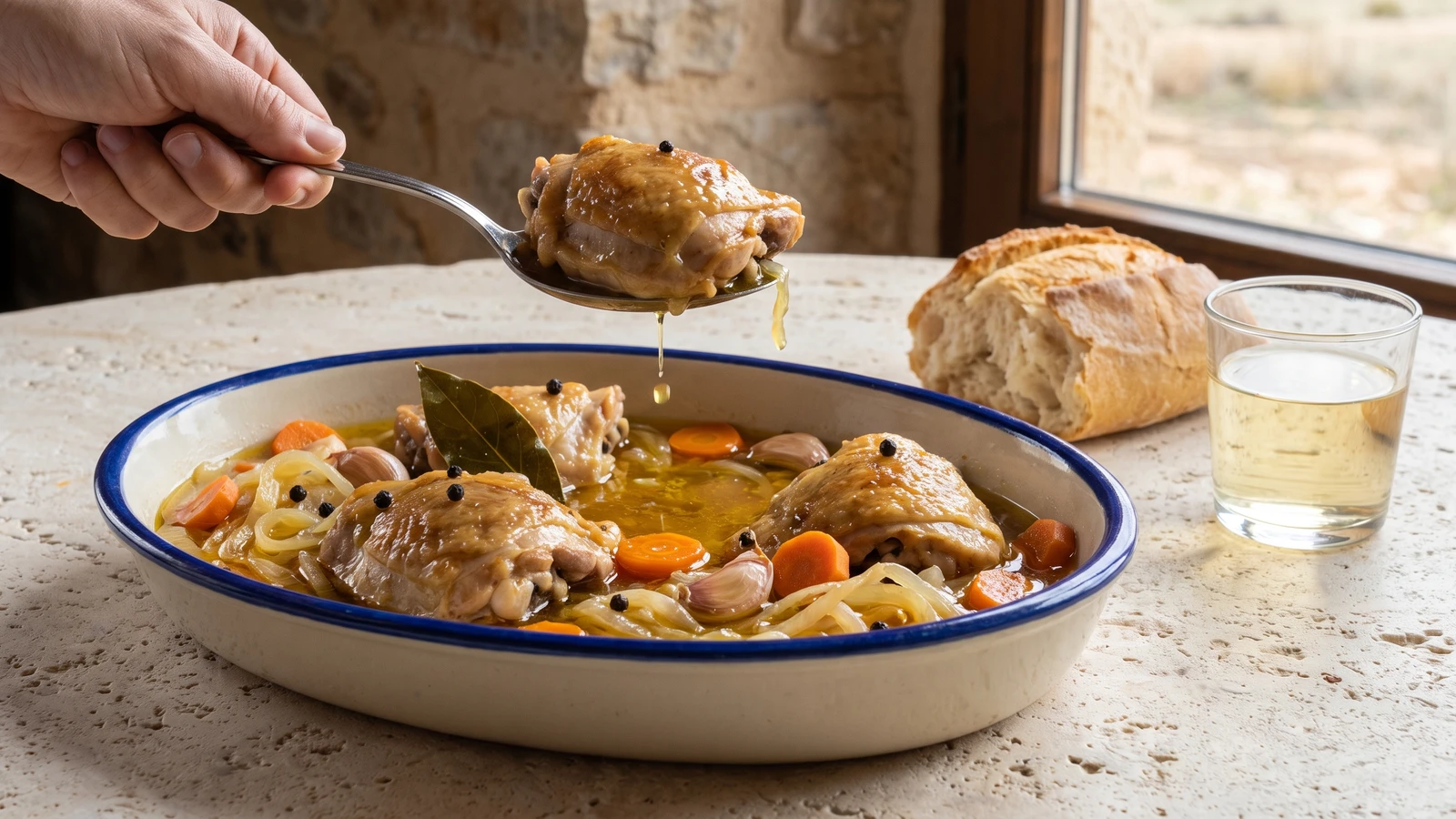
Castilla-La Mancha's chicken in escabeche is browned, then gently braised with wine vinegar, onion, garlic, bay and peppercorns, then rested a full day so its sharp liquor settles.
Pollo en escabeche manchego is Castilla-La Mancha's home-kitchen cousin to the region's older partridge escabeches. Chicken is browned in olive oil, then gently braised with wine vinegar, onion, carrot, garlic, bay, thyme and black pepper. What makes this escabeche, rather than simply braised chicken, is that it cools and waits in its own vinegar-and-oil liquor.
The full day's rest is the method that decides it. During those hours, the vinegar's raw edge settles, the aromatics season the meat through, and the oil and cooking juices share their flavor. Eat it straight from the pot and you taste separate parts. Give it until tomorrow and you have the dish. Serve it cold or just warm, with bread for the liquor. Siempre sale, si lo sigues.
Nothing here demands a Spanish shop. Use any dry, unoaked white wine and a clean white wine vinegar marked 5 to 6% acidity. If white wine vinegar is unavailable, use the same amount of cider vinegar; the escabeche will be fruitier and a little softer, but it remains a sensible household substitute. The Margin beside this recipe says only: cook today, judge tomorrow. That's good advice.
The word escabeche came through the Arabic of al-Andalus from sikbaj, a Persian sour stew seasoned with vinegar. Across inland Castilla-La Mancha, cooks used the acid-and-oil liquor especially for partridge, rabbit and other game brought home from the hunt. Chicken carries that Castilian method into the everyday kitchen, where the overnight rest remains part of the cooking rather than an optional wait.
Quantity
8 (about 1.6kg)
trimmed and patted dry
Quantity
16g
divided: 12g for the chicken and 4g for the escabeche
Quantity
150ml
divided
Quantity
300g (about 2 medium)
halved and sliced 5mm thick
Quantity
180g (about 2 medium)
peeled and sliced 5mm thick
Quantity
8
lightly crushed and left unpeeled
Quantity
3
Quantity
2 teaspoons (about 6g)
Quantity
4 sprigs
or 1 teaspoon dried thyme
Quantity
200ml
Quantity
150ml
5 to 6% acidity
Quantity
150ml
| Ingredient | Quantity |
|---|---|
| bone-in, skin-on chicken thighstrimmed and patted dry | 8 (about 1.6kg) |
| fine sea saltdivided: 12g for the chicken and 4g for the escabeche | 16g |
| extra virgin olive oildivided | 150ml |
| yellow onionshalved and sliced 5mm thick | 300g (about 2 medium) |
| carrotspeeled and sliced 5mm thick | 180g (about 2 medium) |
| garlic cloveslightly crushed and left unpeeled | 8 |
| bay leaves | 3 |
| whole black peppercorns | 2 teaspoons (about 6g) |
| fresh thymeor 1 teaspoon dried thyme | 4 sprigs |
| dry, unoaked white wine | 200ml |
| white wine vinegar5 to 6% acidity | 150ml |
| water | 150ml |
Season the chicken all over with 12g of the salt and leave it for 20 minutes while you prepare the onion and carrot. Pat the pieces dry again before frying. Surface water makes chicken spit and steam in its own juices instead of taking on the deep golden color the escabeche needs.
Heat 100ml of the olive oil in a wide, heavy lidded pan over medium heat. Add four thighs skin-side down and fry without moving them for 7 to 8 minutes, until the skin is deep gold. Turn and cook the second side for 3 minutes. Lift them to a plate and repeat with the remaining thighs. They will still be raw beside the bone; the braise finishes them.
Lower the heat and add the remaining 50ml olive oil, the onion, carrot, garlic and remaining 4g salt. Cook gently for 12 to 15 minutes, stirring now and then, until the onion is soft and lightly golden and the carrot has begun to yield. Add the bay, peppercorns and thyme. Pour in the wine, scrape up the browned bits and simmer for 3 minutes. Add the vinegar and water, then bring the liquor back to a gentle simmer.
Return the chicken to the pan in one snug layer, skin-side up. The liquor should reach roughly halfway up the pieces. Cover with the lid slightly ajar and hold it at a bare simmer for 20 minutes. Turn the thighs, cook for another 10 minutes, then turn them skin-side up and cook uncovered for 5 to 10 minutes. They are done when the thickest part reaches 75°C and a skewer meets tender meat beside the bone. Do not let the liquor boil hard.
Arrange the chicken snugly in a 2.5-liter nonreactive container, spoon the vegetables over it and pour in every drop of the escabeche. Leave it for 30 minutes, then cover loosely and refrigerate. Once cold, close the lid fully. Turn the pieces after 8 to 12 hours so both sides meet the liquor, then rest for a full 24 hours before serving.
For a cool serving, take the container from the refrigerator 20 to 30 minutes before eating, just long enough for the olive oil to loosen. Spoon the onion, carrot and glossy liquor over each thigh. To serve it just warm, return everything to a covered pan and heat gently until the chicken reaches 74°C, then rest it off the heat for 10 minutes. Put bread on the table. Leaving that escabeche behind would be foolish.
1 serving (about 310g)
Culinary guides, cultural storytelling, and the editorial depth that makes cooking meaningful.
Discover Culinary ExplorerChef Isabel
Extremadura's dehesa gives us this fan-shaped, marbled rib cut: salt it at the last moment, lay it on a fierce plancha, and count in seconds so the centre stays juicy.
Chef Isabel
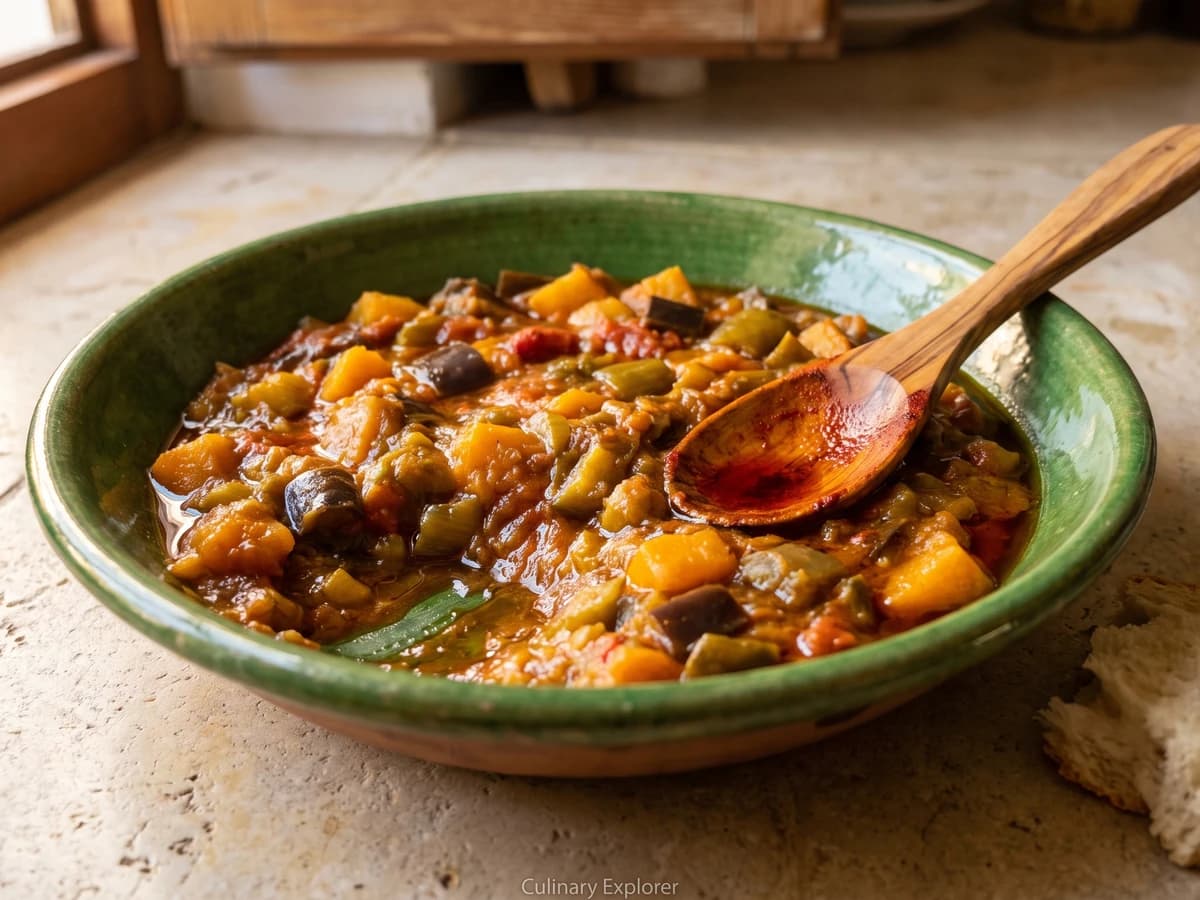
Alboronía is Andalucía's old pumpkin and aubergine stew, deepened with tomato, pimentón, and cumin, then cooked without hurry until the vegetables settle into a glossy, sweet, spoon-soft whole.

Chef Isabel
Aletría Murciana is Murcia's humble noodle guiso: fine fideos, pork ribs, potato, saffron, and a dark sweet sofrito. Get that base right and the pot knows where it's going.
Chef Isabel
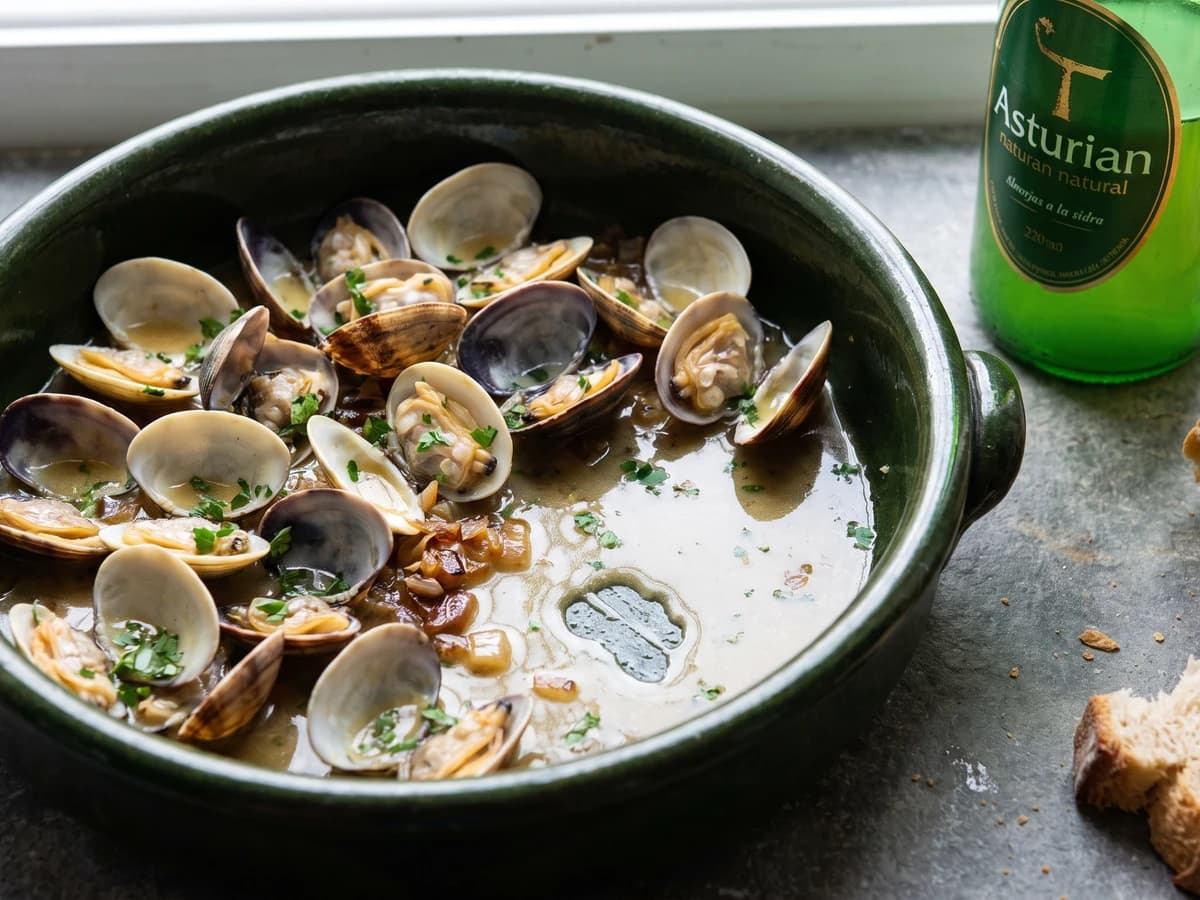
Asturias opens clams in tart natural cider over a slow onion and garlic sofrito, making a bright, briny sauce that asks for bread and rewards one rule: lift each clam as it opens.