Chef Isabel
Abanico Ibérico a la Plancha
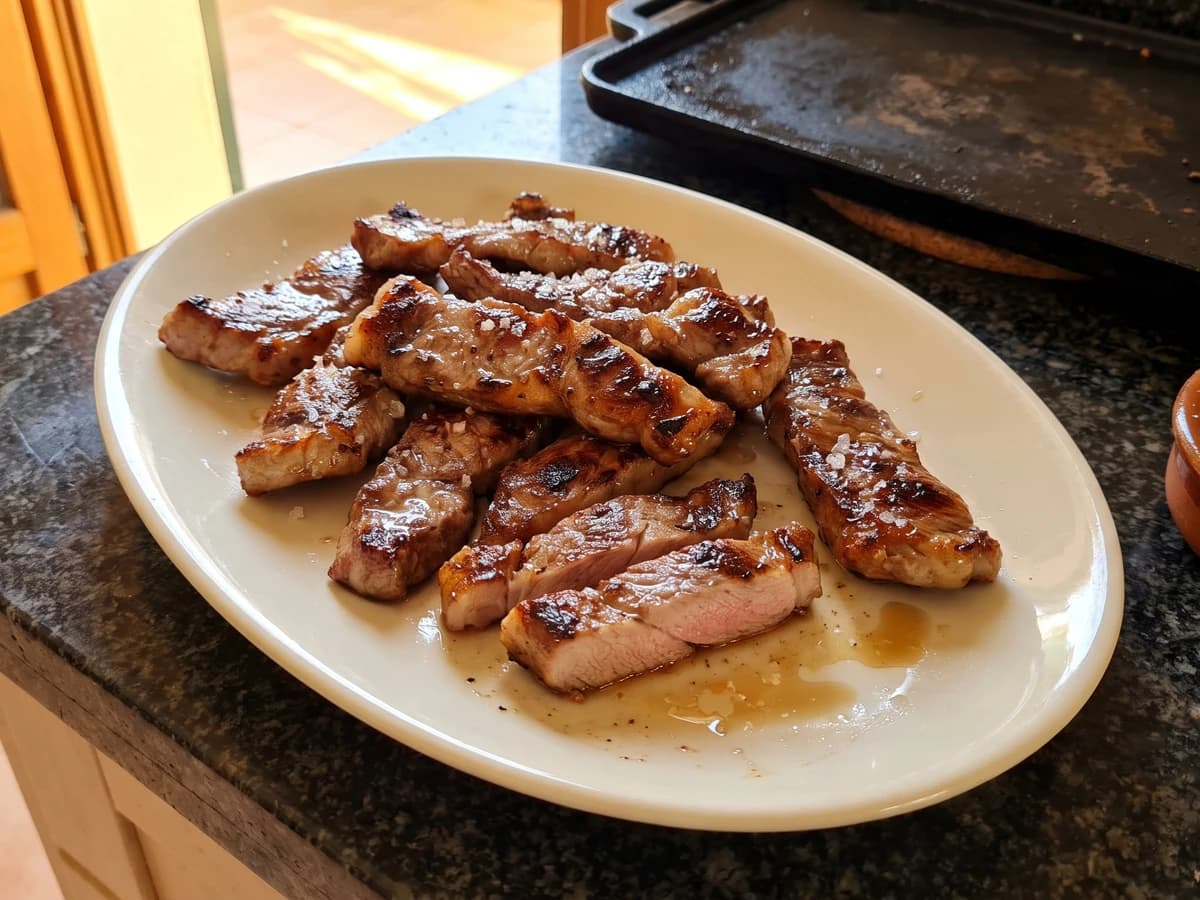
Extremadura's dehesa gives us this fan-shaped, marbled rib cut: salt it at the last moment, lay it on a fierce plancha, and count in seconds so the centre stays juicy.
A cooking platform built around craft, culture, and the stories behind what we eat.
Created by
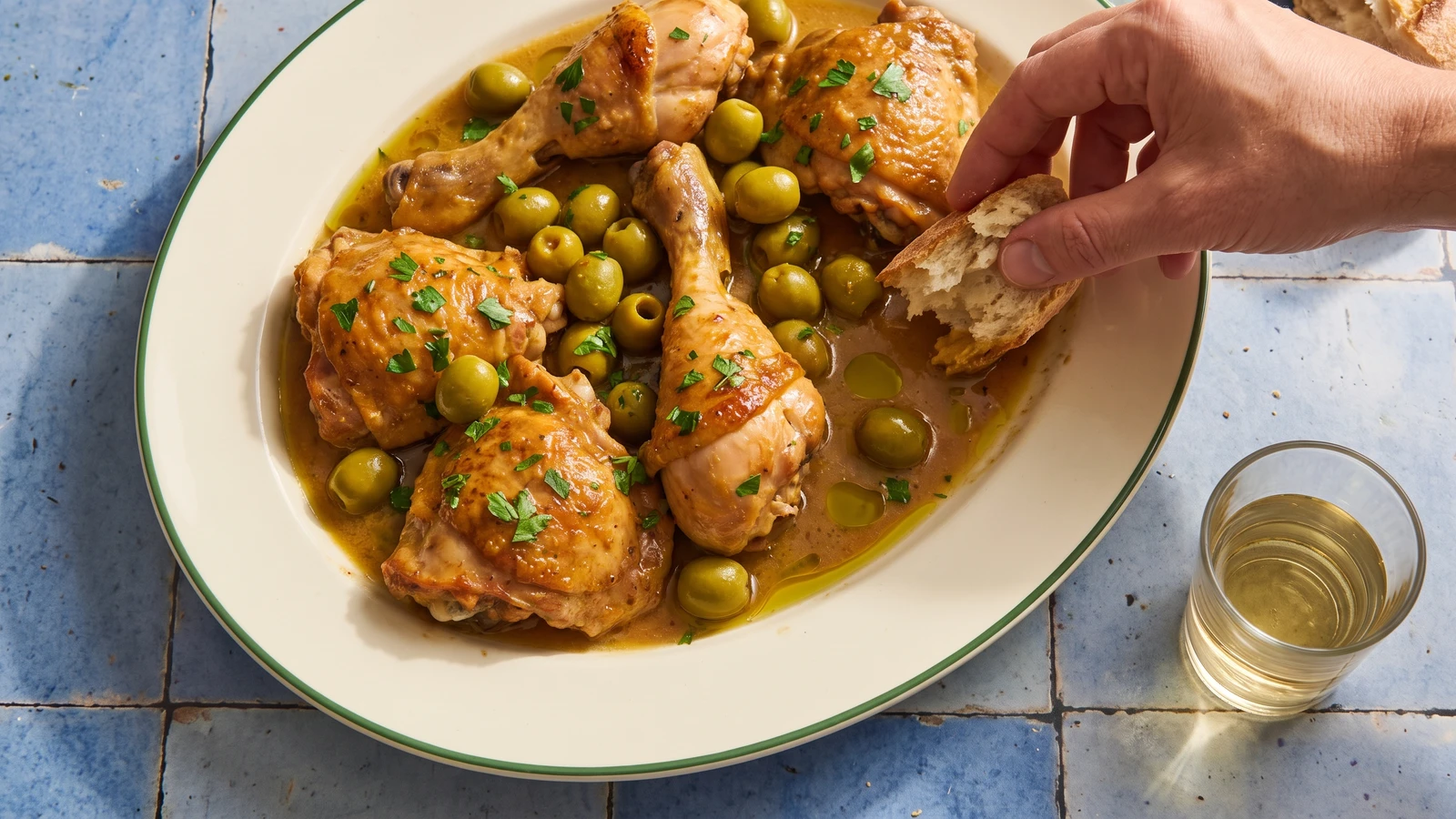
Sevilla braises chicken with a dark, sweet onion base, dry white wine, almonds, and green olives added near the end, so the sauce turns silky and savory without taking on bitterness.
Pollo con aceitunas is Sevillian, a home braise from Sevilla in western Andalucía. Browned chicken cooks gently in white wine over a sofrito, the slow onion base, then a majado of almonds, fried bread, garlic, and parsley gives the sauce its body. Manzanilla de Sevilla olives make the dish what it is: green, firm, gently briny, and meant for the table rather than the oil press.
The point that decides the dish is when the olives go into the pot. Build the sauce first and let the chicken become tender, then add the olives for only the final ten to twelve minutes. That is long enough for them to season the sauce while keeping their clean flavor. Simmer them from the beginning and the sauce can turn too salty, blunt, and bitter.
If Manzanilla de Sevilla olives aren't sold where you live, use Gordal or Hojiblanca. A firm, plain green olive in brine also works, provided it isn't stuffed with pepper, garlic, or cheese. The flavor will be less nutty and more plainly briny, so taste before adding the last of the salt. No hace falta haber pisado España. You don't need to have set foot in Spain.
Keep the braise quiet, crush the majado well, and leave the olives until the end. The Margin beside this recipe says only aceitunas al final, olives at the end. Siempre sale, si lo sigues. It turns out if you follow it.
Pollo con aceitunas belongs to Sevilla and its surrounding olive country, from the Aljarafe to the countryside south of the city, where table olives have long been part of the household larder as well as the local harvest. Manzanilla de Sevilla is prized as an eating olive for its fine skin, firm flesh, and balanced bitterness. The almond-and-bread majado reflects the old Andalusian practice of thickening meat sauces in the mortar, giving body without flour or cream.
Quantity
1.2kg (6 to 8 pieces)
Quantity
8g
divided
Quantity
1g (about 1/2 teaspoon)
Quantity
75ml
Quantity
40g
Quantity
25g
cut into 2cm cubes
Quantity
4 cloves
1 left whole and 3 thinly sliced
Quantity
250g
finely diced
Quantity
200ml
Quantity
300ml
Quantity
1
Quantity
180g drained weight
pitted and drained
Quantity
12g
finely chopped and divided
| Ingredient | Quantity |
|---|---|
| bone-in, skin-on chicken thighs and drumsticks | 1.2kg (6 to 8 pieces) |
| fine sea saltdivided | 8g |
| freshly ground black pepper | 1g (about 1/2 teaspoon) |
| extra virgin olive oil | 75ml |
| raw blanched almonds | 40g |
| day-old rustic breadcut into 2cm cubes | 25g |
| garlic1 left whole and 3 thinly sliced | 4 cloves |
| yellow onionfinely diced | 250g |
| dry unoaked white wine | 200ml |
| water | 300ml |
| bay leaf | 1 |
| Manzanilla de Sevilla green olivespitted and drained | 180g drained weight |
| flat-leaf parsley leavesfinely chopped and divided | 12g |
Pat the chicken very dry, especially around the skin. Season it all over with 6g of the salt and the black pepper, then leave it for 15 minutes while you prepare the onion and majado ingredients. Taste one olive now. If it is sharply salty rather than pleasantly briny, rinse the olives briefly under cold water and drain them well.
Warm the olive oil in a wide heavy pan over medium-low heat. Add the whole garlic clove and almonds and cook for 2 minutes, stirring, until the garlic is pale gold and the almonds smell toasted. Add the bread cubes and cook for another 1 to 2 minutes, turning them until golden on every side. Lift the garlic, almonds, and bread onto a plate with a slotted spoon. Keep them pale gold rather than brown; dark almonds will spoil the sauce.
Raise the heat to medium-high. Lay in half the chicken, skin side down, without crowding the pan. Brown it undisturbed for 5 to 6 minutes, until the skin is deep gold and releases easily, then turn and cook the second side for 2 minutes. Transfer it to a plate and repeat with the remaining pieces. Browning in two batches keeps the pan hot enough to color the chicken properly.
Lower the heat and leave about 45ml of fat in the pan, spooning away any excess. Add the diced onion and cook gently for 15 to 18 minutes, stirring often, until dark gold, soft, and jammy, with no pale raw pieces left. Add the three sliced garlic cloves and cook for 2 minutes more, just until fragrant.
Pour in the white wine and scrape the browned residue from the bottom with a wooden spoon. Let the wine bubble for 3 to 4 minutes, until reduced by roughly half and its raw alcoholic smell has gone. Add the water and bay leaf, then return the chicken and every drop of its juices to the pan. Bring the liquid to a gentle simmer, cover with the lid slightly ajar, and cook over low heat for 25 minutes.
While the chicken braises, put the fried almonds, bread, and whole garlic clove in a mortar with 8g of the parsley. Pound until finely crumbled, then work in about 100ml of liquid ladled from the pan to make a thick, rough cream. A small food processor is fine, but pulse rather than running it continuously; the almonds should thicken the sauce, not turn into almond butter.
Stir the majado into the sauce around the chicken, then add the drained olives. Cook uncovered at a gentle simmer for 10 to 12 minutes, shaking the pan once or twice, until the sauce lightly coats a spoon and the chicken is tender. The thickest piece must reach at least 74°C. Adding the olives only now lets them season the braise without making it bitter.
Remove the bay leaf and taste the sauce before adding more salt. Use some or all of the reserved 2g only if it needs it, since the olives continue seasoning the pan. Rest the chicken off the heat for 5 minutes, scatter over the remaining parsley, and serve with plenty of bread for the almond-and-wine sauce.
1 serving (about 370g)
Culinary guides, cultural storytelling, and the editorial depth that makes cooking meaningful.
Discover Culinary ExplorerChef Isabel
Extremadura's dehesa gives us this fan-shaped, marbled rib cut: salt it at the last moment, lay it on a fierce plancha, and count in seconds so the centre stays juicy.
Chef Isabel
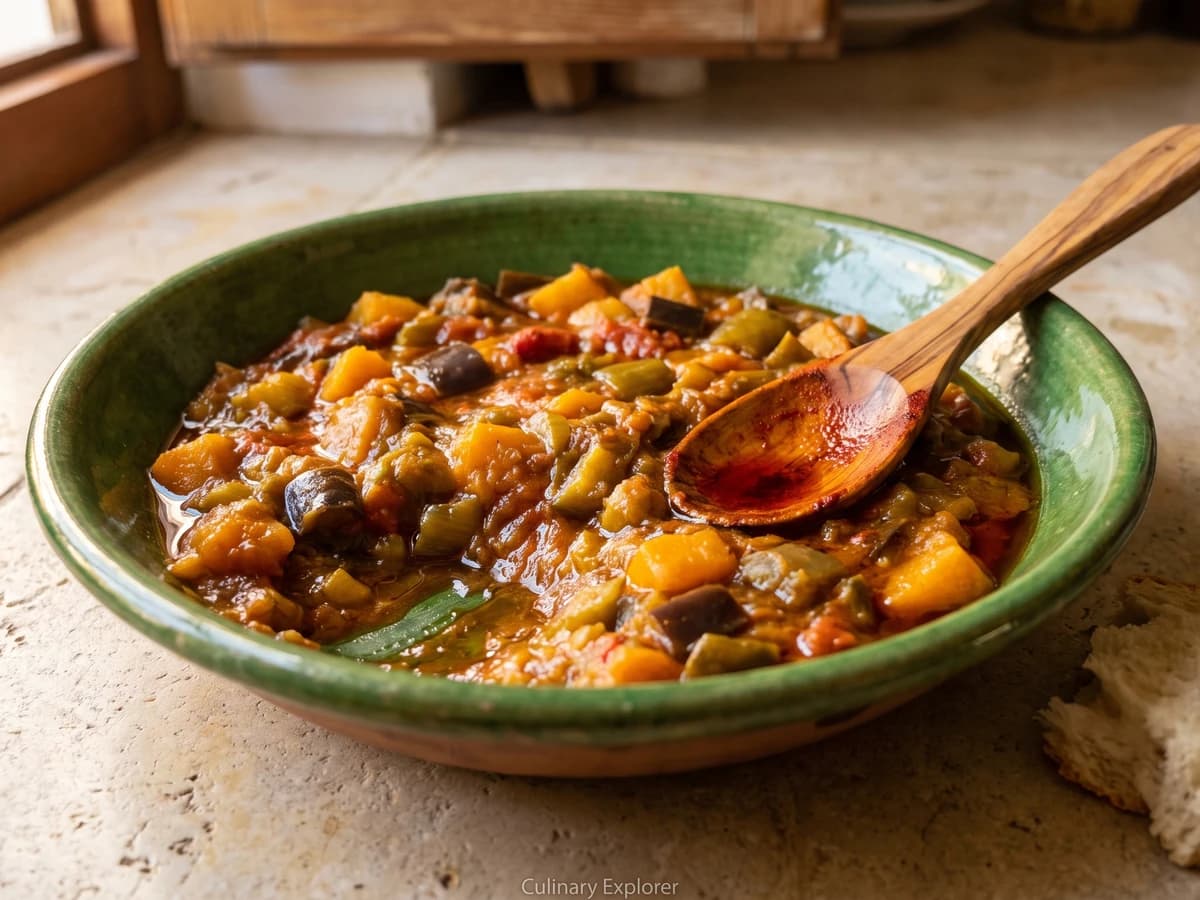
Alboronía is Andalucía's old pumpkin and aubergine stew, deepened with tomato, pimentón, and cumin, then cooked without hurry until the vegetables settle into a glossy, sweet, spoon-soft whole.

Chef Isabel
Aletría Murciana is Murcia's humble noodle guiso: fine fideos, pork ribs, potato, saffron, and a dark sweet sofrito. Get that base right and the pot knows where it's going.
Chef Isabel
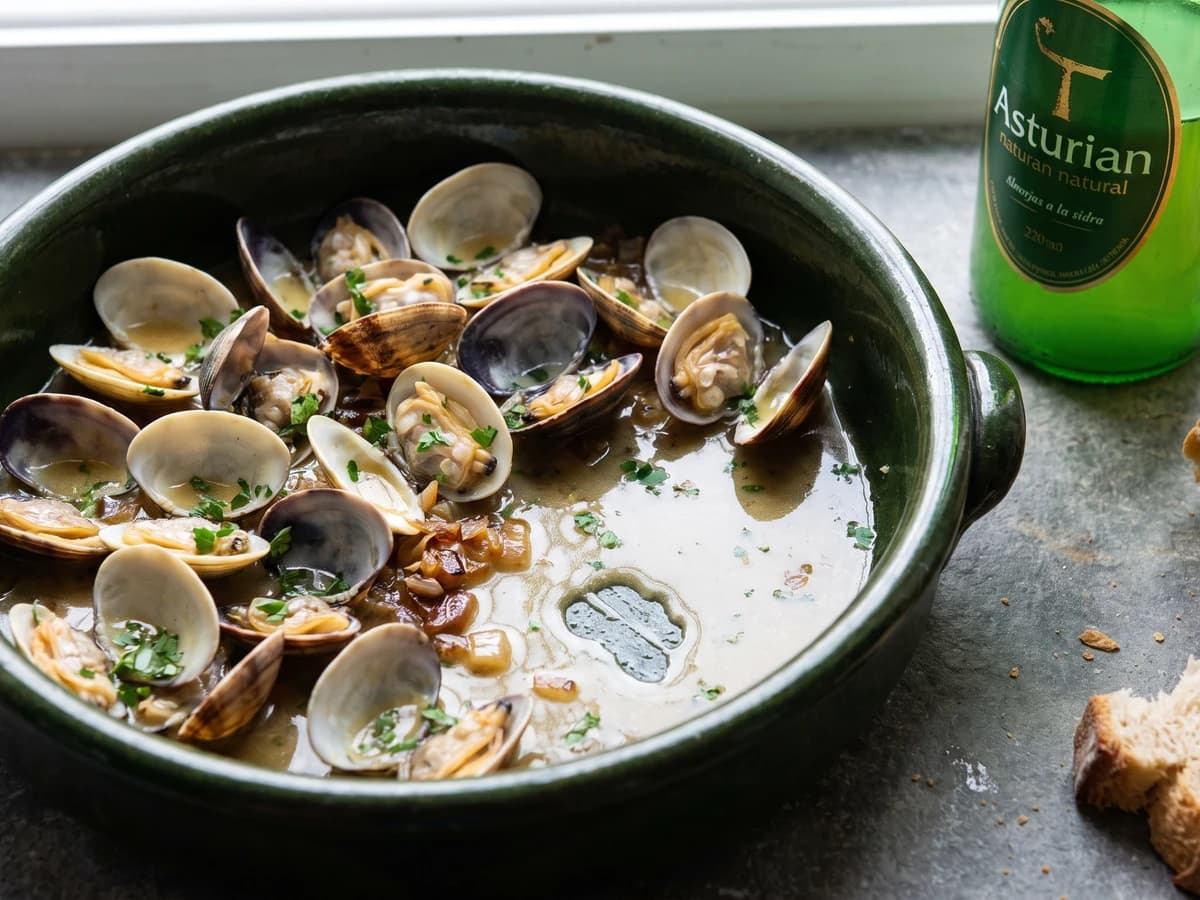
Asturias opens clams in tart natural cider over a slow onion and garlic sofrito, making a bright, briny sauce that asks for bread and rewards one rule: lift each clam as it opens.