Chef Isabel
Abanico Ibérico a la Plancha
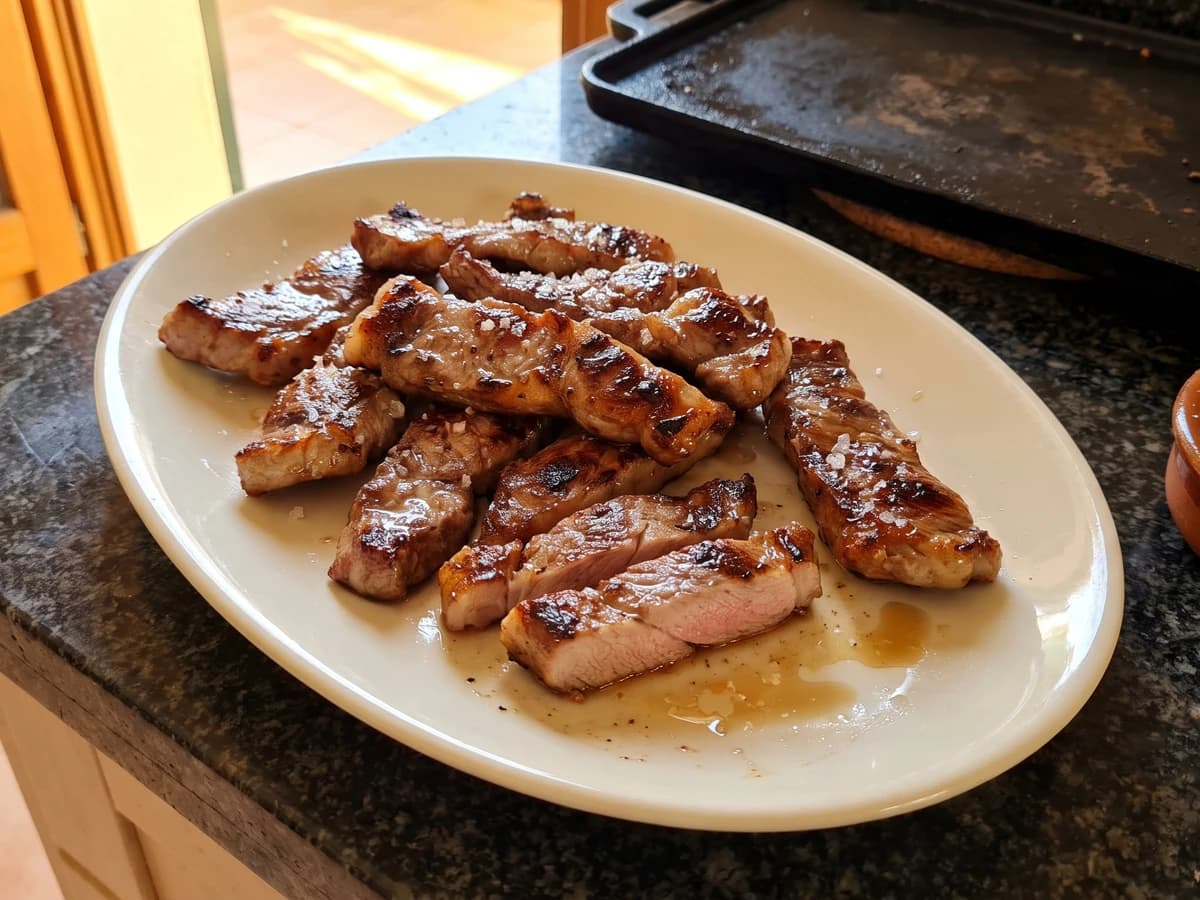
Extremadura's dehesa gives us this fan-shaped, marbled rib cut: salt it at the last moment, lay it on a fierce plancha, and count in seconds so the centre stays juicy.
A cooking platform built around craft, culture, and the stories behind what we eat.
Created by
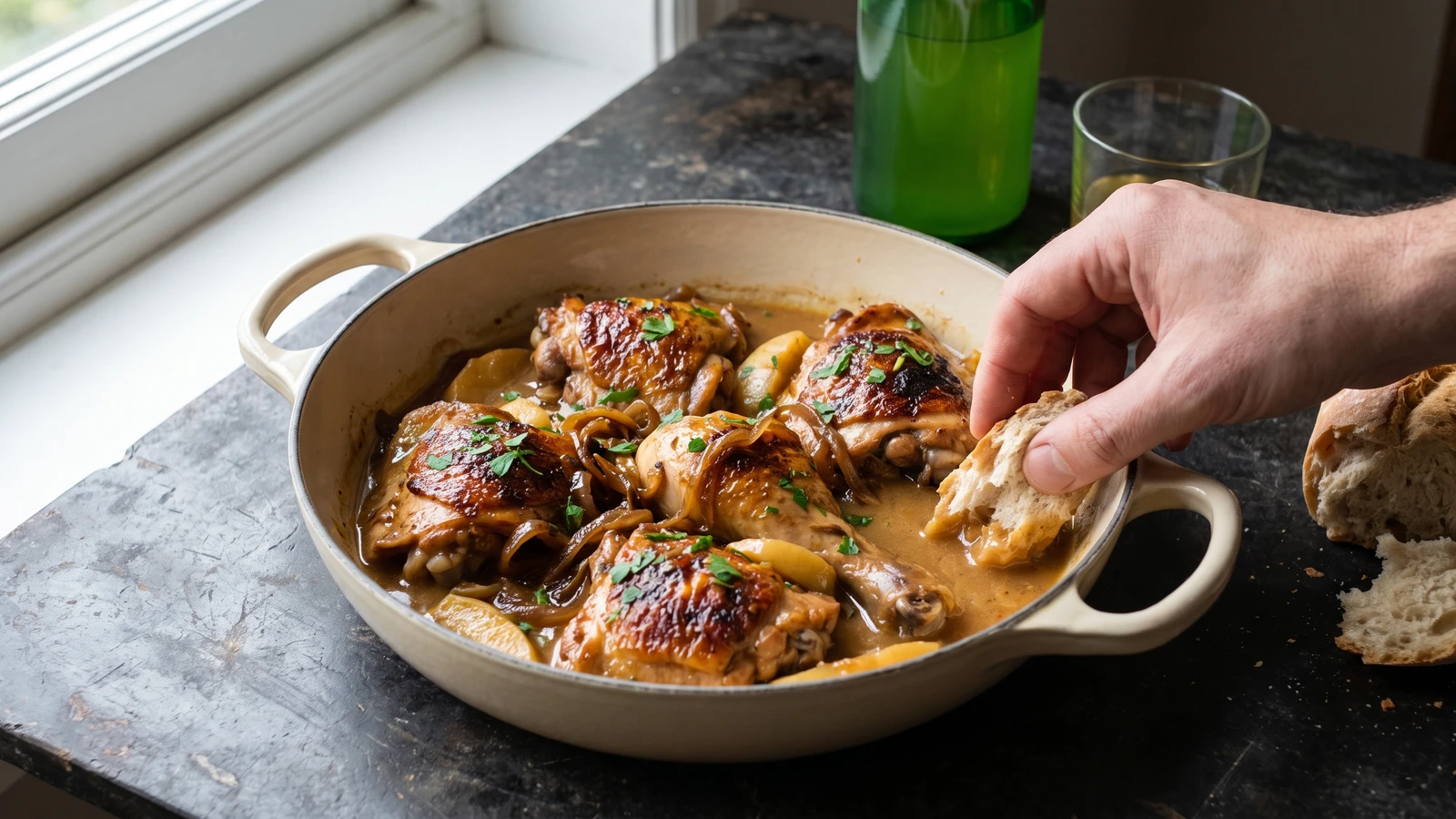
Asturias braises chicken with its dry natural cider, sweet onion, and tart apple. Brown the meat well, then reduce the cider until the sauce clings in a bright, glossy coat.
Pollo a la sidra is Asturian: browned chicken braised with sidra natural, the region's dry, still cider, until onion and tart apple collapse into a sharp, glossy sauce. This belongs to Asturias's orchard country. What makes it different from a chicken braised in wine elsewhere is the cider's clean acidity and faint farmhouse edge. Sweet bottled cider gives you sticky chicken, which is another thing entirely.
The part I watch is the reduction. Brown the chicken properly, cook the onion low until dark gold, then boil the cider uncovered until its harsh edge softens and its volume falls by a third. Once the chicken is tender, lift it out and reduce the sauce again. That second reduction concentrates the apple while rounding its bite, so the sauce clings rather than running across the plate. Rush it and you have cider-flavored broth.
If Asturian sidra natural isn't sold where you are, use the driest unsweetened hard cider you can find. A dry sparkling cider will do if you open it and let it settle first; the sauce may taste a little fruitier and less earthy, but it will still be sound. Don't use apple juice. No hace falta haber pisado España, you don't need to have set foot in Spain. In the Margin beside this recipe I wrote one line: reduce again after the chicken comes out. Follow that, and it turns out.
Pollo a la sidra belongs to Asturias's orchard belt, particularly the Comarca de la Sidra around Villaviciosa and Nava, where apples are pressed in llagares, cider houses and presses, into dry sidra natural. Asturian natural cider is served still; its brief sparkle comes from escanciar, pouring it from height, while in the casserole its acidity cuts the richness of chicken and concentrates into sauce.
Quantity
1.5kg (about 8 pieces)
patted dry
Quantity
12g
divided
Quantity
1g
Quantity
25g
Quantity
45ml
Quantity
350g
thinly sliced
Quantity
16g (about 4 cloves)
finely chopped
Quantity
180g
peeled, cored, and cut into 1cm dice
Quantity
500ml
Quantity
1
Quantity
up to 100ml
Quantity
10g
finely chopped
| Ingredient | Quantity |
|---|---|
| bone-in, skin-on chicken thighs and drumstickspatted dry | 1.5kg (about 8 pieces) |
| fine sea saltdivided | 12g |
| freshly ground black pepper | 1g |
| plain flour | 25g |
| extra virgin olive oil | 45ml |
| yellow onionsthinly sliced | 350g |
| garlicfinely chopped | 16g (about 4 cloves) |
| Reineta or other tart cooking applepeeled, cored, and cut into 1cm dice | 180g |
| Asturian sidra natural, or another dry unsweetened hard cider | 500ml |
| bay leaf | 1 |
| water (optional) | up to 100ml |
| flat-leaf parsleyfinely chopped | 10g |
Season the dried chicken all over with 10g of the salt and the black pepper. Dust it lightly with the flour, then shake off every loose patch. You want a thin coating that helps the meat brown and gives the finished sauce a little body, not a heavy crust.
Heat the olive oil in a wide, heavy casserole over medium-high heat. Brown the chicken in two batches, skin side down first, for about 5 minutes without disturbing it. Turn and brown the other side for 3 minutes. Transfer each batch to a plate. The skin should be a deep, even gold, with dark browned patches around the joints.
Lower the heat to medium-low. Leave about 30ml of fat in the casserole, spooning away any excess. Add the onions and the remaining 2g salt, then cook for 18 to 20 minutes, stirring regularly, until dark gold, soft, and almost jammy. This is the sofrito, the slow onion base. If it catches before it softens, add 15ml water and scrape the bottom. Add the garlic and diced apple and cook for 3 minutes more.
Pour in the cider and scrape up every browned bit from the bottom. Bring it to a brisk boil and leave it uncovered for 8 to 10 minutes, until the level has fallen by roughly one-third and the sharp alcoholic smell has softened into tart apple. This first reduction matters. If the cider goes straight into a covered braise, the sauce stays thin and tastes raw.
Return the chicken and its resting juices to the casserole, keeping the skin mostly above the liquid, and tuck in the bay leaf. The cider should reach about halfway up the pieces; add only enough water to reach that level, up to 100ml. Bring it to a gentle simmer, partially cover, and cook over low heat for 25 to 30 minutes. Shake the casserole once or twice instead of stirring hard. The thickest piece must reach at least 74°C at the bone.
Move the cooked chicken to a warm serving dish and discard the bay leaf. Boil the sauce uncovered over medium-high heat for 6 to 10 minutes, stirring along the bottom, until the onion and apple have nearly melted into it and the sauce coats the back of a spoon. Taste only after reducing, because the salt concentrates with the cider. If it becomes too thick, loosen it with 15ml water.
Return the chicken to the casserole and spoon the sauce over it for 2 minutes, turning each piece until glossy. Scatter over the parsley, remove from the heat, and rest for 5 minutes before serving. The sauce should be tart, savory, and softly fruity, never sugary. Siempre sale, si lo sigues.
1 serving (about 410g)
Culinary guides, cultural storytelling, and the editorial depth that makes cooking meaningful.
Discover Culinary ExplorerChef Isabel
Extremadura's dehesa gives us this fan-shaped, marbled rib cut: salt it at the last moment, lay it on a fierce plancha, and count in seconds so the centre stays juicy.
Chef Isabel
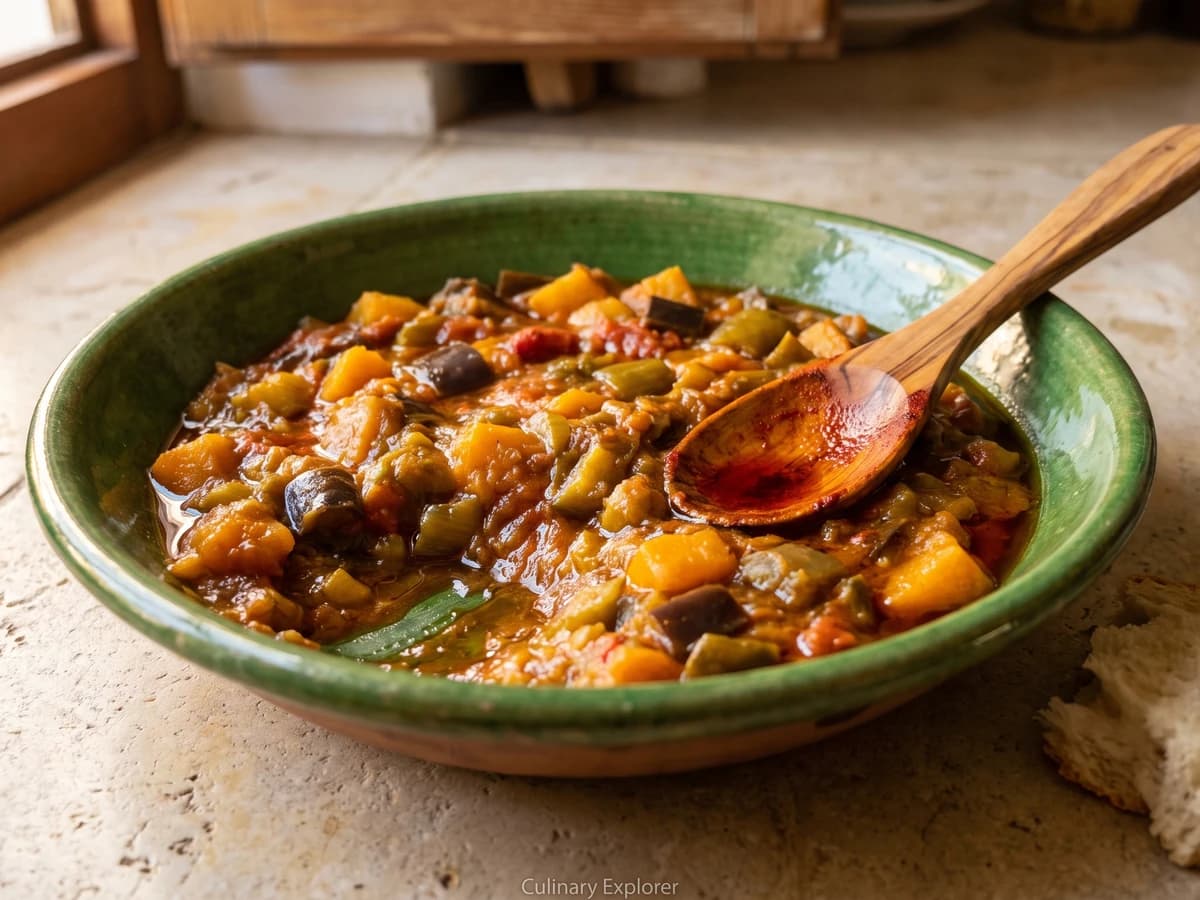
Alboronía is Andalucía's old pumpkin and aubergine stew, deepened with tomato, pimentón, and cumin, then cooked without hurry until the vegetables settle into a glossy, sweet, spoon-soft whole.

Chef Isabel
Aletría Murciana is Murcia's humble noodle guiso: fine fideos, pork ribs, potato, saffron, and a dark sweet sofrito. Get that base right and the pot knows where it's going.
Chef Isabel
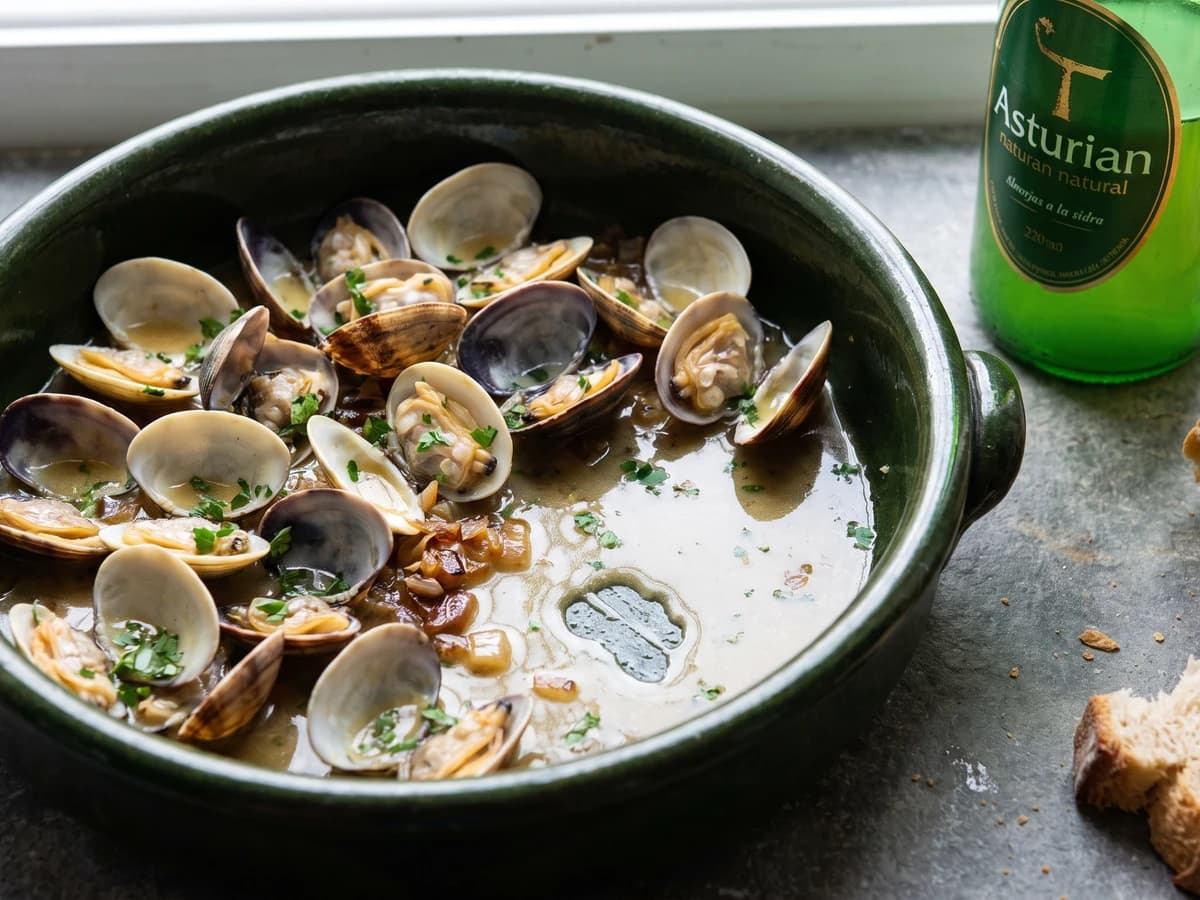
Asturias opens clams in tart natural cider over a slow onion and garlic sofrito, making a bright, briny sauce that asks for bread and rewards one rule: lift each clam as it opens.