
Chef Makoa
Baked ʻUala (Hawaiian Sweet Potato in the Embers)
Whole Hawaiian ʻuala baked in embers or a hot oven until the skins char and the flesh goes honey-soft, finished plain with paʻakai so the canoe crop tastes like itself.
A cooking platform built around craft, culture, and the stories behind what we eat.
Created by
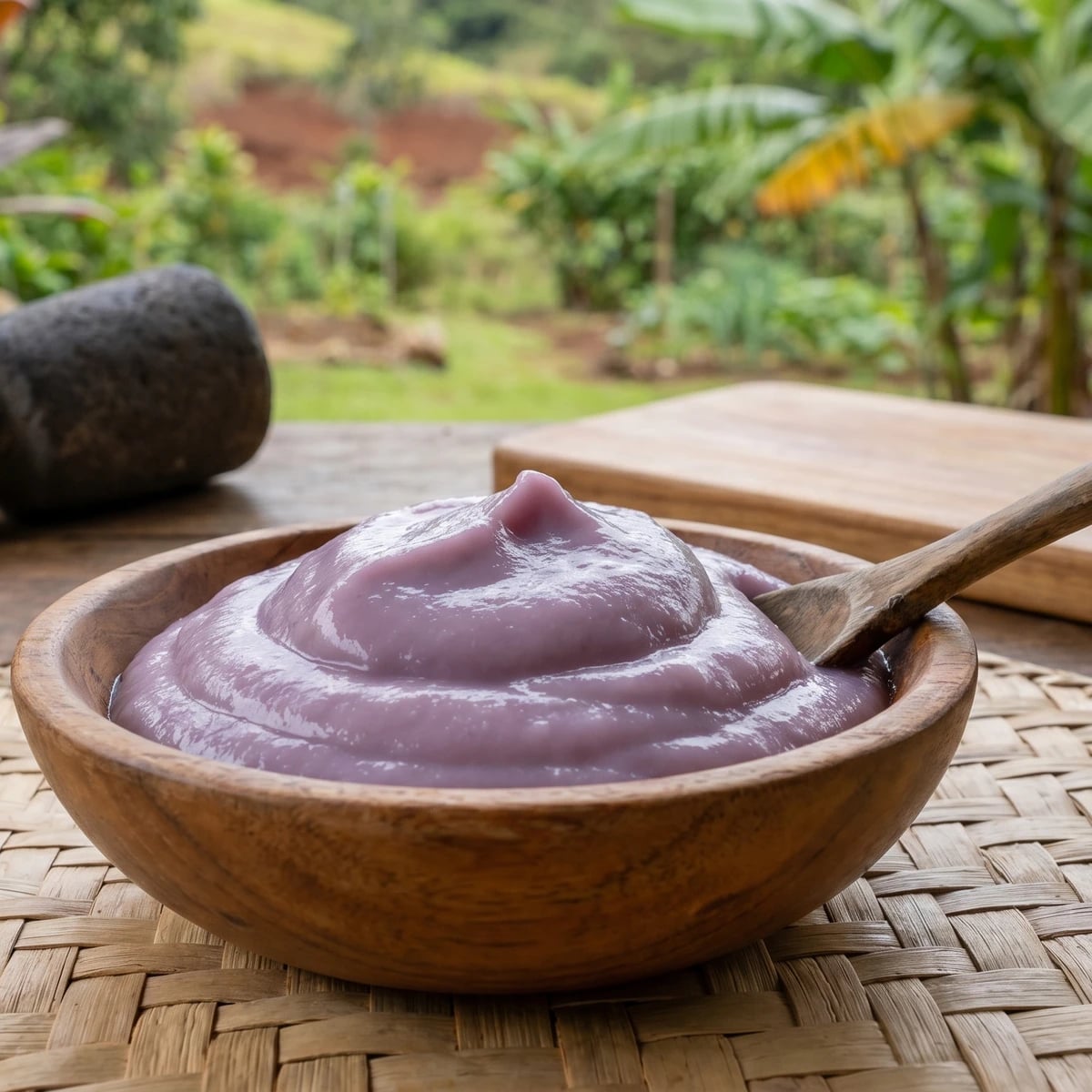
Hawaiʻi's sweet potato poi, pounded from ʻuala instead of kalo, smooth and faintly sweet, a canoe-crop starch for the table when the loʻi isn't the only teacher.
My kumu used to say, "Eat what you have," and that wasn't a small lesson. Back home in Hawaiʻi, poi usually means kalo, taro, Hāloa our elder brother. But the kūpuna also carried ʻuala, sweet potato, in the canoes, and when the land was dry or the loʻi wasn't giving, that root fed the people too.
So this is Hawaiian poi ʻuala, sweet potato poi, pounded smooth the same patient way, but softer in spirit, a little sweet, a little earthy, humble as a weeknight bowl. It belongs to Hawaiʻi's hand, and it sits beside its cousins across the Triangle: paʻiʻai and poi from kalo, Marquesan and Tahitian popoi, Cook Islands poʻe, breadfruit and taro pounded wherever one ocean, one canoe, one root took hold.
No need make it precious. If you have Hawaiian ʻuala, use that. If what your market gives you is purple Okinawan sweet potato or an orange one from the grocery, eat what you have and no shame. The point is the work: cook it fully, pound it slow, add water only as the root asks for it, and don't blame the ʻuala if you rushed the hand.
ʻUala, the sweet potato, was one of the major Hawaiian canoe and field crops, especially important in drier places where wetland kalo could not grow well. Long before rice became the everyday starch under plantation life, Hawaiian tables were built from pounded and cooked roots like kalo, ʻuala, ʻulu, and ʻuhi. Poi ʻuala shows that poi is not only one ingredient, but a pounded-starch practice, with cousins in popoi and poʻe across the Polynesian Triangle.
Quantity
3 pounds
scrubbed, preferably Hawaiian or purple sweet potatoes
Quantity
3/4 to 1 1/4 cups
as needed for pounding
Quantity
1/2 teaspoon
plus more to taste
| Ingredient | Quantity |
|---|---|
| ʻuala (sweet potatoes)scrubbed, preferably Hawaiian or purple sweet potatoes | 3 pounds |
| warm wateras needed for pounding | 3/4 to 1 1/4 cups |
| paʻakai (sea salt)plus more to taste | 1/2 teaspoon |
Steam or bake the ʻuala until a knife slides through with no catch, 35 to 45 minutes depending on size. Don't pull them early. The root has to give all the way through before it can pound smooth.
Let the ʻuala cool just enough to handle, then slip off the skins. Keep the flesh warm if you can. Warm ʻuala listens better under the pounder, and cold ʻuala gets stiff on you.
Set the ʻuala on a papa kuʻi ʻai, a poi-pounding board, or in a heavy bowl. Pound or mash until the flesh breaks down from chunks to a thick, glossy paste. Add the salt, then work in warm water a few tablespoons at a time.
Keep pounding and folding until the poi is smooth enough to scoop, soft but not soupy. For thick paʻiʻai-style ʻuala, use less water. For table poi, add more until it settles in the bowl with a gentle shine.
Taste for salt and serve warm or at room temperature in a small ʻumeke, a Hawaiian wooden bowl. If making it ahead, press a little water against the surface, cover tight, and stir it back together before serving.
1 serving (about 260g)
Culinary guides, cultural storytelling, and the editorial depth that makes cooking meaningful.
Discover Culinary Explorer
Chef Makoa
Whole Hawaiian ʻuala baked in embers or a hot oven until the skins char and the flesh goes honey-soft, finished plain with paʻakai so the canoe crop tastes like itself.

Chef Makoa
Hawaiʻi's ʻulu, breadfruit, roasted whole until the skin blackens and the inside turns soft and bread-like, the old canoe crop made real for a weeknight oven.

Chef Makoa
Roasted kukui nut pounded soft with paʻakai ʻalaea, the salty, oily Hawaiian relish that makes poke taste like home and carries the old hand into a weeknight kitchen.

Chef Makoa
Hawaiʻi's koʻele pālau turns steamed ʻuala into a soft coconut-cream pudding, sweet but grounded, the canoe crop brought forward for a celebration table or a quiet bowl at home.