
Chef Makoa
Baked ʻUala (Hawaiian Sweet Potato in the Embers)
Whole Hawaiian ʻuala baked in embers or a hot oven until the skins char and the flesh goes honey-soft, finished plain with paʻakai so the canoe crop tastes like itself.
A cooking platform built around craft, culture, and the stories behind what we eat.
Created by
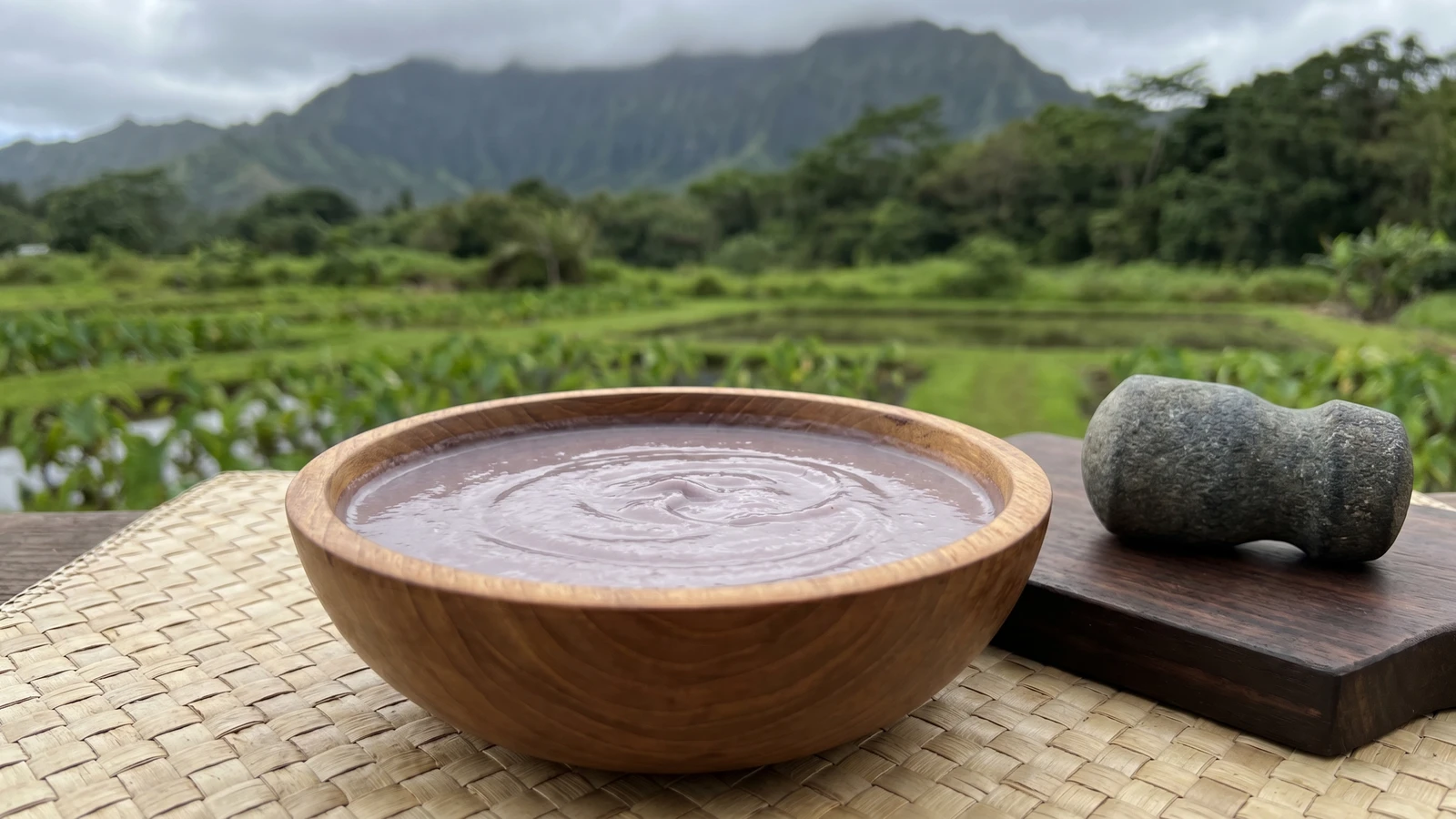
Fresh Hawaiian poi left to turn ʻawaʻawa, sour, over a few days, tangy and clean from its own kalo life, ready beside fish, kālua puaʻa, laulau, or tomorrow's plate lunch.
Hāloa is our elder brother, and sometimes he teaches after everybody thinks the work is pau, finished. In Hawaiʻi, poi ʻawaʻawa means sour poi, fresh poi left a few days until the kalo keeps working and turns tangy, clean, alive in the bowl. My kumu used to look at people funny when they called sour poi spoiled. Spoiled? No. That's the relative still talking.
Fresh poi is not dead food. You steamed the kalo until its bite went soft, pounded it on the papa kuʻi ʻai, the poi-pounding board, or bought it from somebody who did that work, and now you give it time. Clean bowl, loose cover, a little water when it tightens, and patience. The sourness should come gentle first, then brighter, never rotten. That's the why under the method: you're tending fermentation, not neglecting leftovers.
This bowl belongs to Hawaiʻi. Across the Triangle the cousins keep their own pounded starches, Marquesan popoi, Tahitian poʻe, breadfruit and taro worked under their own names and hands. I no blur them together. Same root, different bowls. One ocean, one canoe, one root.
Eat poi ʻawaʻawa with the deep foods, sure, kālua puaʻa, laulau, poke with limu and ʻinamona. But don't make it precious. Sour poi sits just fine beside fried fish, rice, eggs, Spam, chili pepper water, whatever get. Keeper, not gatekeeper. The old food has to live in today's kitchen too.
Kalo (Hawaiian taro) was one of the canoe plants carried into Hawaiʻi by Polynesian voyagers, and in Hawaiian genealogy Hāloa binds the plant and the people as elder sibling and younger sibling. Poi ʻawaʻawa, sour poi, comes from the natural lactic fermentation of cooked, pounded kalo, a way households held poi for days before refrigeration and a taste many families came to prefer. Its cousins are not copies: Marquesan popoi, Tahitian poʻe, and other pounded taro and breadfruit foods across the Triangle show one ocean, one canoe, one root, each island keeping its own bowl.
Quantity
3 cups
Quantity
1/4 to 1 cup
as needed
Quantity
2 tablespoons
as a starter
Quantity
to taste
for the table
| Ingredient | Quantity |
|---|---|
| fresh poi, made from cooked and pounded kalo (Hawaiian taro) | 3 cups |
| cool filtered water, or boiled and cooled wateras needed | 1/4 to 1 cup |
| mature sour poi from a previous batch (optional)as a starter | 2 tablespoons |
| paʻakai ʻalaea (Hawaiian red sea salt) (optional)for the table | to taste |
Wash your hands well and set the fresh poi in a clean glass, stainless, or wooden bowl. It should smell earthy and sweet, like cooked kalo, with no sharp rot, fuzz, or strange color. If you're starting from paʻiʻai, the firm hand-pounded taro paste, work in cool water a little at a time until it becomes thick poi.
Stir in enough cool water to make the poi smooth and glossy, thick enough to hold a spoon trail for a moment before it settles back. One-finger poi is thick, two-finger poi is the middle road, and three-finger poi is loose. For poi ʻawaʻawa, I like it in the two-finger place so it sours evenly but still has body.
Stir in the mature sour poi if you have it, then cover the bowl with a clean cloth or a loose lid. Do not seal it airtight. Leave it at cool room temperature, about 68 to 75F, for 24 hours. If your kitchen is hotter than 80F, let it sit only 12 to 18 hours, then move it to the fridge and give it more time there.
Once a day, stir the poi with a clean spoon and work in a tablespoon or two of cool water if the surface looks dry or the poi tightens up. Taste with a clean spoon. Day one is gentle, day two gets bright, and day three is where the ʻawaʻawa, the sourness, starts speaking up.
The poi is ready when it smells clean and lactic, tangy like plain yogurt but still earthy from the kalo. The color should stay lavender-grey, beige, or pale tan, and the surface should look satin-smooth after stirring. If you see mold, fuzz, pink, orange, or black spots, or if it smells rotten, alcoholic, or harsh, throw it out. No shame. No blame the taro. Start again cleaner.
When the sourness tastes right to you, stir the poi smooth and adjust with a little water. Serve room temperature or cool, in an ʻumeke, a Hawaiian wooden bowl, with kālua puaʻa, laulau, poke, fried fish, chili pepper water, rice, or whatever the table has that day. Refrigerate the rest and eat within 5 days.
1 serving (about 145g)
Culinary guides, cultural storytelling, and the editorial depth that makes cooking meaningful.
Discover Culinary ExplorerChef Makoa
Whole Hawaiian ʻuala baked in embers or a hot oven until the skins char and the flesh goes honey-soft, finished plain with paʻakai so the canoe crop tastes like itself.
Chef Makoa
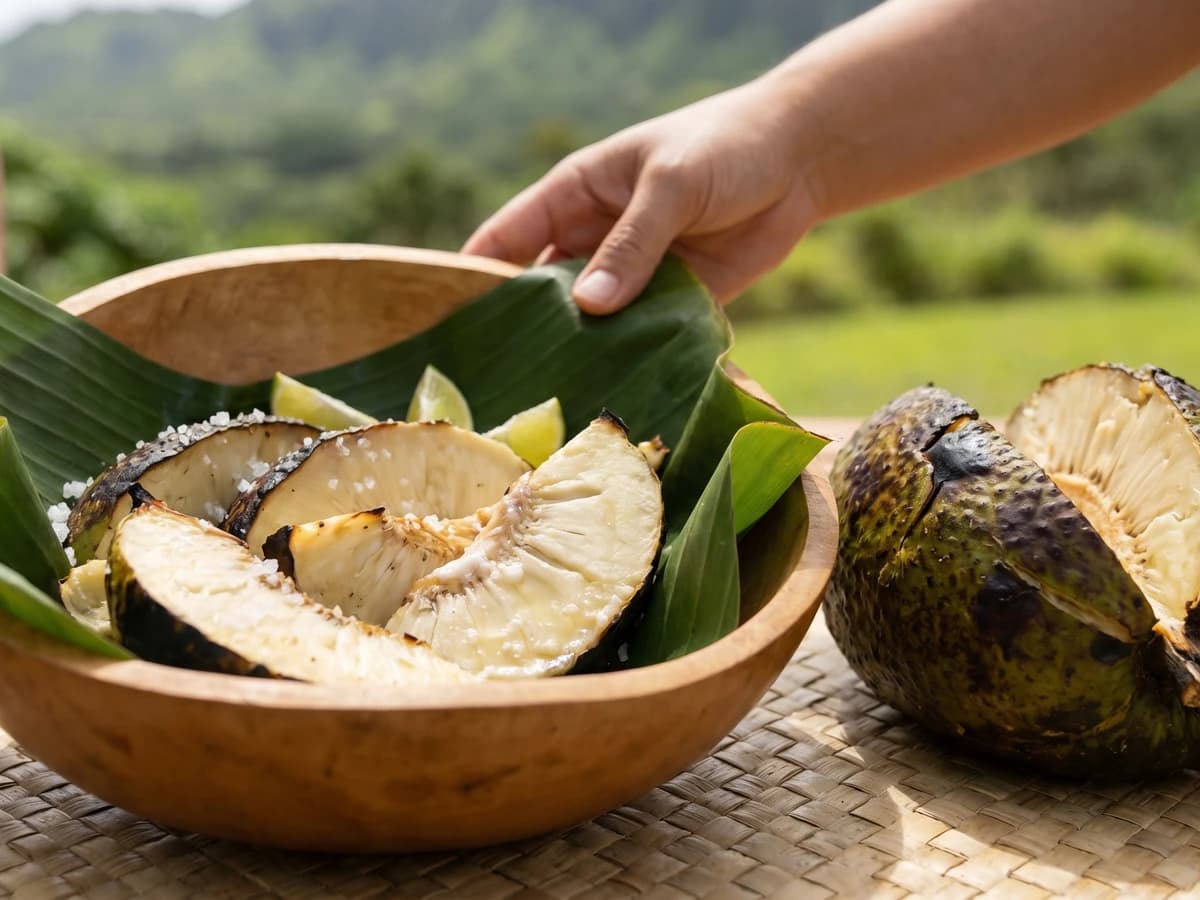
Hawaiʻi's ʻulu, breadfruit, roasted whole until the skin blackens and the inside turns soft and bread-like, the old canoe crop made real for a weeknight oven.
Chef Makoa
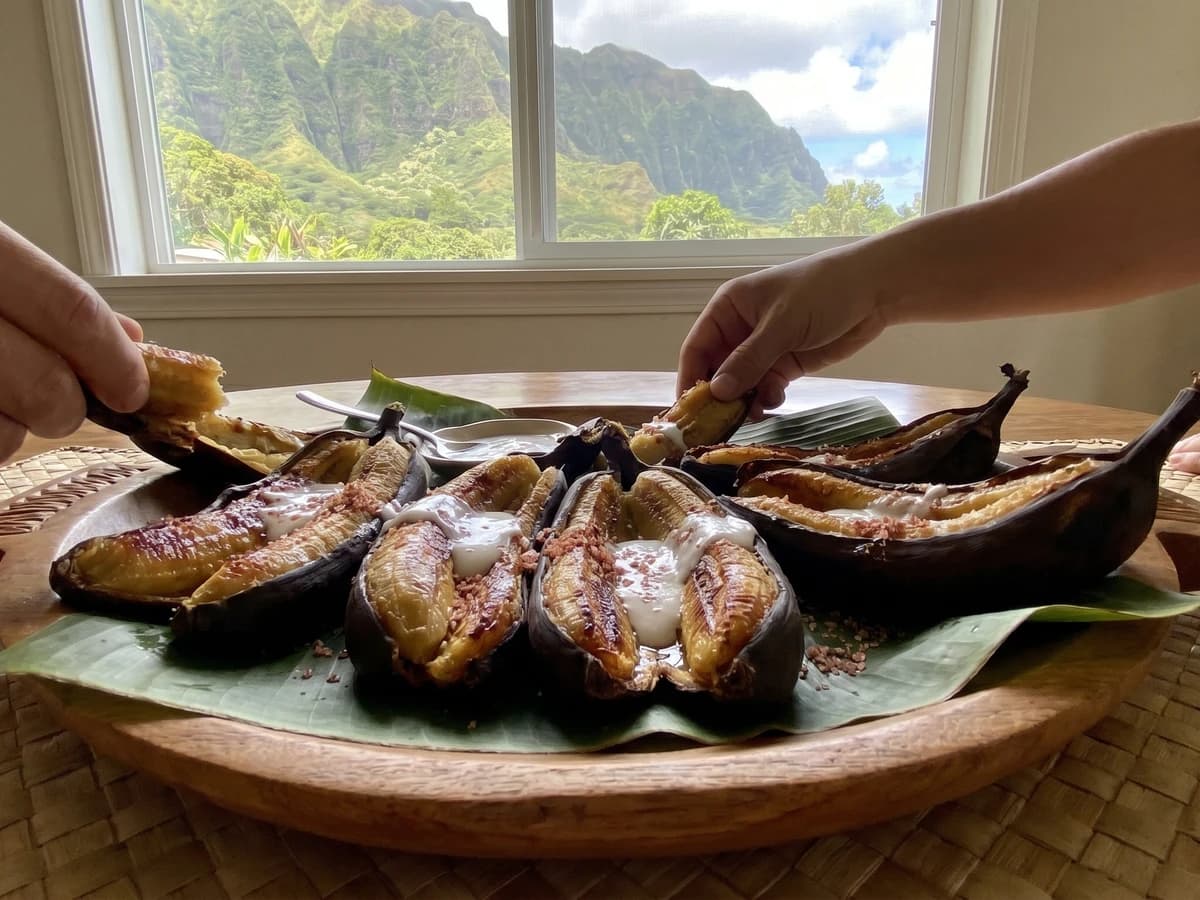
Firm Hawaiian maiʻa baked in its own skin until the starch relaxes into quiet sweetness, split open with coconut cream and paʻakai, a canoe-crop side for weeknight rice or a lūʻau table.
Chef Makoa
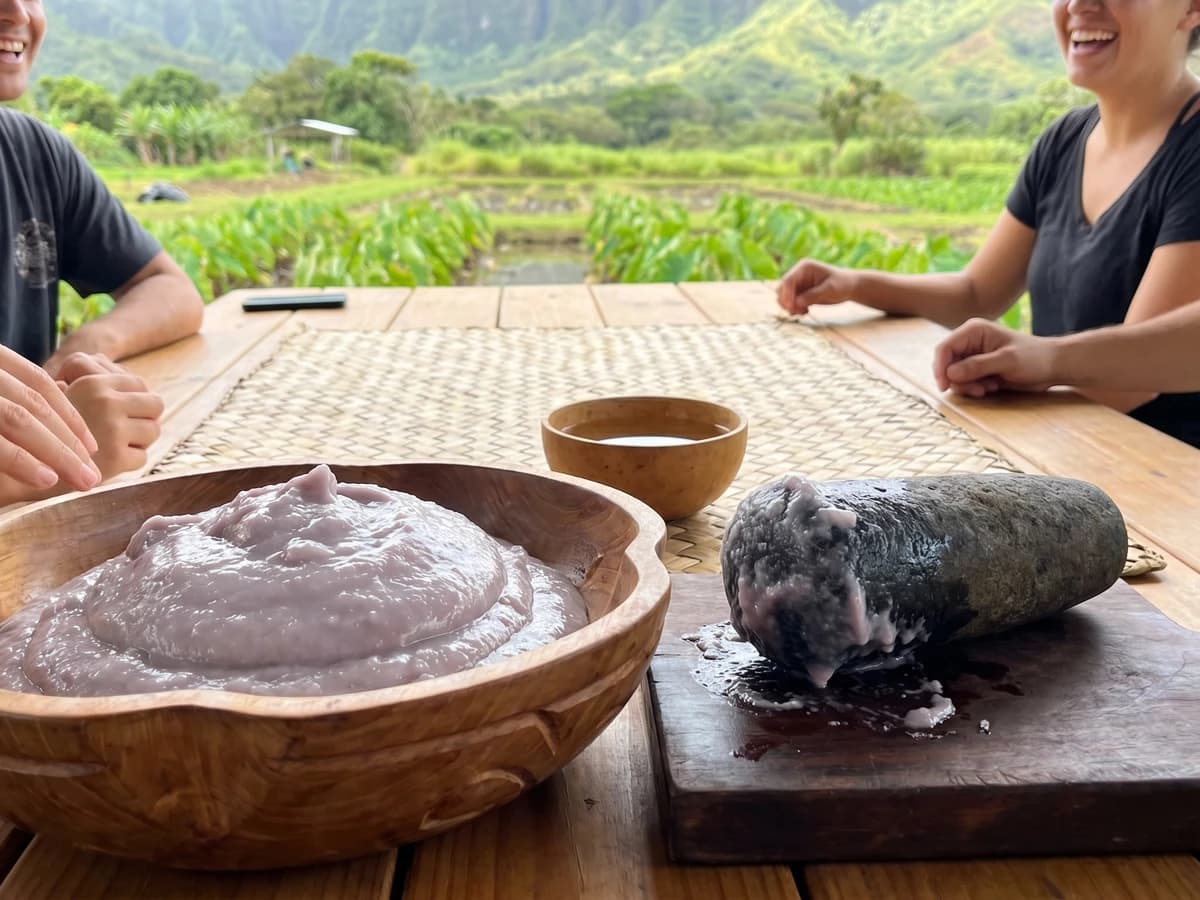
Hawaiian paʻiʻai is kalo steamed soft, cleaned, and pounded by hand until it shines, thick enough to lift from the stone, ready to eat as is or loosen into poi.