Chef Graziella
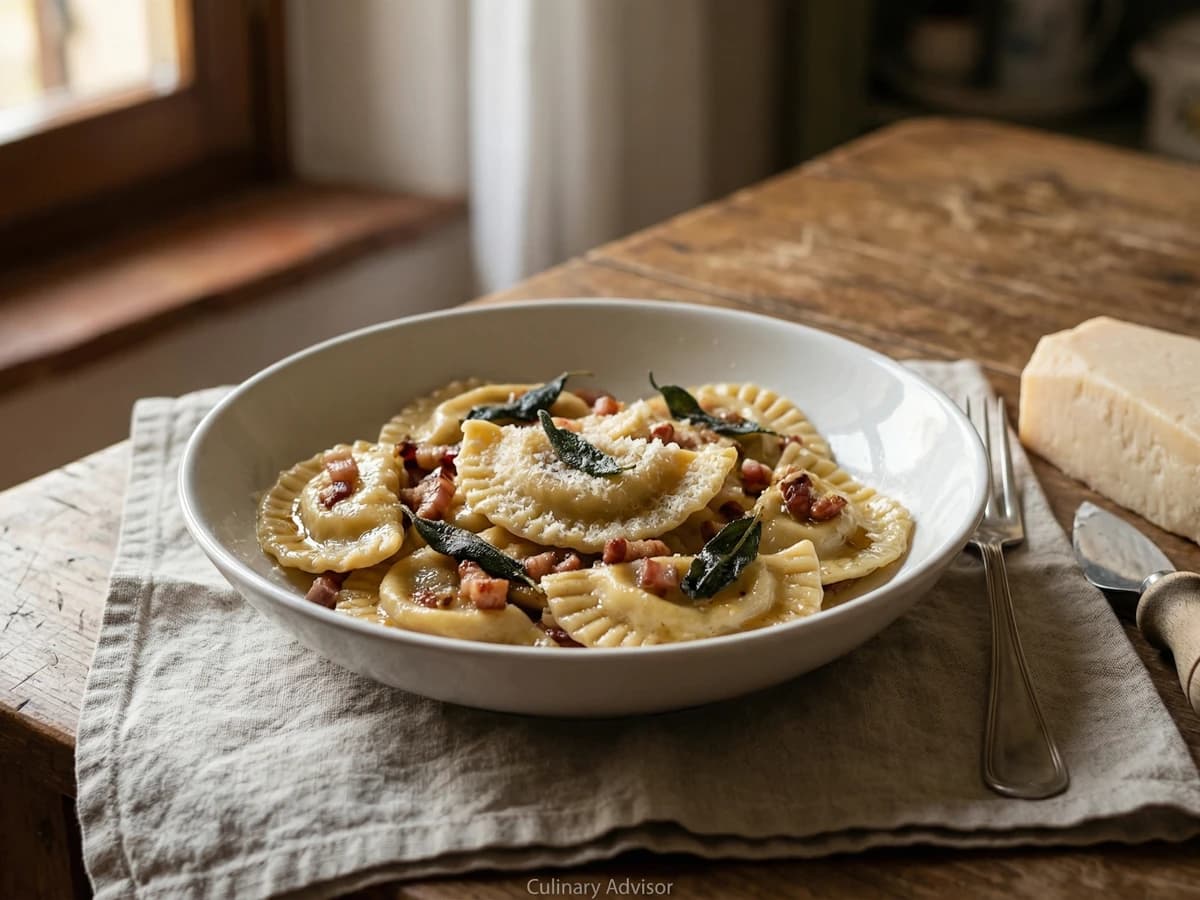
Casoncelli alla Bergamasca
The stuffed pasta of Bergamo's valleys, where crushed amaretti in the meat filling creates a sweet-savory balance that exists nowhere else in Italy. Dressed simply in browned butter and sage.
A cooking platform built around craft, culture, and the stories behind what we eat.

Created by
The mountain pasta of Lombardy's Valtellina valley, where buckwheat noodles, potatoes, cabbage, and Alpine cheese become one warming, substantial dish under a cascade of browned butter and sage.
Pizzoccheri is peasant food from people who understood cold. In the Valtellina valley, where the Alps rise sharply and winter lasts half the year, contadini grew what the mountains allowed. Wheat will not thrive at that altitude. Buckwheat will. So buckwheat became the grain of the high valleys, ground into flour the color of stone and made into short, thick ribbons that could warm a shepherd from the inside out.
This is not delicate food. It is not restaurant food. It is fuel for bodies that work hard in thin air, and it makes no apologies for its heft. The pasta cooks in the same water as the potatoes and cabbage, everything draining together into a terra cotta casserole, layered with local cheese, then baptized with butter that has been cooked to brown with garlic and sage. The cheese melts. The butter soaks through. You eat it immediately, before the layers cool and stiffen.
Americans sometimes ask about making this lighter. You cannot make it lighter. That would be like asking the mountains to be less steep. The dish is what the dish is: substantial, warming, and honest about what it takes to survive an Alpine winter.
Pizzoccheri emerged in the high valleys around Teglio in Lombardy's province of Sondrio, where buckwheat cultivation dates to the 16th century. The Accademia del Pizzocchero di Teglio has defended the authentic recipe since 2002, though arguments about proper technique go back generations before any academy existed.
Quantity
300g
Quantity
100g
Quantity
1
Quantity
3/4 cup, plus more as needed
Quantity
to taste
Quantity
400g (about 2 medium)
Quantity
300g (about 1/3 medium head)
Quantity
250g
cut into small cubes
Quantity
100g
freshly grated
Quantity
200g
Quantity
3
peeled and lightly crushed
Quantity
8
| Ingredient | Quantity |
|---|---|
| buckwheat flour | 300g |
| all-purpose flour | 100g |
| large egg | 1 |
| whole milk | 3/4 cup, plus more as needed |
| fine sea salt | to taste |
| waxy potatoes | 400g (about 2 medium) |
| Savoy cabbage | 300g (about 1/3 medium head) |
| Valtellina Casera cheesecut into small cubes | 250g |
| Parmigiano-Reggianofreshly grated | 100g |
| unsalted butter | 200g |
| garlic clovespeeled and lightly crushed | 3 |
| fresh sage leaves | 8 |
Combine the buckwheat flour and all-purpose flour on a wooden board or in a large bowl. Make a well in the center. Add the egg and begin incorporating the flour, adding milk gradually until a rough dough forms. The buckwheat absorbs liquid differently than wheat flour. You may need slightly more or less milk. Knead for 8 to 10 minutes until the dough is smooth and cohesive, though it will never achieve the silkiness of pure egg pasta. The buckwheat makes it slightly grainy. This is correct.
Wrap the dough tightly in plastic and let it rest at room temperature for 30 minutes. This relaxes what little gluten exists and makes rolling easier. Do not skip this step or the dough will fight you.
Divide the dough into four pieces. Working with one piece at a time, roll it on a floured surface into a sheet about 2 millimeters thick. This is thicker than tagliatelle. Cut into ribbons roughly 7 centimeters long and 1 centimeter wide. They should look rustic, not uniform. Dust with flour and set aside on a tray. Repeat with remaining dough.
Peel the potatoes and cut them into slices about half a centimeter thick, then cut each slice into rough pieces. Remove the tough core from the cabbage and cut the leaves into strips about 5 centimeters wide. The potatoes and cabbage cook together with the pasta. Everything must be ready before you begin.
Bring a very large pot of water to a boil and salt it generously. Add the potatoes first. After 5 minutes, add the cabbage. Let both cook for another 5 minutes. The potatoes should be nearly tender but not falling apart. The cabbage should be soft but retain some texture.
Add the pizzoccheri to the pot with the vegetables. Stir gently to prevent sticking. Cook for 8 to 10 minutes. Fresh buckwheat pasta takes longer than egg pasta. Taste it. The pasta should be tender throughout with no raw flour taste at the center. When done, drain everything together, reserving one cup of the cooking water.
Have ready a large terra cotta casserole or heavy ceramic baking dish, warmed in a low oven. Work quickly now. Spread one third of the drained pasta and vegetables in the dish. Scatter one third of the Casera cubes and one third of the Parmigiano over top. Repeat twice more, finishing with cheese. The heat from the pasta will begin melting the cheese immediately.
In a small saucepan, melt the butter over medium heat. Add the crushed garlic cloves and sage leaves. Cook, swirling occasionally, until the butter foams, then subsides, then begins to turn the color of hazelnuts and smell nutty. Watch it carefully. Browned butter becomes burnt butter in seconds. Remove the garlic cloves.
Pour the hot brown butter with the sage leaves over the layered casserole. The butter will sizzle as it hits the cheese, melting it further and pooling in the crevices. Do not stir. Do not wait. Bring the casserole directly to the table and serve immediately, scooping deep to get all the layers in each portion. Pizzoccheri waits for no one. Once it begins to cool, the cheese stiffens and the magic diminishes.
1 serving (about 350g)
Culinary guides, cultural storytelling, and the editorial depth that makes cooking meaningful.
Discover Culinary ExplorerChef Graziella
The stuffed pasta of Bergamo's valleys, where crushed amaretti in the meat filling creates a sweet-savory balance that exists nowhere else in Italy. Dressed simply in browned butter and sage.

Chef Graziella
The Milanese cutlet made with pork instead of veal: bone-in, pounded thin, breaded simply, fried in clarified butter until the crust shatters at the touch of a fork. This is not schnitzel. This is older.
Chef Graziella
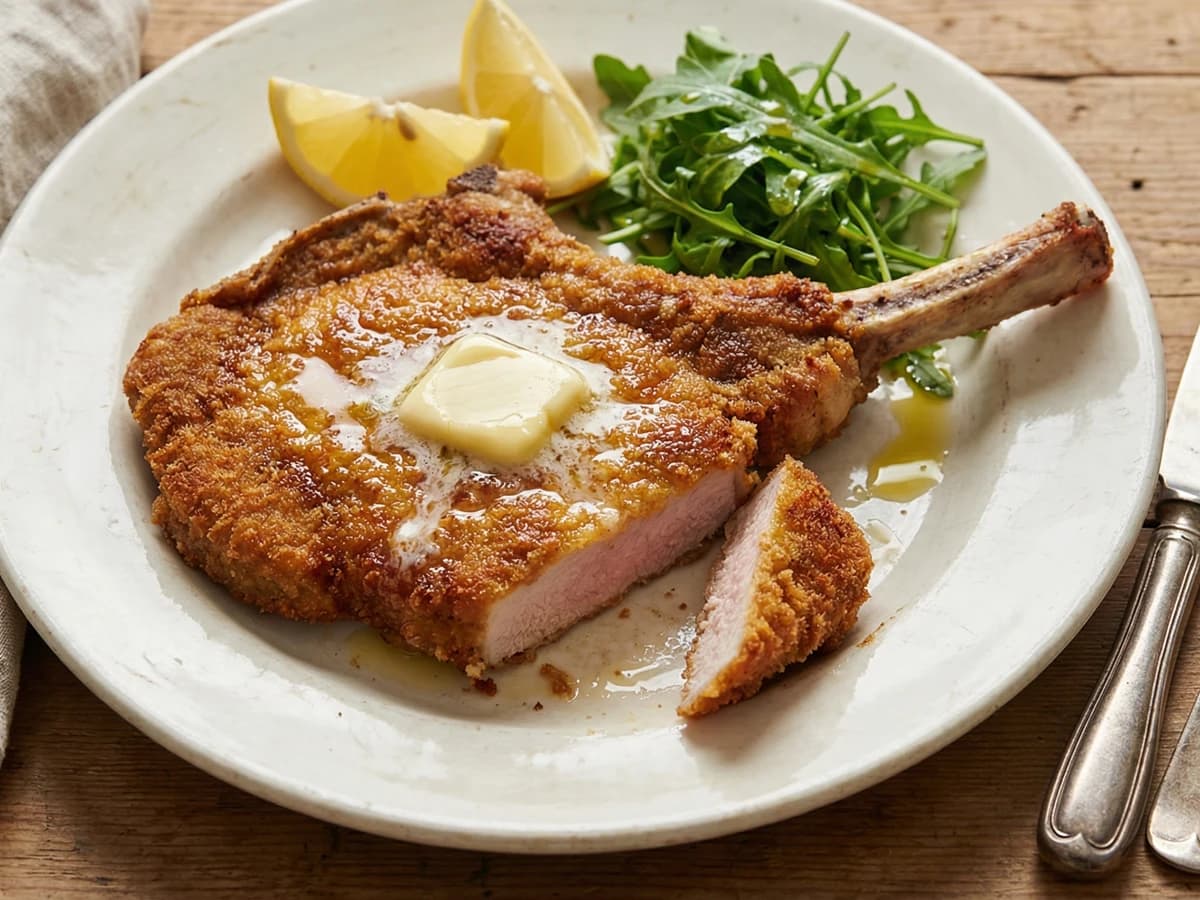
The original bone-in veal cutlet of Milan, pounded thin and fried in clarified butter until the crust shatters and the meat stays juicy. The Viennese borrowed this dish. The Milanese perfected it.
Chef Graziella
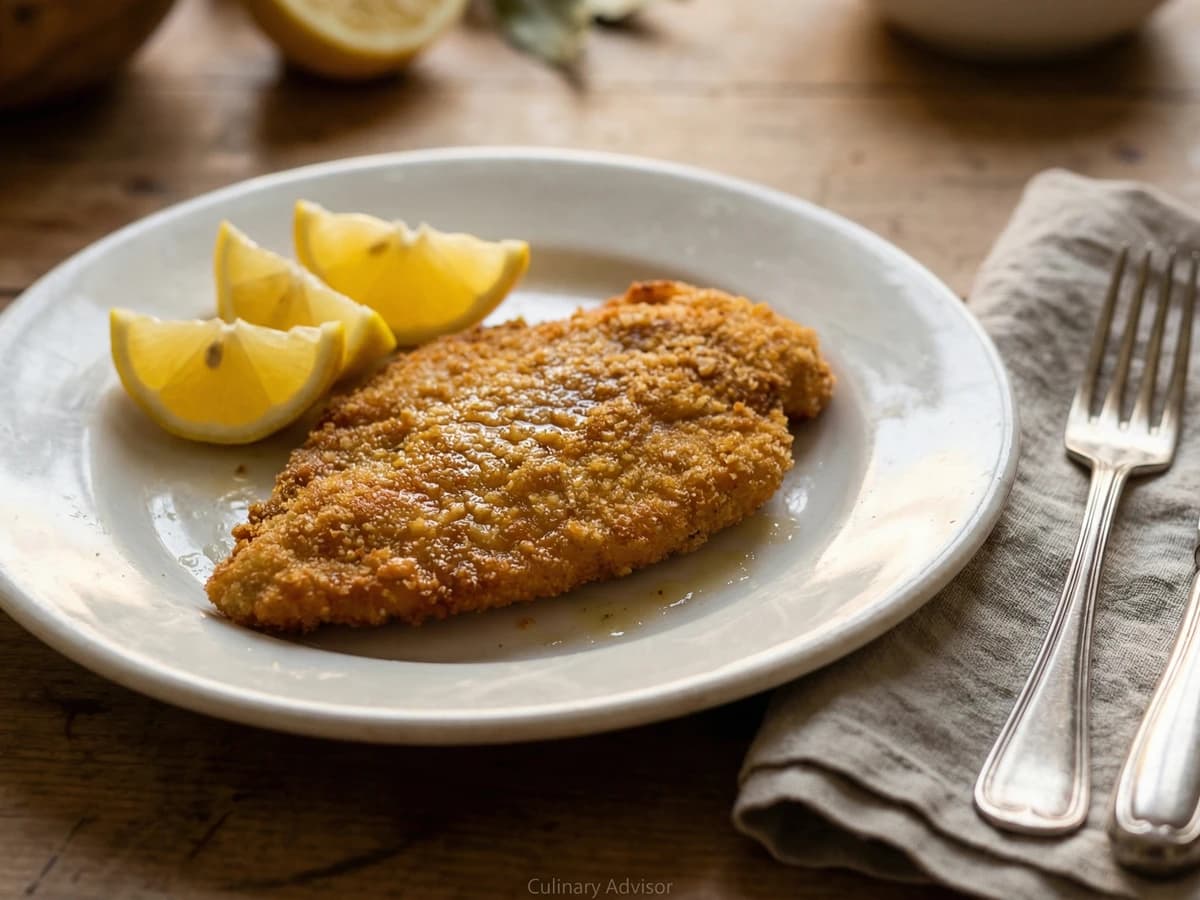
The golden cutlet of Lombardy, where chicken is pounded thin, coated in the finest crumbs, and fried in butter until it shatters at the touch of a fork. Lemon is the only adornment it needs.