Chef Isabel
Abanico Ibérico a la Plancha
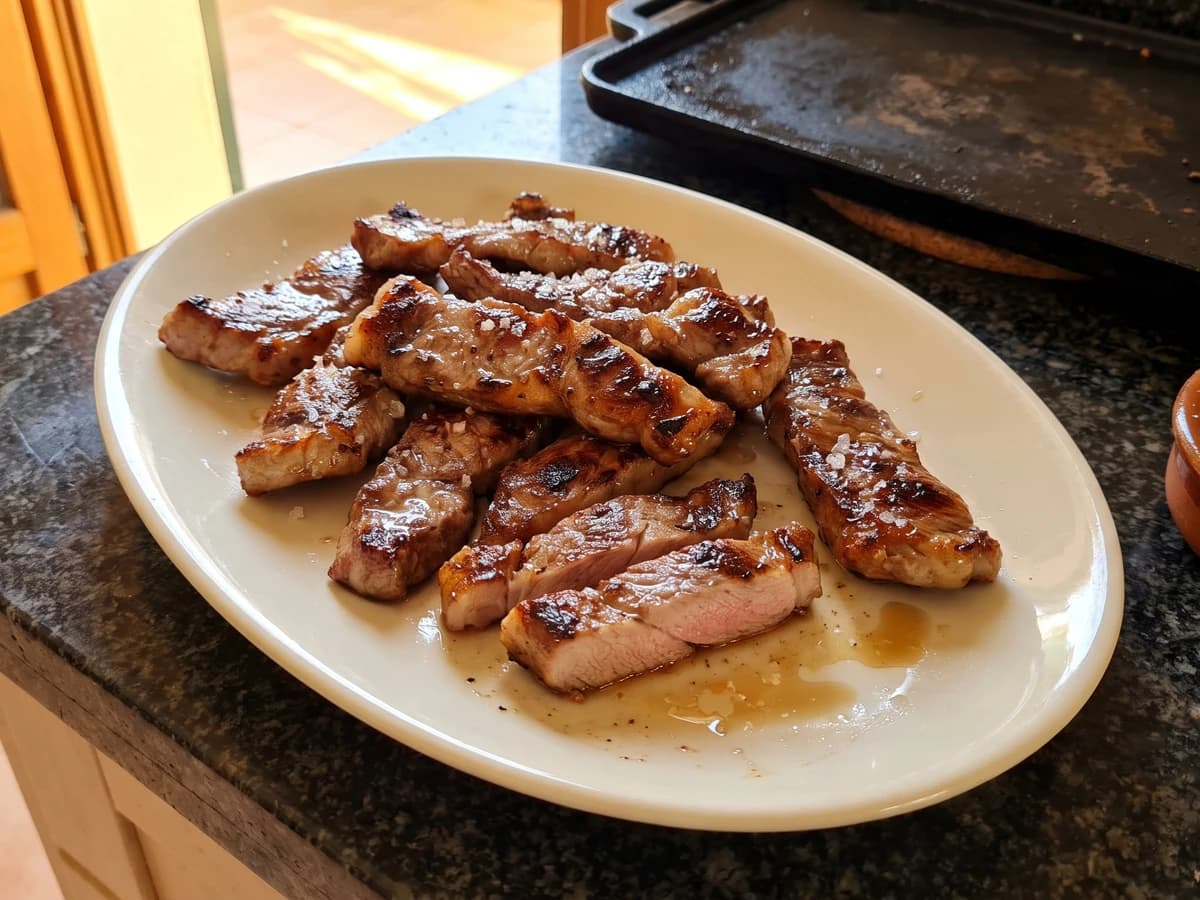
Extremadura's dehesa gives us this fan-shaped, marbled rib cut: salt it at the last moment, lay it on a fierce plancha, and count in seconds so the centre stays juicy.
A cooking platform built around craft, culture, and the stories behind what we eat.
Created by
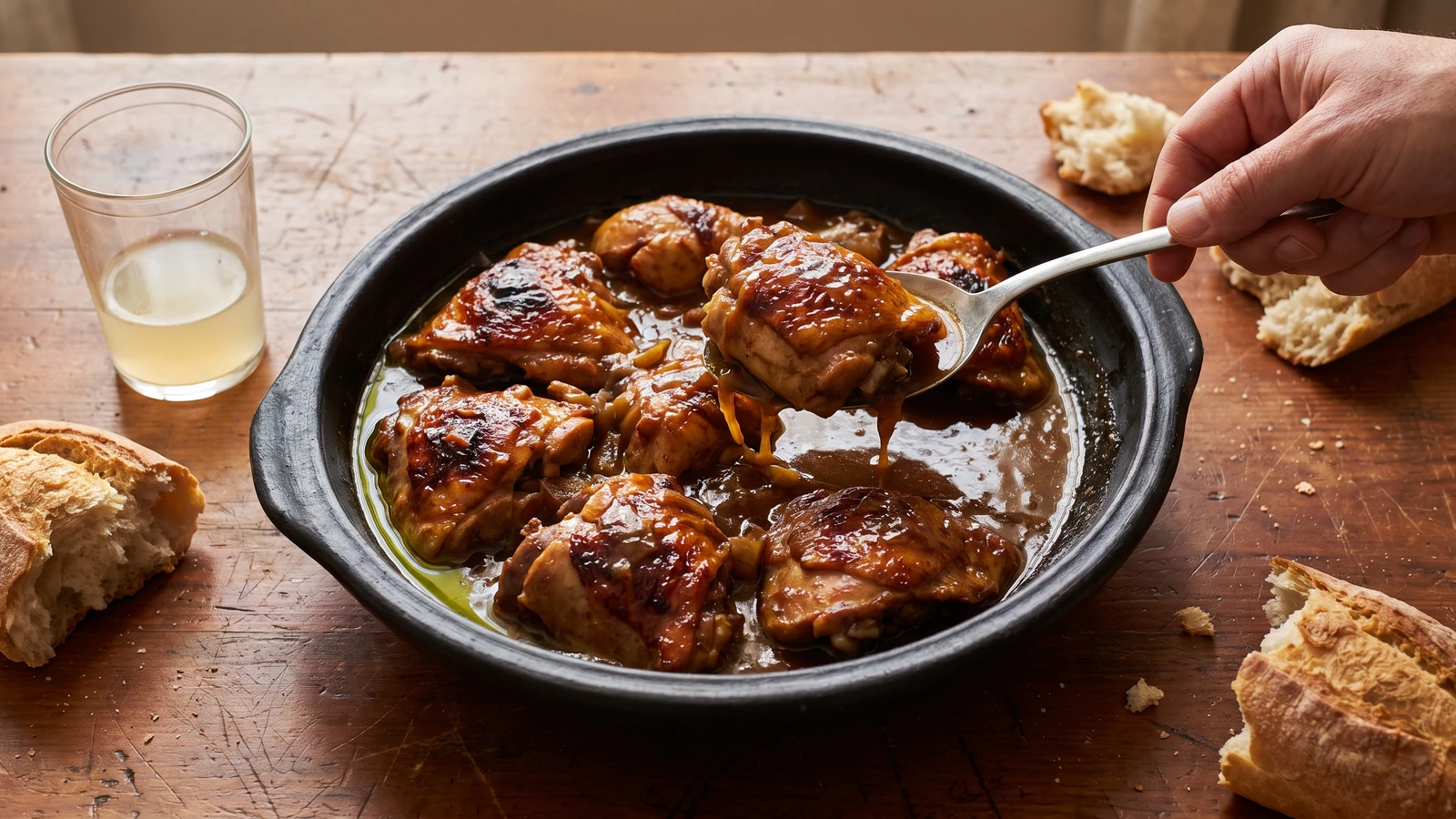
Pitu de caleya is Asturias in a stewpot: a mature, outdoor-raised bird browned well, then held at the gentlest bubble in a dark onion sauce until its stubborn meat finally yields.
Pitu de caleya guisado is Asturian, and its name tells you what matters. Pitu is chicken, caleya is the country lane: this is a slow-grown bird that has walked and scratched outdoors, developing firm, dark meat and enough character to make its own broth. Asturias cooks it in an onion-rich guiso, a covered stew, until the meat yields at the joint. A young roasting chicken gives a different, lighter dish.
The old bird decides the method. Brown the pieces well, cook the sofrito, the slow onion base, until dark gold and jammy, then hold the whole pot at a lazy bubble for hours. Hard boiling makes the liquid disappear before the bird's firm joints soften. Let time do the work. The finished sauce should be glossy and thick enough to cling, with the vegetables almost melted into it.
Far from Asturias, ask a butcher for a mature stewing hen or cockerel. That's the nearest honest substitute. If all you can find is a young free-range roasting chicken, use less water and begin checking it after 75 minutes; the meat will be milder and the sauce less deep. The Margin beside this one says, "Trust the thigh joint, not the clock." Siempre sale, si lo sigues: it turns out if you follow it.
Pitu is the Asturian word for chicken, while caleya names the narrow country lane where household birds ranged and scratched for food. The term describes a way of rearing rather than a single breed; birds kept to maturity developed muscular, strongly flavored meat and were valued for Sunday tables and celebrations. Their firmness called for the hours-long guiso, while arroz con pitu became another Asturian way of making the same prized bird feed a full table.
Quantity
1 (2.8-3.2kg)
cut into 10 serving pieces, neck and backbone kept
Quantity
24g
divided
Quantity
8 cloves
5 crushed to a paste and 3 finely chopped
Quantity
2g
Quantity
100ml
Quantity
900g
thinly sliced
Quantity
180g
seeded and finely diced
Quantity
250g
peeled and cut into 5mm rounds
Quantity
300g
grated; or use 250g drained canned whole tomatoes, crushed
Quantity
2
Quantity
60ml
Quantity
250ml
Quantity
600ml, plus up to 250ml more if needed
| Ingredient | Quantity |
|---|---|
| pitu de caleya or mature free-range stewing chickencut into 10 serving pieces, neck and backbone kept | 1 (2.8-3.2kg) |
| fine sea saltdivided | 24g |
| garlic5 crushed to a paste and 3 finely chopped | 8 cloves |
| freshly ground black pepper | 2g |
| extra virgin olive oil | 100ml |
| onionsthinly sliced | 900g |
| green pepperseeded and finely diced | 180g |
| carrotspeeled and cut into 5mm rounds | 250g |
| ripe plum tomatoesgrated; or use 250g drained canned whole tomatoes, crushed | 300g |
| bay leaves | 2 |
| brandy | 60ml |
| dry white wine | 250ml |
| hot water | 600ml, plus up to 250ml more if needed |
Pat the chicken pieces dry. Mix the five crushed garlic cloves with 18g of the salt and all the black pepper, then rub the paste over every piece. Put the chicken in a covered non-reactive dish and refrigerate for 8 to 12 hours. This seasoning time matters with a large, mature bird; it carries the salt beyond the surface.
Scrape away loose garlic so it doesn't burn, then pat the pieces dry again. Heat the olive oil in a wide, heavy pot over medium-high heat. Brown the chicken in three or four batches, starting skin-side down and leaving room around each piece. Give each batch 10 to 12 minutes, turning until the surfaces are a deep burnished gold. Brown the neck and backbone as well; they give the sauce body. Transfer everything to a tray.
Lower the heat and leave about 60ml of oil and chicken fat in the pot. Add the onions, green pepper, carrots, and 4g of the remaining salt. Scrape up the browned bits and cook gently for 35 to 45 minutes, stirring often, until the onion is dark gold, very soft, and almost jammy. Add the three chopped garlic cloves and cook for 2 minutes. Stir in the tomato and cook for another 15 to 20 minutes, until its water is gone and the oil shows again around the edges.
Take the pot off the heat before pouring in the brandy, then return it to medium heat. There is nothing gained by setting it alight. Add the white wine, scrape the bottom thoroughly, and boil for 5 to 7 minutes, until the sharp smell of alcohol has gone and the liquid has reduced by roughly half.
Return the chicken, neck, backbone, and any collected juices to the pot. Add the bay leaves and 600ml hot water; the liquid should reach between one-third and halfway up the pieces, not cover them. Bring it just to a bubble, lower the heat, and cover with the lid slightly ajar. Cook for 2 hours 45 minutes to 3 hours 15 minutes, turning the pieces about every 40 minutes. Add hot water in 50ml measures only if the sauce drops below one-third of the chicken. It is ready when a skewer enters the thickest thigh easily and the joint moves without resistance. A mature thigh will often read 88 to 92°C; 74°C means it is safe, but it may still be stubborn.
Lift the tender chicken onto a warm tray and discard the bay leaves, neck, and bare backbone. Pass the sauce through a food mill, or blend it directly in the pot until smooth. Simmer uncovered for 10 to 15 minutes, until it coats the back of a spoon but still runs. Taste before adding the final 2g salt; the reduction may have seasoned it enough. Return the chicken and its juices and warm gently for 5 minutes.
Take the pot off the heat, cover it, and rest the stew for 20 minutes. The sauce settles around the meat and the oil rises into a fine gloss rather than sitting heavily on top. Serve large pieces of pitu with plenty of the dark onion sauce and bread for the plate. Con buenos ingredientes y paciencia, nothing else is needed.
1 serving (about 500g)
Culinary guides, cultural storytelling, and the editorial depth that makes cooking meaningful.
Discover Culinary ExplorerChef Isabel
Extremadura's dehesa gives us this fan-shaped, marbled rib cut: salt it at the last moment, lay it on a fierce plancha, and count in seconds so the centre stays juicy.
Chef Isabel
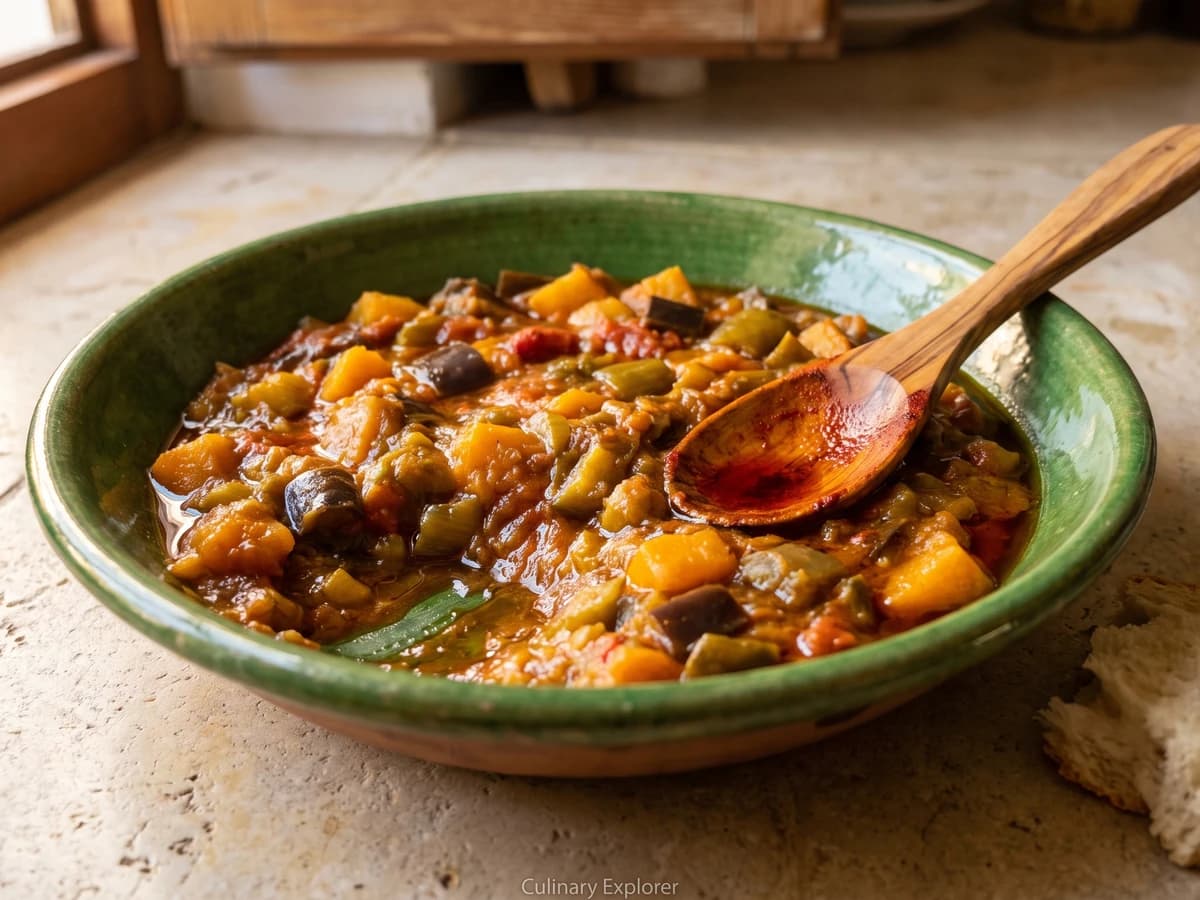
Alboronía is Andalucía's old pumpkin and aubergine stew, deepened with tomato, pimentón, and cumin, then cooked without hurry until the vegetables settle into a glossy, sweet, spoon-soft whole.

Chef Isabel
Aletría Murciana is Murcia's humble noodle guiso: fine fideos, pork ribs, potato, saffron, and a dark sweet sofrito. Get that base right and the pot knows where it's going.
Chef Isabel
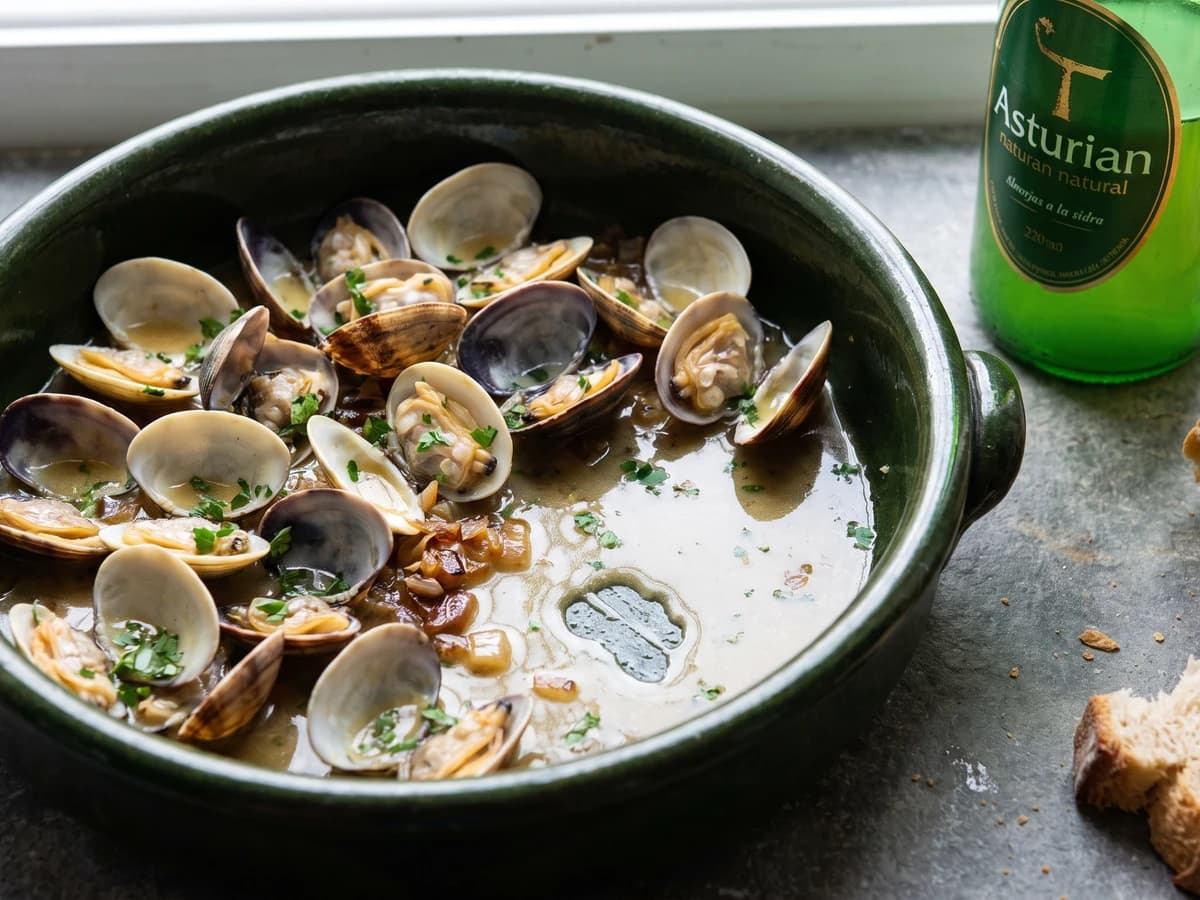
Asturias opens clams in tart natural cider over a slow onion and garlic sofrito, making a bright, briny sauce that asks for bread and rewards one rule: lift each clam as it opens.