
Chef Lesia
Buzhenyna (буженина, garlic-studded roast pork)
A whole pork neck takes garlic into little knife pockets, roasts until the crust goes dark and fragrant, then rests overnight so every cold slice tastes better than shop ham.
A cooking platform built around craft, culture, and the stories behind what we eat.

Created by
The best thing in these meatless holubtsi is the water you almost threw away: dark mushroom liquor that soaks into the rice, stains the cabbage bronze, and makes the pot taste fed.
The best thing in these meatless holubtsi is the water you almost threw away. Dried mushrooms give you their first gift in the bowl: dark, forest-smelling liquor, almost black tea, and that is what turns rice and cabbage into a fasting dish with shoulders. No meat, no butter, no pretending. The pot feeds itself.
Pisni means Lenten, fasting, and these belong especially to Sviata Vecheria, the Christmas Eve table, though I make them whenever winter has got into the walls. The filling is simple: rice, mushrooms, onion, carrot, dill, black pepper. What matters is that the rice is only half-cooked before rolling, so it can finish inside the leaf, drinking the mushroom liquor and tomato until each roll swells tight but stays tender.
Save the zasmazhka, the slow-sweated onion and carrot, for the sauce near the end. If you cook all that sweetness from the start, it flattens into the pot. Add it later and it sits brightly on the broth, orange and alive, the way Aunt Nadia wrote in one letter: "until the smell changes, then you know." She never said how many minutes. Of course she didn't.
Make a big pot. Holubtsi improve overnight, and the quiet ones at the bottom, the slightly collapsed ones, are usually the best.
Pisni holubtsi belong to Ukraine's fasting calendar, especially Christmas Eve, when many households serve twelve meatless dishes before the first star appears. Older versions often used fermented cabbage leaves from barrels, while fillings shifted by region: buckwheat and millet in central villages, dried forest mushrooms in Polissia and the Carpathian belt, rice where trade and later Soviet-era groceries made it ordinary. The meatless roll was never a lesser version; it was a separate winter dish built from preservation, grain, and the dark strength of dried mushrooms.
Quantity
1 large, about 1.5 to 2 kg
Quantity
40g
Quantity
600ml
for soaking the mushrooms
Quantity
250g
rinsed
Quantity
3 tablespoons, plus more for the pot
Quantity
2 large
finely diced
Quantity
2 large
coarsely grated
Quantity
3 cloves
finely grated
Quantity
2 tablespoons
Quantity
400ml
Quantity
1
Quantity
1 teaspoon
Quantity
1 small bunch
finely chopped, plus more to serve
Quantity
1 teaspoon, plus more to taste
Quantity
1/2 teaspoon
Quantity
1 teaspoon
if the tomatoes are sharp
Quantity
to serve
| Ingredient | Quantity |
|---|---|
| white cabbage | 1 large, about 1.5 to 2 kg |
| dried porcini or mixed wild mushrooms | 40g |
| just-boiled waterfor soaking the mushrooms | 600ml |
| short-grain or medium-grain ricerinsed | 250g |
| unrefined sunflower oil | 3 tablespoons, plus more for the pot |
| onionsfinely diced | 2 large |
| carrotscoarsely grated | 2 large |
| garlicfinely grated | 3 cloves |
| tomato paste | 2 tablespoons |
| passata or crushed tomatoes | 400ml |
| bay leaf | 1 |
| sweet paprika | 1 teaspoon |
| dillfinely chopped, plus more to serve | 1 small bunch |
| fine sea salt | 1 teaspoon, plus more to taste |
| black pepper | 1/2 teaspoon |
| sugar (optional)if the tomatoes are sharp | 1 teaspoon |
| smetana or vegan smetana (optional) | to serve |
Put the dried mushrooms in a bowl and cover them with the just-boiled water. Leave them until they soften and the water turns dark and smells like the forest floor after rain. Lift the mushrooms out with your fingers, then pour the soaking liquor through a fine sieve or cloth to catch any grit. Keep every drop of that liquor; it is the broth of the dish.
Cut the core from the cabbage and lower the head into a big pot of salted simmering water. Peel the leaves away as they loosen, one by one, laying them on a tray to cool. Shave the thick rib from each large leaf so it bends without snapping. Keep the torn leaves and small inner leaves for lining the pot.
Put the rinsed rice in a small pan with enough water to cover it by a finger. Simmer only until the outside softens but the center still has a little chalky bite. Drain it well. The rice must finish inside the cabbage rolls, drinking mushroom liquor and tomato, or the filling turns heavy and dull.
Chop the soaked mushrooms finely. Warm one tablespoon of sunflower oil in a wide pan and soften half the onion until translucent, then add the mushrooms and garlic. Cook until the pan smells deep and savory and the mushrooms stop squeaking under the spoon. Stir in the rice, half the dill, salt, pepper, and paprika. Taste it boldly; cabbage will soften the seasoning.
Lay a cabbage leaf rib-side down, put a spoonful of filling near the base, fold the sides in, and roll it away from you snugly. Not tight like a parcel from the post office, just firm enough that it holds. My hands remember varenyky folds, but holubtsi ask for a different kindness: tuck, roll, breathe. Repeat until the filling is gone.
Oil the bottom of a heavy pot and line it with the torn cabbage leaves. Pack the holubtsi seam-side down in tight layers, like people on a winter bus, close enough to hold each other in place. Pour over the strained mushroom liquor, passata, and tomato paste whisked together. Add the bay leaf. The liquid should come about three-quarters of the way up the rolls; add a splash of water if the pot looks thirsty.
Bring the pot to the quietest simmer, then cover and cook until the cabbage turns tender and the rice has swollen inside the rolls. Listen for a soft blip under the lid, not a hard boil. If the pot rattles, lower the heat. Holubtsi like patience more than drama.
While the holubtsi simmer, make the zasmazhka. Warm the remaining sunflower oil in a pan, add the remaining onion, and cook slowly until it goes sweet and glassy. Add the grated carrot and cook until the oil turns orange and the smell changes from raw root to something round and sweet. Spoon this over the top of the pot for the last stretch of cooking so its sweetness sits brightly on the sauce instead of disappearing into it.
Turn off the heat and let the pot rest, covered, until the sauce settles and the rolls stop looking tense. Taste the sauce for salt and a tiny pinch of sugar if your tomatoes are sharp. Serve in deep bowls with dill scattered over, and smetana if your fasting table allows it. The next day, they are even better.
1 serving (about 360g)
Culinary guides, cultural storytelling, and the editorial depth that makes cooking meaningful.
Discover Culinary ExplorerChef Lesia
A whole pork neck takes garlic into little knife pockets, roasts until the crust goes dark and fragrant, then rests overnight so every cold slice tastes better than shop ham.
Chef Lesia
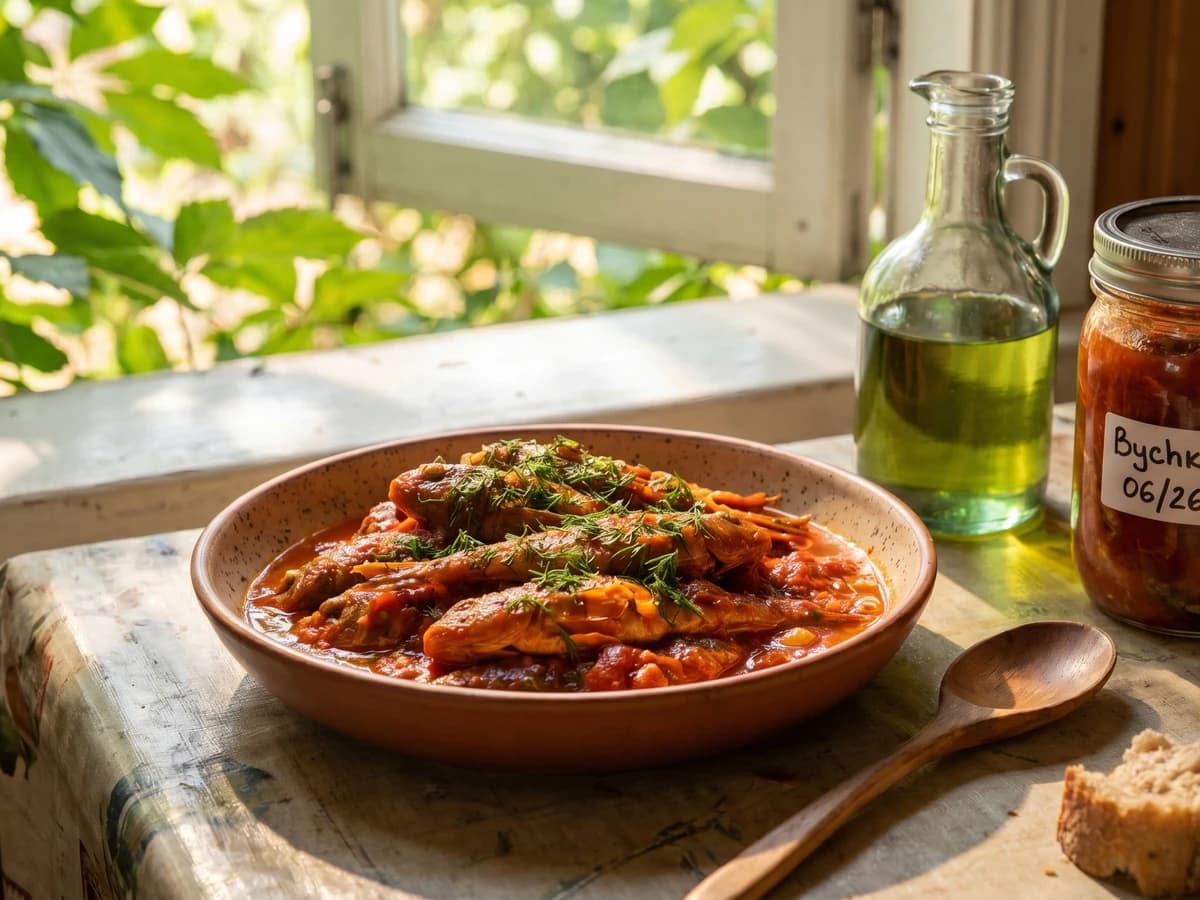
Small Azov gobies go into tomato bright as market cloth and come out soft enough that the bones give up. This is Mariupol food: cheap, red, generous, and better tomorrow.

Chef Lesia
The first sound is the meat against the board: flat, sharp, changing as the fibres loosen. Fry the cutlets fast, then let onion gravy do the soft finishing.

Chef Lesia
A heap of tiny silver fish becomes supper by the oldest Odesa trick: clean them, press them together, fry until the edges crackle, and let lemon and dill do the talking.