Chef Lupita
Acúmara Tatemada al Comal
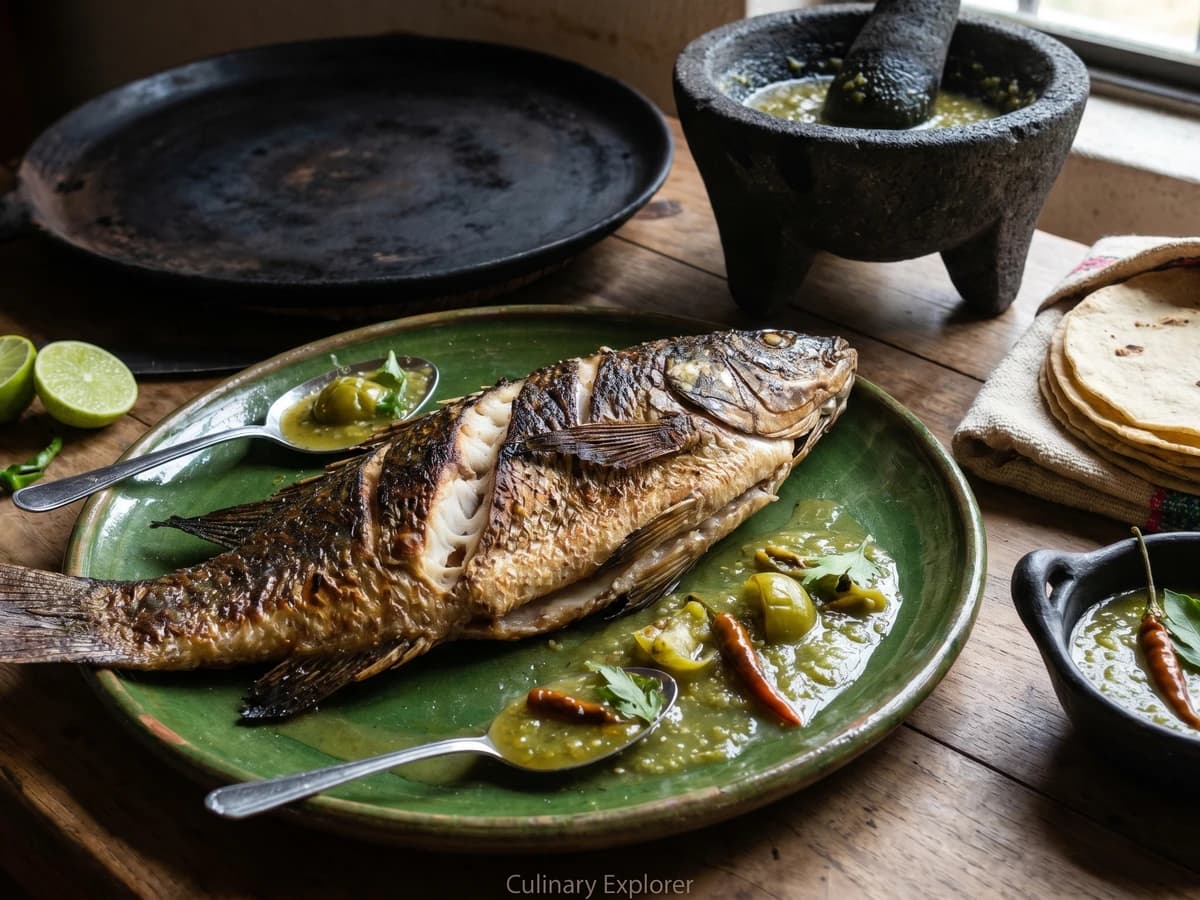
Michoacán's Lake Pátzcuaro acúmara, a whole kurucha from the lago tatemada on a comal de leña and served with chile perón atápakua, corn tortillas, and P'urhépecha discipline.
A cooking platform built around craft, culture, and the stories behind what we eat.
Created by
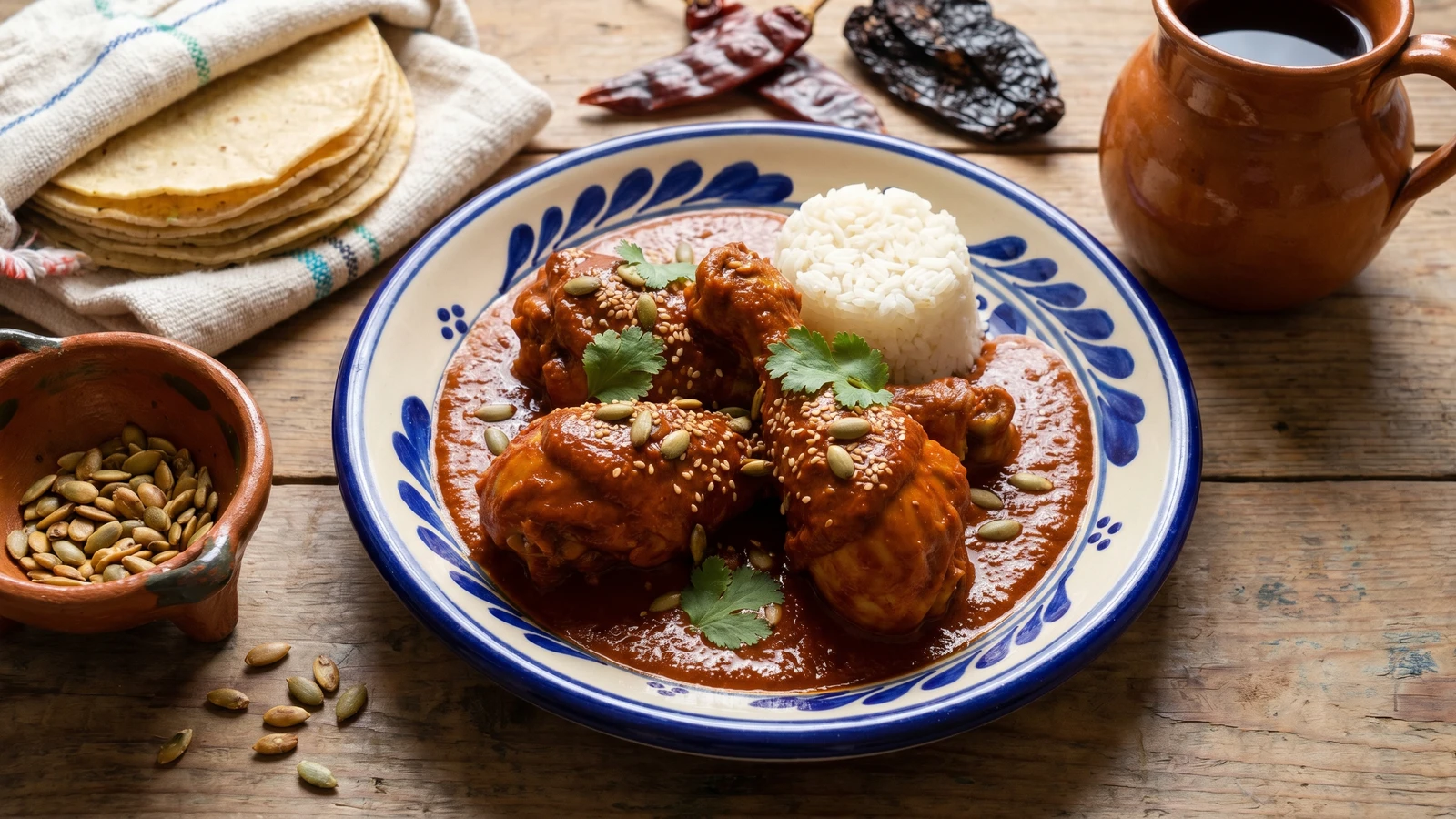
Central Mexico's brick-red pipián, pepitas and sesame seeds toasted with guajillo and ancho on the comal, ground into a thick sauce, and ladled over poached chicken the way they make it in Tlaxcala and Puebla.
Pipián is central Mexican food. The red one belongs to Tlaxcala, Puebla, and the Estado de México, the high plateau country where pumpkin seeds have been ground into sauces since long before the Spanish arrived. The word itself comes from the Nahuatl, and the dish is older than the chicken it is poured over. It used to be turkey. In some kitchens it still is.
Do not confuse pipián with mole. People do, and they should not. Mole carries chocolate, dried fruit, bread, sometimes thirty ingredients. Pipián is shorter and more direct: toasted seeds, dried chiles, a few spices, a little tortilla for body, broth, and lard. The seeds are the dish. Pepitas and sesame, toasted on the comal until they pop and turn gold, then ground with guajillo and ancho into a thick, brick-red sauce that clings to the chicken and stains the plate. That is the test of a good pipián, the color. Brick red, not orange. If yours comes out orange, you did not toast the chiles long enough or you did not fry the sauce.
The technique that matters most is the frying of the puree in lard before you add the broth. This is where the sauce becomes itself. The puree goes in bright and shallow and comes out dark and deep. La manteca es el sabor. I have watched señoras in the markets of Tlaxcala do this with a wooden spoon worn smooth from years of stirring. They do not rush it. Neither should you.
My mother kept a pipián recipe in her notebook from a woman she met at a posada in Cholula in the early eighties. The page is stained brick red. That is how I know it is the right one. Cada estado, su propia cocina.
Pipián derives from the Nahuatl word 'pipiyan,' meaning a sauce thickened with ground seeds, and predates the Spanish conquest by centuries; pre-Columbian cooks in the central highlands ground pumpkin seeds with chiles and tomatoes to sauce turkey, iguana, and game. The arrival of sesame seeds, peanuts, cinnamon, and cloves through the Manila galleon trade in the 16th and 17th centuries transformed the dish without displacing its indigenous core, producing the layered pipián we know today. The distinction between pipián and mole is regional and historical: pipián is defined by its seed thickening and is considered older, while mole is the broader Spanish-era category that absorbed dried fruit, chocolate, and bread, with Tlaxcala and Puebla both claiming the strongest pipián traditions in modern Mexico.
Quantity
1 (about 4 pounds)
cut into 8 pieces
Quantity
1 medium
halved (one half whole for poaching, one half quartered for the sauce)
Quantity
1
halved crosswise, plus 3 cloves for the sauce
Quantity
2
Quantity
1 tablespoon, plus more to taste
Quantity
8
stemmed and seeded
Quantity
4
stemmed and seeded
Quantity
2
stemmed
Quantity
1 cup
Quantity
1/3 cup, plus 1 tablespoon for garnish
Quantity
1/4 cup
Quantity
2 medium
Quantity
1 (3-inch)
Quantity
4
Quantity
3
Quantity
1 (4-inch)
torn into pieces
Quantity
3 tablespoons
Quantity
for serving
warmed
Quantity
for serving
| Ingredient | Quantity |
|---|---|
| whole chickencut into 8 pieces | 1 (about 4 pounds) |
| white onionhalved (one half whole for poaching, one half quartered for the sauce) | 1 medium |
| head of garlichalved crosswise, plus 3 cloves for the sauce | 1 |
| bay leaves | 2 |
| kosher salt | 1 tablespoon, plus more to taste |
| dried chile guajillostemmed and seeded | 8 |
| dried chile anchostemmed and seeded | 4 |
| dried chile de arbol (optional)stemmed | 2 |
| raw hulled pumpkin seeds (pepitas) | 1 cup |
| raw sesame seeds | 1/3 cup, plus 1 tablespoon for garnish |
| raw shelled peanuts | 1/4 cup |
| Roma tomatoes | 2 medium |
| Mexican cinnamon stick (canela) | 1 (3-inch) |
| whole black peppercorns | 4 |
| whole cloves | 3 |
| day-old corn tortillatorn into pieces | 1 (4-inch) |
| manteca de cerdo (pork lard) | 3 tablespoons |
| hand-pressed corn tortillas (optional)warmed | for serving |
| Mexican white rice (optional) | for serving |
Place the chicken pieces in a large stockpot. Cover with cold water by two inches. Add the whole onion half, the halved head of garlic, the bay leaves, and the salt. Bring to a gentle simmer over medium heat. Skim the gray foam that rises in the first ten minutes. Cook for 35 to 40 minutes, until the chicken is tender and cooked through. Pull the chicken from the pot and set aside. Strain the broth and reserve four cups. The broth is the spine of the sauce. Do not throw it out.
Heat a dry comal or heavy skillet over medium. Toast the guajillo, ancho, and arbol chiles separately, about 20 to 30 seconds per side. They should puff slightly and release their scent, never blacken. The ancho is thicker and forgives a little more. The guajillo is thin and turns bitter fast. Watch them like you watch a pot of milk.
Transfer the toasted chiles to a heatproof bowl and cover with hot tap water. Hot water, not boiling. Boiling water cooks the skin and turns the sauce bitter. Let them soften for 20 minutes while you toast the seeds.
On the same dry comal over medium-low, toast the pepitas, stirring constantly. They will pop and puff and turn from green to pale gold in about three minutes. Pour them onto a plate. Toast the sesame seeds the same way until they turn an even gold, two minutes. Set aside one tablespoon for garnish. Toast the peanuts until they smell roasted and the skins darken. Finally, toast the cinnamon, peppercorns, and cloves for 30 seconds, just until fragrant. The seeds are what give pipián its name and its body. Do not skip the toasting and do not rush it.
Place the tomatoes, the quartered onion, and the three garlic cloves (skins on) on the hot comal. Let them blacken in spots, turning every few minutes, about 8 to 10 minutes total. The char is flavor, not damage. Once the garlic skins are loose and the tomato skins split, pull everything off. Peel the garlic. Leave the tomato skins on. They blend in.
In a small skillet, heat one tablespoon of the lard over medium. Fry the torn tortilla pieces until they turn golden and crisp, about one minute per side. The tortilla thickens the sauce and is how cooks in Tlaxcala and Puebla have built body into pipián for generations. No me vengas con atajos. Skip this and the sauce will be thin.
Drain the soaked chiles. In a high-powered blender, combine the chiles with the tomatoes, charred onion, peeled garlic, toasted pepitas (reserve one tablespoon for garnish), toasted sesame seeds, peanuts, cinnamon, peppercorns, cloves, fried tortilla, and two cups of the reserved chicken broth. Blend on high for at least three minutes, until completely smooth. Pipián should have body but not grit. If your blender struggles, blend in two batches. Strain the puree through a medium-mesh sieve, pressing on the solids with a wooden spoon. You want a thick, brick-red puree the color of old terracotta.
In a wide heavy pot or cazuela, melt the remaining two tablespoons of lard over medium heat. When it shimmers, pour in the strained puree. It will sputter. Stand back. Cook for 8 to 10 minutes, stirring constantly with a wooden spoon, scraping the bottom so nothing catches. The puree will darken from bright red to deep brick and the fat will begin to bead at the edges. La manteca es el sabor. This step is the difference between a thin sauce and a serious pipián.
Stir in the remaining two cups of reserved chicken broth. Lower the heat and let the sauce simmer gently for 20 to 25 minutes, stirring often. It should coat the back of a spoon but still flow. If it gets too thick, add a little more broth. If it is too thin, let it cook longer. Taste for salt now. The pepitas absorb salt, so the sauce needs to be assertive.
Slide the cooked chicken pieces into the simmering sauce. Spoon the sauce over the chicken so every piece is coated. Cook for another five to seven minutes, just enough to warm the chicken through and let it drink up the flavor. Do not boil. The seeds in the sauce can break if you push it too hard, and a broken pipián is a sad pipián.
Spoon the chicken onto plates and ladle the brick-red sauce generously over the top. Sprinkle with the reserved toasted sesame seeds and pepitas. Serve with hand-pressed corn tortillas and Mexican white rice on the side. Eat with your hands and a tortilla. Así se hace y punto.
1 serving (about 320g)
Culinary guides, cultural storytelling, and the editorial depth that makes cooking meaningful.
Discover Culinary ExplorerChef Lupita
Michoacán's Lake Pátzcuaro acúmara, a whole kurucha from the lago tatemada on a comal de leña and served with chile perón atápakua, corn tortillas, and P'urhépecha discipline.

Chef Lupita
Puebla's weekday adobo of pork shoulder braised in a thick guajillo and ancho sauce sharpened with vinegar, cumin, and clove. The deep red of a market spice stall, the dish a poblana cooks without thinking.

Chef Lupita
Loreto's pit-roasted clams, planted hinge-up in beach sand and tatemadas under a fast fire of dried romerillo brush, the resinous Baja desert shrub that gives this dish its smoke.

Chef Lupita
Oaxaca's eighth mole, the silky, almond-and-cinnamon almendrado, served over poached chicken. Mild, sweet, restrained, and a quiet rebuttal to anyone who thinks Mexican food has to be hot to be Mexican.