
Chef Makoa
Baked ʻUlu Coconut Pudding (Hawaiian Ripe Breadfruit Custard)
Very ripe Hawaiian ʻulu, the canoe-crop breadfruit, mashed soft with coconut milk and sugar, then baked until the middle sets like a quiet custard.
A cooking platform built around craft, culture, and the stories behind what we eat.
Created by
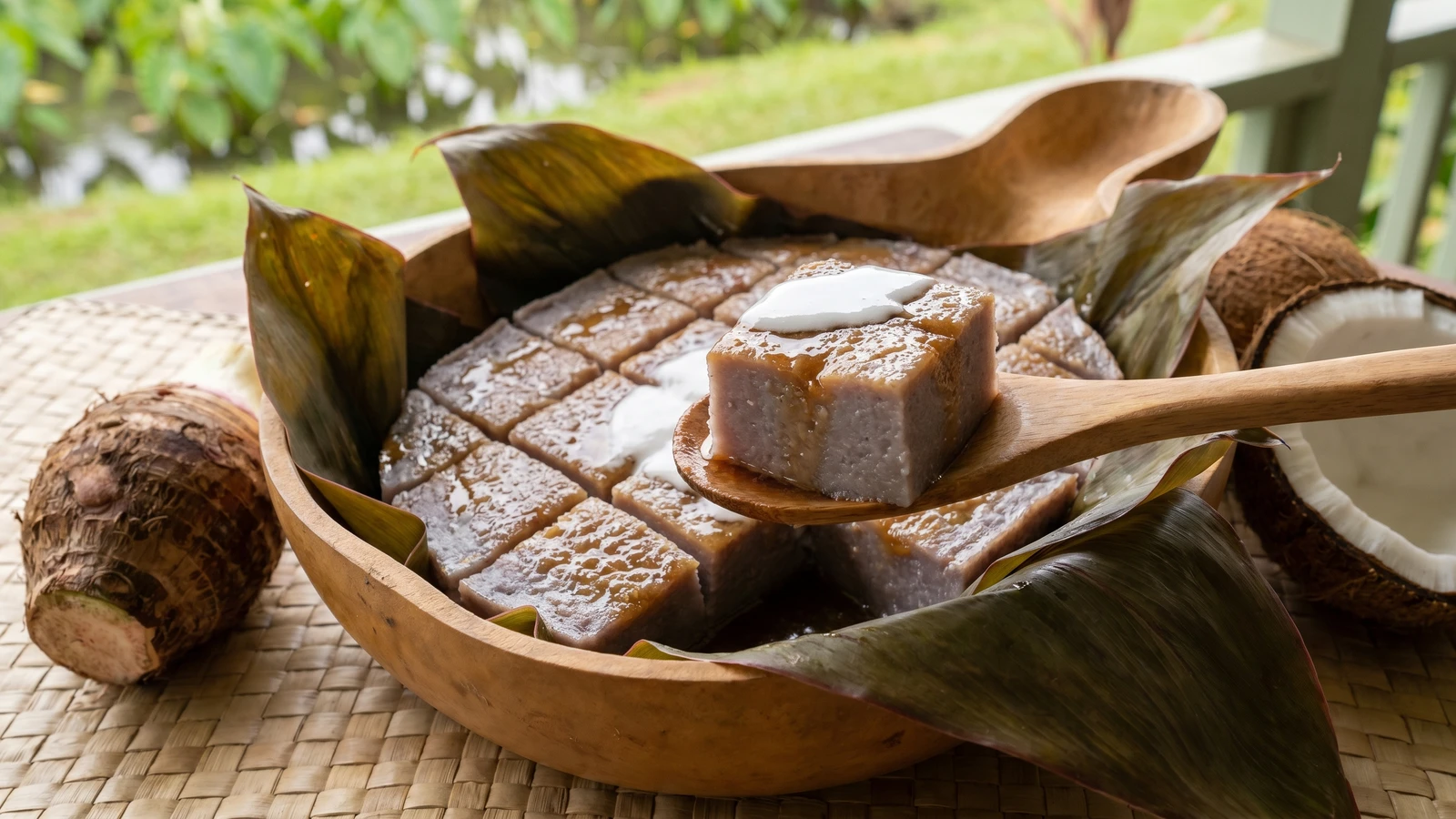
Hawaiʻi's piele is kalo from the loʻi grated with coconut cream and sugar, wrapped in ti leaf, and baked soft and set, a tender cousin to kūlolo.
My kumu used to say, no blame the taro. It's not the taro's fault. If the kalo is tough, if the pudding comes out dry, if your hands get tired at the grater, that's us rushing the elder brother. Piele is Hawaiian, from the same home table that keeps poi, paʻiʻai, kūlolo, laulau, and the imu. It belongs to Hawaiʻi, to the loʻi, the irrigated taro patch, and to the families who kept cooking kalo when the old food got pushed to the side.
This one sits close to kūlolo, that dense Hawaiian pudding of grated kalo, coconut, and sweetener, but piele is softer, more homey, usually baked in ti leaf, lāʻī, until it sets like a tender custard you can slice or spoon. The method matters because raw kalo holds a bite in the throat, so the long bake isn't just for texture. It makes the elder brother gentle. It turns the starch glossy and sweet, the coconut cream rich, the whole pan into comfort food you bring to a lūʻau, a family birthday, or a quiet Sunday when you need the house to smell like somebody remembered you.
Across the Triangle, the cousins know this grammar too. Sāmoa wraps lūʻau leaf into palusami with coconut cream, Tonga folds lū with meat and cream, the Cook Islands keep rukau, Tahiti has fāfā, and back home we keep laulau and kūlolo beside this piele. One ocean, one canoe, one root, but each island's hand is its own. Today you can grate the kalo by hand if you've got the time, or use a food processor if the week is heavy. Eat what you have. Just cook it long enough, wrap it with care, and don't pretend the shortcut is the elder.
Piele is part of Hawaiʻi's deep food, the older kalo-and-coconut line that sits beside poi, paʻiʻai, kūlolo, and laulau rather than the later mission and plantation sweets. Kalo was one of the canoe crops carried into Hawaiʻi by Polynesian voyagers, and in Hawaiian genealogy Hāloa, the taro, is the elder sibling of the people. Sugar, metal graters, and modern ovens changed the way many families finish the pudding, but the older shape remains: kalo, coconut, leaf, heat, and patience.
Quantity
2 pounds
peeled and finely grated
Quantity
1 1/2 cups
Quantity
3/4 cup
or grated piloncillo-style cane sugar
Quantity
1/2 cup
Quantity
1/2 teaspoon
Quantity
4 to 6
thick center ribs trimmed
Quantity
1 tablespoon
for the pan if not fully leaf-lined
| Ingredient | Quantity |
|---|---|
| fresh kalo (taro corm)peeled and finely grated | 2 pounds |
| thick coconut cream | 1 1/2 cups |
| packed brown sugaror grated piloncillo-style cane sugar | 3/4 cup |
| water | 1/2 cup |
| fine sea salt | 1/2 teaspoon |
| ti leaves (lāʻī) or banana leavesthick center ribs trimmed | 4 to 6 |
| neutral oil (optional)for the pan if not fully leaf-lined | 1 tablespoon |
Heat the oven to 325F. Rinse the ti leaves, lāʻī, and pass them briefly over a burner flame or dip them in hot water until they turn glossy and bend without cracking. Line an 8-inch square baking pan with the leaves, shiny side in, letting the edges hang over so they can fold back across the top.
Peel the kalo and grate it fine, by hand on the small holes or in a food processor until it looks like wet, pale lavender shreds. Wear gloves if your skin is sensitive. Raw kalo can itch, and raw kalo does not get tasted. It needs the full cook to become food that loves you back.
In a wide bowl, stir the coconut cream, sugar, water, and salt until the sugar loosens. Fold in the grated kalo with your hand or a sturdy spoon until every shred is coated and the mixture looks thick, wet, and a little sticky. It should mound softly, not pour like batter.
Spoon the kalo mixture into the leaf-lined pan and press it level without packing it hard. Fold the ti leaves over the top, then cover the pan tightly with foil. The leaf keeps the pudding close and fragrant while the long heat turns the raw bite into a tender set.
Bake for 1 hour 45 minutes to 2 hours, until the piele is firm at the edges, softly set in the center, and a skewer pushed into the middle meets no raw crunch. The surface under the leaf should look glossy and deep grey-purple, with coconut fat shining at the edges. No rush this part. No blame the taro if you pulled it early.
Let the pan rest at least 30 minutes before cutting, or cool it fully for clean slices. Serve warm, room temperature, or chilled, laid back on the ti leaf with a spoonful of coconut cream if you like. This is not a fancy sweet. It is a kalo sweet. Dense, tender, quiet, and enough for one more.
1 serving (about 165g)
Culinary guides, cultural storytelling, and the editorial depth that makes cooking meaningful.
Discover Culinary ExplorerChef Makoa
Very ripe Hawaiian ʻulu, the canoe-crop breadfruit, mashed soft with coconut milk and sugar, then baked until the middle sets like a quiet custard.

Chef Makoa
A chewy, golden Hawaiʻi Local square from mochiko, butter, and coconut milk, baked in one pan until the edges pull crisp and the middle stays tender.

Chef Makoa
Soft squares of Hawaiʻi Local chichi dango, pale pink and white from the mochi-shop counter, baked with mochiko, milk, and coconut milk, then dusted until every sticky edge turns friendly.
Chef Makoa
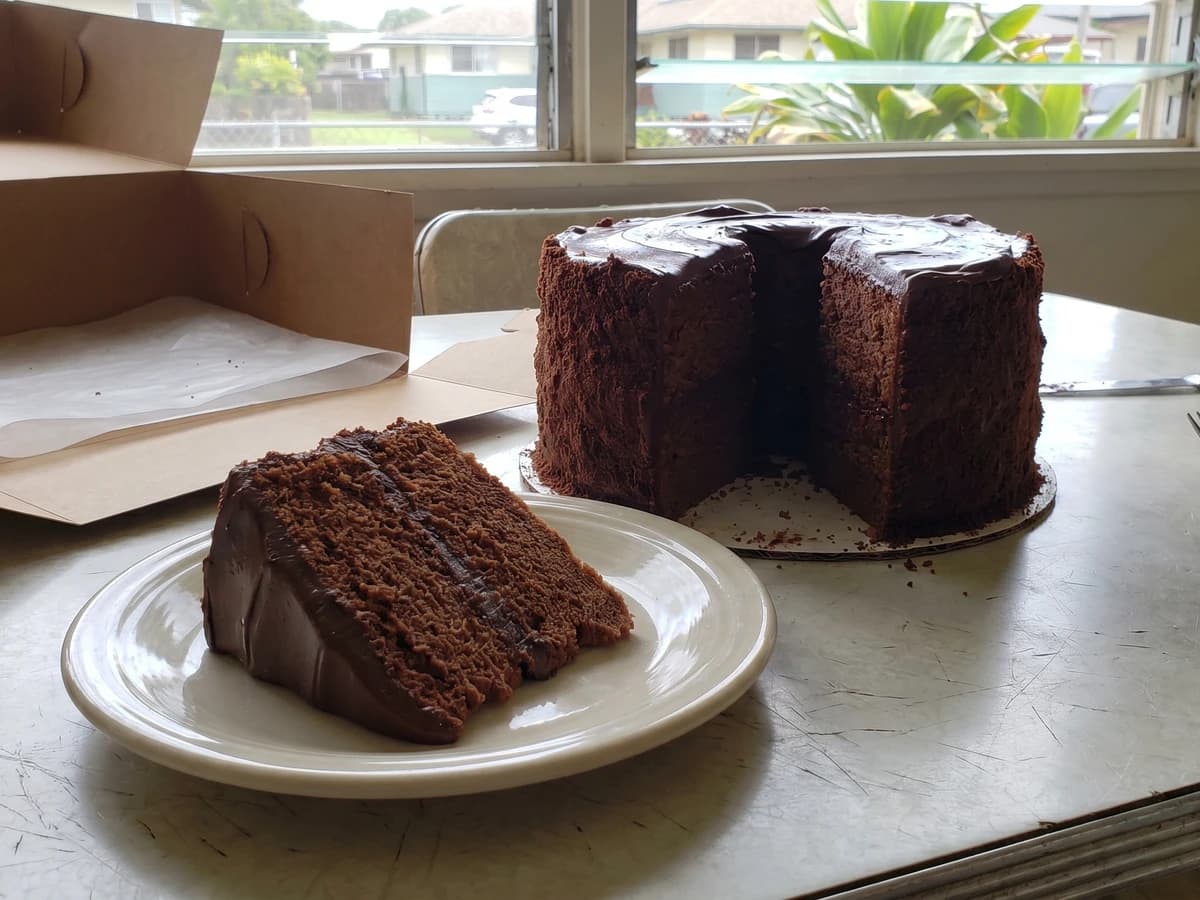
A Hawaiʻi Local chocolate-on-chocolate birthday cake: soft chiffon, cooked pudding icing, and cake crumbs pressed around the sides like the bakery case knew you were coming.