Chef Lupita
Acúmara Tatemada al Comal
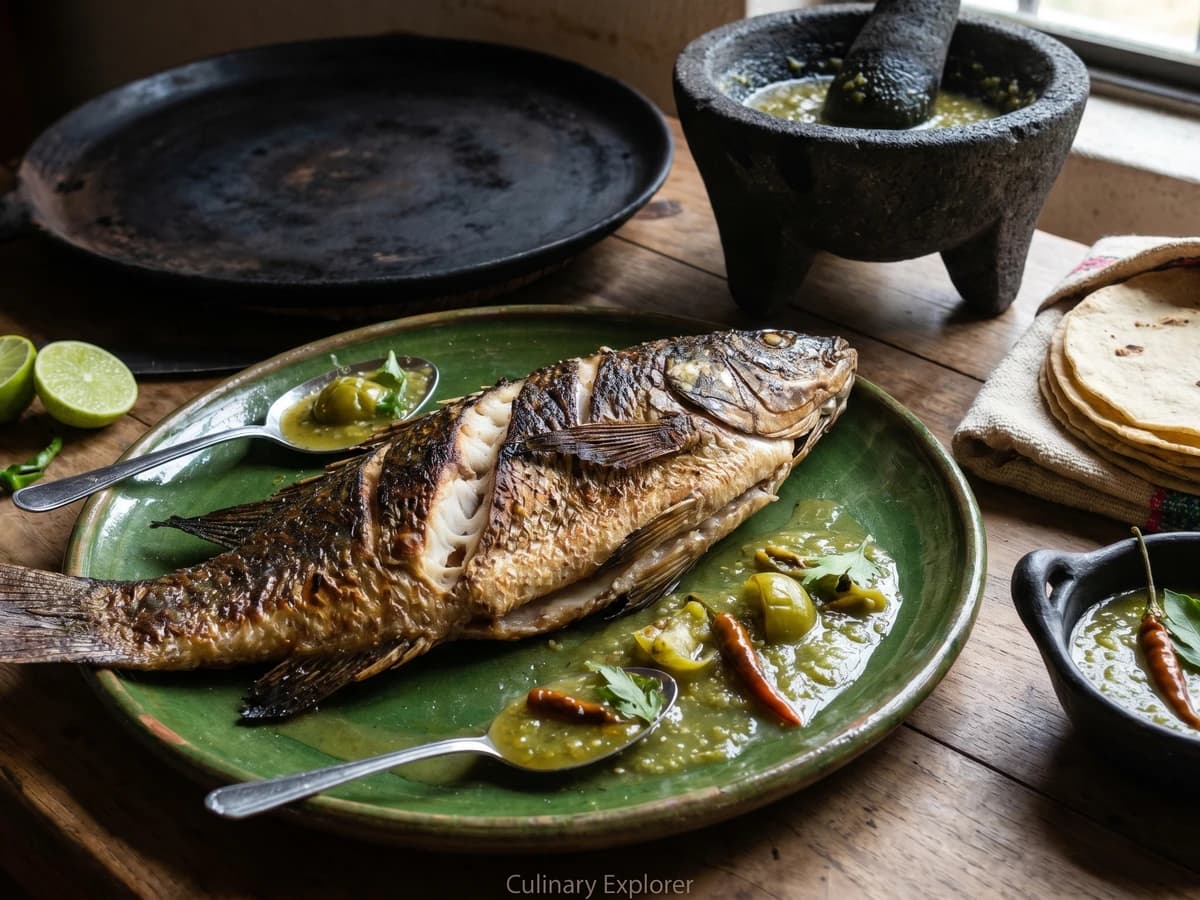
Michoacán's Lake Pátzcuaro acúmara, a whole kurucha from the lago tatemada on a comal de leña and served with chile perón atápakua, corn tortillas, and P'urhépecha discipline.
A cooking platform built around craft, culture, and the stories behind what we eat.

Created by
Michoacán's Lake Pátzcuaro fish, butterflied and salted with limón, epazote, and sal de grano, then grilled over hardwood carbón until the skin crisps and the flesh stays pearly.
Michoacán, Lake Pátzcuaro. This dish lives on the shore, between Janitzio and the old lake towns, where kurucha means more than fish. It means the lago feeding the kitchen, the comal already black from leña, the tortillas wrapped in a servilleta, and the cocinera watching the fire because the fish will not forgive laziness.
Pescado blanco is not a generic white fish. It is the lake's fish, fragile, clean, and famous for a reason. The flesh needs lime, sal de grano, garlic, epazote, and direct carbón. Nothing heavy. The salsa comes from the milpa and monte: tomatillo milpero, chile perón, chile serrano, cilantro, and a little epazote stem ground in the molcajete. The fish comes from the lago. Keep those worlds clear.
I learned this style from the women who cook around Pátzcuaro, and from the broader work of the cocineras tradicionales of Janitzio, Zacán, Cocucho, Cherán, and Uruapan. They are not decoration at festivals. They are the transmission system. They know when the fish is fresh, when the carbón is ready, when the skin will release, and when a cook is about to ruin a good thing by touching it too much.
Do not turn this into Nayarit's pescado zarandeado, and do not drown it in sauce. Cada estado, su propia cocina. Michoacán's lake fish is direct: salt, lime, epazote, leña, carbón, and timing. Saber cocinar es saber vivir.
Pescado blanco de Pátzcuaro, commonly identified as Chirostoma estor, is an endemic lake fish tied to the P'urhépecha food system that surrounded Tzintzuntzan and the authority of the Cazonci in the Late Postclassic period. Lake fish, including kurucha and smaller acúmara, moved through local tribute and market networks long before the Spanish arrived, while corn, beans, squash, chile, and quelites from the milpa completed the plate. In 2010, UNESCO inscribed Traditional Mexican Cuisine as Intangible Cultural Heritage using the Michoacán paradigm, a recognition built on living community transmission led by cocineras tradicionales, not restaurant fashion.
Quantity
4 fish, 8 to 10 ounces each
scaled, gutted, and butterflied
Quantity
2 teaspoons, plus more to taste
Quantity
1/3 cup
from 5 to 6 limes
Quantity
4
peeled
Quantity
8 sprigs
leaves picked and tender stems reserved
Quantity
1 tablespoon
melted, for brushing the skin and parrilla
Quantity
6
husked and rinsed
Quantity
2
stemmed
Quantity
1
stemmed
Quantity
1/4 medium
Quantity
1/2 cup
Quantity
for serving
warmed
Quantity
for serving
| Ingredient | Quantity |
|---|---|
| whole pescado blanco de Pátzcuaroscaled, gutted, and butterflied | 4 fish, 8 to 10 ounces each |
| sal de grano | 2 teaspoons, plus more to taste |
| fresh Mexican lime juicefrom 5 to 6 limes | 1/3 cup |
| garlic clovespeeled | 4 |
| fresh epazoteleaves picked and tender stems reserved | 8 sprigs |
| manteca de cerdomelted, for brushing the skin and parrilla | 1 tablespoon |
| tomatillos milperoshusked and rinsed | 6 |
| fresh chile perónstemmed | 2 |
| fresh chile serranostemmed | 1 |
| white onion | 1/4 medium |
| fresh cilantro leaves and tender stems | 1/2 cup |
| hand-pressed corn tortillas (optional)warmed | for serving |
| lime halves (optional) | for serving |
Buy pescado blanco only from licensed pescadores around Pátzcuaro, Janitzio, or the lake markets. The eyes should be clear, the skin bright, and the smell clean, like fresh lake water, not mud. This is kurucha from the lago, and it is delicate. If you are outside Michoacán, use whole lake trout or small branzino as a compromise, not as the same thing.
Open each butterflied fish skin side down on a tray. Crush 2 garlic cloves with 1 teaspoon sal de grano in a molcajete until you have a paste. Stir in the lime juice. Rub this over the flesh, tuck in the epazote leaves, and let the fish sit for 15 minutes. No longer. Lime wakes the flesh, but too much time starts curing it and turns the texture woolly.
While the fish rests, set the tomatillos, chile perón, chile serrano, onion, and remaining 2 garlic cloves on a comal over the carbón or on a dry comal indoors. Turn them until the tomatillos slump and the chiles blister in dark patches. The chile perón gives Michoacán's highland perfume, fruity and sharp. Do not replace it with jalapeño and pretend nothing changed.
In the molcajete, grind the roasted garlic with 1 teaspoon sal de grano. Add the roasted chiles and onion, then the tomatillos, crushing until the salsa is rough and glossy. Stir in the cilantro and the tender epazote stems, chopped fine. This salsa is from the milpa and the monte. It belongs beside the fish, not poured over it like a disguise.
Build a medium-hot hardwood carbón fire and let the coals settle until they are covered with gray ash. No lighter fluid. Set the parrilla over the fire and brush it with a little melted manteca. Brush the skin side of each fish with the remaining manteca. This is not a bath of fat. It is just enough so the skin crisps and releases cleanly.
Lay the fish skin side down on the parrilla. Cook 4 to 5 minutes without moving it. Listen for the gentle crackle of skin meeting metal. When the edges firm and the skin releases, turn the fish once with a wide spatula or a hinged fish basket. Cook the flesh side 2 to 3 minutes more, just until the thickest part flakes and reaches 145F. Pescado blanco dries fast. Watch it.
Move the fish to a plain barro plate from Capula or Tzintzuntzan, skin still crisp, flesh pearly and moist. Spoon the salsa de chile perón into a small cazuelita on the side. Add warm corn tortillas from the comal and lime halves. This is not atápakua, and it is not acúmara. This is lake fish over fire. Así se hace y punto.
1 serving (about 250g)
Culinary guides, cultural storytelling, and the editorial depth that makes cooking meaningful.
Discover Culinary ExplorerChef Lupita
Michoacán's Lake Pátzcuaro acúmara, a whole kurucha from the lago tatemada on a comal de leña and served with chile perón atápakua, corn tortillas, and P'urhépecha discipline.

Chef Lupita
Puebla's weekday adobo of pork shoulder braised in a thick guajillo and ancho sauce sharpened with vinegar, cumin, and clove. The deep red of a market spice stall, the dish a poblana cooks without thinking.

Chef Lupita
Loreto's pit-roasted clams, planted hinge-up in beach sand and tatemadas under a fast fire of dried romerillo brush, the resinous Baja desert shrub that gives this dish its smoke.

Chef Lupita
Oaxaca's eighth mole, the silky, almond-and-cinnamon almendrado, served over poached chicken. Mild, sweet, restrained, and a quiet rebuttal to anyone who thinks Mexican food has to be hot to be Mexican.