Chef Lupita
Acúmara Tatemada al Comal
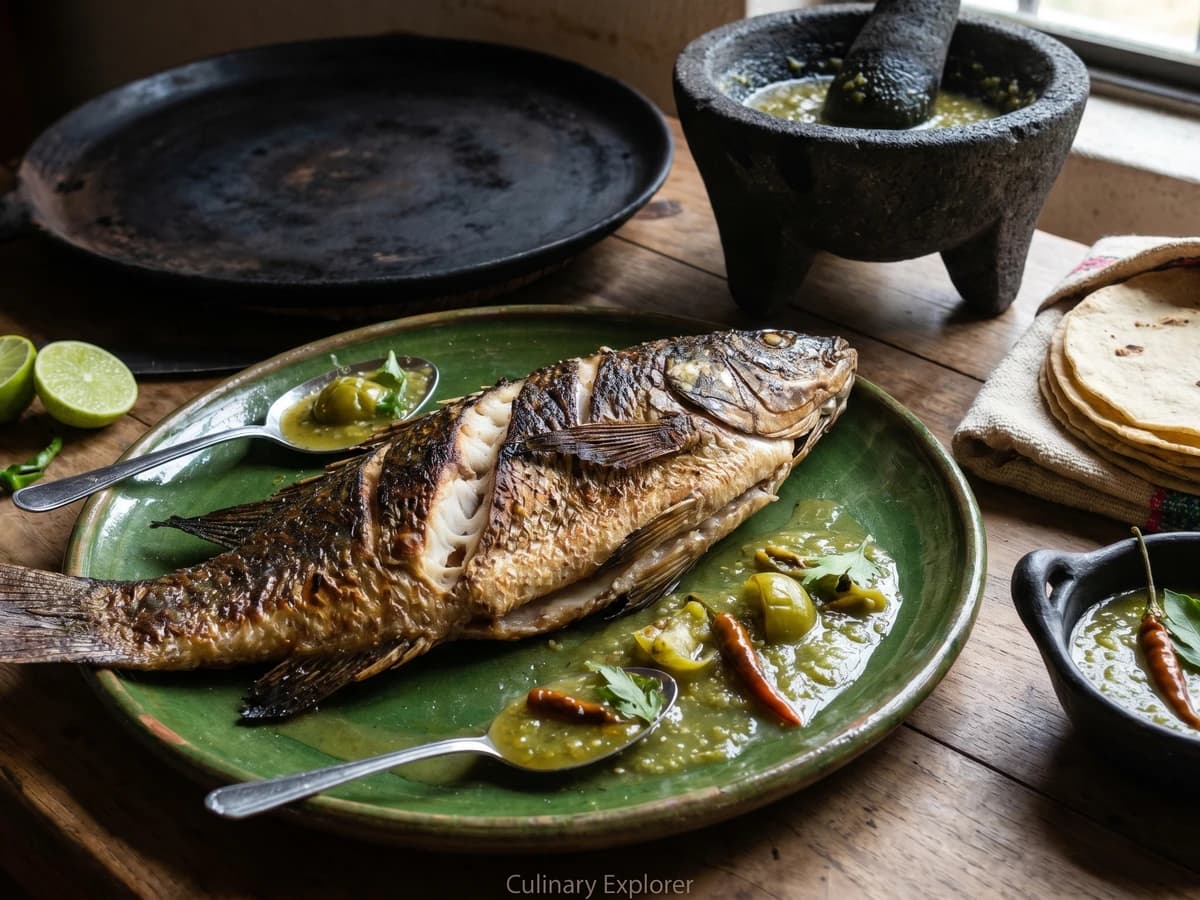
Michoacán's Lake Pátzcuaro acúmara, a whole kurucha from the lago tatemada on a comal de leña and served with chile perón atápakua, corn tortillas, and P'urhépecha discipline.
A cooking platform built around craft, culture, and the stories behind what we eat.
Created by
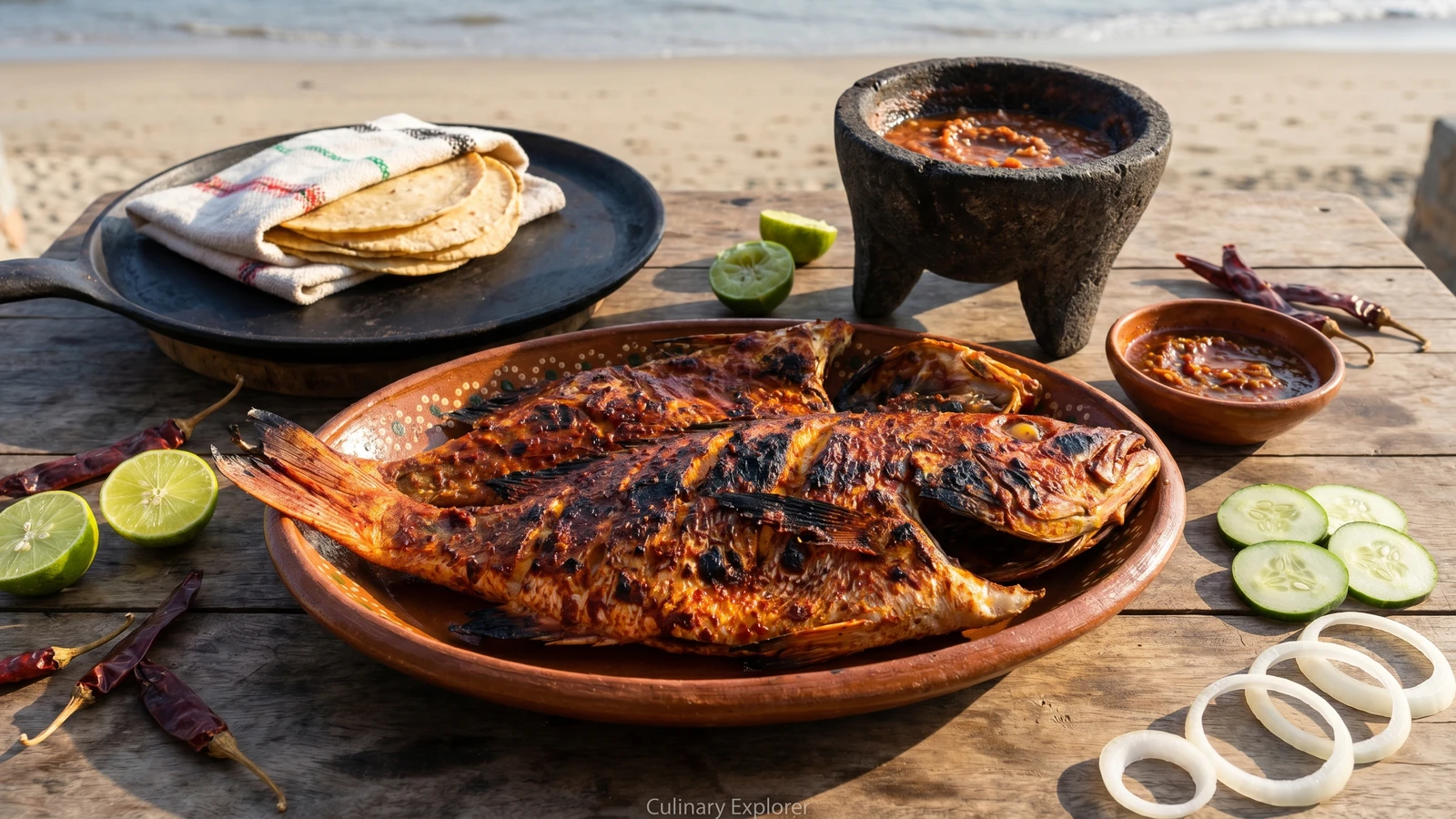
Guerrero's whole grilled fish from Barra Vieja, butterflied open, painted with chile guajillo and ancho adobo, and cooked over coals until the skin crisps and the flesh stays juicy.
Guerrero's Costa Grande gives you this dish, especially Barra Vieja, the beach east of Acapulco where the lagoon, the Pacific, and the charcoal grills meet at the same table. Pescado a la talla is not a fillet with sauce. It is a whole fish opened like a book, salted, covered with adobo, and grilled slowly enough that the flesh stays moist while the skin takes the fire.
The adobo is the signature: chile guajillo for red color and clean fruit, chile ancho for depth, garlic, cumin, oregano, vinegar, and a little mayonnaise because the beach cooks know what they are doing. The mayonnaise is not decoration. It helps the adobo cling to the fish and brown over the coals. No me vengas con atajos. If the chiles are not toasted, the sauce will taste asleep.
I learned this version from women working the palapas near Barra Vieja, not from a restaurant menu in Acapulco's hotel zone. They grill by sight: the coals must be gray, the fish must lie flat in the basket, and the adobo must be thick enough to hold onto the flesh. Serve it family-style on barro rojo from Guerrero with tortillas, lime, and a small bowl of salsa. Cada estado, su propia cocina.
Pescado a la talla is strongly associated with Barra Vieja, a coastal community east of Acapulco, where beach palapas turned the split-and-grilled whole fish into Guerrero's best-known seafood dish during the late 20th century tourism boom. The method belongs to a broader Pacific coast tradition of cooking whole fish over open coals, but Guerrero's version is defined by its red dried-chile adobo rather than the soy, mustard, or citrus marinades common farther north. The word 'talla' refers to the way the fish is cut open and flattened to a size that cooks evenly over the grill.
Quantity
1, 2 1/2 to 3 pounds
scaled, gutted, butterflied, and left attached at the back
Quantity
1 1/2 teaspoons, plus more to taste
Quantity
6
stemmed and seeded
Quantity
3
stemmed and seeded
Quantity
2
stemmed
Quantity
4
unpeeled
Quantity
1/4 medium
Quantity
1/2 teaspoon
Quantity
1 teaspoon
Quantity
3
Quantity
2
Quantity
1/3 cup
Quantity
2 tablespoons
Quantity
2 tablespoons
Quantity
2 tablespoons, plus more for the grill basket
Quantity
1 teaspoon
Quantity
for serving
Quantity
for serving
Quantity
for serving
Quantity
for serving
| Ingredient | Quantity |
|---|---|
| whole firm white fishscaled, gutted, butterflied, and left attached at the back | 1, 2 1/2 to 3 pounds |
| kosher salt | 1 1/2 teaspoons, plus more to taste |
| dried chile guajillostemmed and seeded | 6 |
| dried chile anchostemmed and seeded | 3 |
| dried chile costeño or chile de arbol (optional)stemmed | 2 |
| garlic clovesunpeeled | 4 |
| white onion | 1/4 medium |
| cumin seeds | 1/2 teaspoon |
| dried Mexican oregano | 1 teaspoon |
| whole black peppercorns | 3 |
| whole cloves | 2 |
| apple cider vinegar | 1/3 cup |
| fresh lime juice | 2 tablespoons |
| mayonnaise | 2 tablespoons |
| vegetable oil | 2 tablespoons, plus more for the grill basket |
| piloncillo or dark brown sugar | 1 teaspoon |
| warm corn tortillas (optional) | for serving |
| lime halves (optional) | for serving |
| sliced cucumber (optional) | for serving |
| salsa de chile costeño or salsa verde (optional) | for serving |
Ask the fishmonger to butterfly the fish from the belly so it opens flat and stays attached along the back. At home, pat it very dry, especially inside the cavity. Score the thickest part of the flesh in shallow diagonal cuts. Rub the fish all over with salt and let it sit while you make the adobo. Dry fish browns. Wet fish sticks.
Heat a dry comal or heavy skillet over medium. Toast the chile guajillo, chile ancho, and chile costeño separately, about 20 to 30 seconds per side, pressing them flat with a spatula until they darken slightly and smell deep. Do not let them blacken. Burned chile makes bitter adobo, and the fish will tell on you.
Put the toasted chiles in a bowl and cover with hot water, not boiling. Let them soften for 15 minutes, then drain. Save 1/4 cup of the soaking liquid in case the blender needs help. Boiling water toughens the skins and can pull bitterness into the sauce.
On the same comal, toast the unpeeled garlic and the piece of white onion until the garlic skins spot with brown and the onion edges char lightly, about 6 minutes. Peel the garlic. Toast the cumin seeds, oregano, peppercorns, and cloves for 30 seconds, just until fragrant. This is where the adobo starts to smell like a Guerrero beach kitchen.
Blend the softened chiles, peeled garlic, onion, toasted spices, vinegar, lime juice, mayonnaise, oil, piloncillo, and 1/2 teaspoon salt until completely smooth. The adobo should be thick, glossy, and brick red. If the blender stalls, add the reserved chile soaking liquid one tablespoon at a time. Do not make it watery. It has to cling to the fish.
Taste the adobo for salt. It should be slightly stronger than you think because the fish will soften it. Brush a heavy layer over the flesh side and a thinner layer over the skin. Work some adobo into the scored cuts. Let the fish sit for 15 to 20 minutes while the grill comes ready. Longer is not better here. Vinegar can tighten delicate fish.
Build a medium charcoal fire and wait until the coals are covered in gray ash. Oil a large hinged grill basket well. If you cook over flames, the adobo burns before the fish cooks. You want steady coals, not drama. La cocina no es decoración, es trabajo.
Place the fish in the oiled basket, flesh side down first. Grill for 6 to 8 minutes, until the adobo sets, darkens in spots, and releases from the metal when you lift carefully. Do not keep moving it. The first side needs time to form a crust.
Flip the basket and cook skin side down for 10 to 15 minutes more, depending on thickness. Brush with more adobo once or twice. The fish is done when the flesh flakes near the backbone and the thickest part reaches 135F to 140F. Pull it before it dries out. Carryover heat will finish the center.
Slide the fish onto a large barro rojo platter from Guerrero or a plain clay plate. Set warm corn tortillas, lime halves, cucumber, and salsa at the table. Let people pull pieces straight from the fish and make their own tacos. Flour tortillas belong to the north. Here, on this coast, you serve corn. Así se hace y punto.
1 serving (about 300g)
Culinary guides, cultural storytelling, and the editorial depth that makes cooking meaningful.
Discover Culinary ExplorerChef Lupita
Michoacán's Lake Pátzcuaro acúmara, a whole kurucha from the lago tatemada on a comal de leña and served with chile perón atápakua, corn tortillas, and P'urhépecha discipline.

Chef Lupita
Puebla's weekday adobo of pork shoulder braised in a thick guajillo and ancho sauce sharpened with vinegar, cumin, and clove. The deep red of a market spice stall, the dish a poblana cooks without thinking.

Chef Lupita
Loreto's pit-roasted clams, planted hinge-up in beach sand and tatemadas under a fast fire of dried romerillo brush, the resinous Baja desert shrub that gives this dish its smoke.

Chef Lupita
Oaxaca's eighth mole, the silky, almond-and-cinnamon almendrado, served over poached chicken. Mild, sweet, restrained, and a quiet rebuttal to anyone who thinks Mexican food has to be hot to be Mexican.