Chef Lupita
Acúmara Tatemada al Comal
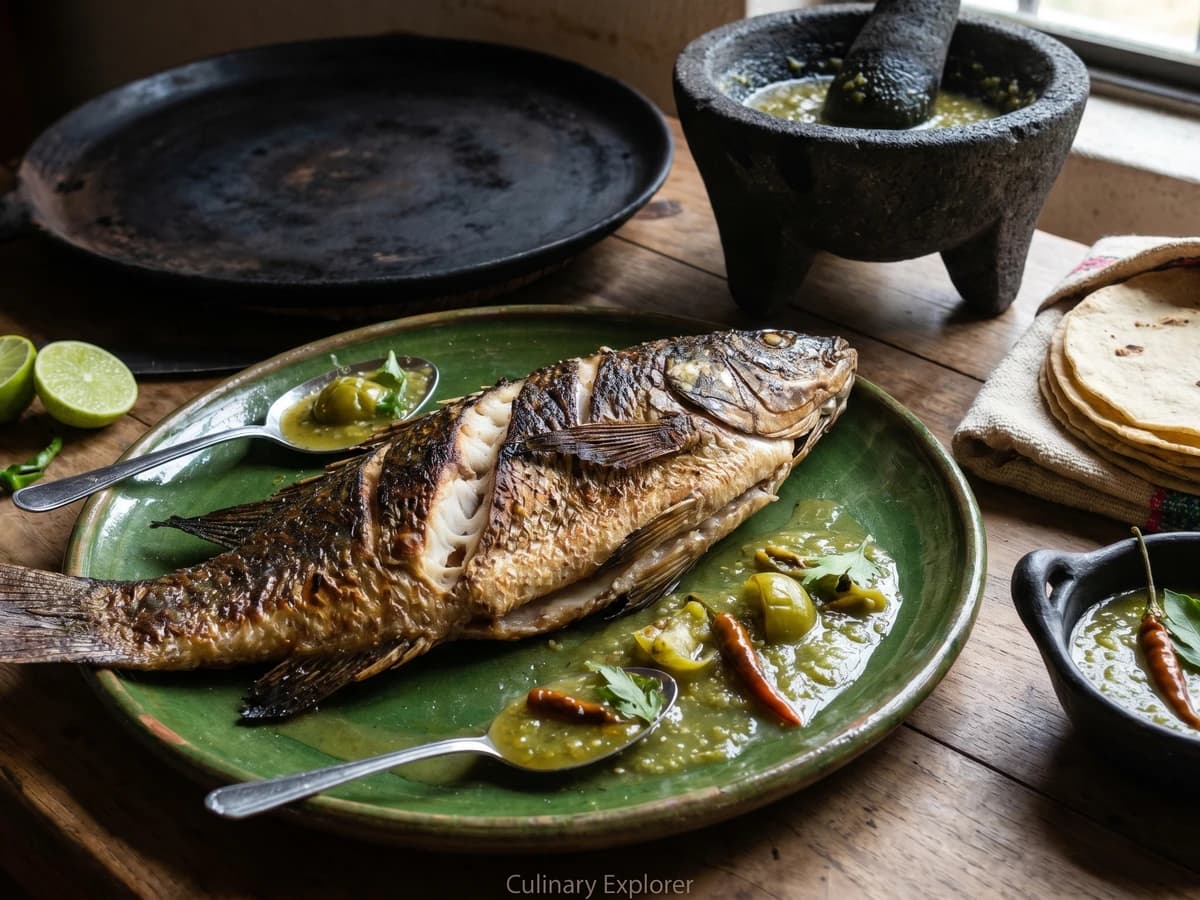
Michoacán's Lake Pátzcuaro acúmara, a whole kurucha from the lago tatemada on a comal de leña and served with chile perón atápakua, corn tortillas, and P'urhépecha discipline.
A cooking platform built around craft, culture, and the stories behind what we eat.

Created by
Guerrero's Tierra Caliente cecina is thin beef salted, dried until the surface tightens, then grilled over coals and served the way the region knows it: with crema, enchiladas, avocado, and rice.
Guerrero's Tierra Caliente, the hot country around Ciudad Altamirano, Arcelia, and Coyuca de Catalan, knows cecina as work food and celebration food at the same time. Thin sheets of beef, salt, dry air, a hot grill. Nothing decorative. The plate arrives with crema, red enchiladas, avocado, and rice because the meat is only one part of the table.
The defining ingredient is not a chile. It is the beef itself, cut thin enough that the salt can travel through it and the surface can dry into that firm, almost leathery skin before it hits the coals. In Guerrero homes, the women who serve this dish know the balance: salty meat, soft crema, chile guajillo on the enchiladas, ripe avocado, plain rice to catch everything. This is a 32-state cuisine. Cada estado, su propia cocina.
Do not confuse this with a wet marinade. Cecina guerrerense is not carne asada wearing sauce. The drying is the technique. In a modern kitchen, you use the refrigerator uncovered on a rack because clean airflow matters more than pretending your apartment window is a Tierra Caliente patio. If you have safe outdoor drying conditions, good. If not, the refrigerator does the work. Saber cocinar es saber vivir.
Cecina in Mexico descends from Spanish salting and drying techniques adapted to local climates after cattle became widespread in the colonial period. Morelos, especially Yecapixtla, became nationally famous for cecina, but Guerrero's Tierra Caliente developed its own table tradition, serving the grilled salted beef with crema, rice, avocado, and red enchiladas rather than presenting it as a stand-alone cut. The dish reflects the dry inland cattle country of northern Guerrero, not the coastal seafood cooking many outsiders wrongly assume represents the whole state.
Quantity
2 1/2 pounds
sliced across the grain into 1/8-inch sheets
Quantity
2 tablespoons
Quantity
1 teaspoon
Quantity
1 tablespoon
Quantity
1 tablespoon
softened, for rubbing the beef before grilling
Quantity
12
Quantity
6
stemmed and seeded
Quantity
2
stemmed and seeded
Quantity
1
stemmed
Quantity
2
Quantity
2
unpeeled
Quantity
1/4 small
Quantity
1/2 teaspoon
Quantity
1 teaspoon, plus more to taste
Quantity
2 tablespoons
for frying the enchilada sauce
Quantity
1 cup
Quantity
1/2 cup
crumbled
Quantity
2
sliced
Quantity
3 cups cooked
Quantity
for serving
Quantity
for serving
| Ingredient | Quantity |
|---|---|
| beef top round or sirloin flapsliced across the grain into 1/8-inch sheets | 2 1/2 pounds |
| fine sea salt | 2 tablespoons |
| freshly ground black pepper | 1 teaspoon |
| fresh lime juice | 1 tablespoon |
| pork lard (manteca de cerdo)softened, for rubbing the beef before grilling | 1 tablespoon |
| corn tortillas | 12 |
| dried chile guajillostemmed and seeded | 6 |
| dried chile anchostemmed and seeded | 2 |
| dried chile de arbol (optional)stemmed | 1 |
| Roma tomatoes | 2 |
| garlic clovesunpeeled | 2 |
| white onion | 1/4 small |
| dried Mexican oregano | 1/2 teaspoon |
| kosher salt | 1 teaspoon, plus more to taste |
| pork lard (manteca de cerdo)for frying the enchilada sauce | 2 tablespoons |
| Mexican crema | 1 cup |
| queso frescocrumbled | 1/2 cup |
| ripe avocadossliced | 2 |
| Mexican white rice (optional) | 3 cups cooked |
| lime halves (optional) | for serving |
| salsa de molcajete with chile serrano (optional) | for serving |
Lay the beef on a board and slice it across the grain into long sheets about 1/8 inch thick. If your knife work is not there yet, ask the butcher to do it. Tell them cecina, not steaks. The pieces should be thin enough to bend but not so thin they tear when salted.
Rub both sides of the beef with the fine sea salt, black pepper, and lime juice. Use your hands and cover the edges. Stack the sheets in a shallow dish, cover, and refrigerate for 2 hours. The salt tightens the meat and begins the cure. Do not drown it in lime. This is cecina, not ceviche.
Set wire racks over sheet pans and lay the beef in a single layer. Refrigerate uncovered for 18 to 24 hours, turning once halfway through. The surface should look darker, dry to the touch, and slightly firm at the edges. In Tierra Caliente, clean dry air does this work outside. In your kitchen, the refrigerator is the clean airflow. No me vengas con atajos.
Heat a dry comal over medium. Toast the guajillo and ancho chiles separately, about 20 to 30 seconds per side, until they smell deep and warm. Toast the chile de arbol for only a few seconds if using it. Do not let any chile blacken. Burned chile makes bitter enchiladas, and the crema will not save you.
Cover the toasted chiles with hot water and soak for 15 minutes. On the same comal, roast the tomatoes, garlic, and onion until the tomato skins blister and the garlic softens. Peel the garlic. Blend the drained chiles with the tomatoes, garlic, onion, oregano, kosher salt, and 1 cup of fresh water until smooth.
Melt 2 tablespoons of manteca de cerdo in a skillet over medium heat. Pour in the chile sauce carefully because it will sputter. Fry for 8 to 10 minutes, stirring often, until the color darkens and the fat begins to shine at the edges. La manteca es el sabor. This sauce is for the enchiladas that sit beside the cecina, not under it.
Warm the corn tortillas on the comal until pliable. Dip each tortilla quickly through the hot guajillo-ancho sauce, fold it in half, and set it on a platter. Spoon a little more sauce over the top. Finish with crema and queso fresco. These are soft table enchiladas, not baked casseroles. Así se hace y punto.
Prepare a charcoal grill or heat a heavy grill pan until very hot. Rub the dried beef sheets lightly with 1 tablespoon softened lard. Grill 1 to 2 minutes per side, just until the edges char in spots and the meat firms without turning hard. Cecina is thin. Look away and you will make leather.
Pile the grilled cecina on a large clay platter with the red enchiladas, Mexican crema, sliced avocado, cooked white rice, lime halves, and salsa de molcajete. Serve immediately with warm corn tortillas. The plate should look generous, not arranged with tweezers. La cocina no es decoracion, es trabajo.
1 serving (about 555g)
Culinary guides, cultural storytelling, and the editorial depth that makes cooking meaningful.
Discover Culinary ExplorerChef Lupita
Michoacán's Lake Pátzcuaro acúmara, a whole kurucha from the lago tatemada on a comal de leña and served with chile perón atápakua, corn tortillas, and P'urhépecha discipline.

Chef Lupita
Puebla's weekday adobo of pork shoulder braised in a thick guajillo and ancho sauce sharpened with vinegar, cumin, and clove. The deep red of a market spice stall, the dish a poblana cooks without thinking.

Chef Lupita
Loreto's pit-roasted clams, planted hinge-up in beach sand and tatemadas under a fast fire of dried romerillo brush, the resinous Baja desert shrub that gives this dish its smoke.

Chef Lupita
Oaxaca's eighth mole, the silky, almond-and-cinnamon almendrado, served over poached chicken. Mild, sweet, restrained, and a quiet rebuttal to anyone who thinks Mexican food has to be hot to be Mexican.