Chef Lupita
Acúmara Tatemada al Comal
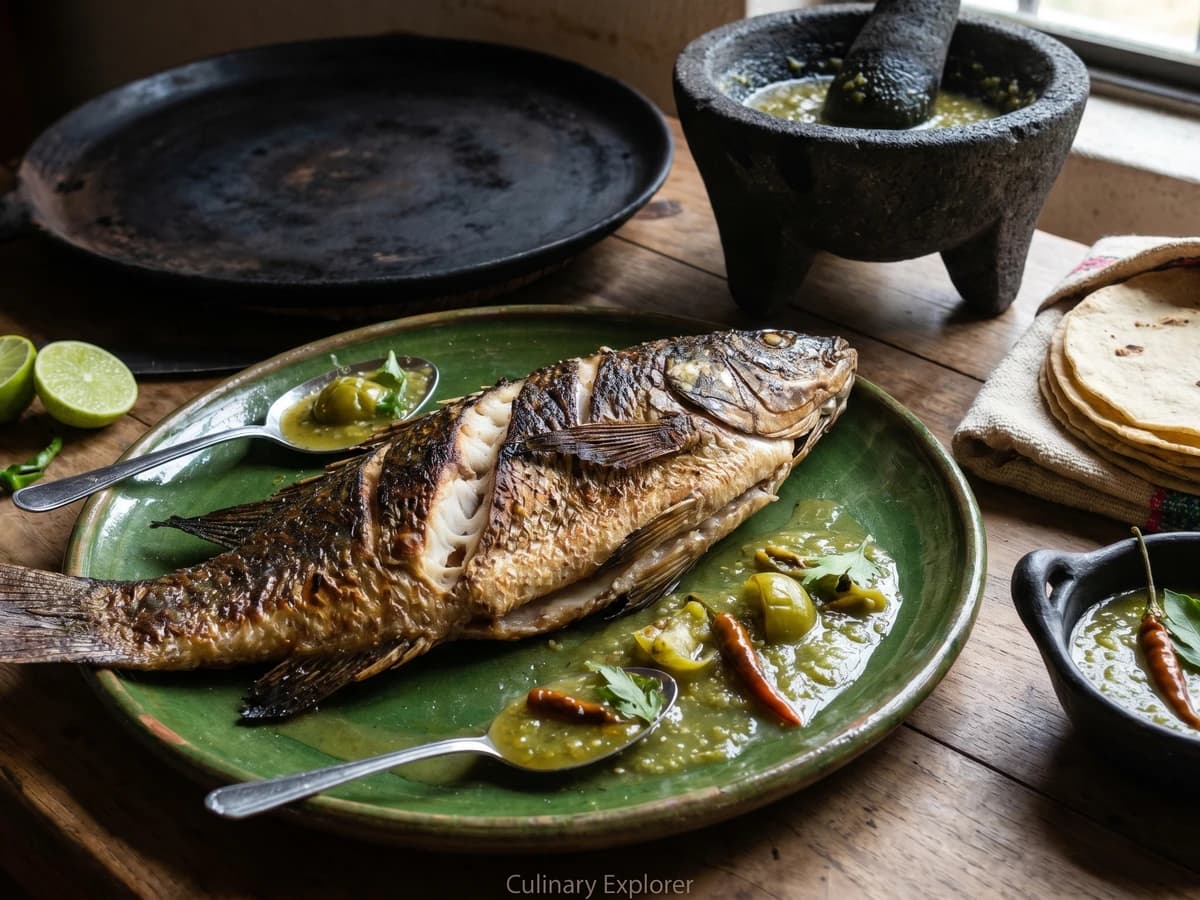
Michoacán's Lake Pátzcuaro acúmara, a whole kurucha from the lago tatemada on a comal de leña and served with chile perón atápakua, corn tortillas, and P'urhépecha discipline.
A cooking platform built around craft, culture, and the stories behind what we eat.

Created by
Colima's chilayo is pork backbone and ribs simmered in guajillo broth, sharpened with cumin and vinegar, then thickened with ground rice and served over white morisqueta.
Colima lives on the Pacific side of Mexico, small on the map and serious at the table. Chilayo belongs there, in the hot kitchens between the port of Manzanillo, the city market in Colima, and the villages where pork bones are treated as flavor, not poverty. This is comida de casa, the pot that waits for people who come in hungry and do not need a speech before they eat.
The chile is guajillo. Remember that. Not a handful of random dried chiles, not tomato pretending to be color. Guajillo gives Chilayo its red broth and clean fruit, while cumin cuts through the pork and ground rice thickens the liquid the way the older cooks taught it. The rice is not garnish. It is the architecture of the broth.
I first wrote this dish down from a señora near the Mercado Obregón in Colima, who corrected me twice before I had even touched the pot. Backbone first. Ribs if you have them. Rice ground into the chile, not thrown in like soup. She served it over morisqueta in a clay bowl with lime at the edge and tortillas under a cotton servilleta. Cada estado, su propia cocina.
This is not a showy dish. Good. La cocina no es decoración, es trabajo. You simmer the bones until the broth has weight, you toast the chiles without burning them, and you stir once the rice goes in because rice will stick if you turn your back. Recetas probadas y garantizadas, but only if you do the work.
Chilayo is a regional stew from Colima and parts of the western coastal corridor, where pork, rice, dried chiles, and vinegar became practical household staples after Spanish livestock and Asian rice entered local cooking during the colonial period. Colima's rice dishes are tied to the Pacific trade routes that connected western Mexico to the Manila galleon economy from the 16th to the 19th century, which helped make rice a familiar grain in coastal kitchens. The use of ground rice as a thickener marks Chilayo apart from many central Mexican pork stews, which more often rely on tortillas, bread, masa, or nuts for body.
Quantity
2 pounds
cut into 2-inch pieces
Quantity
1 pound
cut into individual ribs
Quantity
10 cups, plus more as needed
Quantity
1/2 medium
Quantity
5
divided
Quantity
2
Quantity
1 tablespoon, plus more to taste
Quantity
10
stemmed and seeded
Quantity
2
stemmed and seeded
Quantity
1/3 cup
rinsed and soaked for 20 minutes
Quantity
1 teaspoon
Quantity
1/2 teaspoon
Quantity
2 tablespoons
Quantity
2 tablespoons
Quantity
1/2 teaspoon
Quantity
for serving
Quantity
for serving
Quantity
for serving
| Ingredient | Quantity |
|---|---|
| pork backbone (espinazo de puerco)cut into 2-inch pieces | 2 pounds |
| pork ribscut into individual ribs | 1 pound |
| cold water | 10 cups, plus more as needed |
| white onion | 1/2 medium |
| garlic clovesdivided | 5 |
| bay leaves | 2 |
| kosher salt | 1 tablespoon, plus more to taste |
| dried chile guajillostemmed and seeded | 10 |
| dried chile anchostemmed and seeded | 2 |
| long-grain white ricerinsed and soaked for 20 minutes | 1/3 cup |
| whole cumin seeds | 1 teaspoon |
| dried Mexican oregano | 1/2 teaspoon |
| pork lard (manteca de cerdo) | 2 tablespoons |
| apple cider vinegar or mild cane vinegar | 2 tablespoons |
| freshly ground black pepper | 1/2 teaspoon |
| cooked white morisqueta | for serving |
| lime halves (optional) | for serving |
| warm corn tortillas (optional) | for serving |
Put the pork backbone and ribs in a heavy pot with 10 cups cold water. Add the onion, 3 garlic cloves, bay leaves, and salt. Bring it slowly to a simmer over medium heat, then skim the gray foam that rises in the first 15 minutes. Backbone is not fancy meat. Good. It gives the broth body because bone and cartilage do the work.
Lower the heat so the broth moves gently. Cover partially and cook for 1 hour and 15 minutes, until the pork is tender but not falling apart. Add hot water if the liquid drops below the meat. You want broth, not a dry pot. Taste for salt only after the meat has cooked, because the bones release their own depth slowly.
Heat a dry comal over medium. Toast the chile guajillo about 20 to 30 seconds per side, just until the skins darken slightly and smell fruity. Toast the chile ancho separately because it is thicker and needs a little more time. Do not blacken them. Burned guajillo tastes bitter and thin, and no amount of pork will fix it.
Put the toasted chiles in a bowl and cover with hot water for 20 minutes. Drain them. Drain the soaked rice. In a blender, combine the chiles, soaked rice, cumin seeds, oregano, remaining 2 garlic cloves, vinegar, black pepper, and 1 cup of hot pork broth from the pot. Blend longer than you think, until the rice is fully broken down and the sauce looks smooth and brick red.
Pass the chile and rice sauce through a fine-mesh strainer into a bowl, pressing hard with a spoon. This is not decoration. The strainer keeps chile skins and rough rice bits out of the broth. Chilayo should have body, not grit. Ask the women at the market. They know the difference.
Melt the manteca de cerdo in a skillet over medium heat. Add the strained sauce carefully because it will jump. Stir for 6 to 8 minutes, until the red deepens, the raw garlic smell disappears, and the lard begins to show in small orange beads at the edges. La manteca es el sabor. Oil works in some dishes. This one wants lard.
Scrape the fried chile base into the pork pot and stir well. Simmer uncovered for 25 to 35 minutes, stirring often so the ground rice does not catch on the bottom. The broth will thicken enough to coat the spoon but should still pour easily. If it becomes too thick, add hot water by the half cup. Chilayo is a stew, not a paste.
Taste for salt and vinegar. The broth should be red, porky, lightly sharp, and rounded by cumin. Spoon cooked white morisqueta into deep bowls and ladle the chilayo over it, making sure every bowl gets bone-in pork. Serve with lime halves and warm corn tortillas. No me vengas con flour tortillas here. This is Colima, and the table knows it.
1 serving (about 540g)
Culinary guides, cultural storytelling, and the editorial depth that makes cooking meaningful.
Discover Culinary ExplorerChef Lupita
Michoacán's Lake Pátzcuaro acúmara, a whole kurucha from the lago tatemada on a comal de leña and served with chile perón atápakua, corn tortillas, and P'urhépecha discipline.

Chef Lupita
Puebla's weekday adobo of pork shoulder braised in a thick guajillo and ancho sauce sharpened with vinegar, cumin, and clove. The deep red of a market spice stall, the dish a poblana cooks without thinking.

Chef Lupita
Loreto's pit-roasted clams, planted hinge-up in beach sand and tatemadas under a fast fire of dried romerillo brush, the resinous Baja desert shrub that gives this dish its smoke.

Chef Lupita
Oaxaca's eighth mole, the silky, almond-and-cinnamon almendrado, served over poached chicken. Mild, sweet, restrained, and a quiet rebuttal to anyone who thinks Mexican food has to be hot to be Mexican.