Chef Lupita
Acúmara Tatemada al Comal
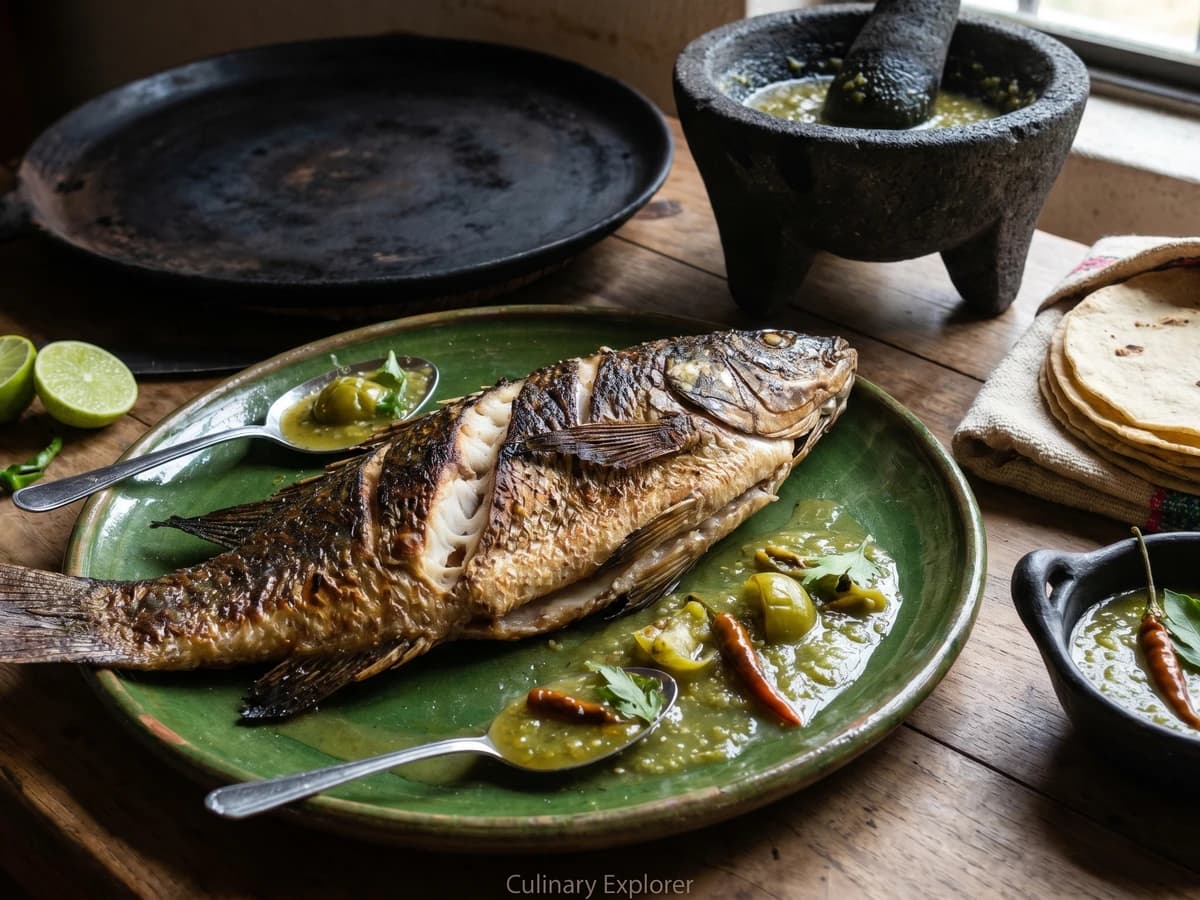
Michoacán's Lake Pátzcuaro acúmara, a whole kurucha from the lago tatemada on a comal de leña and served with chile perón atápakua, corn tortillas, and P'urhépecha discipline.
A cooking platform built around craft, culture, and the stories behind what we eat.

Created by
Nayarit's Pacific shrimp, seared quickly and coated in a red sauce of chile de arbol, chipotle, tomato, and garlic, the kind of heat that belongs beside white rice and warm corn tortillas.
Nayarit sits on the Pacific, with San Blas, Chacala, and the Riviera Nayarit feeding kitchens that know shrimp better than any menu writer from the city. Camarones a la diabla live there, in fondas near the water and in home kitchens where the sauce is made before the shrimp ever touches the pan.
The chile de arbol gives the bite. The chipotle gives smoke. The tomato and garlic carry both so the sauce clings instead of running across the plate like red water. Some restaurants drown this dish in bottled hot sauce and ketchup. No me vengas con atajos. Toast the chiles, soften them, blend them with roasted jitomate, then fry the sauce until it darkens and smells serious.
In Nayarit, the shrimp matters first. If the shrimp is old, the sauce cannot save it. Buy firm shrimp that smells clean, preferably shell-on, and use the shells for a quick stock. The women who cook along the coast understand this without making speeches: the sea gives you the ingredient, the comal wakes the chile, the pan finishes the work. Cada estado, su propia cocina.
Camarones a la diabla became common in Pacific coast seafood restaurants during the 20th century as shrimp fishing expanded in states including Nayarit, Sinaloa, and Sonora. The name 'a la diabla' refers to a family of very hot red chile sauces rather than one fixed recipe, with chile de arbol often providing the sharp heat and chipotle adding smoke in western versions. Nayarit's version belongs to its coastal seafood cooking, where quick-seared shrimp are served with rice, lime, and corn tortillas instead of being folded into northern flour-tortilla customs.
Quantity
1 1/2 pounds
peeled and deveined, shells reserved
Quantity
1 teaspoon, divided
Quantity
1 tablespoon
Quantity
10
stemmed
Quantity
3
stemmed and seeded
Quantity
2 chiles, plus 1 tablespoon adobo sauce
Quantity
4
roasted on a comal until blistered
Quantity
1/2 medium
quartered
Quantity
4
unpeeled
Quantity
1 cup
for shrimp stock
Quantity
2 tablespoons
Quantity
1 tablespoon
Quantity
1/2 teaspoon
Quantity
1 teaspoon
Quantity
for serving
Quantity
for serving
Quantity
for serving
Quantity
for serving
| Ingredient | Quantity |
|---|---|
| large shell-on shrimppeeled and deveined, shells reserved | 1 1/2 pounds |
| kosher salt | 1 teaspoon, divided |
| fresh lime juice | 1 tablespoon |
| dried chile de arbolstemmed | 10 |
| dried chile guajillostemmed and seeded | 3 |
| canned chipotle chiles in adobo | 2 chiles, plus 1 tablespoon adobo sauce |
| Roma tomatoesroasted on a comal until blistered | 4 |
| white onionquartered | 1/2 medium |
| garlic clovesunpeeled | 4 |
| waterfor shrimp stock | 1 cup |
| unsalted butter | 2 tablespoons |
| vegetable oil | 1 tablespoon |
| dried Mexican oregano | 1/2 teaspoon |
| apple cider vinegar | 1 teaspoon |
| cooked Mexican white rice (optional) | for serving |
| warm corn tortillas (optional) | for serving |
| lime wedges (optional) | for serving |
| chopped cilantro (optional) | for serving |
Pat the shrimp dry. Toss with 1/2 teaspoon salt and the lime juice. Let them sit while you build the sauce, no longer than 20 minutes. Shrimp cooks fast and tightens faster. Respect that.
Put the reserved shrimp shells in a small saucepan with 1 cup water and a pinch of salt. Simmer gently for 10 minutes, then strain. You only need a little stock, but it gives the sauce the taste of Nayarit's coast instead of plain tap water.
Heat a dry comal over medium. Toast the chile guajillo about 20 seconds per side, just until fragrant and flexible. Toast the chile de arbol for only a few seconds, moving constantly. They should darken slightly, not blacken. Burned chile de arbol turns bitter and angry in the wrong way.
Cover the toasted chiles with hot water and soak for 15 minutes. On the same comal, roast the tomatoes, onion, and unpeeled garlic until the tomatoes blister, the onion chars at the edges, and the garlic softens inside its skin. Peel the garlic. This roasting gives the sauce depth before it ever sees the pan.
Drain the soaked chiles and put them in a blender with the roasted tomatoes, onion, peeled garlic, chipotle chiles, adobo sauce, Mexican oregano, vinegar, 1/2 cup shrimp stock, and the remaining 1/2 teaspoon salt. Blend until completely smooth. If the blender struggles, add another spoonful of stock. The sauce should be thick enough to coat a spoon.
Heat 1 tablespoon butter with the vegetable oil in a wide skillet over medium heat. Pour in the blended sauce carefully. It will sputter. Cook 8 to 10 minutes, stirring often, until the red deepens, the raw tomato smell disappears, and the fat begins to shine at the edges. This is where the sauce becomes a diabla sauce, not a blender salsa.
In a second wide skillet, melt the remaining 1 tablespoon butter over medium-high heat. Add the shrimp in one layer. Cook about 60 to 90 seconds per side, just until they turn pink and curl into a loose C. If they curl tight like a fist, you overcooked them. Work in batches if the pan is crowded.
Add the seared shrimp to the diabla sauce and toss for 1 minute, just long enough for the sauce to cling. Taste for salt. Serve immediately with white rice, warm corn tortillas, lime wedges, and a little cilantro if you use it. The rice is not decoration. It is there to catch the sauce.
1 serving (about 410g)
Culinary guides, cultural storytelling, and the editorial depth that makes cooking meaningful.
Discover Culinary ExplorerChef Lupita
Michoacán's Lake Pátzcuaro acúmara, a whole kurucha from the lago tatemada on a comal de leña and served with chile perón atápakua, corn tortillas, and P'urhépecha discipline.

Chef Lupita
Puebla's weekday adobo of pork shoulder braised in a thick guajillo and ancho sauce sharpened with vinegar, cumin, and clove. The deep red of a market spice stall, the dish a poblana cooks without thinking.

Chef Lupita
Loreto's pit-roasted clams, planted hinge-up in beach sand and tatemadas under a fast fire of dried romerillo brush, the resinous Baja desert shrub that gives this dish its smoke.

Chef Lupita
Oaxaca's eighth mole, the silky, almond-and-cinnamon almendrado, served over poached chicken. Mild, sweet, restrained, and a quiet rebuttal to anyone who thinks Mexican food has to be hot to be Mexican.