Puebla's bald-bread fried sandwich, a smooth white roll deep-fried whole until shiny and crackling, then split and piled with shredded beef, refried beans, salsa roja, crema, and queso fresco.
Appetizers & Snacks
Mexican
Game Day
Comfort Food
30 min
Active Time
2 hr 30 min cook•3 hr total
Yield8 pelonas
Pelonas are from Puebla. Specifically from the antojitos counters and market stalls of the city center, where they sit on metal trays under a pane of glass and the woman behind the counter assembles them to order, one after another, with the practiced economy of someone who has made ten thousand of them.
The name means bald. It refers to the bread: a small, smooth-topped white roll, no sesame, no flour dusting, deep-fried whole until the entire surface turns shiny and crackling. That bald, glossy shell is the dish's identity. If your roll has seeds or a split top, it is the wrong roll. In Puebla they use a specific local pan blanco, palm-sized and round. Outside Puebla, the closest cousin is a small telera or a soft white dinner roll with a smooth crust. Whatever you use, it must be small. A big pelona is not a pelona, it is a sad torta.
What goes inside is the antojito formula that Puebla has perfected: frijoles refritos, hand-shredded beef, a salsa roja with body, shredded lettuce, crema, and crumbled queso fresco. Cool against warm, soft against crisp, salsa soaking into the bread from the inside while the outside still crackles under your teeth. The pelona is street food in the most precise sense: built to be eaten standing up, in two minutes, with the napkin already wet. No me vengas con atajos. Fry the bread whole. Shred the beef by hand. Toast the chiles. The dish is short. Every step counts.
My mother never made pelonas. She was from Jalisco and pelonas are not Jalisciense. I learned them from a woman named Dona Cuca who ran a stand near the Mercado El Carmen in Puebla in the late 1990s. She fried the bread in a wide cazo of lard and assembled each sandwich on a piece of butcher paper. She would not let me write the recipe down while I was there. She said: cook it five times, then you will know it. Saber cocinar es saber vivir. Cada estado, su propia cocina.
The pelona belongs to Puebla's deep tradition of antojitos, the small wheat-and-corn-based street foods that proliferated in the state after Spanish wheat cultivation took root in the Valley of Atlixco in the 16th century, making Puebla one of the earliest wheat-baking regions of New Spain. The fried-whole-bread technique that defines the pelona likely emerged in the early-to-mid 20th century as a market-day adaptation, when cooks needed a way to refresh day-old pan blanco and stretch a single piece of stewed meat across a working-class lunch. Unlike the cemita, Puebla's other famous sandwich, which is sesame-crowned and built around milanesa or quesillo, the pelona remained a humbler, beef-and-bean composition, largely confined to the antojito stalls of Puebla city and rarely served in restaurants outside the state.
The technique, the tradition, and the story behind every dish.
small white bread rolls (pan blanco or telera-style)
Quantity
8
palm-sized, smooth-topped, no sesame seeds
beef chuck or skirt steak
Quantity
1 1/2 pounds
in one piece
white onion
Quantity
1/2 medium, plus 1/4 for the salsa
garlic cloves
Quantity
3, plus 1 for the salsa
bay leaves
Quantity
2
dried Mexican oregano
Quantity
1 teaspoon
kosher salt
Quantity
1 tablespoon, plus more to taste
dried chile guajillo
Quantity
6
stemmed and seeded
dried chile ancho
Quantity
2
stemmed and seeded
dried chile chipotle morita (optional)
Quantity
1
for smoke and heat
roma tomatoes
Quantity
3 medium
ground cumin
Quantity
1/4 teaspoon
manteca de cerdo (pork lard)
Quantity
1 tablespoon
frijoles refritos
Quantity
1 1/2 cups
warm, black or pinto
shredded iceberg or romaine lettuce
Quantity
1 1/2 cups
crema mexicana
Quantity
3/4 cup
queso fresco or queso de rancho
Quantity
1/2 cup
crumbled
vegetable oil or lard for deep-frying
Quantity
4 cups
pickled jalapenos en escabeche (optional)
Quantity
for serving
Ingredient
Quantity
small white bread rolls (pan blanco or telera-style)palm-sized, smooth-topped, no sesame seeds
8
beef chuck or skirt steakin one piece
1 1/2 pounds
white onion
1/2 medium, plus 1/4 for the salsa
garlic cloves
3, plus 1 for the salsa
bay leaves
2
dried Mexican oregano
1 teaspoon
kosher salt
1 tablespoon, plus more to taste
dried chile guajillostemmed and seeded
6
dried chile anchostemmed and seeded
2
dried chile chipotle morita (optional)for smoke and heat
1
roma tomatoes
3 medium
ground cumin
1/4 teaspoon
manteca de cerdo (pork lard)
1 tablespoon
frijoles refritoswarm, black or pinto
1 1/2 cups
shredded iceberg or romaine lettuce
1 1/2 cups
crema mexicana
3/4 cup
queso fresco or queso de ranchocrumbled
1/2 cup
vegetable oil or lard for deep-frying
4 cups
pickled jalapenos en escabeche (optional)
for serving
Equipment Needed
•Heavy 4-quart pot or wide deep skillet for frying
•Deep-fry or candy thermometer
•Cast iron comal or heavy skillet for toasting chiles and charring tomatoes
•High-powered blender
•Slotted spoon or kitchen spider
•Wire rack set over a sheet pan
•Serrated knife
Instructions
1
Cook the beef
Place the beef in a heavy pot with the half onion, 3 cloves garlic, bay leaves, oregano, and salt. Cover with cold water by two inches. Bring to a gentle simmer over medium heat. Skim the gray foam that rises in the first ten minutes. Lower the heat and cook at a lazy bubble for two hours, until the meat shreds easily with a fork. Cold water and a quiet simmer give you clean broth and tender meat. A rolling boil toughens the chuck and clouds everything.
Save the broth. Strain it, freeze it, and use it for the next pot of arroz rojo or sopa de fideo. In a Mexican kitchen you do not throw away broth.
2
Shred the meat
Lift the beef out with a slotted spoon and let it cool until you can handle it. Shred it by hand into thin strands along the grain. Not chunks. Not a food processor. Hand-shredded meat is what gives the pelona its texture. Season the shredded meat with a pinch of salt and a few spoons of its own broth to keep it moist. Set aside.
3
Toast the chiles
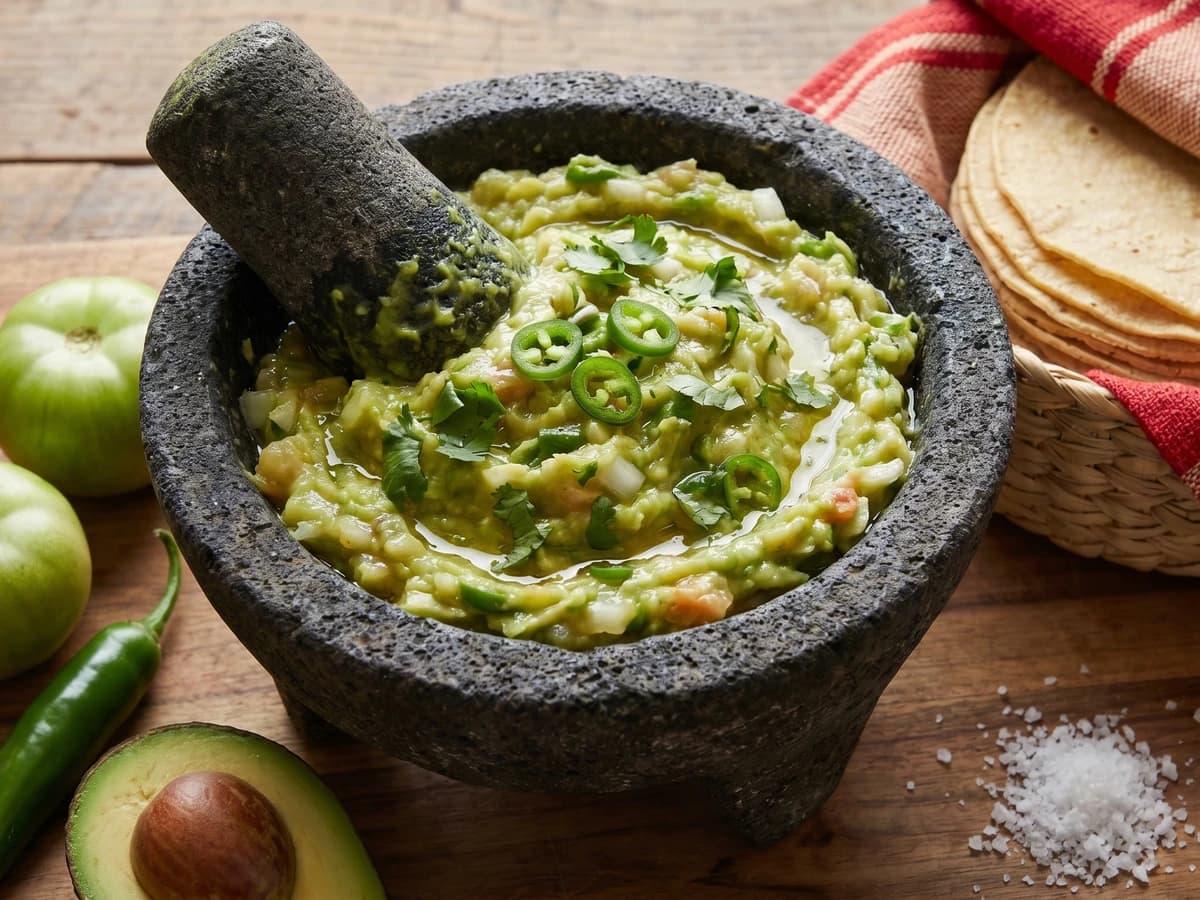
Heat a dry comal or heavy skillet over medium. Toast the guajillo, ancho, and chipotle morita separately, about 30 seconds per side. They should puff and turn fragrant, never blacken. The kitchen will smell like a chile vendor's stall in the Mercado de Sabores in Puebla. That smell is the oils releasing. Skip the toasting and your salsa will taste flat.
The chipotle morita is optional but traditional in many Puebla versions. It adds a smoky backbone that ties the salsa to the meat.
4
Char the tomatoes
On the same comal, char the tomatoes and the 1/4 onion and 1 garlic clove for the salsa. Turn them as the skins blister and blacken in patches. You want char marks, not ash. The tomatoes should be soft and weeping juice. This direct-fire roasting is what gives a Mexican salsa its depth. Boiled tomatoes give you spaghetti sauce.
5
Build the salsa roja
Place the toasted chiles in a heatproof bowl and cover with hot tap water. Hot water, not boiling. Let them soften for 20 minutes. Drain. Transfer the chiles to a blender with the charred tomatoes, onion, garlic, cumin, and a teaspoon of salt. Blend until smooth. Melt the lard in a small skillet over medium heat. Pour in the salsa. It will sputter. Cook for eight minutes, stirring, until the salsa darkens and the fat starts to separate at the edges. La manteca es el sabor. Taste for salt. This salsa needs to be assertive: the bread is bland, the meat is mild, the salsa is what carries the bite.
6
Heat the frying oil
Pour the oil or lard into a heavy pot or wide skillet to a depth of two inches. Heat to 350F. If you do not have a thermometer, drop a small piece of bread crust in. It should sizzle steadily and turn golden in about 30 seconds. Too cold and the bread soaks up grease. Too hot and the outside burns before the inside warms through. Temperature is the technique here.
7
Fry the rolls whole
Lower two rolls at a time into the hot oil. Do not split them first. The whole roll goes in. Use a slotted spoon to keep them submerged and rolling, about 90 seconds, until the entire surface is uniformly golden, shiny, and firm. The exterior should sound hollow when you tap it with the spoon. Lift onto a wire rack to drain. Repeat with the rest of the rolls. This is the pelona. The bald, shiny, crisp shell is the dish's signature and the reason it carries that name.
Pelona means bald. The name comes from the smooth, slick surface the bread takes on after frying, like a bald head with no seeds, no flour, no markings. If your roll has sesame seeds on top, it is the wrong roll. Find a smooth-topped pan blanco.
8
Split and stack
While the rolls are still warm, split each one horizontally with a serrated knife. Do not cut all the way through if you can avoid it. Spread a generous spoonful of warm frijoles refritos across the bottom half. Pile shredded beef on top of the beans. Drizzle a heavy spoon of salsa roja over the meat, letting it soak into the bread. Top with shredded lettuce, a drizzle of crema, and a scatter of crumbled queso fresco. Close the sandwich. Press lightly so the salsa kisses the top half from the inside.
9
Serve immediately
Pelonas wait for nobody. The fried bread softens fast once the salsa hits it, and that is the dish: a crisp shell on the outside, salsa-soaked inside, cool crema and lettuce against warm meat. Serve right away with pickled jalapenos en escabeche on the side. Eat with your hands. Lean over the plate. Asi se hace y punto.
Chef Tips
•The bread is everything. Look for a small, smooth-topped white roll about the size of your palm. If your only option is a sesame-topped roll, brush the seeds off before frying. A pelona with seeds is a contradiction in terms.
•Shred the beef by hand, with the grain, into thin strands. A food processor turns the meat into paste and a knife gives you chunks that fall out of the sandwich. Hands are the tool the dish requires.
•Use a thermometer for the frying oil if you have one. 350F is the line. Below that, the bread drinks oil and turns greasy. Above 375F, the outside browns before the inside heats and the bread stays cold in the middle.
•If you cannot find crema mexicana, use Salvadoran crema or a thinned creme fraiche. Sour cream is a compromise, not an upgrade. It is too thick and too tangy and it will throw the balance off.
Advance Preparation
•The shredded beef can be cooked one day ahead and refrigerated in its broth. Reheat gently in a little of the broth before assembling.
•The salsa roja can be made two days ahead and refrigerated. The flavor deepens overnight.
•The refried beans can be made one or two days ahead and reheated with a splash of broth or water to loosen.
•The bread must be fried right before serving. Pre-fried pelonas go soft and lose the crackling shell that defines the dish.
Frequently Asked Questions
Nutrition Information
1 serving (about 265g)
Calories
580 calories
Total Fat
33 g
Saturated Fat
12 g
Trans Fat
0 g
Unsaturated Fat
21 g
Cholesterol
75 mg
Sodium
825 mg
Total Carbohydrates
45 g
Dietary Fiber
6 g
Sugars
5 g
Protein
27 g
Where cooking meets culture.
Culinary guides, cultural storytelling, and the editorial depth that makes cooking meaningful.