
Chef Lupita
Alambres de Carne Asada Sonorenses
Sonora's mesquite-grilled alambre of ribeye and arrachera with bacon, bell pepper, and onion, blanketed in melted asadero and rolled into thin flour tortillas at the rancho table.
A cooking platform built around craft, culture, and the stories behind what we eat.
Created by
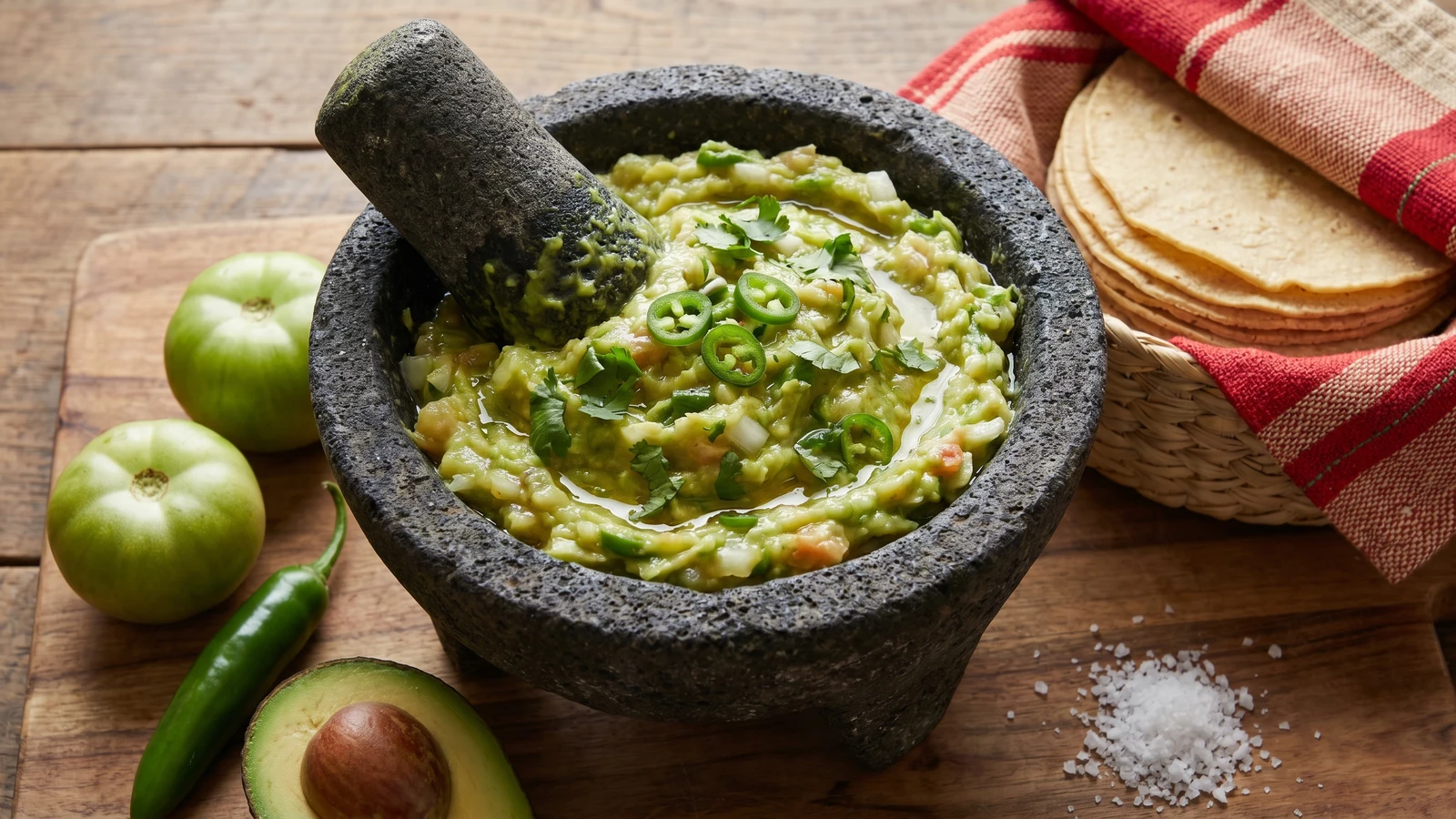
The pre-Columbian ahuacamolli of the Valley of Mexico, pounded in a basalt molcajete with tomate verde, chile serrano, onion, and salt. No lime, no garlic, no shortcuts. The original guacamole, served the way the Mexica ate it.
Ahuacamolli is from the Valley of Mexico. From the chinampas of Xochimilco and the markets of Tlatelolco where the Mexica traded avocados, tomate verde, and chiles by the basketful before the Spanish ever set foot on the continent. The word itself is Nahuatl: ahuacatl, avocado, and molli, sauce or concoction. Guacamole is simply the Spanish corruption of a word that already existed.
What you are making is not the bowl of mashed avocado with lime and garlic that travels under the name guacamole in restaurants. This is the original: avocado, tomate verde, chile serrano, white onion, cilantro, salt. That is the list. No lime, because limes are Asian fruits that arrived with Spanish ships. No garlic, for the same reason. No cumin, no sour cream, no diced tomato. The acidity comes from the tomate verde. The heat from the chile. The texture from the basalt molcajete that has been the tool of this dish for at least six hundred years.
My mother kept a molcajete on the counter that had belonged to her mother. The inside of the stone was dark from decades of chile and salt. She told me once that a molcajete is not seasoned by you, it is seasoned by every cook who used it before you. When she died and I went through her kitchen, the molcajete is what I took home first. I make ahuacamolli in it now, the way the women in Tlatelolco made it for the Mexica nobles, the way my mother made it on Sunday afternoons. The stone remembers. Saber cocinar es saber vivir.
Ahuacamolli is documented in the Florentine Codex, the 16th-century ethnographic work compiled by the Franciscan friar Bernardino de Sahagun, which records the food markets of Tenochtitlan in detail and describes a sauce of mashed avocado with chile, tomate verde, and ground seeds that the Mexica ate with their tortillas and tamales. The avocado itself was domesticated in central and southern Mexico at least seven thousand years ago, and the word ahuacatl in Nahuatl shares a root with the word for testicle, a reference to the fruit's shape and its reputation as an aphrodisiac. The modern global guacamole, with its lime, garlic, and frequent additions of tomato or cumin, is a post-conquest hybrid; the pre-Columbian version was acid-balanced by tomate verde alone and was always prepared in volcanic stone, never in a bowl with a fork.
Quantity
4
Quantity
2 small
husked and rinsed
Quantity
2
stemmed (3 if you want it hot)
Quantity
1/4 medium
roughly chopped
Quantity
1/4 cup, loosely packed
Quantity
1 1/2 teaspoons, plus more to taste
Quantity
for serving
warmed
Quantity
for serving
| Ingredient | Quantity |
|---|---|
| ripe Hass avocados | 4 |
| tomate verde (tomatillos)husked and rinsed | 2 small |
| fresh chile serranostemmed (3 if you want it hot) | 2 |
| white onionroughly chopped | 1/4 medium |
| fresh cilantro leaves and tender stems | 1/4 cup, loosely packed |
| coarse sea salt | 1 1/2 teaspoons, plus more to taste |
| hand-pressed corn tortillas (optional)warmed | for serving |
| tostadas or totopos (optional) | for serving |
Place the chopped onion, the stemmed chile serrano, and the salt into a basalt molcajete. Grind with the tejolote in a slow circular motion until you have a wet green paste at the bottom of the stone. This is the base. The salt is the abrasive. The stone does the work. A bowl and a fork cannot do this. The texture of ahuacamolli comes from basalt against ingredient, not from a blade.
Quarter the tomate verde and add them to the molcajete. Grind them into the chile-onion paste until they break down completely and the mixture turns juicy and pale green. The tomate verde is what makes this ahuacamolli and not modern guacamole. Its acidity is what the dish was built on for centuries before limes ever crossed the Atlantic. No me vengas con atajos.
Cut each avocado in half lengthwise, twist to separate, and remove the pit. Scoop the flesh out with a spoon directly into the molcajete on top of the green base. The avocados should be ripe enough to yield to gentle pressure but not soft enough to bruise. Underripe avocado is grass. Overripe avocado is mud. Neither is ahuacamolli.
Press the avocado into the base with the tejolote, working from the outside in. You want a rustic mash with visible pieces of avocado still holding their shape, not a smooth puree. The Mexica did not eat smooth guacamole. They ate it textured, with pieces you could feel in your teeth. Stop when the green base is folded through and the avocado is broken but not destroyed.
Tear the cilantro by hand and fold it into the avocado with a spoon. Do not grind it in. Bruised cilantro tastes like soap. Whole leaves taste like cilantro. Taste for salt and adjust. The salt should bring up the flavor of the avocado without announcing itself.
Bring the molcajete directly to the table. Set warm corn tortillas and tostadas beside it. Ahuacamolli is eaten the moment it is made. It does not wait, it does not store, it does not travel. The avocado will darken within the hour and the texture will turn. Eat it now. Así se hace y punto.
1 serving (about 130g)
Culinary guides, cultural storytelling, and the editorial depth that makes cooking meaningful.
Discover Culinary ExplorerChef Lupita
Sonora's mesquite-grilled alambre of ribeye and arrachera with bacon, bell pepper, and onion, blanketed in melted asadero and rolled into thin flour tortillas at the rancho table.
Chef Lupita
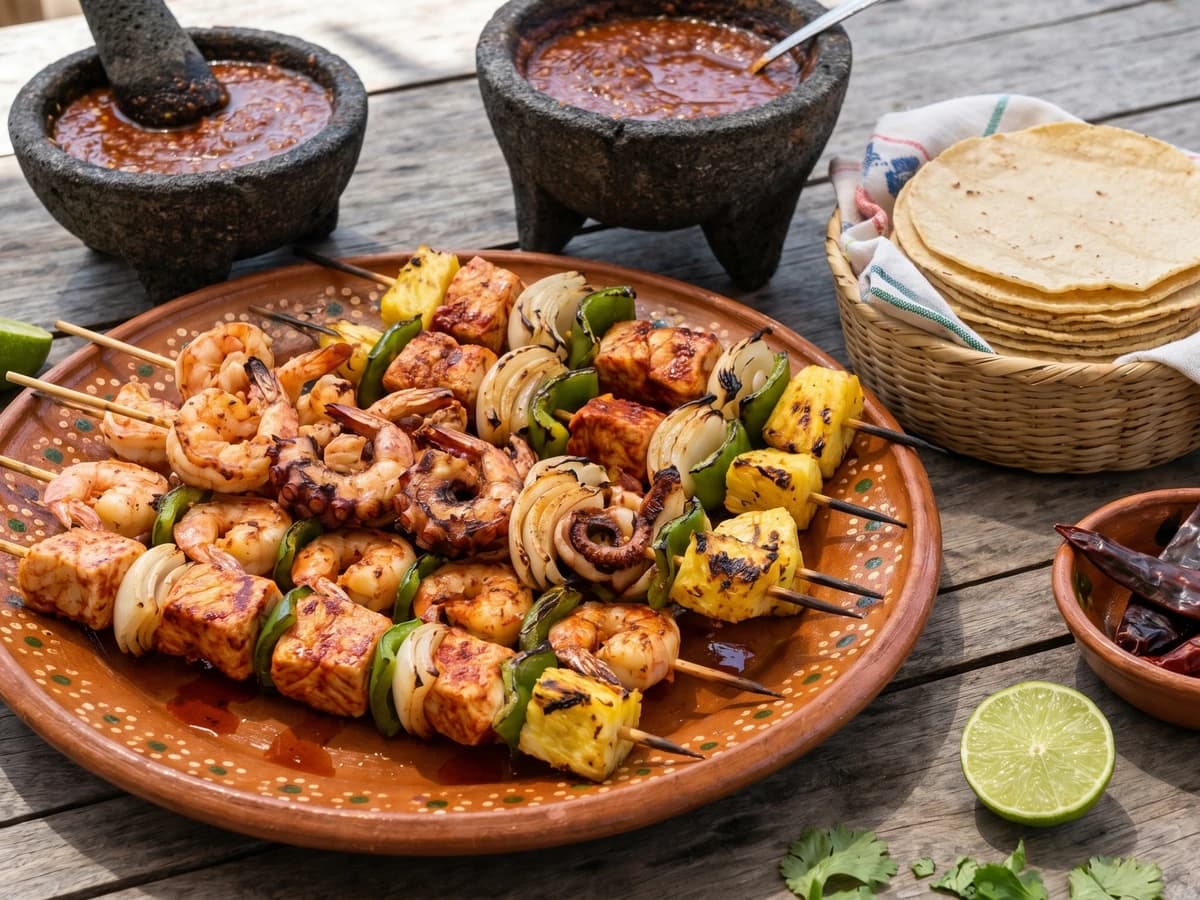
Nayarit's palapa-style seafood alambres thread shrimp, octopus, firm fish, pineapple, onion, and peppers through a guajillo and chile de arbol adobo, then grill them over wood charcoal for a botana built to share.

Chef Lupita
Sonora's roasted chicken wings tossed in clarified butter heavy with crushed wild chiltepín, garlic, and fresh lime. Sharp clean heat, no vinegar burn, no Tex-Mex shortcuts. The desert north on a plate.
Chef Lupita
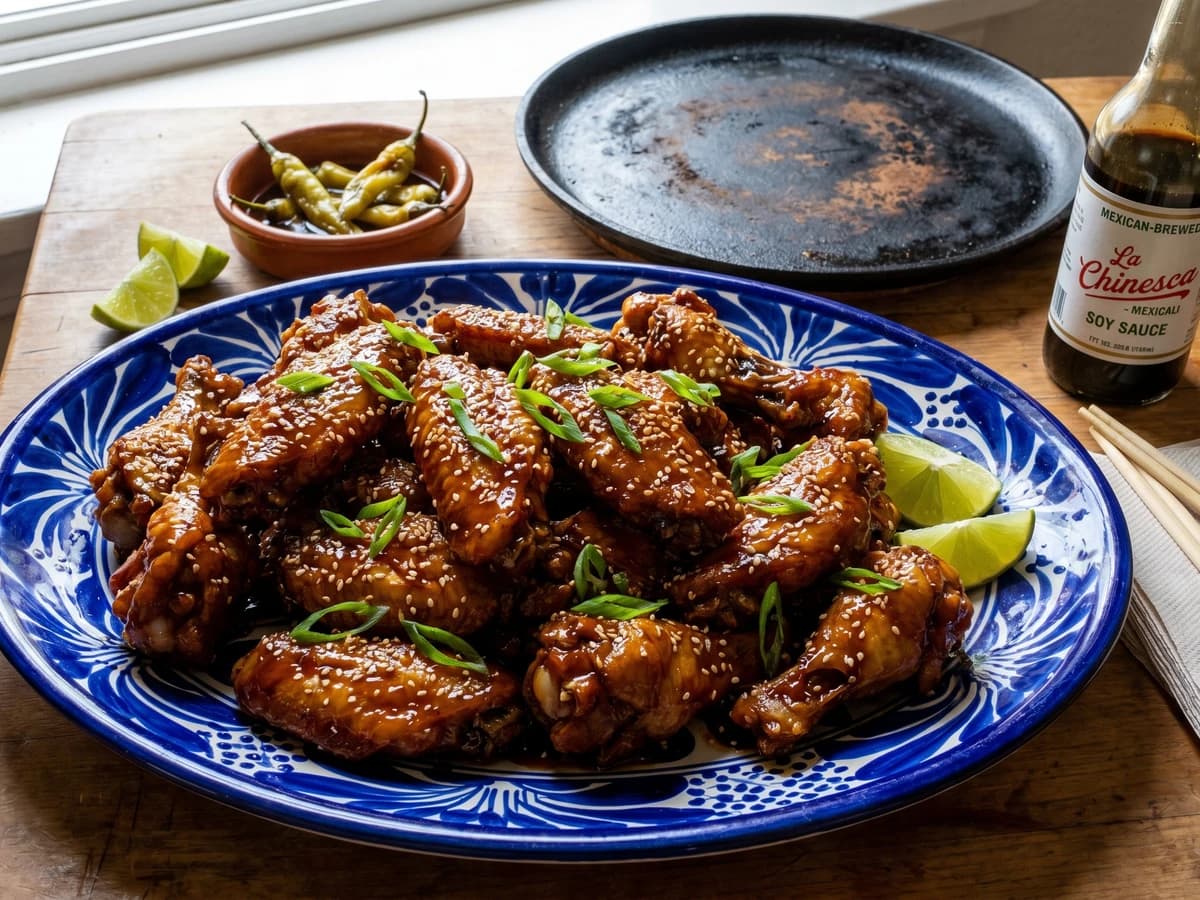
Mexicali's Chinese-Mexican wings, double-fried until the crust crackles, glazed sticky in soy, honey, ginger, and garlic, served with chiles toreados blistered in soy and lime.