Culinary Explorer

A cooking platform built around craft, culture, and the stories behind what we eat.
Discover Culinary Explorer
Flautas Doradas de Pollo con Crema y Queso

Flautas Doradas de Pollo con Crema y Queso

Created by

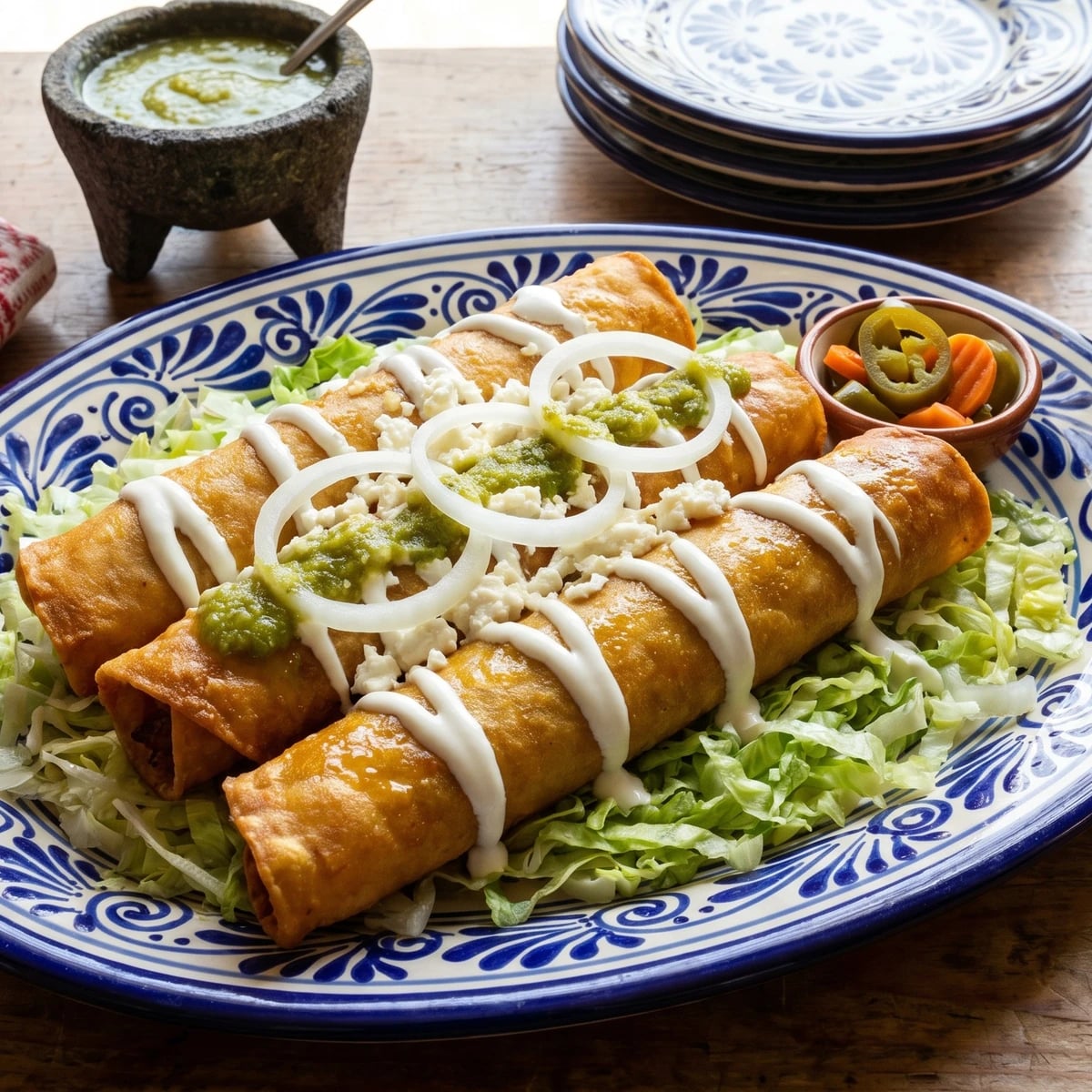
Ciudad de México's fonda standard: long corn tortillas rolled tight around shredded chicken, fried until dorada, and dressed with salsa verde, crema, queso fresco, and shredded lettuce. Eaten the moment they hit the plate.

Appetizers & Snacks
Mexican
Dinner Party
Game Day
Comfort Food
30 min
Active Time
45 min cook1 hr 15 min total
Yield6 servings (about 18 flautas)

Flautas live in the fondas of Ciudad de México. Every neighborhood has one, the small family-run comedor with three tables and a menu chalked on the wall, where the cook fries flautas to order between eleven and four and the diners eat them standing if the tables are full. This is comida corrida food. Working food. The midday plate that holds the city together.

The flauta is not the taco dorado. A taco dorado is a single round tortilla folded and fried. A flauta is long and thin, rolled from a long oval tortilla or from two regular tortillas overlapped, and it has to be skinny or it does not crisp properly. The name means flute. It should look like one. Fat flautas with too much filling are a beginner's mistake and you will see them on every Pinterest board claiming to be Mexican food. They are not what the fondas serve.

The filling is shredded poached chicken with a quick guisado of tomato and onion. Not raw chicken breast cubed and seasoned. Not rotisserie chicken pulled apart in chunks. Poached, shredded fine, cooked with the tomato until the moisture is gone. Wet filling steams the tortilla from the inside and you cannot fry your way out of that mistake. The dressing is what makes them flautas de fonda: salsa verde that is tart and hot, crema that cools it down, queso fresco that adds salt and a little crumble, lettuce that adds crunch, raw onion for bite. Five things. Five things in balance. My mother served them this way every time my cousins came over from Guadalajara, on the Talavera platters she brought from Puebla one summer, and she would tell us to eat them before the crema soaked through. Saber cocinar es saber vivir.

Flautas and tacos dorados share a common ancestor in the pre-Columbian practice of rolling tortillas around fillings, but the fried version as we know it emerged in central Mexico during the 19th century, when frying in lard became a defining technique of urban fonda cooking. Ciudad de México's fondas, the small family comedors that proliferated after the Revolution to feed a growing working class, codified the flauta as a midday plato fuerte topped with crema, queso fresco, and salsa verde, distinguishing them from Sinaloa's chimichangas and the northern states' fried burritos. The dish's signature dressing of crema and queso fresco reflects the dairy traditions of the central Mexican highlands, where Holstein and criollo cattle have been raised since the colonial period and where fresh cheeses are still produced daily in small operations across Estado de México and Hidalgo.

The technique, the tradition, and the story behind every dish.

Discover Culinary Explorer

Ingredients

bone-in, skin-on chicken thighs and breasts

Quantity

1 1/2 pounds

white onion (for poaching)

Quantity

1/2 medium

white onion (for filling)

Quantity

1/4

finely diced

garlic cloves

Quantity

4

smashed

bay leaves

Quantity

2

fresh epazote

Quantity

1 sprig

kosher salt

Quantity

1 tablespoon, plus more to taste

lard (manteca de cerdo)

Quantity

2 tablespoons

Roma tomatoes

Quantity

2

finely diced

fresh chile serrano (for filling) (optional)

Quantity

1

finely minced

dried Mexican oregano

Quantity

1/2 teaspoon

long oval corn tortillas (tortillas para flauta)

Quantity

18

or 18 fresh thin corn tortillas

toothpicks

Quantity

for securing

lard or neutral oil, for frying

Quantity

4 cups

tomatillos

Quantity

1 pound

husked and rinsed

fresh chiles serranos (for salsa)

Quantity

3

stemmed

garlic cloves (for salsa)

Quantity

2

peeled

white onion (for salsa)

Quantity

1/4

fresh cilantro leaves and tender stems

Quantity

1/2 cup

Mexican crema

Quantity

1 cup

queso fresco

Quantity

1 cup

crumbled

romaine lettuce

Quantity

2 cups

finely shredded

white onion (for garnish)

Quantity

1/2

sliced into thin rings

pickled jalapeños and carrots (optional)

Quantity

for serving

Equipment Needed

  • Heavy 4-quart pot for poaching the chicken
  • Wide skillet for the filling
  • Cast iron comal for warming tortillas
  • Deep heavy skillet or Dutch oven for frying
  • Wire rack set over a sheet pan for draining
  • Long tongs
  • Toothpicks

Instructions

  1. 1

    Poach the chicken

    Place the chicken in a pot with the half onion, smashed garlic, bay leaves, epazote, and salt. Cover with cold water by two inches. Bring to a gentle simmer over medium heat and skim the gray foam that rises in the first ten minutes. Cook at a lazy simmer for 30 to 35 minutes, until the meat pulls easily from the bone. Cold water and a slow simmer give you tender chicken and a clean broth. A hard boil gives you stringy meat and cloudy water.

    Save the broth. Strain it and freeze what you do not use. That is your sopa de fideo, your arroz rojo, your next pot of beans. Throwing away chicken broth is throwing away money.
  2. 2

    Shred the chicken

    Lift the chicken out and let it cool until you can handle it. Pull off the skin and discard the bones. Shred the meat with two forks or your fingers into thin, even strands. Even shreds roll tight. Chunks of chicken push the tortilla open and split it in the oil. La cocina no es decoración, es trabajo.

  3. 3

    Build the filling

    Heat the lard in a wide skillet over medium. Add the diced onion and cook until translucent, about three minutes. Add the diced tomato and the minced serrano if using. Cook until the tomato breaks down and most of the liquid has cooked off, about six minutes. Stir in the shredded chicken and the oregano. Salt to taste. The filling should be moist but not wet. If you can see liquid pooling, cook it down more. Wet filling means soggy flautas.

  4. 4

    Make the salsa verde

    While the filling cools, put the tomatillos and serranos in a small pot with water to cover. Simmer for about eight minutes, until the tomatillos turn from bright to olive green and feel soft. Drain and transfer to a blender with the garlic, onion, cilantro, and a generous pinch of salt. Blend until smooth but not foamy. Taste. It should be tart, hot, and a little salty. A salsa verde that tastes timid will not stand up to crema and queso later.

  5. 5

    Warm the tortillas

    Heat a comal over medium. Pass each tortilla over the comal for about ten seconds per side, just until pliable. A cold tortilla cracks when you roll it. A tortilla that has been warmed properly folds around the filling like cloth. Stack them under a clean kitchen towel so they stay soft while you work.

    If you cannot find the long oval tortillas para flauta, two regular tortillas overlapped by half make a flauta of the right length. The fondas in the Centro Histórico do this when the oval tortillas run out and nobody complains.
  6. 6

    Roll the flautas

    Lay a warm tortilla on the counter. Place about two tablespoons of filling in a line down the lower third. Roll tightly away from you into a thin cigar. Secure with a toothpick straight through the seam. Keep the rolls thin. A fat flauta will not crisp properly in the oil and the inside will still be pale when the outside is too dark. Repeat with the rest. Set them seam-side down on a tray so they do not unroll.

  7. 7

    Fry until dorada

    Heat the lard or oil in a deep heavy skillet to 350 degrees. If you have no thermometer, drop in a scrap of tortilla. It should bubble immediately and turn gold in about 20 seconds. Fry the flautas four or five at a time, seam-side down first, turning once, for about two to three minutes per side. They should turn deep golden and the bubbles around them should slow down. That is the water leaving the tortilla. When the bubbling quiets, the flauta is crisp through. Lift them out with tongs and drain on a wire rack set over a sheet pan. Never on paper towels. Paper traps steam and softens the bottom.

    Frying in lard tastes better. Frying in neutral oil works. Frying at a low temperature gives you greasy flautas that absorb the fat instead of crisping in it. Keep the oil hot and never crowd the pan.
  8. 8

    Dress and serve immediately

    Pull the toothpicks. Lay three or four flautas on a plate over a bed of shredded lettuce. Spoon salsa verde generously across the middle, then drizzle with crema in a zigzag, then shower with crumbled queso fresco and a few onion rings. Eat them now. Flautas wait for nobody. The second the crema hits the crust, the clock is running. This is fonda food and fonda food is served the moment it is ready. Así se hace y punto.

Chef Tips

  • Buy the long oval tortillas para flauta if you can find them at a tortillería. If not, two regular thin corn tortillas overlapped by half work fine. Thick tortillas do not work. They stay chewy inside no matter how long you fry them.
  • Crema mexicana is not sour cream. Sour cream is thicker, tangier, and it sits in a clump on top of the flauta instead of drizzling. If your grocery does not carry crema, thin sour cream with a little whole milk and a pinch of salt. It is a compromise, not an upgrade.
  • Queso fresco crumbles. Queso cotija crumbles harder and saltier. Either works. Cheddar does not work. Monterey jack does not work. No me vengas con atajos.
  • Fry only what you will eat right away. Flautas are not a buffet dish. The crust starts losing its crackle within ten minutes of leaving the oil and within twenty it is gone.

Advance Preparation

  • The chicken filling can be made one day ahead and refrigerated. Bring to room temperature before rolling so the cold filling does not lower the oil temperature when you fry.
  • The salsa verde keeps three days refrigerated and the flavor sharpens overnight.
  • The flautas can be rolled and refrigerated for up to four hours before frying. Cover the tray with a damp towel so the tortillas do not dry out and crack.
  • Do not fry ahead. Flautas are a la orden food. Fry them and serve them. There is no shortcut around this.

Frequently Asked Questions

Nutrition Information

1 serving (about 340g)

Calories
595 calories
Total Fat
34 g
Saturated Fat
13 g
Trans Fat
0 g
Unsaturated Fat
19 g
Cholesterol
150 mg
Sodium
710 mg
Total Carbohydrates
42 g
Dietary Fiber
6 g
Sugars
5 g
Protein
27 g

Note: Chef personas and recipes are created with AI assistance. Cook with care: follow safe food-handling practices, check doneness with a thermometer when needed, and adapt for allergies and your kitchen.

Where cooking meets culture.

Culinary guides, cultural storytelling, and the editorial depth that makes cooking meaningful.

Discover Culinary Explorer

More from Central Mexican Appetizers & Snacks

Browse the full collection