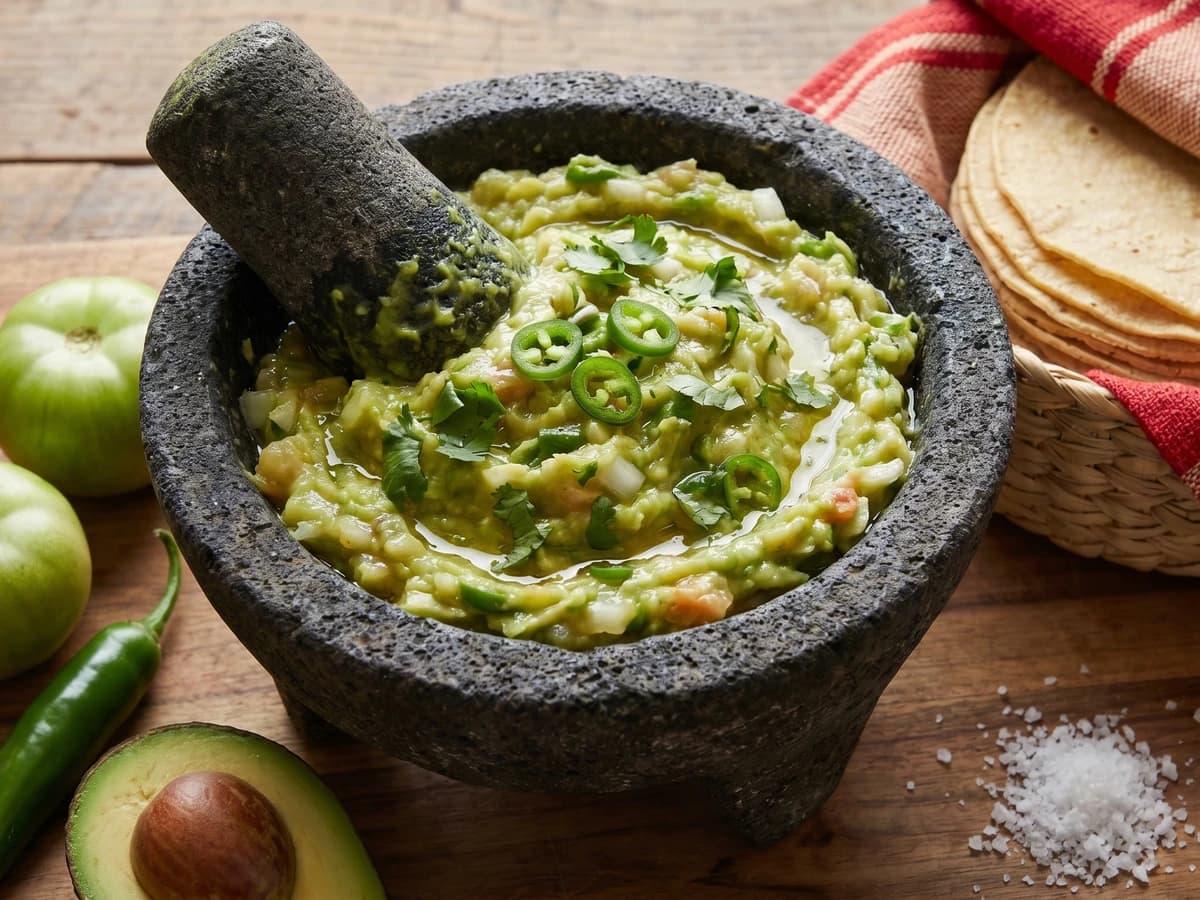
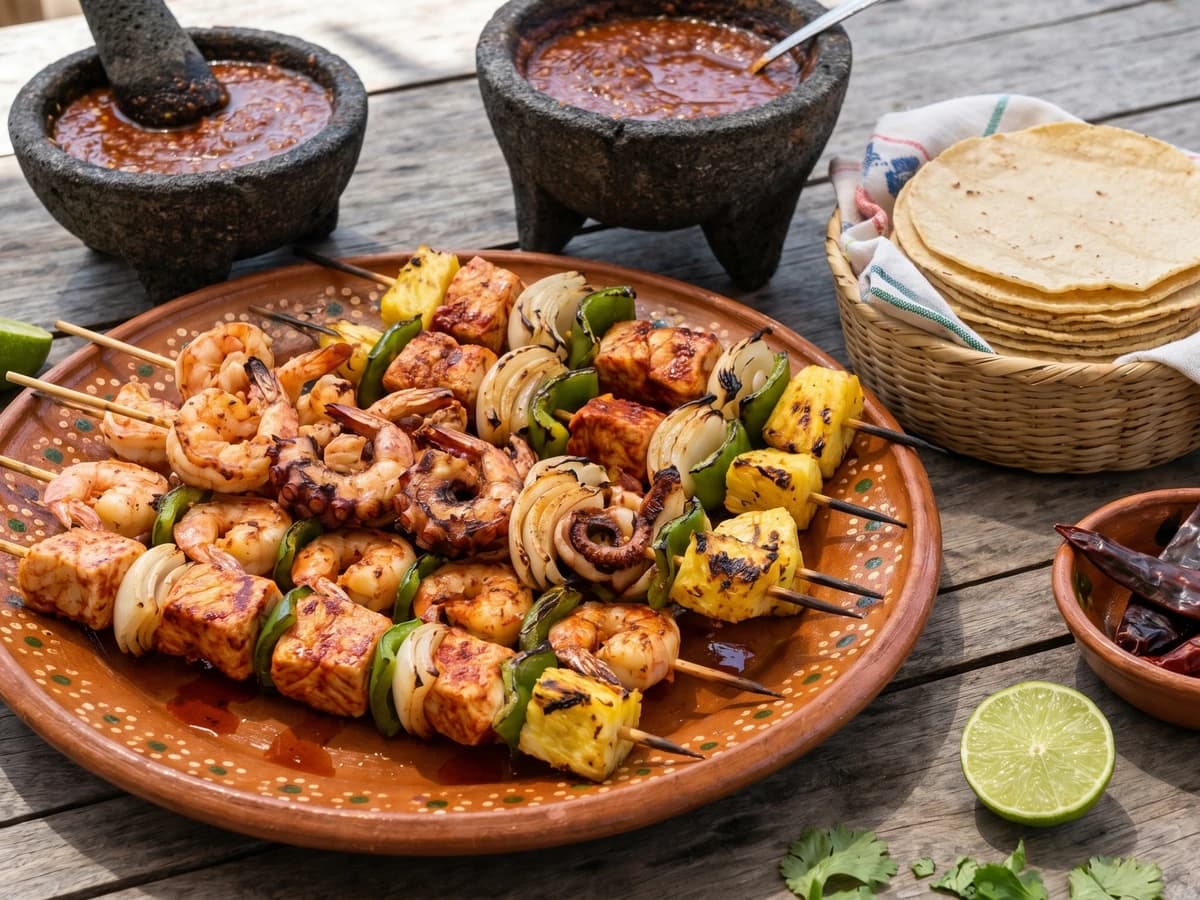
Hidalgo and Tlaxcala's escamoles, the cream-colored larvae of the Liometopum ant, sauteed in butter with epazote and chile serrano and spooned onto warm corn tortillas. Caviar mexicano, and earned.
Appetizers & Snacks
Mexican
Special Occasion
Dinner Party
15 min
Active Time
10 min cook•25 min total
Yield4 servings (about 12 small tacos)
Escamoles belong to the Altiplano. To Hidalgo, to Tlaxcala, to the eastern reach of the Estado de Mexico where the maguey grows in long disciplined rows and the recolectores walk the fields at dawn during the short spring season. This is not a dish from a coast or a jungle. This is a dish of dry highland fields, of agave roots, and of a harvest that goes back centuries before any Spaniard set foot on this continent.
The escamoles are the larvae and pupae of the Liometopum apiculatum ant, which nests in the roots of the maguey and the nopal. They are the color of soft cream and the size of a grain of rice. They taste of butter and toasted corn and something faintly nutty that has no equivalent anywhere else on the planet. They are called caviar mexicano because the comparison earns itself, not because someone borrowed the word for marketing. A kilo costs what a kilo of good beef costs in Mexico City, and that is in season. Out of season, double.
This is the most traditional preparation. Butter, a little lard, onion, garlic, serrano, epazote. Nothing else. The escamoles do not need help. They need a cook who knows when to take the pan off the heat. Cook them three minutes too long and you have ruined a hundred-dollar ingredient. Cook them right and you understand why the Mexica served them to Moctezuma. I have eaten escamoles a dozen ways in the markets of Pachuca and Apizaco, fried with nopal, scrambled with egg, folded into mixiotes, but a la mantequilla is the version that lets you taste what the ant actually gave you.
My mother never cooked escamoles. They were not part of the Jalisco kitchen she brought with her. The first time I tasted them was in a small comedor in Actopan, Hidalgo, in 1998. The senora who served them watched me take the first bite and said, you are eating something nobody on the coast can buy. Saber cocinar es saber vivir, and saber comer is part of the same lesson.
Escamoles are a pre-Columbian food documented in Sahagun's Codex Florentino as a delicacy consumed by Mexica nobility, including, according to colonial accounts, Moctezuma II himself. The Liometopum apiculatum ant nests almost exclusively in the root systems of maguey and nopal across the semi-arid central Mexican Altiplano, and the harvest, called escamolear, is conducted by specialized recolectores from late February through April using techniques passed through generations in communities across Hidalgo, Tlaxcala, and parts of Guanajuato and San Luis Potosi. The trade is increasingly threatened: maguey field reduction, climate variation, and unregulated harvesting have caused supply to fall sharply since the 1990s, which is why a kilo of fresh escamoles now commands prices comparable to imported European delicacies in the Mexico City markets.
The technique, the tradition, and the story behind every dish.
fresh escamoles (Liometopum ant larvae)gently rinsed and drained
1 pound
unsalted butter
4 tablespoons
pork lard (manteca de cerdo)
1 tablespoon
white onionfinely diced
1/2 small
garlic clovesfinely minced
2
fresh chile serranostemmed and finely chopped, seeds left in
2
fresh epazoteleaves stripped and chopped
1 generous sprig
kosher salt
1/2 teaspoon, or to taste
hand-pressed corn tortillaswarmed on a comal
12 small
salsa borracha de pulque (optional)
for serving
lime wedges (optional)
for serving
sliced avocado (optional)
for serving
Equipment Needed
•Wide heavy cast iron skillet or shallow clay cazuela
•Fine-mesh sieve for rinsing the escamoles
•Cast iron comal for warming tortillas
•Wooden spoon for gentle folding
•Woven cotton servilleta for holding the warm tortillas
Instructions
1
Inspect and rinse the escamoles
Tip the escamoles into a fine-mesh sieve and rinse gently under cold running water. Be careful. The larvae are fragile, like little pearls of cream, and rough handling breaks them. Pick through and remove any twigs, bits of dirt, or stray ants the recolectores missed. Drain well and pat dry on a clean kitchen towel.
Fresh escamoles are in season from late February through April, when the maguey fields of Hidalgo and Tlaxcala are harvested. Outside that window, you are buying frozen. Frozen works. Out of season, that is the only honest option.
2
Warm the tortillas
Heat a comal over medium until you can hold your hand an inch above it for two seconds, no more. Warm the tortillas one or two at a time, flipping until they puff slightly and the edges show a few char spots. Stack them in a cloth servilleta to hold the heat. Escamoles are spooned onto the tortilla the moment they come off the pan. The tortilla cannot wait.
3
Build the aromatic base
In a wide cast iron skillet or a heavy cazuela, melt the butter with the spoonful of lard over medium heat. The lard keeps the butter from burning and gives the dish the round, savory weight that pure butter alone cannot carry. La manteca es el sabor. When the foam subsides, add the onion and cook for two minutes until translucent, never browned. Add the garlic and chile serrano and cook one minute more. The kitchen should smell sharp and green.
4
Add the escamoles
Tip the drained escamoles into the skillet in a single layer. Do not stir aggressively. Move them gently with a wooden spoon, folding rather than scraping. They cook in about three minutes. You will see them turn from a pale ivory to a soft golden-white, plumping slightly in the butter. They should look like tiny grains of rice swelling in cream. Pull them off the heat the moment they firm up. Overcooked escamoles turn rubbery and you will have spent good money on a sad dish.
The texture you want is the texture of a perfectly cooked egg yolk: set but yielding. If you taste one and it pops between your teeth, it is done. If it crunches, you went too long.
5
Finish with epazote
Off the heat, stir in the chopped epazote and the salt. The residual warmth wilts the epazote and releases its distinctive scent. There is no substitute for epazote here. It is the herb that tells the dish where it comes from. Without it, you have buttered larvae. With it, you have escamoles a la mantequilla. Taste. Adjust salt. The escamoles should taste of butter, of nuts, of a green field after rain.
6
Serve at the table
Spoon a generous tablespoon of escamoles into the center of each warm tortilla. Pass the salsa borracha, the lime, and the avocado at the table. Each person dresses their own taco. This is not a dish you plate twelve at a time and walk out of the kitchen. Escamoles cool fast and lose their grace within minutes. Serve them the moment they leave the pan. Asi se hace y punto.
Chef Tips
•Sourcing is everything. In Mexico, look for escamoles at Mercado de San Juan in Ciudad de Mexico during the spring season, or directly from vendors in Pachuca, Actopan, or the Apizaco markets in Tlaxcala. Outside Mexico, frozen escamoles from a Mexican specialty importer is the realistic option. Canned escamoles exist. They are a compromise that crosses into a different dish, and no, I will not pretend otherwise.
•Epazote is non-negotiable. Cilantro is not a substitute, parsley is offensive, dried Mexican oregano changes the dish entirely. If you cannot find fresh epazote, wait until you can. Pregunta le a las senoras del mercado where they hide it. They always have it.
•Do not over-season. Escamoles have a delicate, distinctive flavor that gets buried under heavy salt, garlic powder, or extra chile. Two serranos, a half teaspoon of salt, a clove or two of garlic. That is the framework. No me vengas con atajos that involve dumping in more flavor to compensate for technique.
Advance Preparation
•Escamoles do not keep once cooked. The dish is built and eaten within minutes. This is not a make-ahead recipe and pretending otherwise dishonors the ingredient.
•If using frozen escamoles, thaw them slowly overnight in the refrigerator. Never thaw in warm water, which turns them mushy and breaks the membrane.
•The aromatic base of butter, onion, garlic, and chile can be prepped in the skillet up to ten minutes before serving. Add the escamoles only when your guests are seated and the tortillas are coming off the comal.
Frequently Asked Questions
Nutrition Information
1 serving (about 240g)
Calories
465 calories
Total Fat
25 g
Saturated Fat
12 g
Trans Fat
0 g
Unsaturated Fat
12 g
Cholesterol
125 mg
Sodium
520 mg
Total Carbohydrates
39 g
Dietary Fiber
5 g
Sugars
3 g
Protein
20 g
Where cooking meets culture.
Culinary guides, cultural storytelling, and the editorial depth that makes cooking meaningful.