
Chef Juliana
Amalá de Xangô
You don't need mystery for this pot. You need okra, dendê, onion, dried shrimp, and the patience to stir until the quiabo gives up its own caldo.
A cooking platform built around craft, culture, and the stories behind what we eat.
Created by
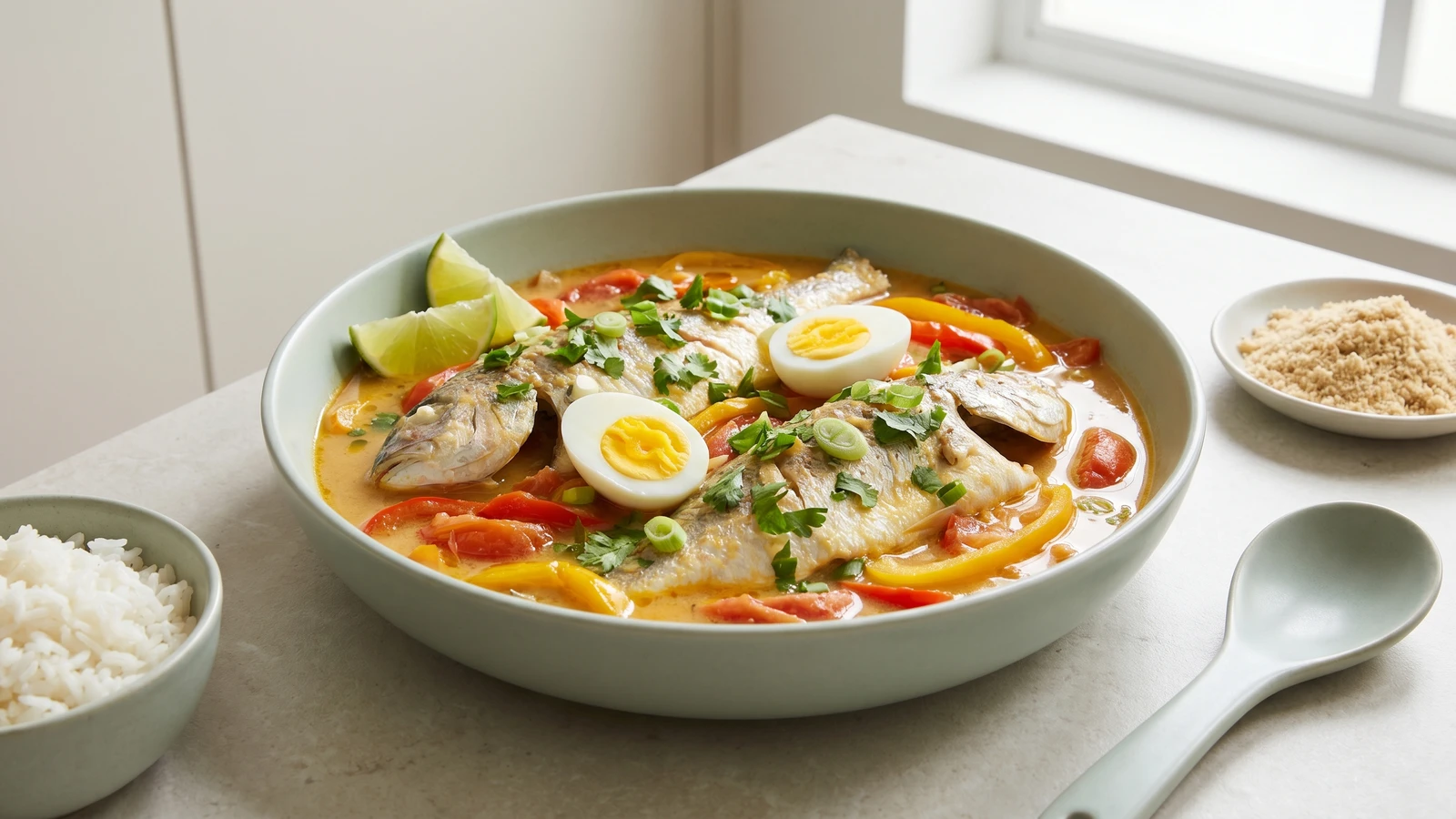
You don't need a coastal grandmother whispering secrets at the stove. You need fresh fish, a real refogado, gentle heat, and the sense to stop before the leite de coco splits.
You look at a pot of fish and think, quietly, isso não é pra mim. Too delicate, too regional, too easy to ruin. Good. We named the fear. Now we can cook through it, because fish stew isn't a gift, it's timing. Cozinhar não é dom, é um aprendizado, and this one teaches fast.
A peixada belongs beautifully beside rice, beans, farofa, a squeeze of lime, maybe a little green on the plate. That's the pê-efe thinking, Northeast edition: the cassava and corn floor, the coastal seafood, the refogado that makes a simple pot taste like a place without turning dinner into a performance. A gente doesn't need powder pretending to be flavor. Onion, pimentão, tomato, alho, coentro, and patience for fifteen minutes do more honest work.
The method is plain. Salt the fish so it tastes seasoned all the way through. Build the refogado until the vegetables murchar, soft and glossy, because raw tomato water is not broth. Lay the fish in whole pieces and simmer gently, because boiling breaks it into sadness. Then the leite de coco goes in off the heat, anota aí, because coconut milk can split when it boils hard and leave you with a grainy sauce instead of a silky caldo.
Pernambuco and Ceará will keep their opinions about eggs, and they should. I don't own those kitchens. The cooks who carry those traditions do. Here, for a home kitchen, I'll give you the choice: add the boiled eggs if your table expects them, leave them out if it doesn't. Both feed you.
Peixada is part of the coastal cooking of Northeast Brazil, where firm fish is simmered with tomato, onion, pimentão, coentro, and often coconut milk, then served with rice, pirão, farofa, or cooked vegetables depending on the house and the state. Pernambuco versions commonly appear with boiled eggs on top, while Ceará has its own peixada tradition tied to local fish and beachside cooking, so the egg is not a universal law. The dish sits near moquecas but is usually lighter and less defined by dendê, especially in home versions outside Bahia.
Quantity
800 g
cut into 4 large pieces
Quantity
1 1/2 teaspoons
divided
Quantity
2 tablespoons
Quantity
3 tablespoons
Quantity
1 large
sliced into thin half-moons
Quantity
1
sliced into thin strips
Quantity
1
sliced into thin strips
Quantity
4
chopped
Quantity
1 1/2 cups
Quantity
4 cloves
minced
Quantity
1/2 teaspoon
Quantity
1/2 cup
chopped and divided
Quantity
3
sliced and divided
Quantity
1 cup
Quantity
1 cup
Quantity
2 tablespoons
Quantity
2
halved
Quantity
as needed
| Ingredient | Quantity |
|---|---|
| firm white fish steaks or thick filletscut into 4 large pieces | 800 g |
| saltdivided | 1 1/2 teaspoons |
| lime juice | 2 tablespoons |
| neutral oil or olive oil | 3 tablespoons |
| onionsliced into thin half-moons | 1 large |
| green bell peppersliced into thin strips | 1 |
| red or yellow bell peppersliced into thin strips | 1 |
| ripe tomatoeschopped | 4 |
| chopped canned tomatoes (optional) | 1 1/2 cups |
| garlicminced | 4 cloves |
| colorau or sweet paprika (optional) | 1/2 teaspoon |
| cilantro stems and leaveschopped and divided | 1/2 cup |
| scallionssliced and divided | 3 |
| water or light fish stock | 1 cup |
| unsweetened coconut milk | 1 cup |
| dendê oil (optional) | 2 tablespoons |
| hard-boiled eggs (optional)halved | 2 |
| lime wedges (optional) | as needed |
Pat the fish dry and season it with 1 teaspoon of the salt and the lime juice. Let it sit while you chop the vegetables, about 15 minutes. The fish should smell clean and lightly citrusy, not sharp like a bottle of perfume. This short rest seasons the flesh without letting the lime cook the outside into a chalky edge.
Warm the oil in a wide heavy pot over medium heat. Add the onion and pimentões with the remaining 1/2 teaspoon salt and cook, stirring now and then, until they murchar and turn glossy, about 6 minutes. You want them soft, not browned hard, because this stew is light and fragrant. Rush this and the peppers stay raw while the fish overcooks later.
Add the tomatoes, garlic, colorau if using, half the cilantro, and half the scallions. Refogar until the tomatoes collapse and the mixture looks saucy, about 8 to 10 minutes. Scrape the bottom and let the tomato water cook down. This is where the caldo gets body; if you add the fish too early, the pot tastes watery and everybody blames the poor fish.
Pour in the water or light fish stock and bring it to a gentle simmer. Nestle the fish pieces into the sauce in one layer, spoon some refogado over the top, cover, and cook gently for 8 to 12 minutes. The fish is ready when it turns opaque and flakes with a spoon but still holds its shape. Keep the heat low. A hard boil knocks the pieces around and turns a clean stew into confetti.
Turn off the heat. Shake the coconut milk, pour it around the fish, and gently tilt the pot or spoon the caldo over the pieces without stirring hard. Add the dendê now if you want that orange-red glint and deeper coastal flavor. Let the covered pot rest for 5 minutes. The coconut milk warms through off the heat and stays smooth; boil it hard and it can separate, which is a silly way to lose a beautiful sauce.
Taste the caldo and adjust the salt. Scatter the remaining cilantro and scallions over the top. Add the halved boiled eggs if they belong on your table, setting them gently on the surface so they stay whole. Serve with white rice, farofa, and lime wedges. The plate should feel complete: rice to catch the caldo, farofa for texture, fish in real pieces, green herbs waking everything up.
1 serving (about 540g)
Culinary guides, cultural storytelling, and the editorial depth that makes cooking meaningful.
Discover Culinary ExplorerChef Juliana
You don't need mystery for this pot. You need okra, dendê, onion, dried shrimp, and the patience to stir until the quiabo gives up its own caldo.

Chef Juliana
You think a Polish hunter's stew is not for your kitchen. Wrong. Brown meat properly, build a real refogado, simmer cabbage low, and tomorrow's lunch is already better.
Chef Juliana
Whole fish in a pot looks like a test. It isn't. Build the refogado, layer the filhote, let tucupi do its work, and the Círio table starts making sense.
Chef Juliana
You don't need river wisdom in your bones to cook tambaqui well. You need real tucupi, a calm simmer, and the sense to let the fish stay whole until it gives.