
Chef Juliana
Beiju Nordestino com Coco
You don't knead it, roll it, or fear it. Hydrate the goma, sieve it fine, and let the hot pan teach cassava to hold together.
A cooking platform built around craft, culture, and the stories behind what we eat.
Created by
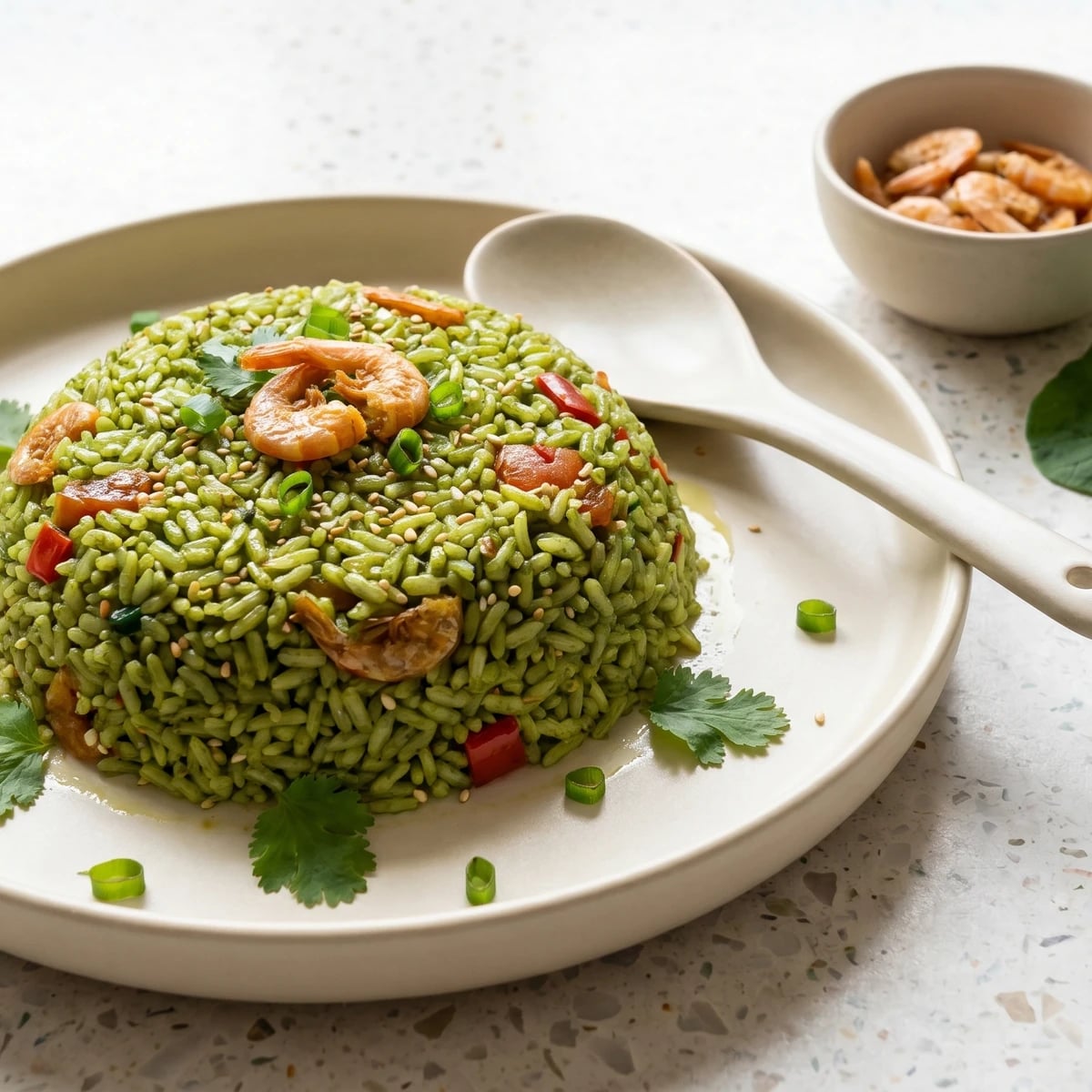
You think a Maranhão green rice belongs to somebody else's clever hands. It doesn't. Wilt the vinagreira, build the refogado, fold it through arroz soltinho, and dinner gets bright, coastal, and yours.
You see the vinagreira, the dried shrimp, the sesame, and that little voice starts: isso não é pra mim. I know that voice. It stood beside me in my own kitchen when I was a grown woman with a cheap caderno and onions I kept ruining. Cozinhar não é dom, é um aprendizado. This rice looks special because Maranhão has the good sense to make ordinary ingredients sing together, not because the method is hiding from you.
I won't pretend this is my backyard. Arroz de cuxá belongs to Maranhão, especially to the cooks of São Luís and the families who keep making it without asking anyone's permission. What I can do is teach a home-kitchen version with respect: vinagreira murchada until tender, camarão seco softened so it seasons instead of bullies, sesame toasted until nutty, and a real refogado of onion, pimentão, tomato, alho and coentro. No packet. No powder pretending to be flavor.
This is still the everyday Brazilian plate talking. Rice holds the meal, the green comes from the leaf, the sea arrives in the shrimp, and the cassava-corn floor of the Northeast is there in the farinha that gives the molho body. Serve it with fish, beans, a fried egg, chicken, whatever resolves your dinner. A gente isn't building a museum piece. We're making comida de verdade you can put on the table tonight.
Arroz de cuxá is tied to Maranhão, especially São Luís, where cuxá is a tart green sauce made from vinagreira leaves, dried shrimp, sesame and often farinha de mandioca. Vinagreira is roselle, Hibiscus sabdariffa, the same plant many people know from red hibiscus drinks, but Maranhão's dish depends on the sour leaves. The rice shows Indigenous, African and Portuguese food paths meeting in one pot: local leaf-and-cassava cooking, sesame and dried seafood across Atlantic and coastal kitchens, and rice folded into the daily table.
Quantity
1 cup
rinsed and soaked
Quantity
6 packed cups
tough stems removed and washed
Quantity
6 cups
for wilting the vinagreira
Quantity
1 teaspoon
for the vinagreira water
Quantity
1/2 cup
Quantity
2 tablespoons
Quantity
2 cups
rinsed and drained
Quantity
1 tablespoon
for the rice
Quantity
1/2
finely chopped, for the rice
Quantity
1 clove
minced, for the rice
Quantity
1 teaspoon
for the rice
Quantity
3 1/2 cups
for the rice
Quantity
3 tablespoons
for the cuxá
Quantity
1 medium
finely chopped
Quantity
1/2
finely chopped
Quantity
1
seeded and chopped
Quantity
3 cloves
minced
Quantity
1
seeded and minced
Quantity
1/2 cup
tender stems and leaves chopped separately
Quantity
2
thinly sliced, whites and greens separated
Quantity
to taste
| Ingredient | Quantity |
|---|---|
| dried salted shrimprinsed and soaked | 1 cup |
| fresh vinagreira leavestough stems removed and washed | 6 packed cups |
| waterfor wilting the vinagreira | 6 cups |
| saltfor the vinagreira water | 1 teaspoon |
| white sesame seeds | 1/2 cup |
| fine farinha de mandioca | 2 tablespoons |
| long-grain white ricerinsed and drained | 2 cups |
| oilfor the rice | 1 tablespoon |
| small onionfinely chopped, for the rice | 1/2 |
| garlicminced, for the rice | 1 clove |
| saltfor the rice | 1 teaspoon |
| hot waterfor the rice | 3 1/2 cups |
| oilfor the cuxá | 3 tablespoons |
| onionfinely chopped | 1 medium |
| green bell pepperfinely chopped | 1/2 |
| ripe tomatoseeded and chopped | 1 |
| garlicminced | 3 cloves |
| pimenta-de-cheiro (optional)seeded and minced | 1 |
| coentrotender stems and leaves chopped separately | 1/2 cup |
| scallionsthinly sliced, whites and greens separated | 2 |
| salt | to taste |
Put the dried shrimp in a bowl, cover with cool water, swish with your fingers, and soak for 15 minutes. Drain and taste a tiny piece. If salt hits first and shrimp comes second, rinse and soak 5 minutes more. Pick off any hard shells or heads, then chop half the shrimp and leave half whole. This is how the camarão seco seasons the cuxá instead of shouting over it.
Bring 6 cups water and 1 teaspoon salt to a lively simmer. Add the vinagreira by handfuls and press it down until the leaves collapse, 3 to 4 minutes. Drain through a sieve, saving 1/2 cup of the green cooking liquid, then press the leaves gently and chop them fine. Murchar first matters: raw vinagreira can be tough and sharply sour, while wilted vinagreira turns tender and lets the rice taste bright instead of harsh.
Put the sesame seeds in a dry skillet over medium heat. Stir or shake the pan until the seeds smell nutty and a few turn pale gold, about 3 minutes, then tip them onto a plate. A hot dry pan gives even color. Oil makes the seeds clump, scorch at the edges, and then you stand there pretending burnt sesame was the plan.
Grind the toasted sesame with the farinha de mandioca and the chopped half of the shrimp in a mortar, food processor, or mini chopper until coarse and sandy. It doesn't need to be smooth. This mixture gives the cuxá body, so the molho clings to the rice instead of leaving green liquid at the bottom of the pan.
Warm 1 tablespoon oil in a heavy pot over medium heat. Add the 1/2 small onion and cook until soft and see-through, about 4 minutes, then add 1 minced garlic clove for 1 minute, just until fragrant. Stir in the drained rice and 1 teaspoon salt until the grains look glossy and separate, about 2 minutes. Add 3 1/2 cups hot water, bring to a boil, cover, lower the heat, and cook until the surface is dry and little holes appear, 12 to 15 minutes. Turn off the heat and rest covered for 10 minutes. Don't stir after the water goes in. Stirring breaks the grains and releases starch, and a gente wants arroz soltinho, not paste.
In a wide pan, warm 3 tablespoons oil over medium heat. Add the medium onion, bell pepper, coentro stems, scallion whites, and a small pinch of salt. Cook until the vegetables soften and smell sweet, 5 to 6 minutes. Add the tomato and cook until it collapses and looks saucy, about 3 minutes. Add the garlic, pimenta-de-cheiro if using, and the whole shrimp. Stir for 1 minute, just until the garlic smells alive. This refogado is the foundation. Skip it and you'll have green rice with ingredients in it, not arroz de cuxá.
Add the chopped vinagreira, the sesame-shrimp mixture, and 1/4 cup of the saved vinagreira liquid. Stir and press everything together until it becomes a thick green molho that leaves a path for a second when you drag the spoon through it, 4 to 6 minutes. If it gets stiff before it looks glossy, add the remaining 1/4 cup liquid a spoonful at a time. Taste before adding salt, because dried shrimp changes its mind from bag to bag.
Fluff the rice with a fork, then add it to the cuxá in three additions, folding gently after each one. Stop when the grains are stained green and the sesame and shrimp are spread through the pot, but the rice is still loose. Cover off the heat for 5 minutes so the grains drink the molho. Finish with the coentro leaves and scallion greens. Serve with beans, fish, chicken, or a fried egg, and there it is: dinner resolved.
1 serving (about 320g)
Culinary guides, cultural storytelling, and the editorial depth that makes cooking meaningful.
Discover Culinary Explorer
Chef Juliana
You don't knead it, roll it, or fear it. Hydrate the goma, sieve it fine, and let the hot pan teach cassava to hold together.

Chef Juliana
That quiet 'isso não é pra mim' is lying. Build one refogado, cook the crabs until the shells turn orange, finish the coconut milk gently, and dinner tastes like the coast.

Chef Juliana
You think crab in the shell is restaurant food. It's not. It's refogado, picked siri, coconut milk, dendê, and a hot oven. Anota aí: fancy-looking is not the same as difficult.

Chef Juliana
You don't need talent for this. You need warm milk, patience, and the sense to let tapioca swell slowly until it turns creamy, cold, and generous.