
Chef Juliana
Beiju de Mandioca
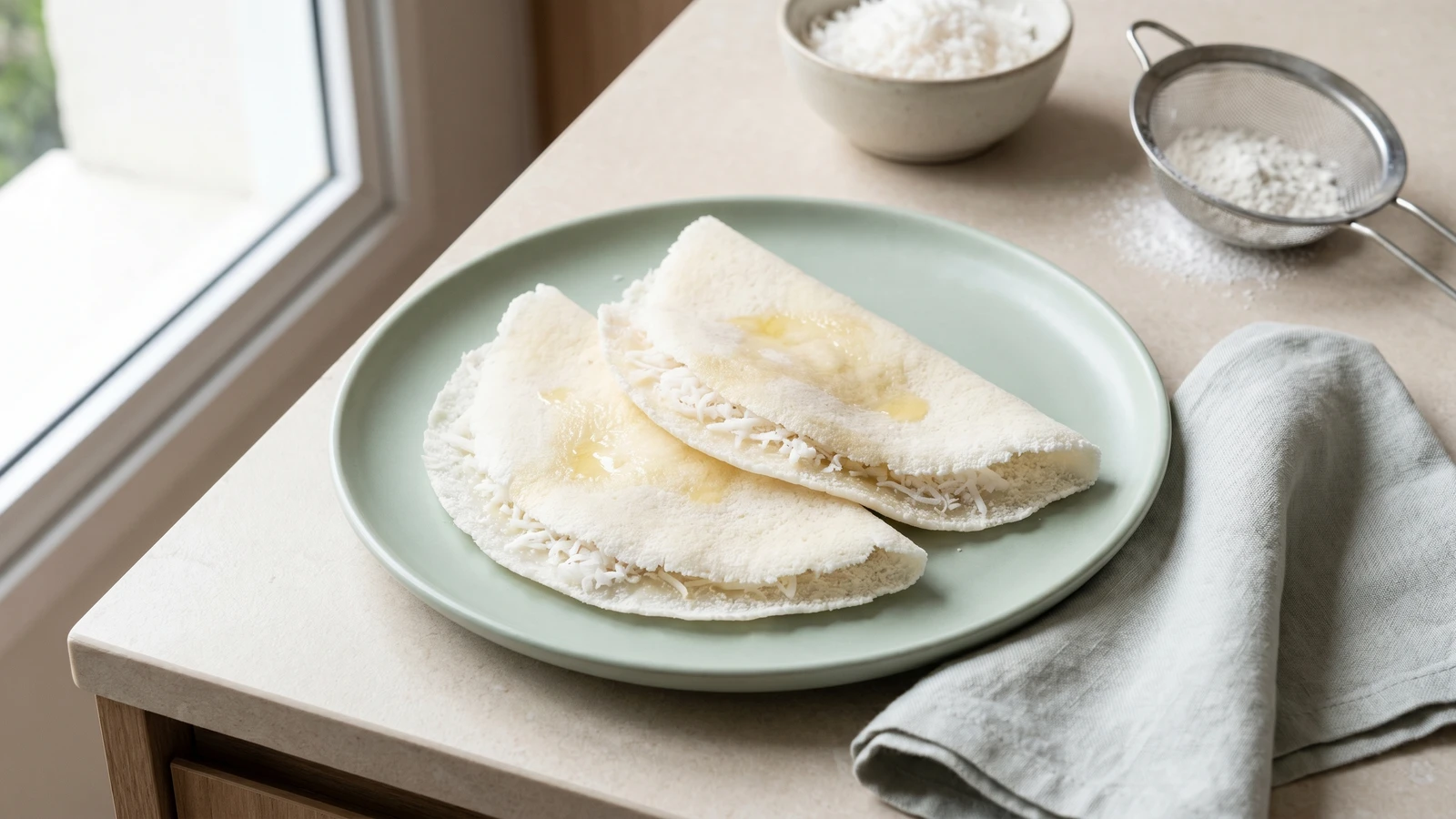
You don't need yeast, wheat, or courage. Grate sweet cassava, press it dry, sieve the crumbs, and toast them into a flatbread that belongs beside beans, greens, and whatever solves dinner.
A cooking platform built around craft, culture, and the stories behind what we eat.
Created by
You don't knead it, roll it, or fear it. Hydrate the goma, sieve it fine, and let the hot pan teach cassava to hold together.
You look at the dry cassava starch and think, quietly, isso não é pra mim. I know that face. I made that face over rice, over beans, over onions I burned until the kitchen smelled like punishment. Cozinhar não é dom, é um aprendizado. This one proves it fast.
Beiju belongs to the same everyday intelligence as the pê-efe: the plate that uses what the place gives. In much of the Nordeste, that floor is cassava and corn, with coconut near the coast, fish and shellfish in the pot, beans close by, greens when the market is kind. Not fancy. Not poor. Comida de verdade, arranged by people who had to resolver o jantar before anyone started making speeches about food.
The method is simple, but it has reasons. You hydrate the polvilho so each grain has just enough water to swell and bind. You peneirar, sieve it, because lumps make a cracked, sandy beiju. You use a hot dry pan because tapioca sticks to itself with heat; oil gets in the way and turns the surface greasy before the disc can set. Scatter coconut, fold, eat warm. That's the whole beautiful arithmetic.
Anota aí: buy the right starch. For beiju, you want tapioca goma already hydrated if your market has it, or polvilho doce that you hydrate yourself. Polvilho azedo is for things that puff and chew, like pão de queijo. Wrong bag, wrong dinner, and that's not your fault.
Beiju comes from Indigenous cassava cookery, long before wheat became common in Brazil, and remains part of daily food across the North and Northeast in many forms. On the Pernambuco coast and in neighboring states, the fresh coconut version is common at breakfast, market stalls, and home kitchens, made from hydrated tapioca starch that sets directly on a hot clay plate or skillet. The names vary, beiju, tapioca, biju, and the debates are local, but the core technique is older than the country: cassava turned into a flatbread by heat, water, and hands that know the point.
Quantity
2 cups
or 2 cups ready hydrated tapioca goma
Quantity
1/2 cup, plus 1 to 2 tablespoons more if needed
Quantity
1/2 teaspoon
Quantity
1 cup
or unsweetened frozen grated coconut, thawed
Quantity
2 tablespoons
for finishing
| Ingredient | Quantity |
|---|---|
| polvilho doce (sweet cassava starch)or 2 cups ready hydrated tapioca goma | 2 cups |
| water | 1/2 cup, plus 1 to 2 tablespoons more if needed |
| fine salt | 1/2 teaspoon |
| freshly grated coconutor unsweetened frozen grated coconut, thawed | 1 cup |
| butter (optional)for finishing | 2 tablespoons |
Put the polvilho doce and salt in a bowl. Sprinkle in 1/2 cup water with your fingers while rubbing the starch between your hands, until it looks like damp beach sand and holds together when squeezed, then falls apart when rubbed. This point matters because dry starch stays powdery in the pan, while wet starch turns gummy and heavy.
Let the hydrated goma rest for 10 minutes, then press it through a fine sieve into a clean bowl. Don't skip this. Resting lets the water spread through the starch, and peneirar breaks the lumps so the beiju melts into one even disc instead of cracking into sandy patches.
Set a small nonstick or well-seasoned skillet over medium heat for 2 minutes. Leave it dry. Sprinkle in a pinch of goma; if it turns slightly translucent and sticks to itself in a few seconds, the pan is ready. Oil blocks the starch from binding cleanly, so save the butter for the end if you want it.
Spoon about 1/2 cup sieved goma into the pan and spread it into a thin, even circle, about 6 inches wide. Don't press hard. Just fill the gaps. Cook until the surface looks set, the edges lift easily, and the disc moves as one piece, about 1 to 2 minutes. If you flip too early, it tears because the starch hasn't finished holding hands yet.
Scatter 1/4 cup grated coconut over half the disc. Let it sit for 20 to 30 seconds, just long enough for the coconut to warm and smell sweet. Fold the plain half over the coconut. The filling should stay loose and juicy, not toasted dry. That's the comfort of it.
Slide the beiju onto a plate and brush with a little butter if you like. Repeat with the remaining goma, wiping the pan with a dry cloth if loose starch builds up. Serve while the edges are tender and the coconut still tastes fresh. Beiju waits badly, which is rude of it, but true.
1 serving (about 110g)
Culinary guides, cultural storytelling, and the editorial depth that makes cooking meaningful.
Discover Culinary ExplorerChef Juliana
You don't need yeast, wheat, or courage. Grate sweet cassava, press it dry, sieve the crumbs, and toast them into a flatbread that belongs beside beans, greens, and whatever solves dinner.

Chef Juliana
You don't need a bakery, a special hand, or courage. You need real goma de mandioca, fresh coconut, a hot pan, and the sense to let the beiju firm before turning.

Chef Juliana
You don't need a bakery arm or a family secret. Mix rye with wheat, let time do its quiet work, and bake a dark, close-crumb loaf that feeds the week.
Chef Juliana
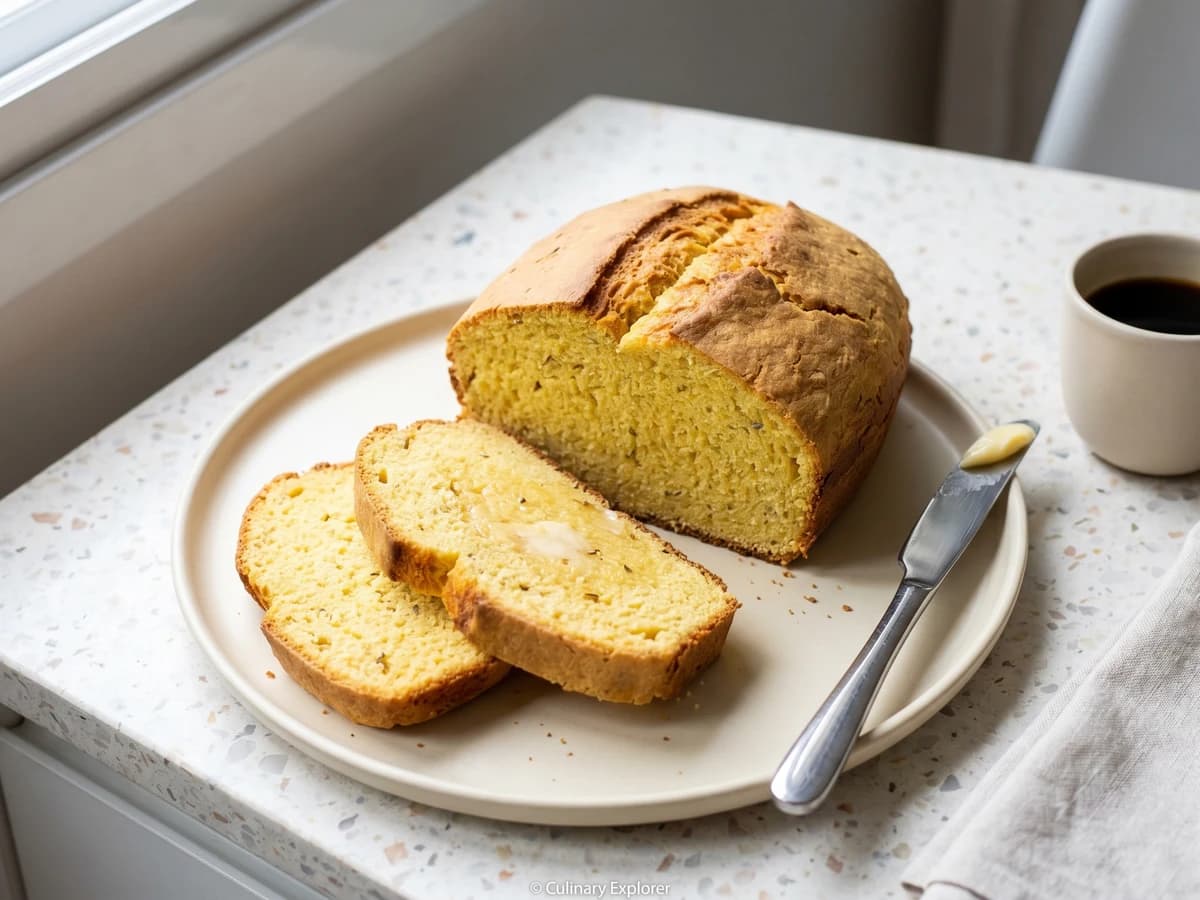
You don't need bakery hands for this. Fubá, a little wheat, eggs, milk, and erva-doce make the kind of broa that slices clean, freezes well, and smells like afternoon coffee.