
Chef Juliana
Arroz de Cuxá Maranhense
You think a Maranhão green rice belongs to somebody else's clever hands. It doesn't. Wilt the vinagreira, build the refogado, fold it through arroz soltinho, and dinner gets bright, coastal, and yours.
A cooking platform built around craft, culture, and the stories behind what we eat.
Created by
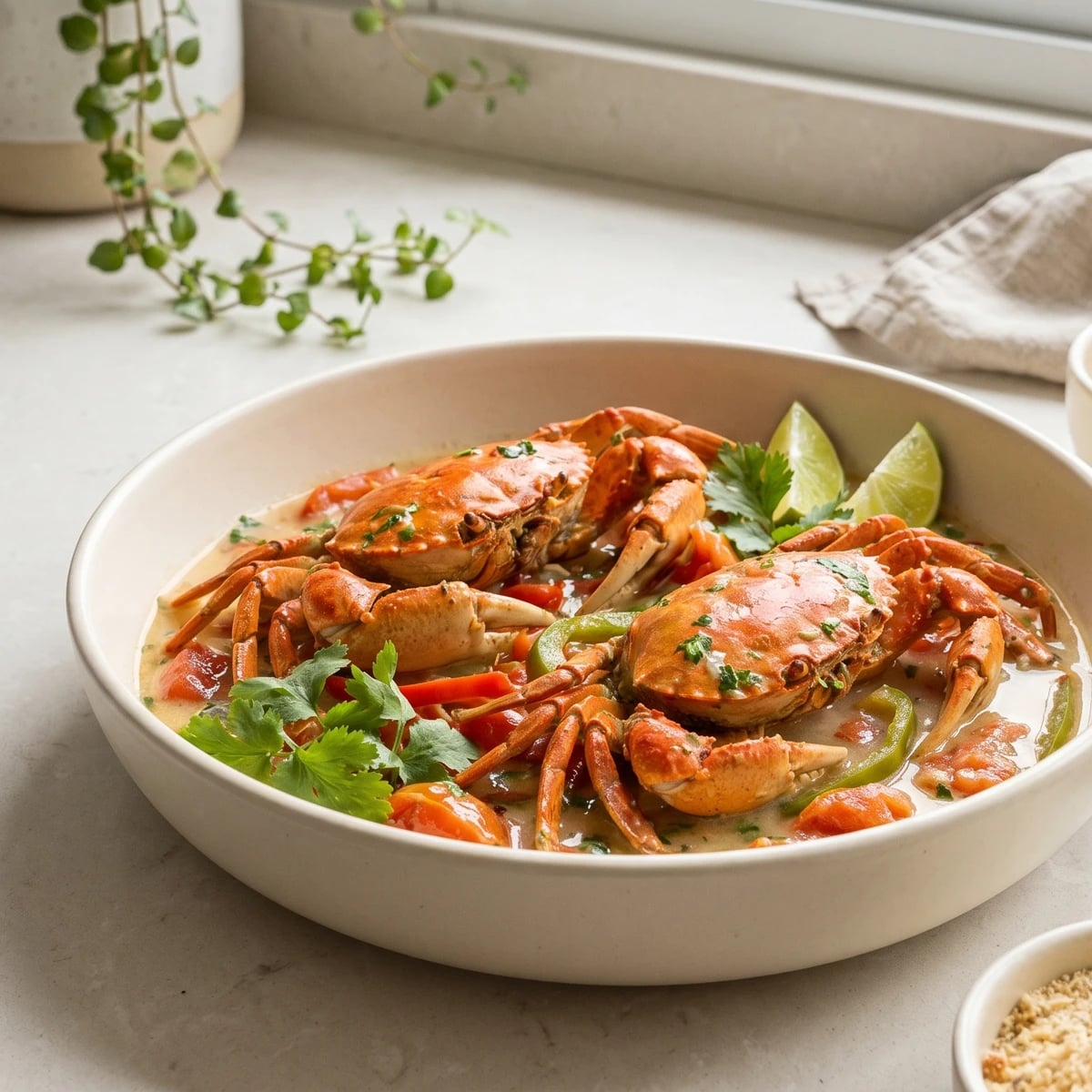
That quiet 'isso não é pra mim' is lying. Build one refogado, cook the crabs until the shells turn orange, finish the coconut milk gently, and dinner tastes like the coast.
You see the claws, the big pot, the whole table eating with their hands, and your brain whispers, isso não é pra mim. Too messy, too coastal, too much. Nonsense. A crab is not a certificate. It's dinner with a shell. Cozinhar não é dom, é um aprendizado, and this one mostly asks you to build a refogado and not bully the coconut milk.
At my grandmother's counter in São Paulo I learned warmth before skill; the skill came much later, with my caderno and a lot of ruined onions. So I don't say you can do this like a person born knowing. I say it because receitas que funcionam are written one plain step at a time: rinse what needs rinsing, refogar until the tomato collapses, cook until the shell turns orange, taste the sauce.
The Northeast has its own everyday floor: mandioca, milho, coco, coentro, fish, crab, the mangue and the sea. I don't pretend to own the caranguejadas of Ceará, Pernambuco, Alagoas, Bahia, or the cooks who carry them. I can teach a home-kitchen version that respects the logic: real aromatics in good fat, fresh coentro, whole crabs, coconut milk handled gently, no packet doing the work of an onion.
Serve it with rice, farofa or pirão, and something green, and the pê-efe stretches toward the coast without losing its shape. You'll eat slowly. You'll need a bowl for shells. Good. Comida de verdade sometimes makes you use your hands.
Caranguejada names both the crab pot and the gathering around it on much of Brazil's northeastern coast, especially where mangroves feed the table. In Ceará, Pernambuco, Alagoas, Sergipe, and Bahia, versions move between beach tables and home kitchens; some lean on coconut milk, some on dendê, and some on neither, so there is no single fixed pot. The prized caranguejo-uçá lives in mangroves and is protected by seasonal closed periods during reproduction, so buy local, legal, and fresh.
Quantity
6 crabs, about 4 to 5 lb total
cleaned, gills removed, claws cracked
Quantity
2
divided
Quantity
1 1/2 teaspoons, plus more to taste
Quantity
1/2 teaspoon
Quantity
3 tablespoons
Quantity
1 tablespoon
Quantity
1 large
finely chopped
Quantity
1 small
chopped
Quantity
1 small
chopped
Quantity
4 cloves
minced
Quantity
3
chopped
Quantity
1 small pimenta-de-cheiro or 1/2 malagueta
minced
Quantity
1 cup chopped
stems and leaves separated
Quantity
1/2 cup, plus 2 tablespoons more if needed
Quantity
1 cup
fresh or canned, shaken
Quantity
1/2 cup
chopped
Quantity
as needed
for serving
Quantity
as needed
for serving
Quantity
as needed
for serving
| Ingredient | Quantity |
|---|---|
| fresh whole crabscleaned, gills removed, claws cracked | 6 crabs, about 4 to 5 lb total |
| limesdivided | 2 |
| salt | 1 1/2 teaspoons, plus more to taste |
| freshly ground black pepper | 1/2 teaspoon |
| neutral oil or olive oil | 3 tablespoons |
| azeite de dendê (optional) | 1 tablespoon |
| onionfinely chopped | 1 large |
| green bell pepperchopped | 1 small |
| red bell pepperchopped | 1 small |
| garlicminced | 4 cloves |
| ripe tomatoeschopped | 3 |
| pimenta-de-cheiro or malagueta (optional)minced | 1 small pimenta-de-cheiro or 1/2 malagueta |
| fresh coentrostems and leaves separated | 1 cup chopped |
| water | 1/2 cup, plus 2 tablespoons more if needed |
| unsweetened coconut milkfresh or canned, shaken | 1 cup |
| cebolinhachopped | 1/2 cup |
| cooked white ricefor serving | as needed |
| farofa or pirãofor serving | as needed |
| sautéed greensfor serving | as needed |
Put the cleaned crabs in a colander and rinse under cold water. Check that the feathery gills are gone and the claws are cracked. If a crab smells sour or sharp, don't be brave. Bad seafood doesn't become good because you added coentro. Drain well, then rub with the juice of 1 lime, 1 teaspoon salt, and the black pepper. Let it sit 10 minutes while you chop. The short rest seasons the exposed meat; a long lime bath tightens it and steals the sweetness.
Warm the oil and the dendê, if using, in a heavy pot over medium heat. Add the onion and both pimentões with the remaining 1/2 teaspoon salt. Cook, stirring now and then, until everything goes soft, shiny, and sweet-smelling, about 6 to 8 minutes. Add the garlic, pimenta, and coentro stems for 1 minute, just until you smell them. Add the tomatoes and cook until they collapse into the pot and the oil shows at the edges, about 6 minutes. This base is not decoration, it's dinner. Raw tomato leaves a thin, sharp sauce, and burnt garlic argues with everything.
Add the crabs to the pot and turn them through the refogado with tongs so the shells get coated. Pour in 1/2 cup water, cover, and cook over medium heat, shaking the pot once, until the shells start turning orange in patches, about 8 minutes. You are not making soup. The liquid should sit below halfway up the crabs, because the crabs release their own juices and too much water washes the refogado off them.
Lower the heat. Pour the coconut milk around the crabs and spoon some sauce over the shells. Cover and cook at a gentle bubble until the shells are fully orange-red and the meat at the joints is opaque, 8 to 10 minutes. If the sauce looks thin, uncover for the last 2 minutes. If it looks dry, add 2 tablespoons water. Hard boiling can split coconut milk and dull the sauce, so keep it calm. Turn off the heat and let the pot rest 5 minutes so the sauce clings instead of running away.
Off the heat, stir in the cebolinha and most of the coentro leaves. Squeeze in the second lime a little at a time and taste the sauce. It should be creamy, green-flecked, salty enough to make rice useful, and bright without turning sour. Off heat keeps the coentro alive and the coconut glossy; boil them now and you mute the finish you just built.
Bring the pot to the table with white rice, farofa or pirão, sautéed greens, lime wedges, and a bowl for shells. Spoon the sauce over the rice, crack the claws, and eat with your hands. This is pê-efe language with a coastal accent: the rice catches the sauce, the farofa brings the mandioca floor, the green resets your mouth, and the crab makes everyone slow down.
1 serving (about 390g)
Culinary guides, cultural storytelling, and the editorial depth that makes cooking meaningful.
Discover Culinary Explorer
Chef Juliana
You think a Maranhão green rice belongs to somebody else's clever hands. It doesn't. Wilt the vinagreira, build the refogado, fold it through arroz soltinho, and dinner gets bright, coastal, and yours.

Chef Juliana
You don't knead it, roll it, or fear it. Hydrate the goma, sieve it fine, and let the hot pan teach cassava to hold together.

Chef Juliana
You think crab in the shell is restaurant food. It's not. It's refogado, picked siri, coconut milk, dendê, and a hot oven. Anota aí: fancy-looking is not the same as difficult.

Chef Juliana
You don't need talent for this. You need warm milk, patience, and the sense to let tapioca swell slowly until it turns creamy, cold, and generous.