Chef Lesia
Baklazhanna Ikra (баклажанна ікра, eggplant caviar)
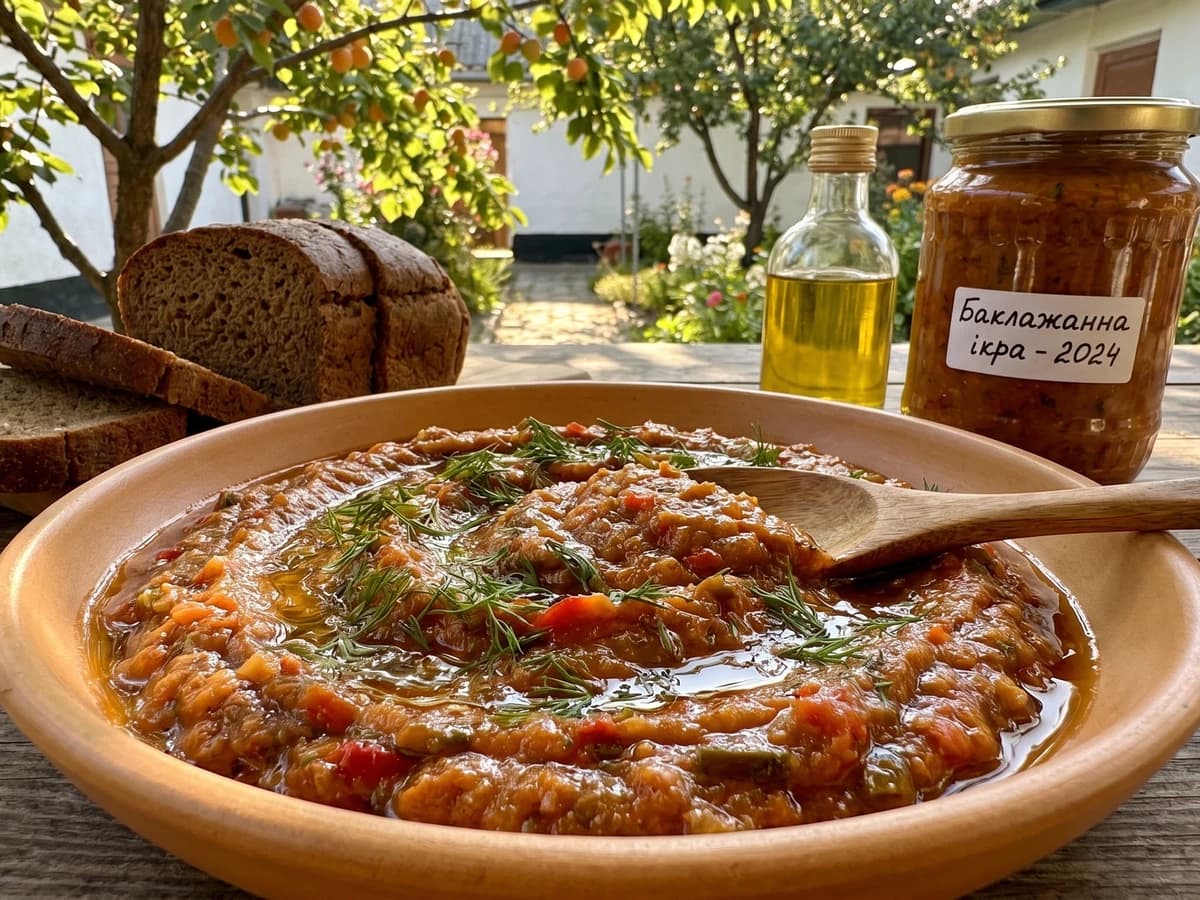
Eggplants collapse into silk, tomatoes give up their summer, and the pan turns sweet and smoky enough that a spoon dragged through leaves a clean path.
A cooking platform built around craft, culture, and the stories behind what we eat.
Created by
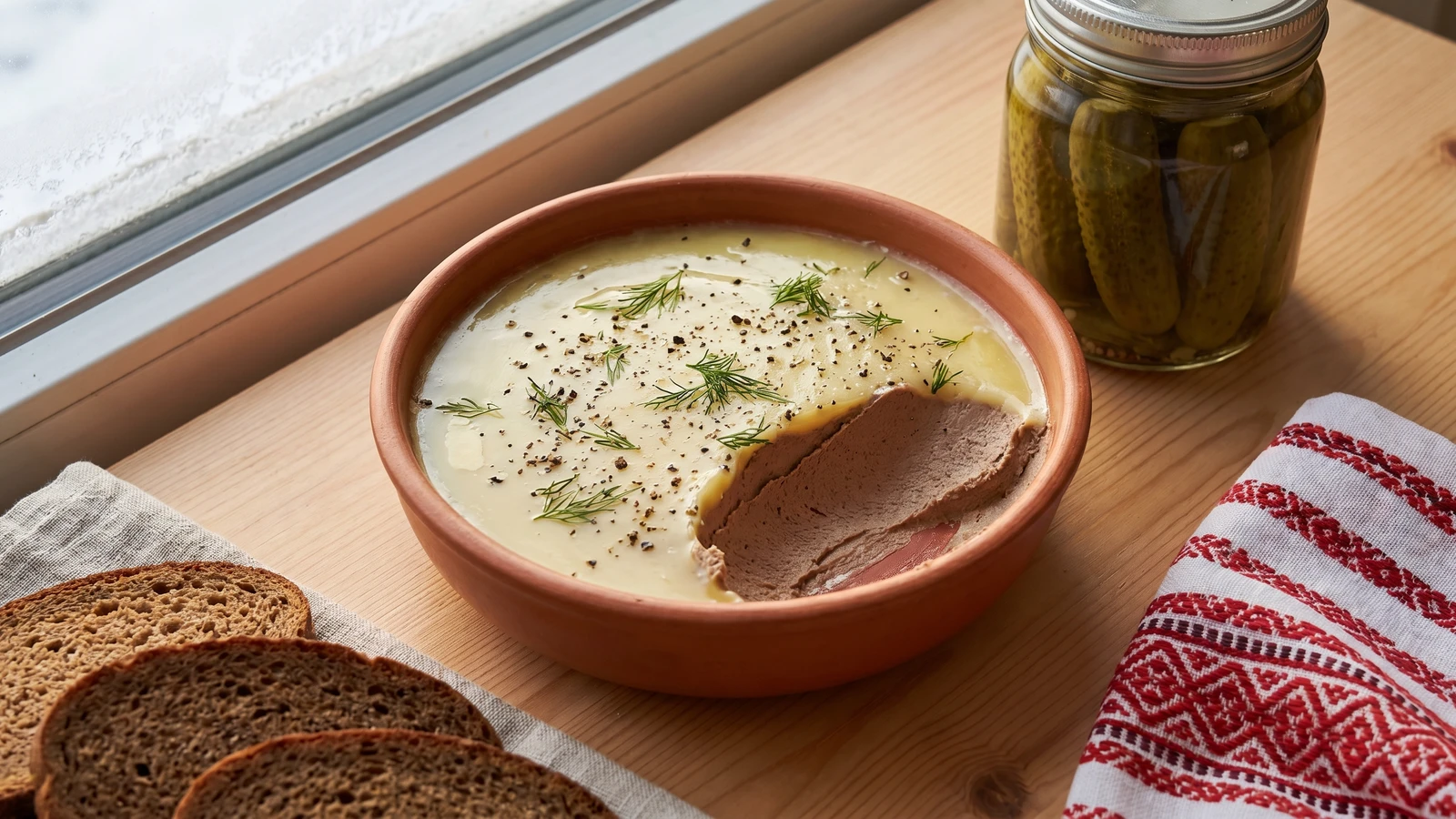
The trick is not luxury but nerve: cook the liver only until the metallic smell turns sweet, then push it warm with cold butter until the bowl goes satin-smooth.
Raw liver smells like coins. Then onion and carrot soften slowly in sunflower oil, the pan goes sweet and golden, and the liver changes from sharp metal to something round, brown, almost nutty. That turn is the whole dish. Miss it and you get grey paste; catch it and the pâté spreads like silk on rye bread, with a sour cucumber beside it doing the bright work.
This is food for the cold table, the one that appears before the hot dishes: New Year, Easter, a name day, a flat full of coats on chairs and someone already asking where the bread knife is. Aunt Nadia once wrote only "until the smell changes" beside the liver, no minutes, no mercy. She was right. The pan tells you before the clock does.
The one why is the butter. The liver must be warm when the cold cubes go in, not scorching and not fridge-cold, so the fat melts slowly into the paste instead of floating away from it. Then it rests overnight and firms into itself. Make a big bowl. There is no tradition of a small one.
The word pashtet comes from French pâté through nineteenth-century urban cookbooks and the borderland kitchens of Galicia, Podillia, Kyiv, and Odesa, where foreign names were made useful at home. Ukrainian versions moved away from pastry crusts and toward a chilled spread stretched with onion, carrot, butter, and sometimes boiled egg, a cold zakuska for New Year, Easter, weddings, and name-day tables.
Quantity
700g
trimmed of sinew and any green spots
Quantity
2 tablespoons
Quantity
180g
30g for the pan, 120g cold and cubed, 30g melted for the top
Quantity
2 large
thinly sliced
Quantity
1 large
coarsely grated
Quantity
2 cloves
finely grated
Quantity
1
Quantity
1/4 teaspoon
Quantity
1 1/2 teaspoons, plus more to taste
Quantity
1/2 teaspoon, plus more to finish
Quantity
80ml
Quantity
small handful
chopped, to finish
Quantity
to serve
Quantity
to serve
| Ingredient | Quantity |
|---|---|
| chicken liverstrimmed of sinew and any green spots | 700g |
| unrefined sunflower oil | 2 tablespoons |
| unsalted butter30g for the pan, 120g cold and cubed, 30g melted for the top | 180g |
| onionsthinly sliced | 2 large |
| carrotcoarsely grated | 1 large |
| garlicfinely grated | 2 cloves |
| bay leaf | 1 |
| ground allspice | 1/4 teaspoon |
| fine sea salt | 1 1/2 teaspoons, plus more to taste |
| freshly ground black pepper | 1/2 teaspoon, plus more to finish |
| light chicken broth or water | 80ml |
| fresh dillchopped, to finish | small handful |
| rye bread (optional) | to serve |
| sour cucumbers or fermented tomatoes (optional) | to serve |
Look over the livers carefully and trim away sinew, dark clots, and any greenish patches, which taste bitter. Pat them dry so they touch the pan properly instead of swimming. Salt them lightly with a pinch from your measured salt and leave them while you start the onions.
Warm the sunflower oil and 30g butter in a wide pan, then add the onions, carrot, bay leaf, and a good pinch of salt. Keep the heat low and let everything slump slowly until the onion is translucent, the carrot has softened, and the pan smells sweet instead of raw. Add the garlic for the last minute only, just until it loses its sharpness.
Add the livers to the pan with the allspice, black pepper, and remaining salt. Let them take color on one side, turn them, then pour in the broth or water and scrape up the pan juices. Cook gently until the centers are no longer bloody and the smell has changed from metallic to nutty and savoury. If you check with a thermometer, poultry livers should reach 74C, then come off the heat at once.
Remove the bay leaf. Tip the warm liver, vegetables, and every drop of pan juice into a food processor. Blend until the big pieces disappear, then add the 120g cold butter cube by cube, letting each piece vanish before the next goes in. The paste should turn lighter, smoother, and glossy, like it has taken a deep breath.
Taste while it is still soft, because cold dulls salt. Add more salt or pepper if it tastes shy. Spoon the pâté into a shallow bowl or several small jars, press it down to remove air pockets, and smooth the top with the back of a spoon.
Pour the 30g melted butter over the top in a thin cap, tilting the bowl so it reaches the edges. Cover and chill until firm, at least six hours and better overnight. The butter cap keeps the surface from darkening and tells everyone there is something good under it.
Take the pâté from the fridge twenty minutes before serving so it softens enough for a knife to drag through. Finish with chopped dill and black pepper. Serve with rye bread and something sour: cucumbers, kvasheni pomidory, or any honest pickle from the shelf.
1 serving (about 85g pâté, excluding optional bread and pickles)
Culinary guides, cultural storytelling, and the editorial depth that makes cooking meaningful.
Discover Culinary ExplorerChef Lesia
Eggplants collapse into silk, tomatoes give up their summer, and the pan turns sweet and smoky enough that a spoon dragged through leaves a clean path.

Chef Lesia
The salt hits first, then the pasture: sheep's milk turned into a white, crumbly cheese that tastes of grass, weather, and the mountain air that made it.

Chef Lesia
The first cheese from the mountain vat is barely cheese yet: sweet milk caught into a warm springy round, unsalted, alive with whey, waiting to become brynza if you let it.

Chef Lesia
Roasted beets turn almost black at the edges, then grind with garlic and walnuts into a crimson spread so dense the spoon leaves a path through it.