Culinary Explorer

A cooking platform built around craft, culture, and the stories behind what we eat.
Discover Culinary Explorer
Baklazhanna Ikra (баклажанна ікра, eggplant caviar)

Baklazhanna Ikra (баклажанна ікра, eggplant caviar)

Created by

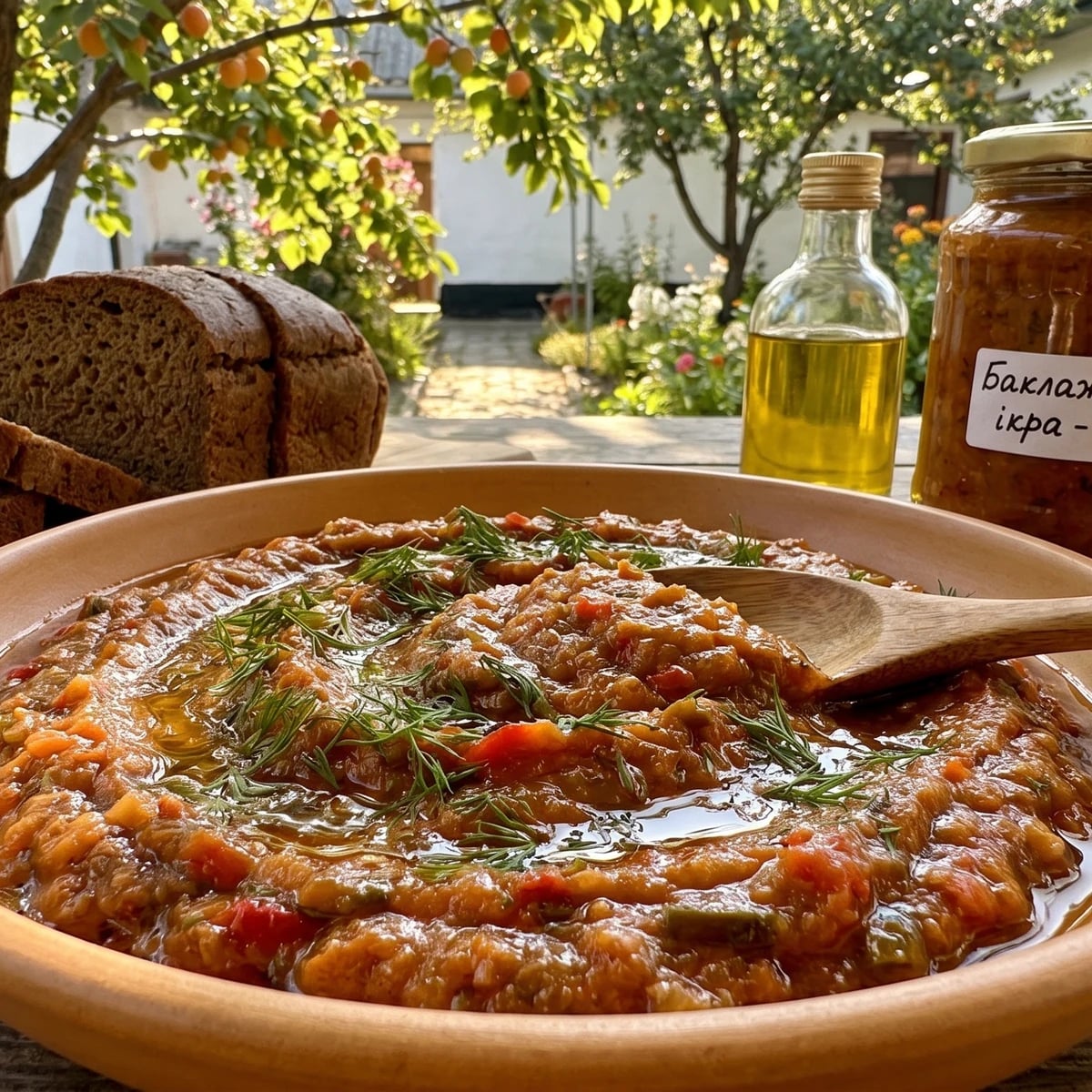
Eggplants collapse into silk, tomatoes give up their summer, and the pan turns sweet and smoky enough that a spoon dragged through leaves a clean path.

Appetizers & Snacks
Ukrainian
Make Ahead
Batch Cooking
Budget Friendly
35 min
Active Time
1 hr 10 min cook1 hr 45 min total
YieldAbout 1.5 litres, enough for 8 to 10

The color is not delicate: rust-red, aubergine-dark, sunflower-gold at the edges where the oil rises, the sort of color that tells you August has been caught in a pot. Baklazhanna ikra is what the southern garden does when it has too much of everything at once. Aubergines slump, peppers blister, tomatoes collapse, and the whole pan cooks down until the smell turns sweet and jammy.

This is not caviar like the grand people mean it, of course. It is caviar because it is precious, because you spoon it thickly onto bread and everybody at the table reaches again. In the litnya kuhnia, the summer kitchen, this sort of thing was made in a pot too big for the stove and then packed into jars for later. Aunt Nadia's letter only said, "cook until it sounds right," which was deeply unhelpful until I learned the sound: watery splatter first, then a soft thick bubble, then the spoon pulling through with a little resistance.

The one thing that decides the dish is water. Aubergines and tomatoes carry plenty, and if you rush them the ikra tastes thin no matter how much oil you add. Cook it until the oil shines at the edges and the raw tomato smell has gone. Then stop. Bread is waiting.

Baklazhanna ikra belongs especially to Ukraine's southern steppe and Black Sea kitchens, where aubergines, peppers, tomatoes, and sunflower oil thrive in the heat around Kherson, Odesa, Mykolaiv, and Bessarabia. The dish spread widely through home canning culture in the twentieth century, but village and family versions stayed more vivid than the standardized Soviet jar: smokier, oilier, sharper with garlic, and tied to the summer glut rather than factory uniformity.

The technique, the tradition, and the story behind every dish.

Discover Culinary Explorer

Ingredients

aubergines (eggplants)

Quantity

1.5 kg

pricked all over

red peppers

Quantity

3

ripe tomatoes

Quantity

900g

grated or finely chopped

onions

Quantity

2 large

finely diced

carrots

Quantity

2 medium

coarsely grated

unrefined sunflower oil

Quantity

120ml, plus more to finish

garlic

Quantity

4 cloves

finely grated

hot pepper (optional)

Quantity

1 small

finely chopped

fine sea salt

Quantity

2 teaspoons, plus more to taste

sugar (optional)

Quantity

1 teaspoon

tomato paste (optional)

Quantity

1 tablespoon

apple cider vinegar or fermented tomato brine (optional)

Quantity

2 tablespoons

dill

Quantity

1 small bunch

finely chopped

black pepper

Quantity

to taste

Equipment Needed

  • A wide heavy pot or Dutch oven
  • A baking tray, grill, barbecue, or gas flame for blistering vegetables
  • A sieve for draining aubergine flesh
  • Clean glass jars for fridge storage

Instructions

  1. 1

    Blister the vegetables

    Roast the pricked aubergines and whole peppers over a gas flame, on a barbecue, or under a hot grill until the skins blacken in patches and the aubergines slump completely. They should feel empty under the tongs, like the flesh has given up holding its shape. Put the peppers in a covered bowl to soften their skins.

    The smoky skin is not just decoration here. That little scorch is what keeps the finished ikra from tasting like polite vegetable puree.
  2. 2

    Drain and chop

    When the vegetables are cool enough to handle, peel away the pepper skins and pull out the seeds. Split the aubergines and let their juices drain in a sieve for ten minutes or so, especially if they are watery. Chop everything by hand until rough and spoonable, not smooth. Ikra should spread, but it should still remember the garden.

  3. 3

    Cook the base

    Warm the sunflower oil in a wide heavy pot and add the onions with a pinch of salt. Let them soften slowly until translucent and sweet-smelling, then add the carrots and cook until the oil turns orange and glossy. This is the southern steppe's little zasmazhka, the slow-sweated flavour base, and it gives the whole pan its sweetness.

  4. 4

    Add tomatoes

    Stir in the tomatoes, tomato paste if you're using it, and the hot pepper if you want heat. Cook until the raw tomato smell disappears and the pan starts to sound thicker, less splash and more soft bubbling. Drag a spoon through the base; when it leaves a brief trail, the water has cooked off enough.

  5. 5

    Stew the ikra

    Add the chopped aubergines and peppers, the salt, and a good grind of black pepper. Keep the pot low and lazy, stirring often because aubergine likes to catch at the bottom when nobody is looking. Cook until the smell changes from sharp and green to sweet, smoky, and jammy, and the oil begins to shine at the edges.

  6. 6

    Finish brightly

    Stir in the garlic for the last few minutes so it stays alive, then taste. If the tomatoes were flat, add the vinegar or fermented tomato brine; if they were too sharp, add the little spoon of sugar. Fold in most of the dill off the heat. Let the ikra rest before serving, because it tastes fuller when the vegetables have stopped shouting over each other.

    For a smoother spread, pulse it briefly with a stick blender. I like half of it crushed and half of it left with texture, a bit more modern but still very much at the table.
  7. 7

    Jar and serve

    Spoon the ikra into clean jars or a deep bowl, pour a thin shine of sunflower oil over the top, and scatter with the remaining dill. Serve warm, room temperature, or cold from the fridge with dark bread, potatoes, buckwheat, or whatever needs feeding. Make a big pot. There is no tradition of a small one.

Chef Tips

  • Use unrefined sunflower oil if you can. It is Ukraine in a bottle of oil, and here it carries the vegetables instead of hiding behind them.
  • If you make this in January, use good jarred roasted peppers and tinned tomatoes. In August we'd be drowning in the fresh ones; in January we open a jar instead. That's not defeat, that's planning.
  • Do not water-bath can this recipe for shelf storage unless you use a tested canning formula with measured acid. Aubergine is low-acid. For my home version, keep jars in the fridge for up to 5 days or freeze them.
  • The chopping forgives you. The cooking-down doesn't. Watery ikra tastes unfinished, so wait for the spoon trail and the glossy oil at the edge.
  • Serve it with dark rye, toasted sourdough, boiled new potatoes, or buckwheat. A spoonful beside grilled meat is also very welcome.

Advance Preparation

  • Ikra tastes better after resting overnight in the fridge, once the garlic, oil, and cooked vegetables settle into each other.
  • It keeps refrigerated in clean jars for up to 5 days, with a thin layer of sunflower oil on top.
  • For longer keeping, freeze in small containers for up to 3 months. Thaw overnight and stir in fresh dill before serving.

Frequently Asked Questions

Nutrition Information

1 serving (about 170g)

Calories
235 calories
Total Fat
15 g
Saturated Fat
2 g
Trans Fat
0 g
Unsaturated Fat
13 g
Cholesterol
0 mg
Sodium
580 mg
Total Carbohydrates
24 g
Dietary Fiber
8 g
Sugars
14 g
Protein
4 g

Note: Chef personas and recipes are created with AI assistance. Cook with care: follow safe food-handling practices, check doneness with a thermometer when needed, and adapt for allergies and your kitchen.

Where cooking meets culture.

Culinary guides, cultural storytelling, and the editorial depth that makes cooking meaningful.

Discover Culinary Explorer

More from Zakusky: Salo, Spreads & Garden Caviar

Browse the full collection