Chef Lesia
Baklazhanna Ikra (баклажанна ікра, eggplant caviar)
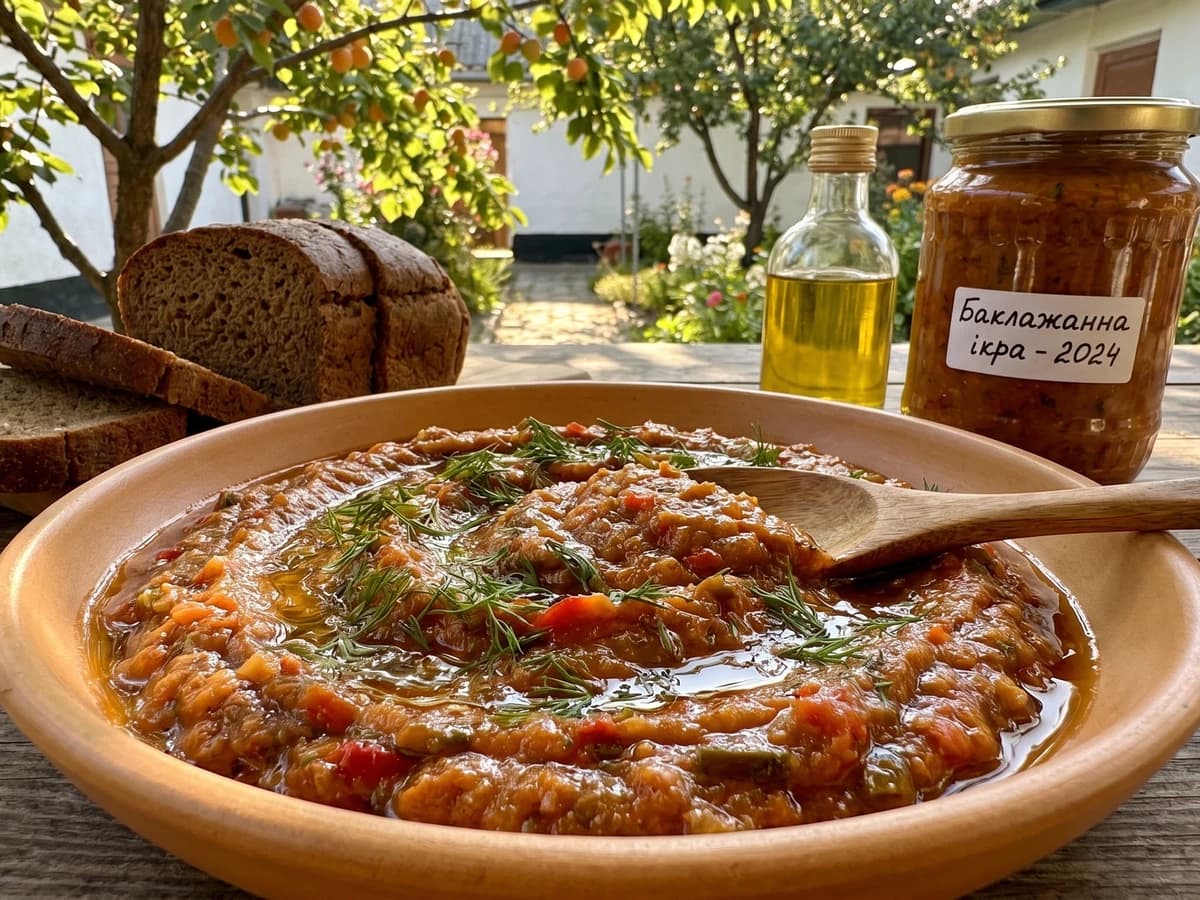
Eggplants collapse into silk, tomatoes give up their summer, and the pan turns sweet and smoky enough that a spoon dragged through leaves a clean path.
A cooking platform built around craft, culture, and the stories behind what we eat.

Created by
The first cheese from the mountain vat is barely cheese yet: sweet milk caught into a warm springy round, unsalted, alive with whey, waiting to become brynza if you let it.
The first cheese from a Carpathian sheep vat is still warm when you taste it. It is not salty yet, not sharp, not the crumbly brynza people know from market tubs; it is a springy white lump with sweet whey on its surface, milk caught just before it chooses a stronger life.
This is Hutsul mountain food, born on the polonyna, the high pasture, not on my southern steppe. I cook it at home because Ukraine is not one pot: the south has brined aubergines and whole watermelons in the litnya kuhnia, the summer kitchen; the Carpathians have sheep, grass, smoke, and women who know exactly when curd has set by the way it resists the knife.
The one thing that decides budz is gentleness after the rennet. Warm the milk enough to wake it, stir the rennet in, then stop fussing. Cut the curd only when it gives a clean break, cook it until the whey turns from milk-cloudy to green-gold, then gather it warm so it knits into a soft round instead of falling into cottage cheese. Aunt Nadia would have called that 'until it sounds right'; here the sound is the curds brushing the pot like wet pebbles.
Eat it fresh, with dill, radishes, dark bread, and Ukraine in a bottle of oil. Salt it and wait, and you're walking toward brynza. But today we're staying at the young stage, when the cheese still tastes of grass and morning.
Budz belongs to Hutsul cheese-making in the Ukrainian Carpathians, especially the polonyny of Ivano-Frankivsk, Zakarpattia, and Chernivtsi, where sheep are milked through the warm pasture season. The unsalted fresh round is the mother cheese for brynza: after draining it is broken, salted, and kept longer; Hutsul sheep bryndzya was registered in 2019 as Ukraine's first geographical indication. That protection keeps breed, pasture, season, and local name attached to the food after decades when Soviet dairy categories flattened mountain cheeses into generic white blocks.
Quantity
4 litres
pasteurized but not UHT
Quantity
1/4 teaspoon
diluted in 60ml cool non-chlorinated water
Quantity
1/8 teaspoon
or 2 tablespoons live cultured buttermilk or plain yogurt
Quantity
1/2 teaspoon
diluted in 60ml cool non-chlorinated water, or use the amount your label gives for 4 litres milk
Quantity
1 teaspoon
for serving
Quantity
2 tablespoons
for serving
Quantity
small bunch
chopped
Quantity
as needed
for serving
| Ingredient | Quantity |
|---|---|
| whole sheep milkpasteurized but not UHT | 4 litres |
| calcium chloridediluted in 60ml cool non-chlorinated water | 1/4 teaspoon |
| mesophilic starter cultureor 2 tablespoons live cultured buttermilk or plain yogurt | 1/8 teaspoon |
| single-strength liquid rennetdiluted in 60ml cool non-chlorinated water, or use the amount your label gives for 4 litres milk | 1/2 teaspoon |
| fine sea salt (optional)for serving | 1 teaspoon |
| unrefined sunflower oil (optional)for serving | 2 tablespoons |
| dillchopped | small bunch |
| radishes, cucumbers, spring onions, and dark rye bread (optional)for serving | as needed |
Wash the pot, spoon, thermometer, cloth, and colander very well. Cheese remembers dirt faster than people do. Pour in the sheep milk and warm it slowly to 32C/90F, stirring from the bottom so nothing catches. Stir in the diluted calcium chloride, then the starter culture, and let the milk sit covered for 20 to 30 minutes. It should still smell sweet, just a little more awake.
Stir the diluted rennet into the milk with slow up-and-down strokes for half a minute, then stop the milk moving. Cover the pot and leave it alone until the surface looks like tender custard and a knife lifted from the curd leaves a clean line with pale green whey in it. If the break is ragged and milky, cover it again and wait. The curd decides when it is ready.
Cut the curd into large cubes, about 2.5cm across, first one way, then the other, then at a slant if your knife reaches. Let the cut curd rest until whey rises between the cubes and the edges begin to round off. Do not chase every perfect square. Mountain cheese was not invented by people afraid of odd corners.
Set the pot over the lowest heat and warm the curds slowly to 38C/100F, lifting them gently with your hand or a slotted spoon so they do not mat into one heavy slab. They will shrink, firm, and begin to brush the pot with a soft wet-pebble sound. The whey should turn green-gold rather than milk-white. That is the moment to stop.
Line a colander with butter muslin or a double layer of clean cheesecloth and set it over a deep bowl. Ladle the warm curds into the cloth, then gather the corners and twist gently. At first the whey will run fast, then slow to thin threads. Keep the whey; it makes good bread, pancakes, or a pot of banosh if the Carpathian mood has properly taken you.
While the curd is still warm, twist the cloth snugly and shape the cheese into a thick round. Set it back in the colander, place a small plate on top, and weight it with 1 to 2kg, a jar of water is enough. Press until it holds its shape and springs gently under a finger. You are not making a hard cheese. You are teaching the curds to stay together.
Unwrap the budz and slice or tear it into generous pieces. Sprinkle with salt at the table, drizzle with unrefined sunflower oil, and scatter over dill. Eat with radishes, cucumbers, spring onions, and dark rye bread. If you are taking it on a picnic, chill it first and keep it cold; fresh unsalted cheese is tender food, not a thing to leave waiting in the sun.
1 serving (about 190g)
Culinary guides, cultural storytelling, and the editorial depth that makes cooking meaningful.
Discover Culinary ExplorerChef Lesia
Eggplants collapse into silk, tomatoes give up their summer, and the pan turns sweet and smoky enough that a spoon dragged through leaves a clean path.

Chef Lesia
The salt hits first, then the pasture: sheep's milk turned into a white, crumbly cheese that tastes of grass, weather, and the mountain air that made it.

Chef Lesia
Roasted beets turn almost black at the edges, then grind with garlic and walnuts into a crimson spread so dense the spoon leaves a path through it.
Chef Lesia
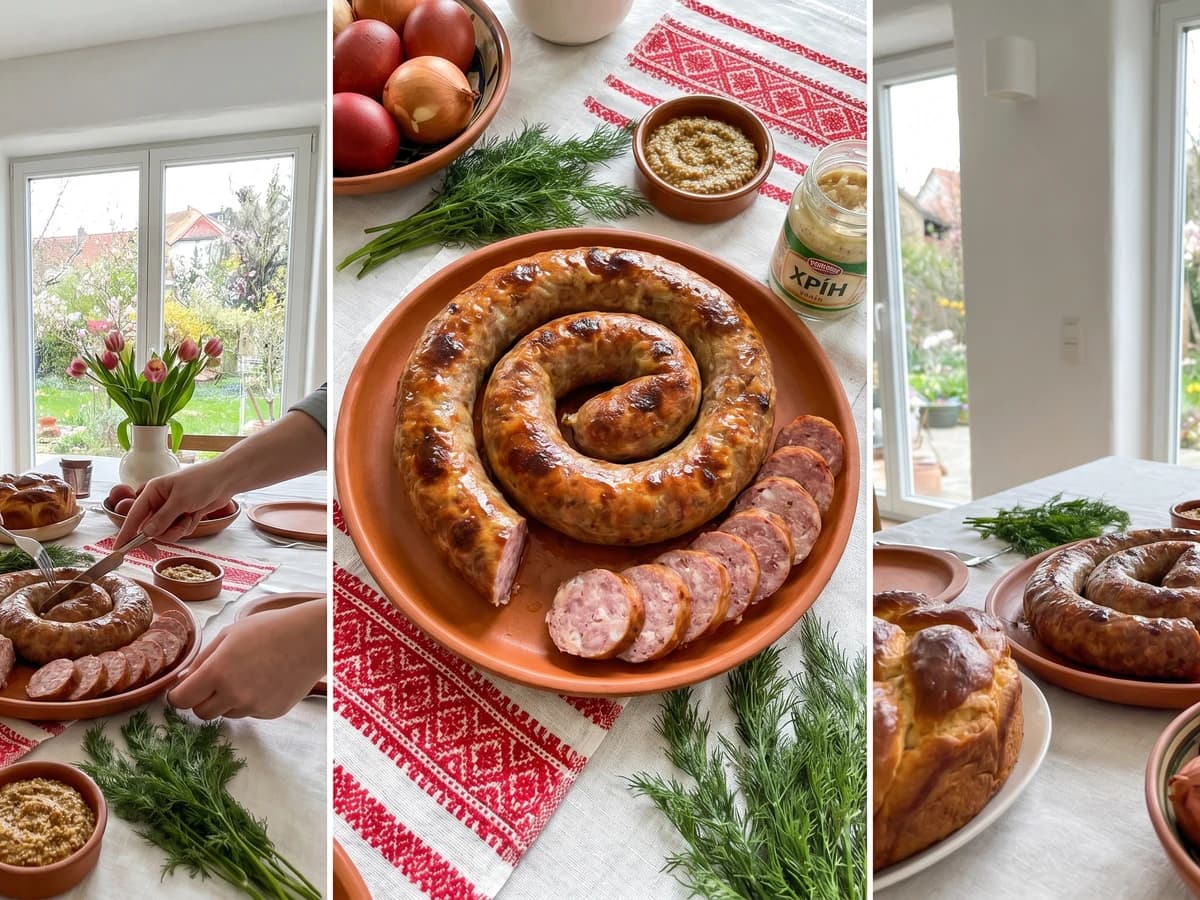
This is the sausage that perfumes the Easter basket before anyone opens it: garlic, pepper, pork fat, and a casing baked tight enough to snap under the knife.