
Chef Juliana
Ambrosia Baiana
You think curdled milk means you ruined dessert. Good. Tonight you'll do it on purpose, with lemon, yolks, cravo, and sugar, until the pot turns into golden gruminhos.
A cooking platform built around craft, culture, and the stories behind what we eat.
Created by
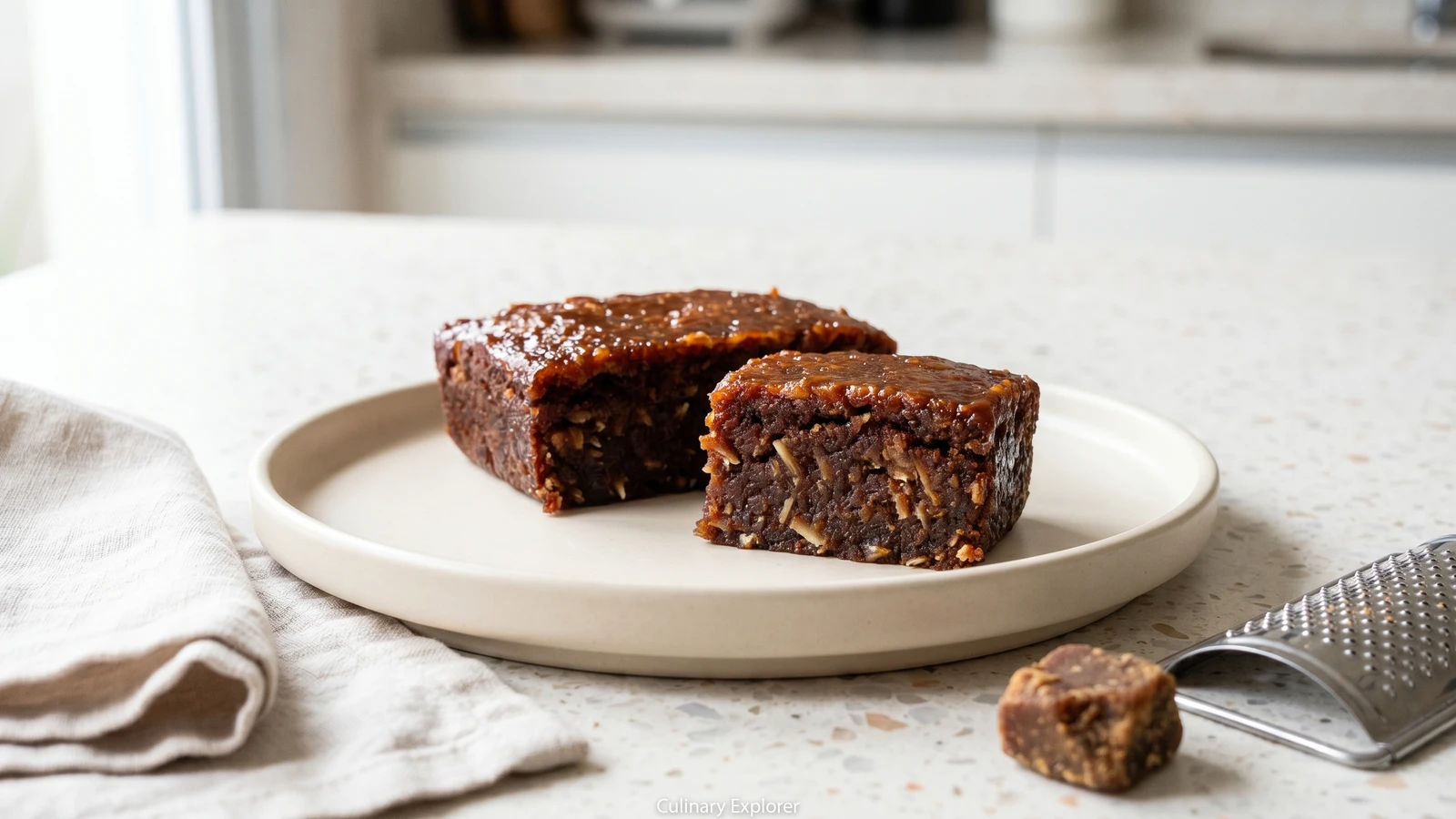
You think this dense cassava sweet belongs to someone else's hands. It doesn't. Grate, sweeten, bake, and you've got tabuleiro doçaria at home, with respect and no powdered lie.
You might look at a dark, dense cassava sweet and hear that little voice: isso não é pra mim. Anota aí: that voice is not wisdom, it's fear wearing clean shoes. The same hands that learn arroz soltinho, feijão creamy from scratch, and something green for the pê-efe can learn this too. Cozinhar não é dom, é um aprendizado.
This sweet belongs to the Afro-Baiana tabuleiro doçaria, tied to the baianas de acarajé and the Ofício they carry. I teach a home version, not a ritual and not a tradition I own. For the living knowledge of the tabuleiro and the terreiros, a gente defers to the baianas and the cooks who carry those houses. Respect doesn't make food unreachable. It makes us pay attention.
The method is plain. Grate sweet cassava fine so it bakes tender, melt rapadura with clove so sweetness reaches every strand, mix coconut milk into the fibers so the crumb stays moist, and bake until the edges pull from the pan and the center feels set. No packet, no coconut-flavored powder pretending to be flavor. Just mandioca, coconut, cane sugar, spice, and a little patience.
After the everyday plate has done its honest work, rice, beans, meat or egg when there is one, and something green, this is the sweet that still speaks the same language: comida de verdade, made from what the land gives and what hands know how to do.
In Bahia, pé de moleque names a baked cassava-and-coconut sweet from tabuleiro doçaria, different from the hard peanut brittle called by the same name in São Paulo and much of the Southeast. The Ofício das Baianas de Acarajé was inscribed by IPHAN in the Livro dos Saberes in 2005, recognizing the knowledge, trade, dress, tabuleiro, and food repertoire carried by baianas. Some versions use puba, lightly fermented cassava mass, while this home version uses fresh grated mandioca mansa and gets its dark color from rapadura and clove.
Quantity
4 cups finely grated, about 700 g peeled
peeled, tough center core removed
Quantity
1 1/2 cups
Quantity
1 1/2 cups, packed
finely grated, or use dark brown sugar
Quantity
1/4 cup
Quantity
6
Quantity
1 teaspoon
Quantity
1/2 teaspoon
Quantity
1 cup
Quantity
2 large
beaten
Quantity
4 tablespoons, plus more for the pan
melted
Quantity
1 teaspoon
Quantity
1 large sheet
rinsed and softened if using banana leaf
| Ingredient | Quantity |
|---|---|
| sweet cassava (aipim or mandioca mansa)peeled, tough center core removed | 4 cups finely grated, about 700 g peeled |
| freshly grated unsweetened coconut | 1 1/2 cups |
| rapadurafinely grated, or use dark brown sugar | 1 1/2 cups, packed |
| water | 1/4 cup |
| whole cloves | 6 |
| ground cinnamon | 1 teaspoon |
| fine salt | 1/2 teaspoon |
| full-fat coconut milk | 1 cup |
| eggsbeaten | 2 large |
| unsalted buttermelted | 4 tablespoons, plus more for the pan |
| fennel seeds (optional) | 1 teaspoon |
| banana leaf or parchment paper (optional)rinsed and softened if using banana leaf | 1 large sheet |
Heat the oven to 180°C (350°F). Butter an 8-inch square pan. Line it with parchment, or with a softened banana leaf if you have one. The lining helps you lift the sweet out cleanly, because cassava sets firm and likes to cling to corners. If using banana leaf, pour hot water over it or pass it quickly over low heat until it bends without cracking.
Peel the cassava, split it lengthwise, and pull out the tough center core. Grate the flesh on the fine holes of a box grater, or use the fine grating disk of a processor. You want wet, fluffy shreds, not chunks. Big pieces stay tough in the bake, and then you'll think the recipe failed when the grater was the lazy one.
Gather the grated cassava in a clean cloth and squeeze only until it stops dripping. It should still feel moist and clump in your hand. Too much water makes a gummy center; too much squeezing gives you a dry, sulky sweet. We want dense, not heavy as punishment.
Put the rapadura, water, and cloves in a small saucepan over medium-low heat. Stir until the rapadura melts, then simmer for 3 to 4 minutes, just until glossy and pourable. Take it off the heat, fish out the cloves, and let it cool until warm, not hot. Syrup spreads sweetness through every strand of cassava; dry sugar leaves sandy pockets.
In a large bowl, mix the grated cassava, coconut, cinnamon, salt, and fennel seeds if using. Pour in the warm syrup, coconut milk, beaten eggs, and melted butter. Stir until the mixture looks thick, shiny, and evenly wet, with no dry cassava hiding at the bottom. The eggs and coconut milk help the sweet set without turning chalky.
Scrape the batter into the prepared pan and press it into the corners with a spatula. Tap the pan twice on the counter. This pushes out empty pockets, so the squares bake dense and even instead of cracking around dry gaps. Smooth the top, but don't fuss. This is tabuleiro food, not a manicure.
Bake for 60 to 70 minutes, until the top is dark brown and glossy, the edges pull slightly from the pan, and a skewer pushed into the center comes out with moist crumbs, not wet paste. Don't chase a dry skewer. Cassava sweets should stay moist, or you've baked the life out of them.
Let the pan cool for at least 1 hour before lifting the sweet out and cutting it into 16 squares. Warm cassava starch is still settling, and if you rush it the squares smear instead of slice. Serve at room temperature. The next day, when the rapadura and clove have settled into the crumb, it's even better.
1 serving (about 90g)
Culinary guides, cultural storytelling, and the editorial depth that makes cooking meaningful.
Discover Culinary ExplorerChef Juliana
You think curdled milk means you ruined dessert. Good. Tonight you'll do it on purpose, with lemon, yolks, cravo, and sugar, until the pot turns into golden gruminhos.

Chef Juliana
You are not ruining the milk. You're curdling it on purpose, slowly, until sugar, eggs, cinnamon, and patience turn cheap ingredients into dessert.

Chef Juliana
You think curdled milk means failure. Not here. Milk, yolks, sugar, and lemon cook into golden curds in amber whey, a Minas sweet where the ponto teaches the whole recipe.

Chef Juliana
You already trust rice for dinner. Trust it for dessert: cook it gently with milk, coconut, and canela until each grain turns soft, creamy, and impossible to blame on lack of talent.