
Chef Juliana
Bigos no Pê-efe
You think a Polish hunter's stew is not for your kitchen. Wrong. Brown meat properly, build a real refogado, simmer cabbage low, and tomorrow's lunch is already better.
A cooking platform built around craft, culture, and the stories behind what we eat.
Created by
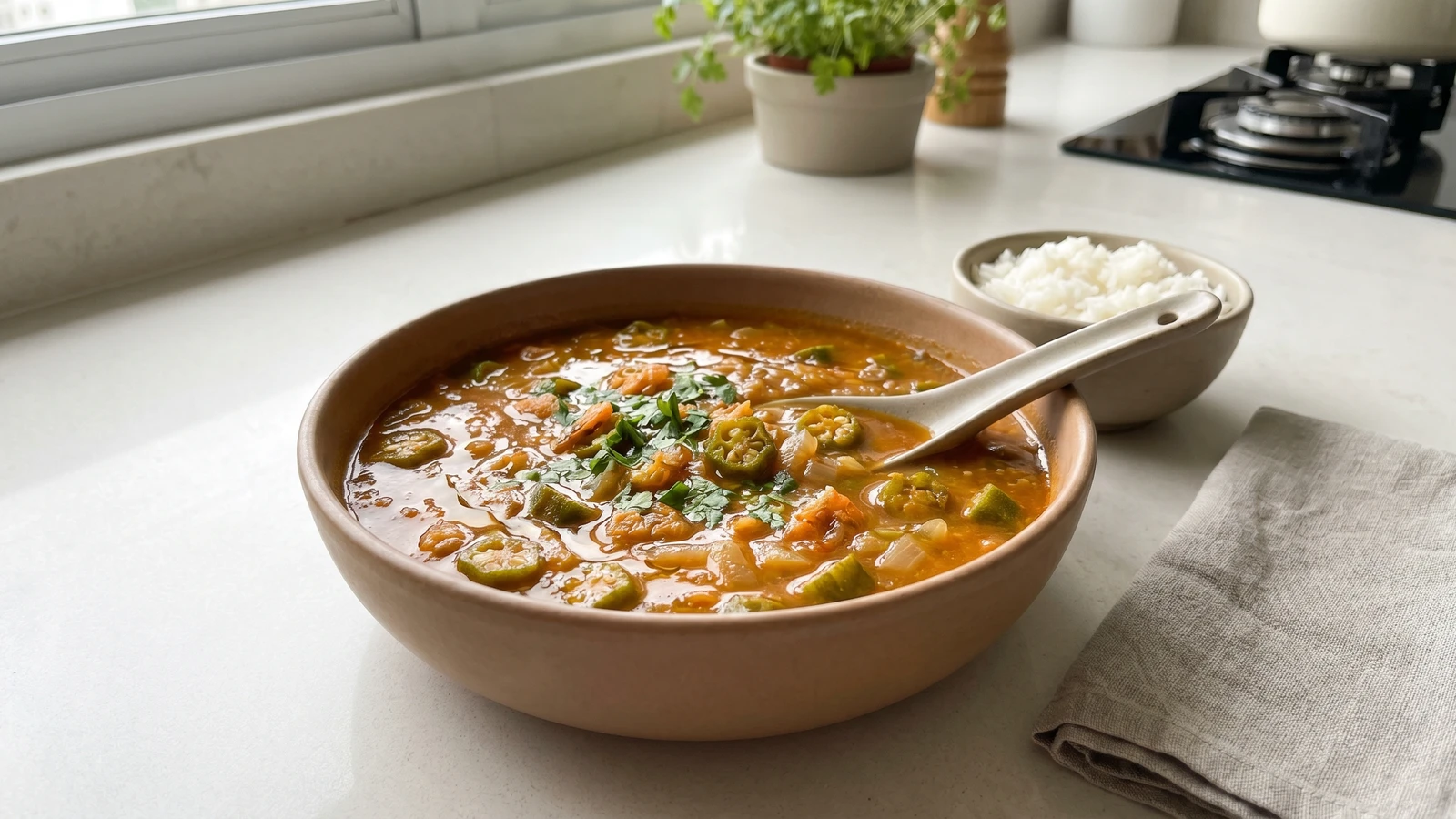
You don't need mystery for this pot. You need okra, dendê, onion, dried shrimp, and the patience to stir until the quiabo gives up its own caldo.
You may be looking at this and thinking, isso não é pra mim. Too sacred, too Baiano, too full of words people use to make a home cook feel small. No. Amalá belongs to Xangô. That is fact. The tradition belongs to the cooks of the terreiros and to the baianas who carry Afro-Baiana food knowledge with their hands, their memory, and their work. This is a home version to teach the cooking, not a ritual for anyone to perform.
A gente respects a food by refusing to turn it into decoration and refusing to fake it. Dendê is not optional here. Azeite de dendê, the red African palm oil, is the color, the smell, the backbone. Annatto in sunflower oil is not a clever substitute; it is erasure in a measuring cup, and I won't hand it to you.
The technique is learnable. Slice the quiabo, build an honest refogado, let the onion murchar, then stir slowly while the okra softens and slips into its own caldo. That silk people fear is the point here, not a mistake. Cooking isn't a gift, it's something you learn, and this one teaches you with a spoon in your hand.
Serve it with arroz soltinho, feijão made from scratch if that's your table, and something green if you want the pê-efe to hold steady around it. Special food doesn't have to become unreachable food. It can still be comida de verdade, made carefully, eaten with respect, and understood one plain step at a time.
Amalá is comida de santo of Xangô in Afro-Brazilian Candomblé, with roots in Yoruba foodways where okra stews and palm oil carry both daily and sacred meaning. In Bahia, these foods sit inside a living Afro-Baiana culinary lineage maintained by terreiros and by baianas de acarajé, whose Ofício das Baianas de Acarajé was inscribed by IPHAN in the Livro dos Saberes in 2005. The home version can teach the technique, but the ritual meaning belongs to the communities that carry it.
Quantity
600 g
trimmed and sliced into 1/2 cm rounds
Quantity
1/2 cup
rinsed, soaked for 10 minutes, drained, and finely chopped
Quantity
1 large
finely chopped
Quantity
3 cloves
minced
Quantity
1/3 cup
Quantity
1 cup, plus more as needed
Quantity
1/2 teaspoon, plus more to taste
Quantity
1 small
minced
Quantity
2 tablespoons
chopped
| Ingredient | Quantity |
|---|---|
| fresh okratrimmed and sliced into 1/2 cm rounds | 600 g |
| dried shrimprinsed, soaked for 10 minutes, drained, and finely chopped | 1/2 cup |
| onionfinely chopped | 1 large |
| garlicminced | 3 cloves |
| azeite de dendê | 1/3 cup |
| water | 1 cup, plus more as needed |
| salt | 1/2 teaspoon, plus more to taste |
| fresh chile (optional)minced | 1 small |
| cilantro or parsley (optional)chopped | 2 tablespoons |
Wash the okra, dry it very well with a clean towel, trim the caps, and slice it into thin rounds. The knife should move cleanly, and the pieces should look bright green and fresh, not wet and bruised. Dry okra browns and refoga better at the start; wet okra drops water into the pan too early and dulls the flavor.
Rinse the dried shrimp under cool water, soak them in 1/2 cup warm water for 10 minutes, then drain and chop them finely. Taste one tiny piece before salting the pot. Dried shrimp carries salt and sea flavor, so you let it speak first instead of charging in with a spoonful of salt like a hero in a bad story.
Warm the dendê in a heavy pot over medium heat. Add the onion and cook, stirring now and then, until it murcha, softens, and turns golden at the edges, about 6 minutes. Add the garlic and chile, if using, for 1 minute, just until you smell them. This is the foundation, and burnt garlic is bitter enough to punish the whole pot.
Add the sliced okra and stir until every piece shines orange with dendê. Cook for 5 minutes, stirring slowly, until the green brightens and the okra begins to soften. You are not trying to kill the baba; you are teaching it to become caldo. Rush this and you'll get raw edges floating in oil instead of a stew that holds together.
Stir in the chopped dried shrimp, 1 cup water, and 1/2 teaspoon salt. Scrape the bottom of the pot so the onion and shrimp dissolve into the liquid. Bring it to a gentle simmer, not a wild boil. A hard boil breaks the okra down too roughly; a gentle simmer lets it thicken the broth while keeping some pieces whole.
Cook uncovered for 15 to 20 minutes, stirring slowly and often, until the okra is tender and the caldo turns glossy, thick, and rust-orange. Drag the spoon through the pot. It should leave a path for a second before closing. That's the ponto. If it gets too thick before the okra is tender, add water 2 tablespoons at a time. If it's watery, simmer a few minutes longer.
Taste before you add more salt, because the shrimp keeps giving as it cooks. Finish with chopped cilantro or parsley only if you like it, then let the pot rest off the heat for 5 minutes. Resting lets the dendê settle into the caldo instead of sitting on top. Serve with arroz soltinho, and if this is dinner, bring feijão and something green to the table too. The pê-efe knows what it's doing.
1 serving (about 250g)
Culinary guides, cultural storytelling, and the editorial depth that makes cooking meaningful.
Discover Culinary ExplorerChef Juliana
You think a Polish hunter's stew is not for your kitchen. Wrong. Brown meat properly, build a real refogado, simmer cabbage low, and tomorrow's lunch is already better.
Chef Juliana
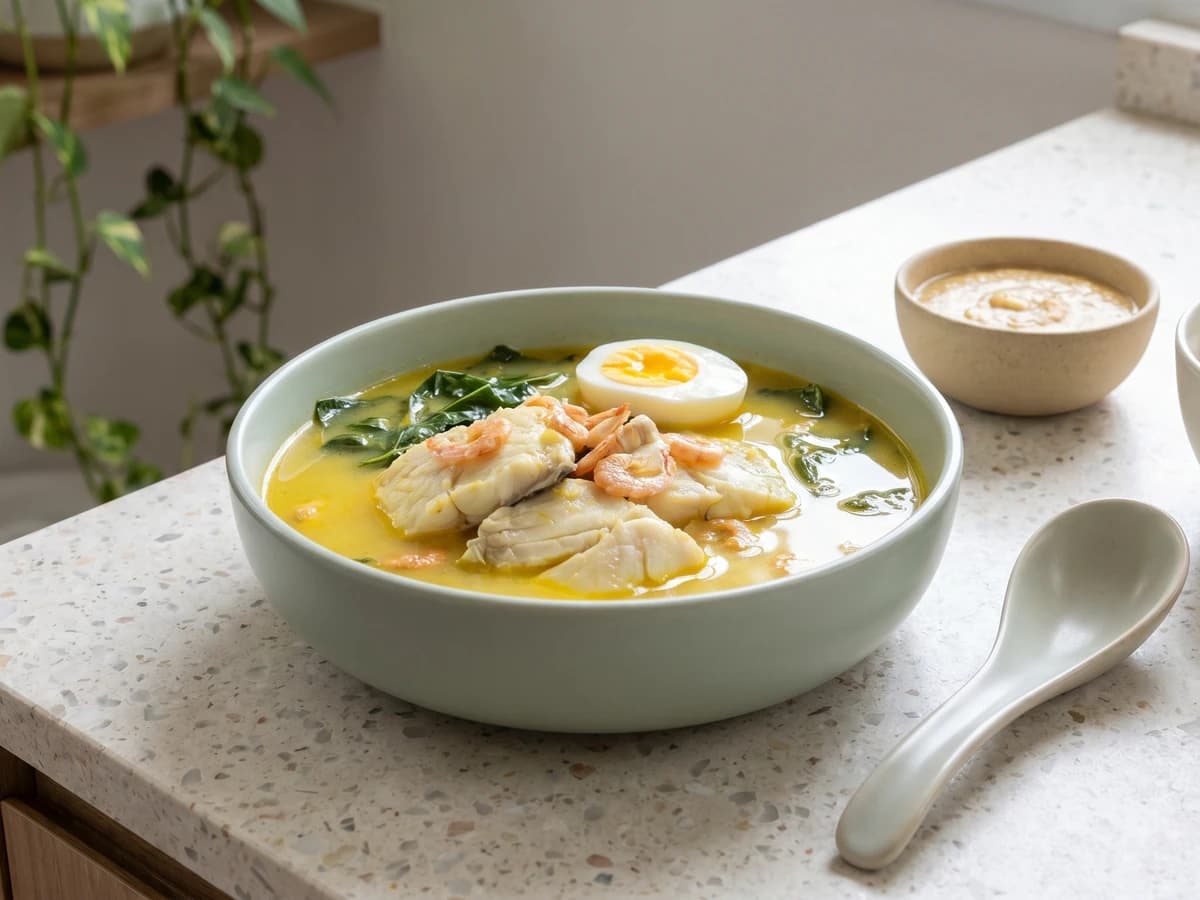
Whole fish in a pot looks like a test. It isn't. Build the refogado, layer the filhote, let tucupi do its work, and the Círio table starts making sense.
Chef Juliana
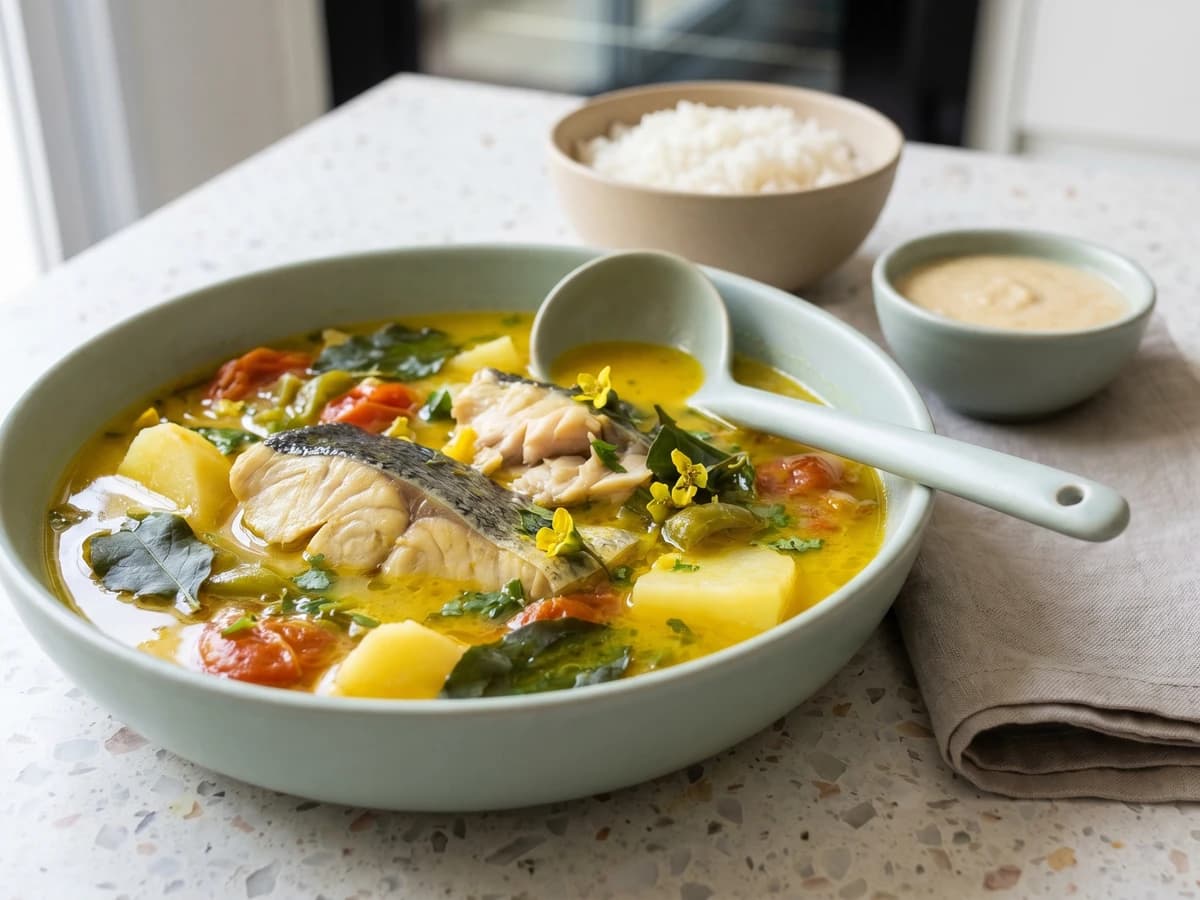
You don't need river wisdom in your bones to cook tambaqui well. You need real tucupi, a calm simmer, and the sense to let the fish stay whole until it gives.
Chef Juliana
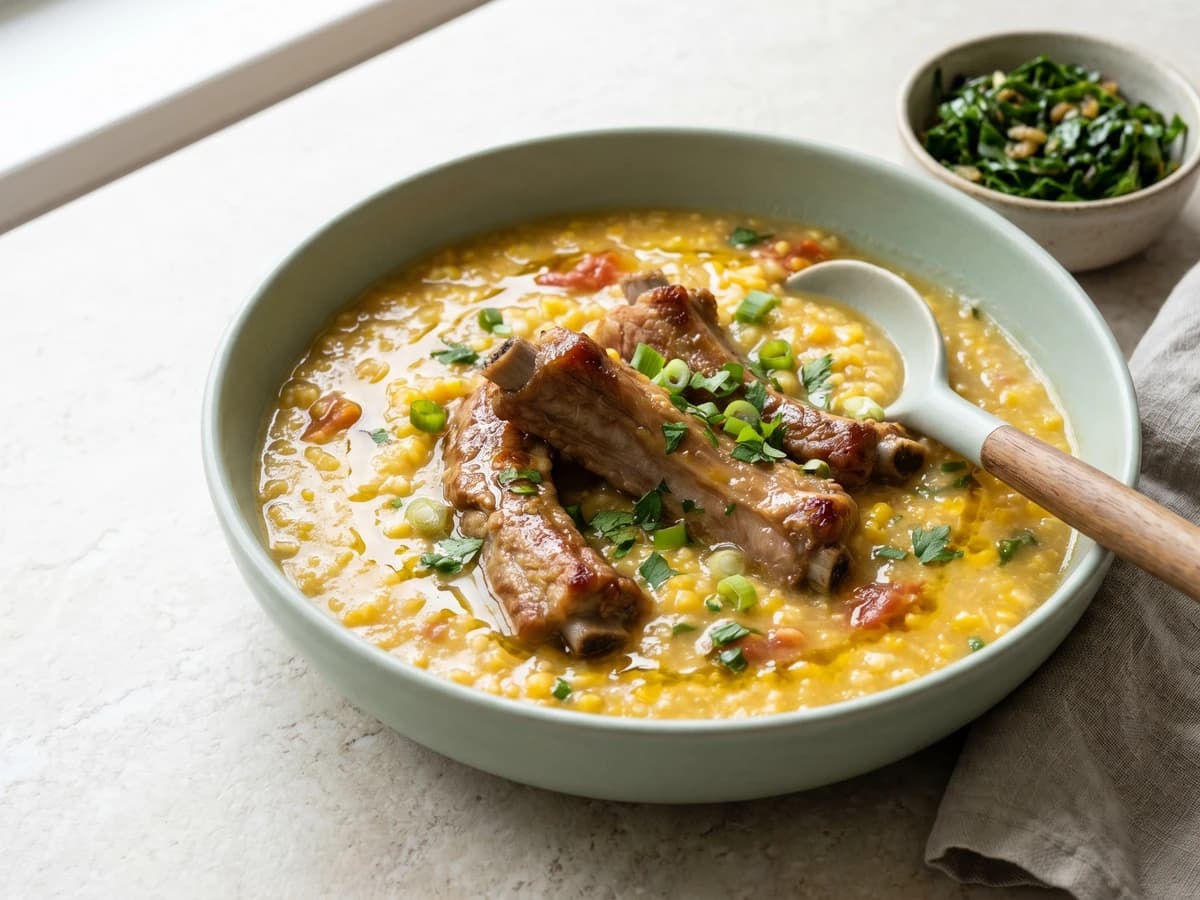
You don't need a secret hand for this pot. Brown the ribs, soften the corn, build the refogado, and let the caldo thicken itself like comida de verdade does.