Chef Isabel
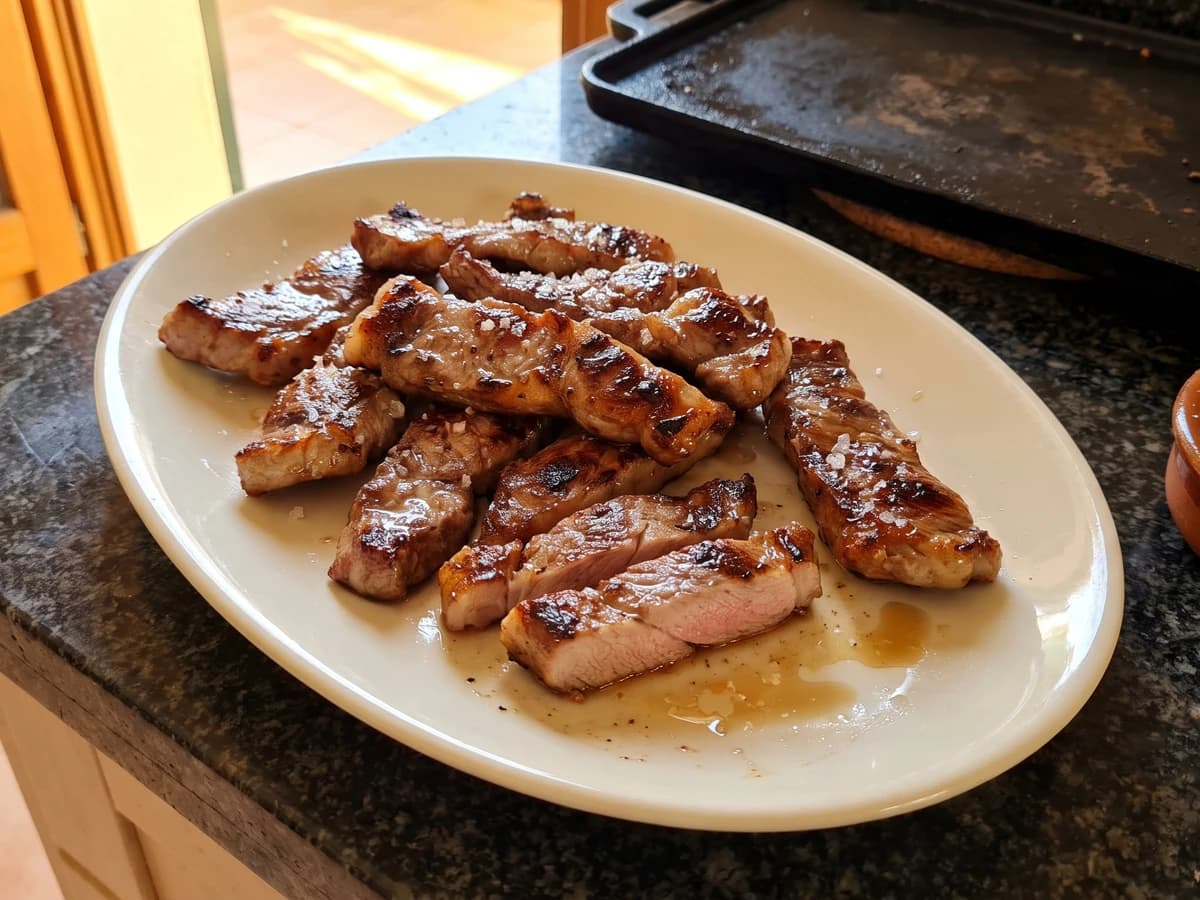
Abanico Ibérico a la Plancha
Extremadura's dehesa gives us this fan-shaped, marbled rib cut: salt it at the last moment, lay it on a fierce plancha, and count in seconds so the centre stays juicy.
A cooking platform built around craft, culture, and the stories behind what we eat.
Created by
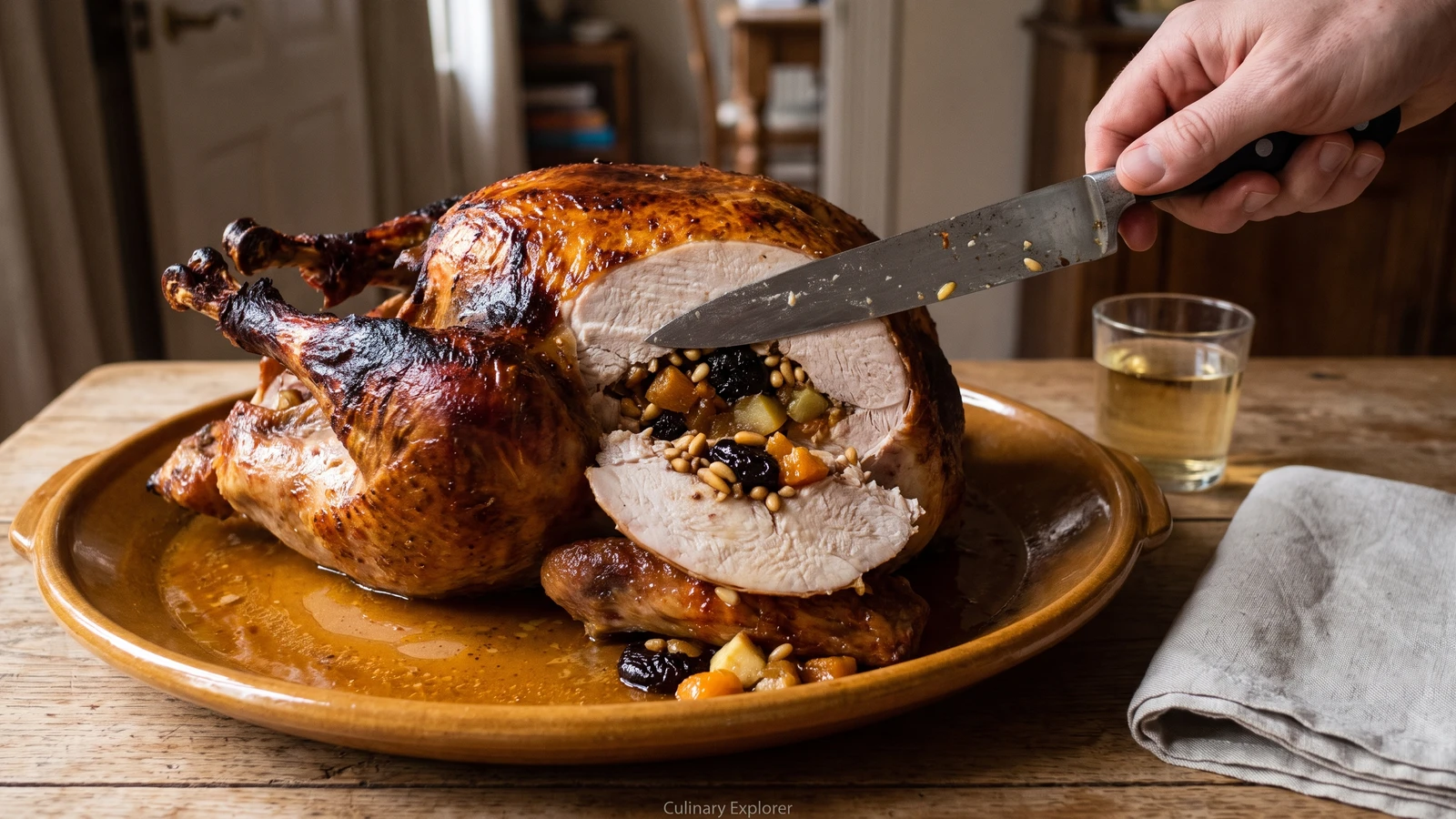
Pavo relleno a la catalana brings botifarra, pork, prunes, apple, raisins and pine nuts to the Christmas table, with a hot start for bronze skin and a gentler roast that protects the breast.
Pavo relleno a la catalana is Catalonia’s stuffed Christmas turkey, a whole bird filled with fresh botifarra and pork, then sweetened in the Catalan roast manner with prunes, apple, raisins, dried apricots and pine nuts. Vi ranci, the region’s aged fortified wine, gives the filling its deep, nutty edge. This is a feast bird for a full table, generous without being showy.
The roast is decided by two temperatures. Start at 220°C until the skin takes colour, then lower the oven to 165°C so the stuffing reaches a safe 74°C without punishing the breast. Baste at measured intervals, not every ten minutes. The oven doesn’t improve because you keep opening it. A thermometer, not the clock, tells you when the bird is ready.
If you can’t find botifarra fresca, use a plain, unsmoked fresh pork sausage without fennel; the seasoning will be less distinctly Catalan, but the filling will still work. Dry oloroso can stand in for vi ranci, and chopped blanched almonds can replace costly pine nuts, though their bite is firmer. My Margin says only this: relleno frío y sin apretar, cold stuffing, never packed tight. Siempre sale, si lo sigues.
Pavo reached Iberian kitchens from the Americas and, because a whole bird was costly, settled into feast cooking rather than the daily pot. In Catalonia it was treated in the older manner of festive capon and chicken roasts, with fresh botifarra, dried fruit, pine nuts and vi ranci, the ingredients that give this stuffing its regional surname. Escudella i carn d’olla remains the older Christmas Day centerpiece in many Catalan homes, while stuffed turkey belongs to the wider family of celebration birds cooked for a full table.
Quantity
1, weighing 5 to 5.5kg
fully thawed, neck and giblets removed
Quantity
35g
30g for the turkey and 5g for the stuffing
Quantity
7g
5g for the turkey and 2g for the stuffing
Quantity
80g
softened and divided
Quantity
30ml
Quantity
250g
finely chopped
Quantity
3 cloves
finely chopped
Quantity
350g
Quantity
300g
casings removed
Quantity
75ml
Quantity
150g
halved
Quantity
100g
cut into small pieces
Quantity
75g
Quantity
250g
peeled, cored and cut into 1cm cubes
Quantity
60g
Quantity
120g
cut into 1cm cubes
Quantity
400ml
120ml for the stuffing and 280ml for the roasting pan
Quantity
15g
finely chopped
Quantity
0.5g
Quantity
2
Quantity
200ml
| Ingredient | Quantity |
|---|---|
| whole turkeyfully thawed, neck and giblets removed | 1, weighing 5 to 5.5kg |
| fine sea salt30g for the turkey and 5g for the stuffing | 35g |
| freshly ground black pepper5g for the turkey and 2g for the stuffing | 7g |
| pork lardsoftened and divided | 80g |
| extra virgin olive oil | 30ml |
| onionsfinely chopped | 250g |
| garlicfinely chopped | 3 cloves |
| lean pork mince | 350g |
| fresh botifarra or plain unsmoked fresh pork sausagecasings removed | 300g |
| vi ranci or dry oloroso | 75ml |
| pitted pruneshalved | 150g |
| dried apricotscut into small pieces | 100g |
| raisins | 75g |
| tart applepeeled, cored and cut into 1cm cubes | 250g |
| pine nuts | 60g |
| day-old rustic breadcut into 1cm cubes | 120g |
| unsalted poultry stock120ml for the stuffing and 280ml for the roasting pan | 400ml |
| flat-leaf parsleyfinely chopped | 15g |
| ground cinnamon | 0.5g |
| bay leaves | 2 |
| dry white wine | 200ml |
Check both cavities for the neck and giblets, then pat the turkey completely dry; don’t rinse it. Mix 30g salt with 5g pepper and rub it over the skin and inside both cavities. Refrigerate uncovered while you prepare and cool the filling, at least 45 minutes. For deeper seasoning, do this up to 12 hours ahead.
Toast the pine nuts in a large dry frying pan over medium-low heat for 3 to 4 minutes, stirring until pale gold, then tip them onto a plate. Add the olive oil and onions to the pan. Cook over low heat for 20 to 25 minutes, stirring regularly, until the onion is dark gold, soft and jammy. Add the garlic and cook for 1 minute. This is the sofregit, the slow Catalan onion base; don’t hurry it.
Raise the heat to medium. Add the pork mince and botifarra, breaking them into small pieces, and cook for 8 to 10 minutes until no pink remains. Pour in the vi ranci and scrape up the browned juices. Let it reduce for about 3 minutes, until almost no liquid remains. Add the prunes, apricots, raisins and apple, then cook for 3 minutes.
Fold in the bread, 120ml stock, parsley, cinnamon, toasted pine nuts, the remaining 5g salt and 2g pepper. Cook for 2 to 3 minutes, just until the bread has absorbed the liquid and the mixture is moist without being wet. Spread it no deeper than 2cm on a clean tray and refrigerate for 30 to 40 minutes, until cold. Don’t leave the pork filling to cool slowly in its pan.
Set a rack in the lower third of the oven and heat it to 220°C conventional or 200°C fan, 425°F. Spoon 900g to 1kg of cold filling loosely into the main cavity and, if the neck skin allows, up to 150g into the neck end. Never press it down; the filling must have room for hot air to move through it. Tie the legs loosely with kitchen string and tuck the wing tips beneath the bird.
Rub the remaining 70g lard evenly over the skin. Set the turkey breast-side up on the roasting rack. Pour 280ml stock and the white wine into the pan beneath it, then add the bay leaves. Roast for 25 minutes without opening the door. This first hard heat begins the deep bronze skin before the gentler cooking starts.
Lower the oven to 165°C conventional or 145°C fan, 325°F. After 45 minutes, spoon the pan juices over the breast, legs and wings. Repeat every 45 minutes, no more often. If the bottom of the pan threatens to dry, add hot water in 100ml measures. Once the skin is a deep chestnut gold, cover the breast loosely with foil. A bird this size usually needs 3 hours 15 minutes to 3 hours 45 minutes in total, but begin checking after 3 hours.
During the final 45 minutes, put the covered dish of extra filling in the oven. Bake it covered for 30 minutes, uncover it for the final 15 minutes, and check that its centre reaches 74°C. The top should be lightly browned while the inside remains moist.
Insert a thermometer into the thickest part of the breast, the inner thigh without touching bone, and the centre of the cavity stuffing. The breast and stuffing must both reach 74°C, and the thigh should reach 76°C. If the skin is ready before the centre, keep the foil in place and continue roasting. Pésalo, no lo adivines applies to temperature too.
Transfer the turkey to a large platter, keeping it level so the cavity juices stay inside. Cover loosely with foil and rest for 40 minutes. Don’t shorten the rest; the juices settle back through the meat, and carving becomes cleaner. Remove the string before serving.
Strain the roasting-pan liquid into a saucepan and skim off most of the fat. Boil for 5 to 10 minutes, until reduced to about 400ml and full-flavoured, then add the juices collected on the resting platter. Taste before adding salt because the turkey drippings already carry plenty. Spoon the cavity filling into a serving dish, carve the turkey, and serve the reduced juices alongside.
1 serving (about 380g)
Culinary guides, cultural storytelling, and the editorial depth that makes cooking meaningful.
Discover Culinary ExplorerChef Isabel
Extremadura's dehesa gives us this fan-shaped, marbled rib cut: salt it at the last moment, lay it on a fierce plancha, and count in seconds so the centre stays juicy.
Chef Isabel
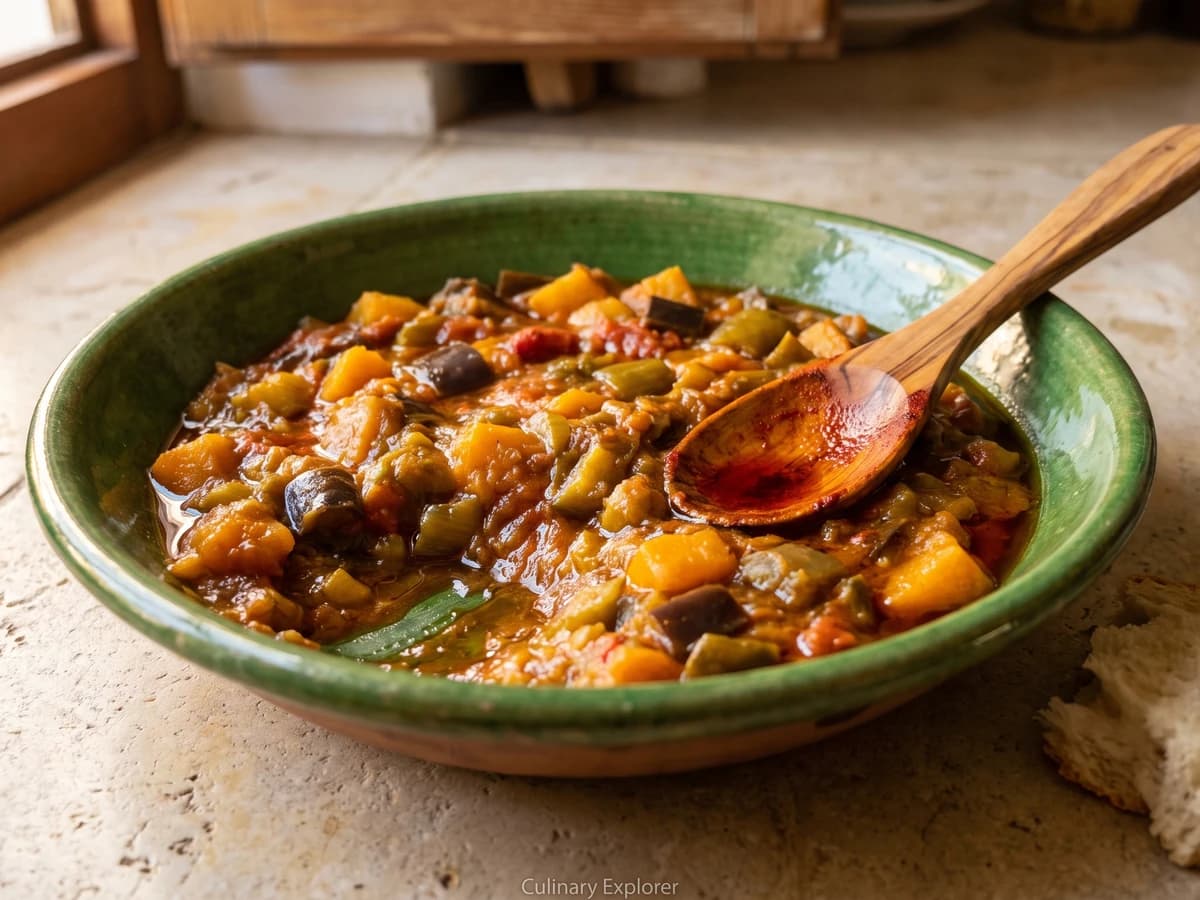
Alboronía is Andalucía's old pumpkin and aubergine stew, deepened with tomato, pimentón, and cumin, then cooked without hurry until the vegetables settle into a glossy, sweet, spoon-soft whole.

Chef Isabel
Aletría Murciana is Murcia's humble noodle guiso: fine fideos, pork ribs, potato, saffron, and a dark sweet sofrito. Get that base right and the pot knows where it's going.
Chef Isabel
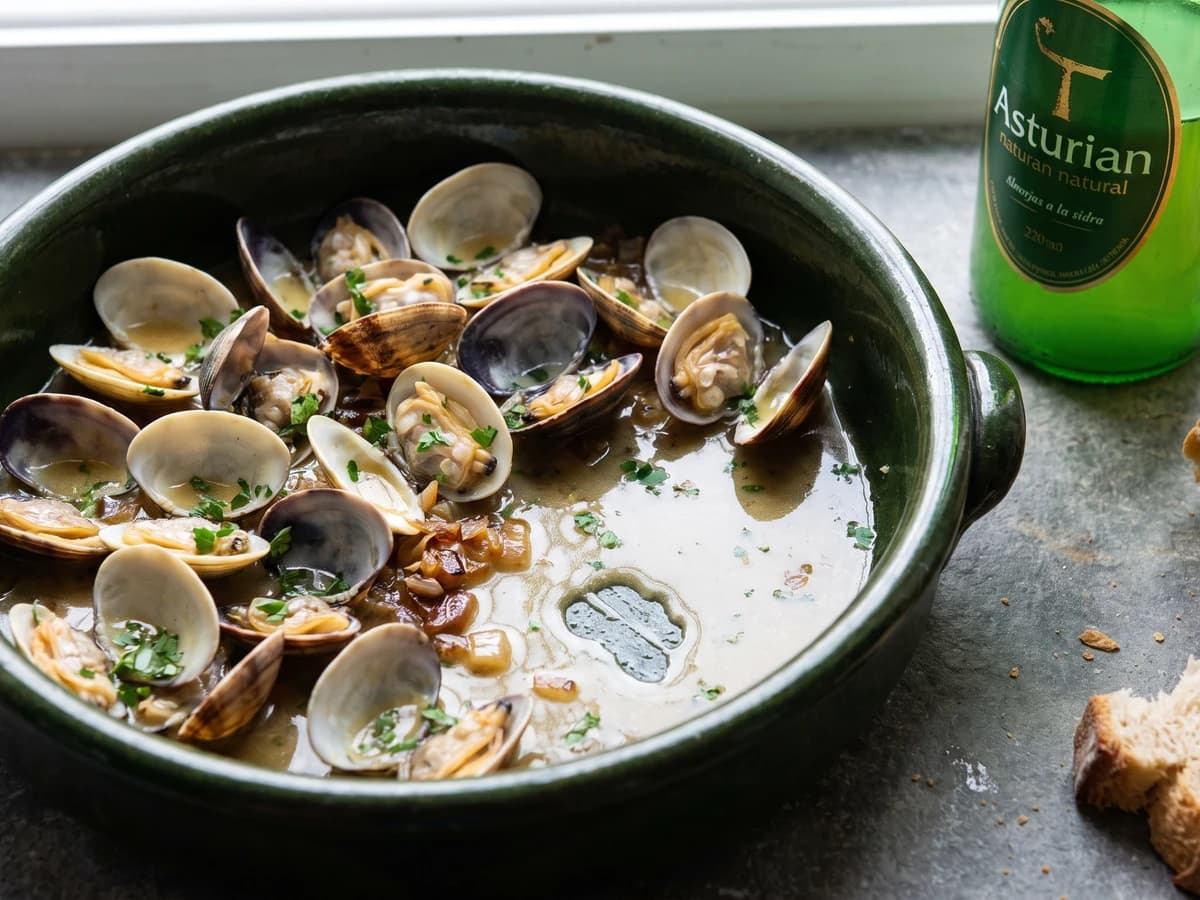
Asturias opens clams in tart natural cider over a slow onion and garlic sofrito, making a bright, briny sauce that asks for bread and rewards one rule: lift each clam as it opens.