Chef Isabel
Abanico Ibérico a la Plancha
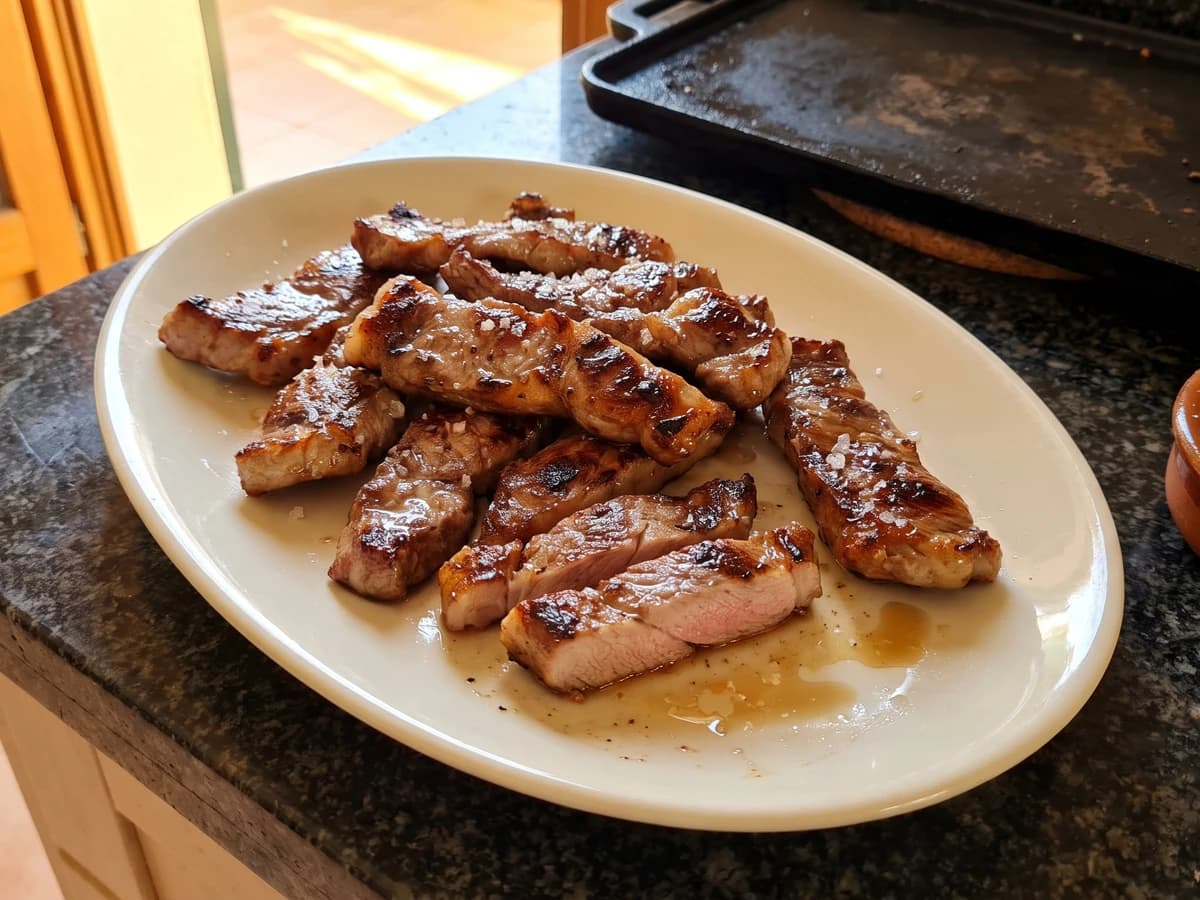
Extremadura's dehesa gives us this fan-shaped, marbled rib cut: salt it at the last moment, lay it on a fierce plancha, and count in seconds so the centre stays juicy.
A cooking platform built around craft, culture, and the stories behind what we eat.
Created by
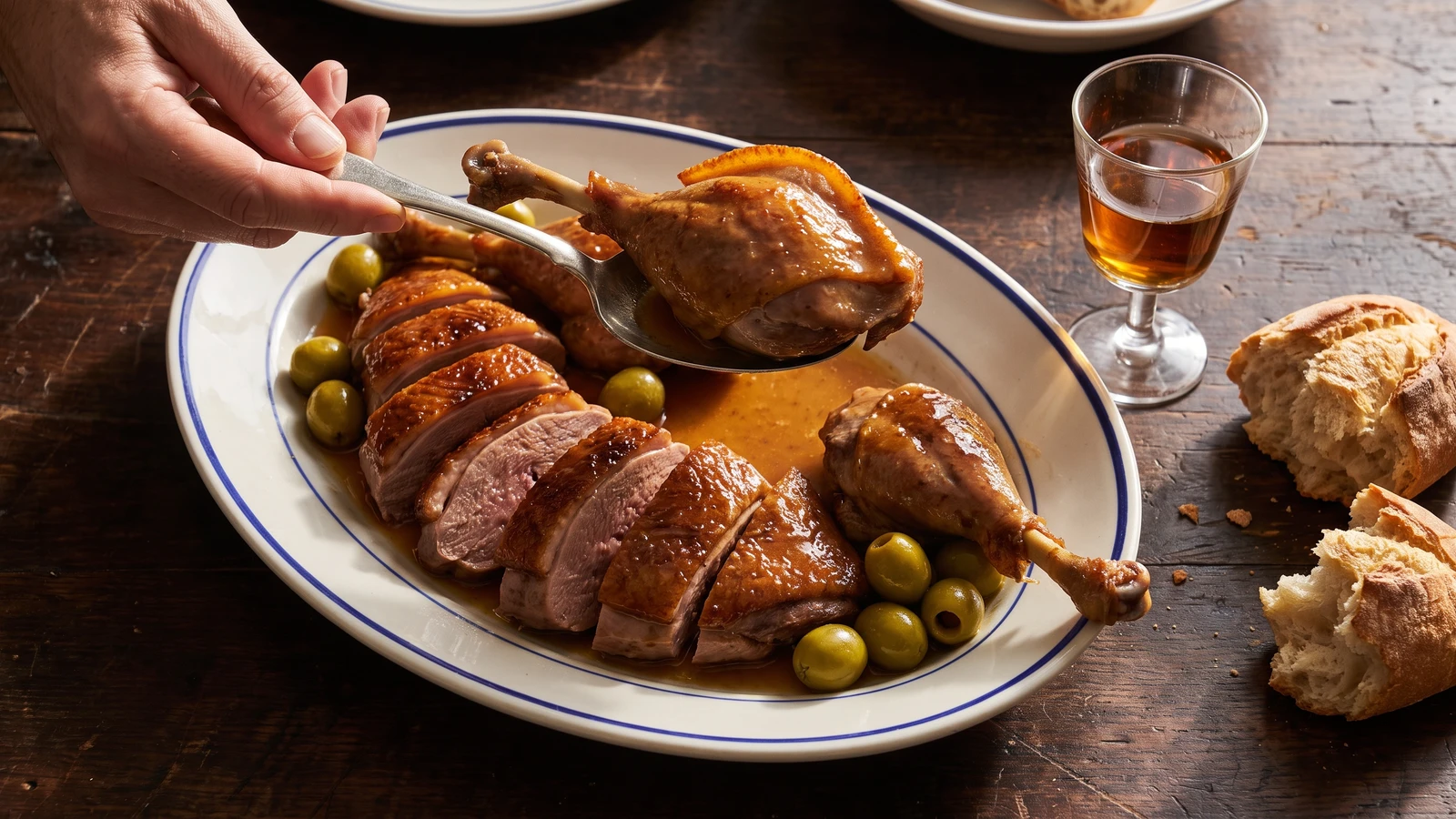
Sevilla gives duck the treatment it deserves: brown the whole bird slowly, build the onion and carrot in its rendered fat, then braise it with dry sherry and green olives until the legs yield.
Pato a la Sevillana is Sevilla's whole duck braised with dry sherry and green olives, a celebration dish that brings together the waterfowl of the lower Guadalquivir, the province's table olives, and the Andalusian wine cupboard. The olives are not decoration. They season the dark sauce and give it the clean, briny edge that marks the dish as Sevillian.
Everything depends on browning the duck slowly enough to render its fat. Turn the bird patiently until the skin is deep brown on every side, then pour off the excess and cook the onion and carrot in what remains. That rendered fat is the floor of the sauce. Rush the browning and you get pale skin, greasy liquor, and none of the depth the sherry needs.
Use Manzanilla de Sevilla olives if you can find them, or Gordal for a plumper, milder bite. Far from Spain, any firm, unstuffed green olive will do if you blanch it first; the finished sauce will be sharper and less delicate. If dry sherry is the difficulty, use the same amount of dry white wine. You lose the sherry's nutty depth, but the braise still comes out properly. No hace falta haber pisado España.
The Margin beside this one says to leave only three tablespoons of duck fat in the pot. That's enough to carry the vegetables and not enough to swamp the sauce. Brown the bird, keep the oven gentle, and wait until the leg yields at the joint. Siempre sale, si lo sigues.
Pato a la Sevillana belongs to the land around the lower Guadalquivir, where waterfowl from the marshes met the olive-growing districts of the Aljarafe and Dos Hermanas. Manzanilla de Sevilla became one of Andalucía's principal green table olives, while dry wine from nearby Jerez gave cooks a sharp, nutty braising liquid suited to rich birds. Blanching the cured olives before they enter the sauce tempers their brine without taking away their firm bite.
Quantity
1, about 2.2kg
giblets removed, excess cavity fat trimmed
Quantity
14g
divided
Quantity
2g
Quantity
15ml
Quantity
350g
finely chopped
Quantity
180g
peeled and cut into 5mm dice
Quantity
12g, about 3 cloves
finely chopped
Quantity
200ml
preferably fino or dry amontillado
Quantity
400ml
Quantity
1
Quantity
2 small sprigs
Quantity
4
tied together
Quantity
200g drained weight
drained
| Ingredient | Quantity |
|---|---|
| whole duckgiblets removed, excess cavity fat trimmed | 1, about 2.2kg |
| fine sea saltdivided | 14g |
| freshly ground black pepper | 2g |
| extra virgin olive oil | 15ml |
| yellow onionsfinely chopped | 350g |
| carrotspeeled and cut into 5mm dice | 180g |
| garlicfinely chopped | 12g, about 3 cloves |
| dry sherrypreferably fino or dry amontillado | 200ml |
| unsalted light chicken stock | 400ml |
| bay leaf | 1 |
| thyme | 2 small sprigs |
| flat-leaf parsley stemstied together | 4 |
| pitted green Manzanilla de Sevilla olivesdrained | 200g drained weight |
Heat the oven to 165°C (325°F). Cut away the loose fat inside the cavity and trim any heavy flap around the opening. Pat the duck thoroughly dry. With a fine skewer, prick the skin over the breasts, thighs, and back at roughly 1cm intervals without piercing the meat. Season inside and out with 12g of the salt and all the pepper, tuck the wing tips underneath, and leave it for 20 minutes. Pat the skin dry once more before it reaches the pot.
Set a heavy oval casserole over medium heat and add the olive oil. Lay in the duck breast-side down. Brown it slowly for 6 to 8 minutes, then turn it onto each side and finally its back, allowing 3 to 5 minutes on every surface. Take 20 to 25 minutes over this. The skin should be a deep chestnut brown and the pot should hold plenty of clear rendered fat. If the skin sticks, wait; properly browned skin releases on its own.
Lower the heat to medium-low. Add the onions, carrots, and remaining 2g salt to the 45ml duck fat. Cook for 18 to 22 minutes, stirring often and scraping up the brown residue, until the onion is dark gold, sweet, and nearly jammy and the carrot is tender. Add the garlic and cook for 1 minute, just until fragrant.
Pour in the dry sherry and scrape the base of the casserole with a wooden spoon. Bring it to a lively simmer and reduce for 4 to 5 minutes, until about half remains and the raw alcoholic sharpness has gone. Return the duck breast-side down. Add the stock, bay leaf, thyme, and tied parsley stems around it, then bring the liquid to the barest simmer.
Cover the casserole and place it in the oven. Braise for 45 minutes, then turn the duck breast-side up and spoon the cooking liquid over it. Cover again and cook for another 45 to 60 minutes. Start checking at 90 minutes in all. The leg joint should move easily, and a thermometer inserted into the thickest part of the thigh without touching bone must read at least 74°C (165°F). If the joint still feels tight, continue in 10-minute intervals.
While the duck cooks, put the drained olives in a small saucepan and cover them with cold water. Bring to a boil, simmer for 2 minutes, and drain. Taste one. If it is aggressively salty or sour from the cure, repeat with fresh water. Blanching should quiet the brine, not wash away the olive.
Transfer the cooked duck to a carving board and cover it loosely while it rests for 20 minutes. Discard the bay, thyme, and parsley. Spoon excess fat from the braising liquid, leaving its surface glossy rather than stripped bare. Blend the onion, carrot, and liquid until smooth, then press the sauce through a fine sieve back into the casserole. Add the olives and simmer uncovered for 8 to 10 minutes. The finished sauce should coat the back of a spoon; if thin, reduce it a little longer, and if too thick, loosen it with 30ml water.
Remove the legs at the joints and divide each into thigh and drumstick. Take off the breasts and slice them thickly across the grain. Arrange the duck on a warmed oval platter, spoon over enough sherry sauce to glaze the pieces, and set the green olives around them. Bring the remaining sauce to the table with plain potatoes or torn country bread for catching it.
1 serving (about 310g)
Culinary guides, cultural storytelling, and the editorial depth that makes cooking meaningful.
Discover Culinary ExplorerChef Isabel
Extremadura's dehesa gives us this fan-shaped, marbled rib cut: salt it at the last moment, lay it on a fierce plancha, and count in seconds so the centre stays juicy.
Chef Isabel
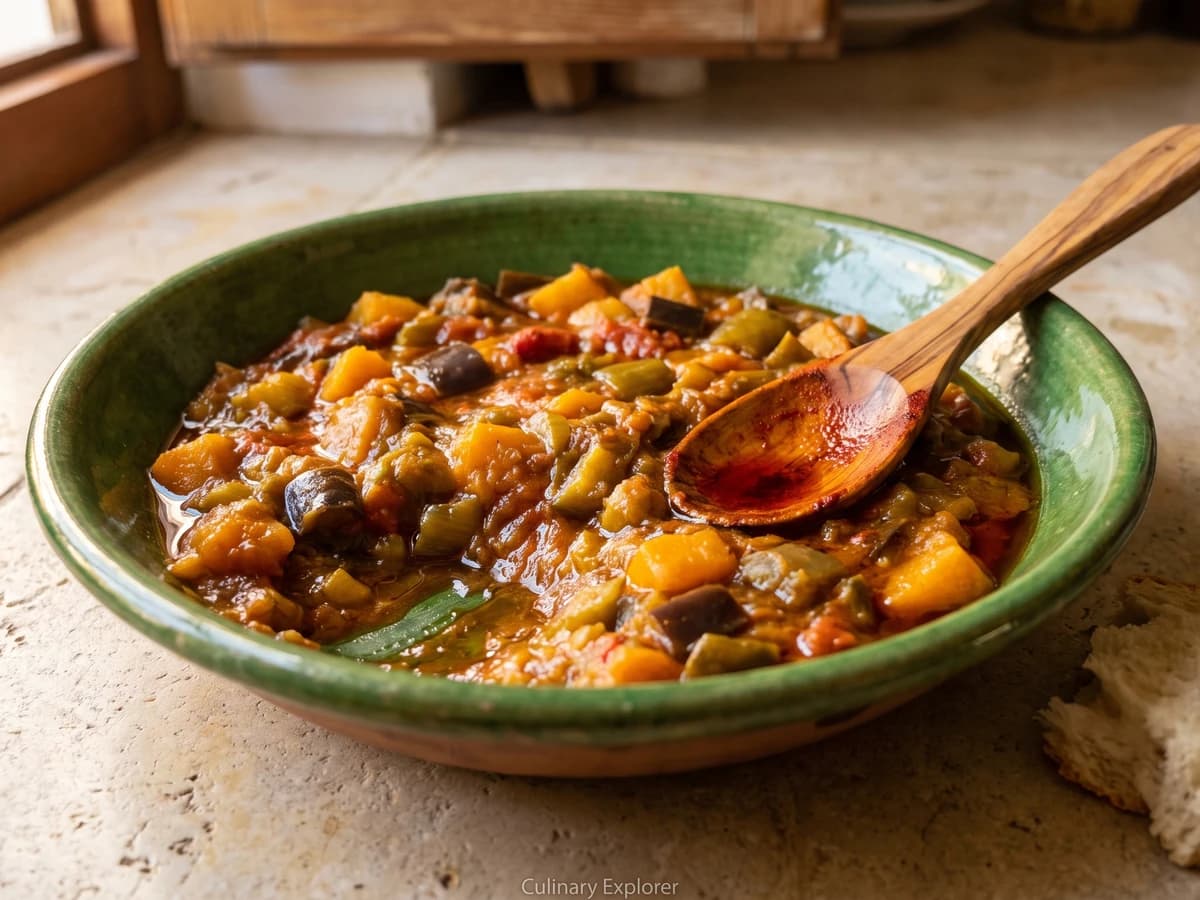
Alboronía is Andalucía's old pumpkin and aubergine stew, deepened with tomato, pimentón, and cumin, then cooked without hurry until the vegetables settle into a glossy, sweet, spoon-soft whole.

Chef Isabel
Aletría Murciana is Murcia's humble noodle guiso: fine fideos, pork ribs, potato, saffron, and a dark sweet sofrito. Get that base right and the pot knows where it's going.
Chef Isabel
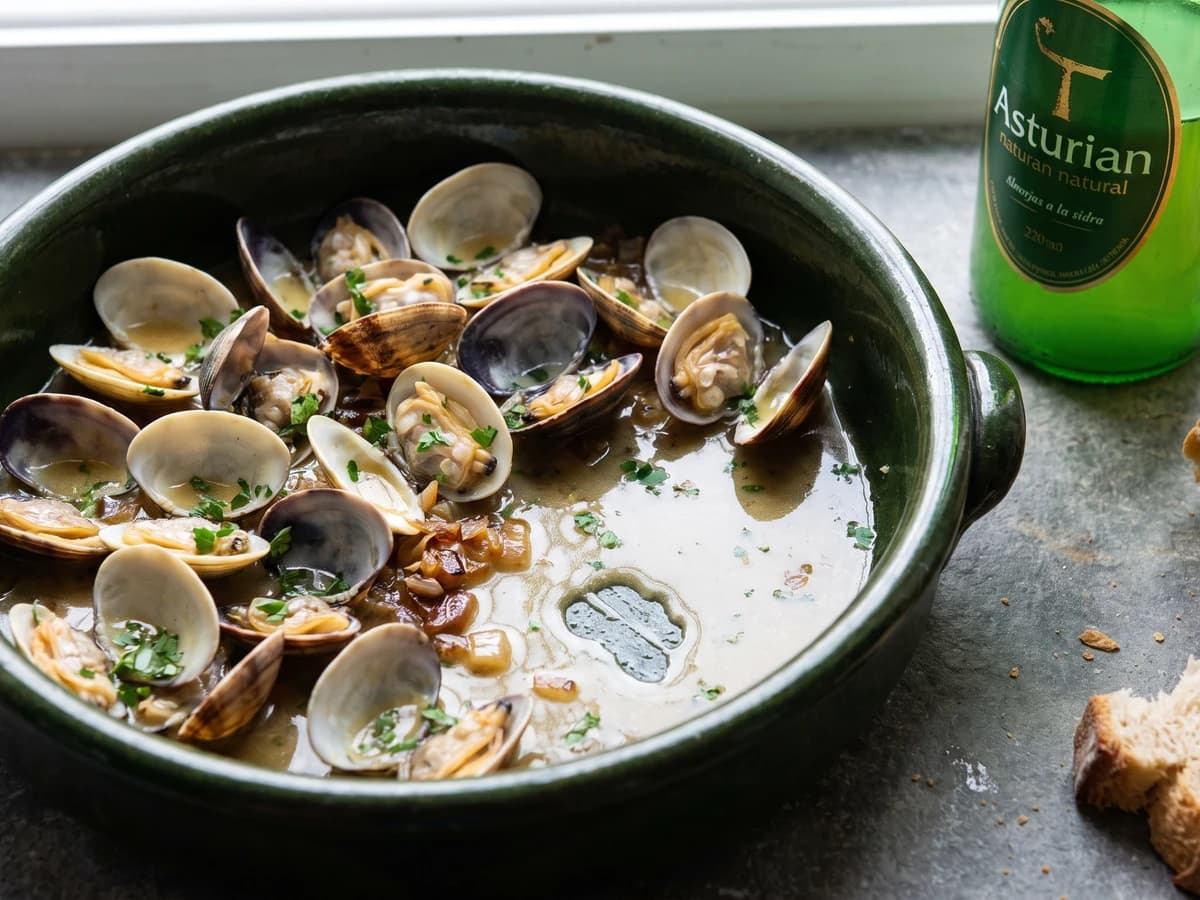
Asturias opens clams in tart natural cider over a slow onion and garlic sofrito, making a bright, briny sauce that asks for bread and rewards one rule: lift each clam as it opens.